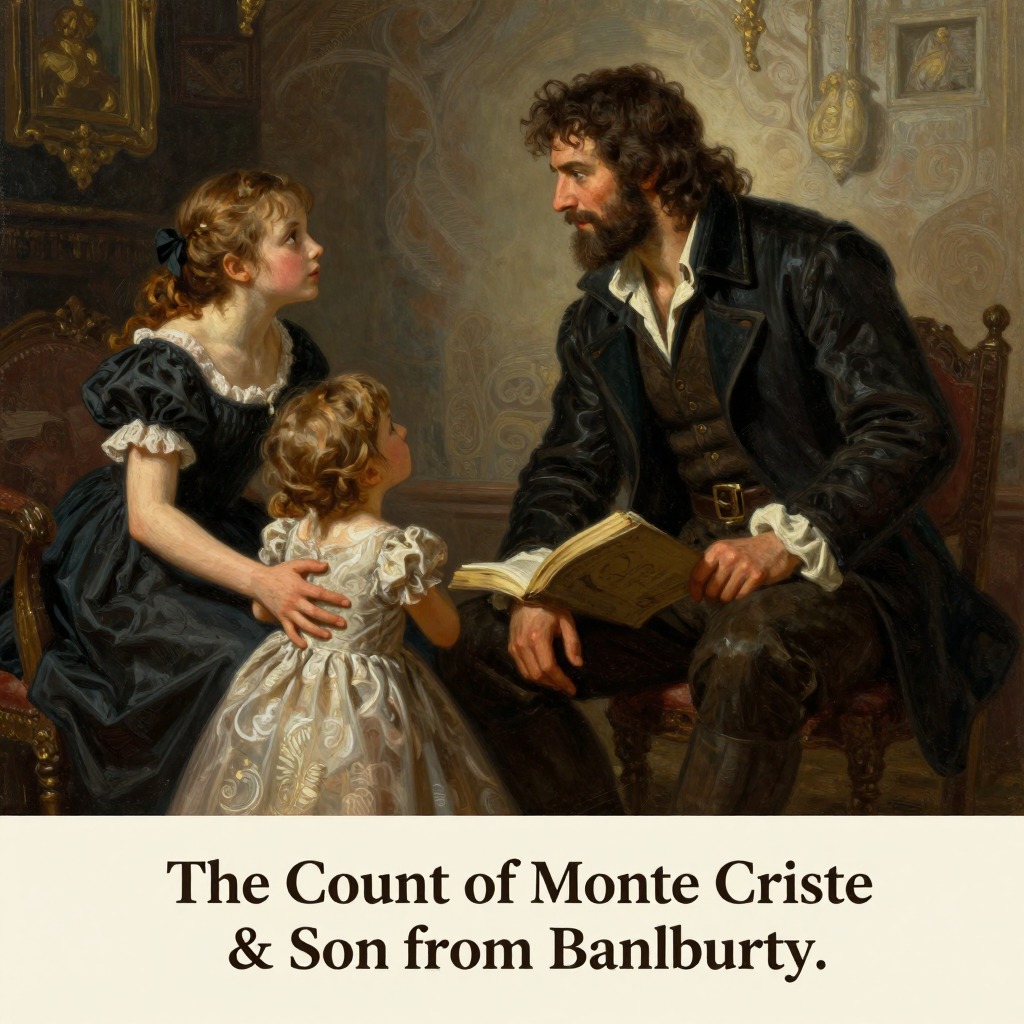
Julie Morrel
The Count of Monte CristoJulie Morrel, later Madame Emmanuel Herbault, is the daughter of the shipowner Pierre Morrel and the sister of Maximilian Morrel. She embodies the domestic happiness and moral integrity that stand in stark contrast to the vengeful world of the Count of Monte Cristo. As the recipient of the mysterious red silk purse that saved her family from bankruptcy, she becomes a living symbol of gratitude and a crucial link between the Morrel family and their unknown benefactor.
Identity and Family Background
Julie is the daughter of Pierre Morrel, the owner of the Pharaon, and the sister of Maximilian Morrel. After her father's death, she marries Emmanuel Herbault, her father's former clerk who remained loyal to the firm during its darkest days. Together, they build a modest but happy life in the Rue Meslay, living on an income of twenty-five thousand francs a year. Julie is described as a young woman of twenty to twenty-five, with a gentle and affectionate nature. She is deeply devoted to her family and maintains a close bond with her brother Maximilian, who often visits her during his leaves from military service.
Role in the Morrel Family's Salvation
Julie is the direct recipient of the Count of Monte Cristo's first act of anonymous generosity. On the day of her father's impending bankruptcy, she receives a letter signed "Sinbad the Sailor" instructing her to retrieve a red silk purse from a specific address. Following the instructions, she finds the purse containing the receipted bill for 287,500 francs and a diamond intended as her dowry. This miraculous intervention saves her father from suicide and restores the family's honor. The purse and the letter become treasured family relics, kept under a crystal globe on a black velvet cushion. Julie and her family spend years trying to discover the identity of their benefactor, never suspecting that he is the Count of Monte Cristo.
Relationship with the Count of Monte Cristo
When the Count of Monte Cristo visits the Morrel home in the Rue Meslay, he is deeply moved by the family's happiness and their reverence for the unknown benefactor. Julie, unaware of his true identity, speaks of the "angel" who saved them and expresses a fervent desire to one day kiss the hand of their savior. The count, struggling to contain his emotion, listens as she recounts the story of the red silk purse and the letter signed "Sinbad the Sailor." He is visibly affected, and his voice trembles as he speaks of Lord Wilmore, the supposed benefactor. The encounter leaves Julie with a strange sense of familiarity, as she notes that the count's voice "went to my heart." Later, when Maximilian reveals the count's true identity as Edmond Dantes, Julie rushes to retrieve the precious purse, declaring that it will be even more dear now that they know their benefactor.
Marriage and Domestic Life
Julie's marriage to Emmanuel Herbault is a model of mutual respect and shared purpose. After inheriting her father's business, Emmanuel works tirelessly for six years to amass a fortune equal to his wife's, refusing to take shortcuts. When they achieve their goal of 250,000 francs, they decide to close the business rather than risk the Morrel name. Julie supports this decision, saying, "The house of Morrel can only be carried on by a Morrel." Their home in the Rue Meslay is a place of simple elegance, with a garden, a fountain, and a small aviary. Julie is often found tending to her roses, while Emmanuel reads his newspapers nearby. The count observes that they are "young and cheerful, they are tenderly attached to each other."
Role in Maximilian's Recovery
After the death of Valentine de Villefort, Maximilian falls into a deep despair. Julie and Emmanuel are deeply concerned for his well-being, but they are unable to penetrate his grief. When the Count of Monte Cristo arrives to take Maximilian away, Julie pleads with the count to restore her brother to happiness. The count reassures her, saying, "I will undertake to divert him." Julie's trust in the count is absolute, and she bids Maximilian farewell with a heavy heart, hoping that the count's mysterious influence will heal her brother's broken spirit. Her faith is ultimately rewarded when Maximilian is reunited with the living Valentine.
Thematic Significance
Julie Morrel represents the possibility of happiness and gratitude in a world marked by betrayal and revenge. She is the living proof that the count's acts of kindness can bear fruit, and her unwavering faith in her unknown benefactor serves as a moral counterweight to the count's darker impulses. Her domestic bliss with Emmanuel stands in stark contrast to the fractured marriages of the Danglars, Villeforts, and Morcerfs. In the final letter to Maximilian, the count entrusts Julie and Emmanuel with the marriage gifts, acknowledging them as the worthy recipients of his generosity. Julie's story is a testament to the power of gratitude and the enduring value of a simple, honest life.