Ali Pasha
The Count of Monte CristoAli Pasha, the Lion of Yanina, was a formidable and semi-independent Ottoman ruler whose dramatic downfall and the subsequent fate of his family form a crucial backstory in Alexandre Dumas's The Count of Monte Cristo. His story is not merely a historical footnote but the foundational crime that fuels one of the novel's central acts of vengeance. The betrayal of Ali Pasha by his trusted French officer, Fernand Mondego, creates a debt of blood that the Count of Monte Cristo, as an agent of Providence, is destined to collect.
Identity and Historical Context
Ali Pasha, whose full name was Ali Tepelini, was born in 1741 at Tepelini, an Albanian village. Through a combination of military prowess and political cunning, he rose to become the virtually independent ruler of Albania, Epirus, and the surrounding territories. He was known for his ferocity, his strategic intelligence, and his immense wealth, ruling from his palace at Yanina. The novel portrays him as a figure of almost legendary power, a man before whom Turkey trembled. His court was a complex mix of Ottoman splendor and local Albanian tradition, and he maintained a degree of autonomy that made him a target of the Sublime Porte. His daughter, Haidee, describes him as an "illustrious man" whose name was known throughout Europe. He was a man who commanded absolute loyalty, as seen in his devoted servant Selim, and who inspired both fear and admiration.
The Betrayal and Fall
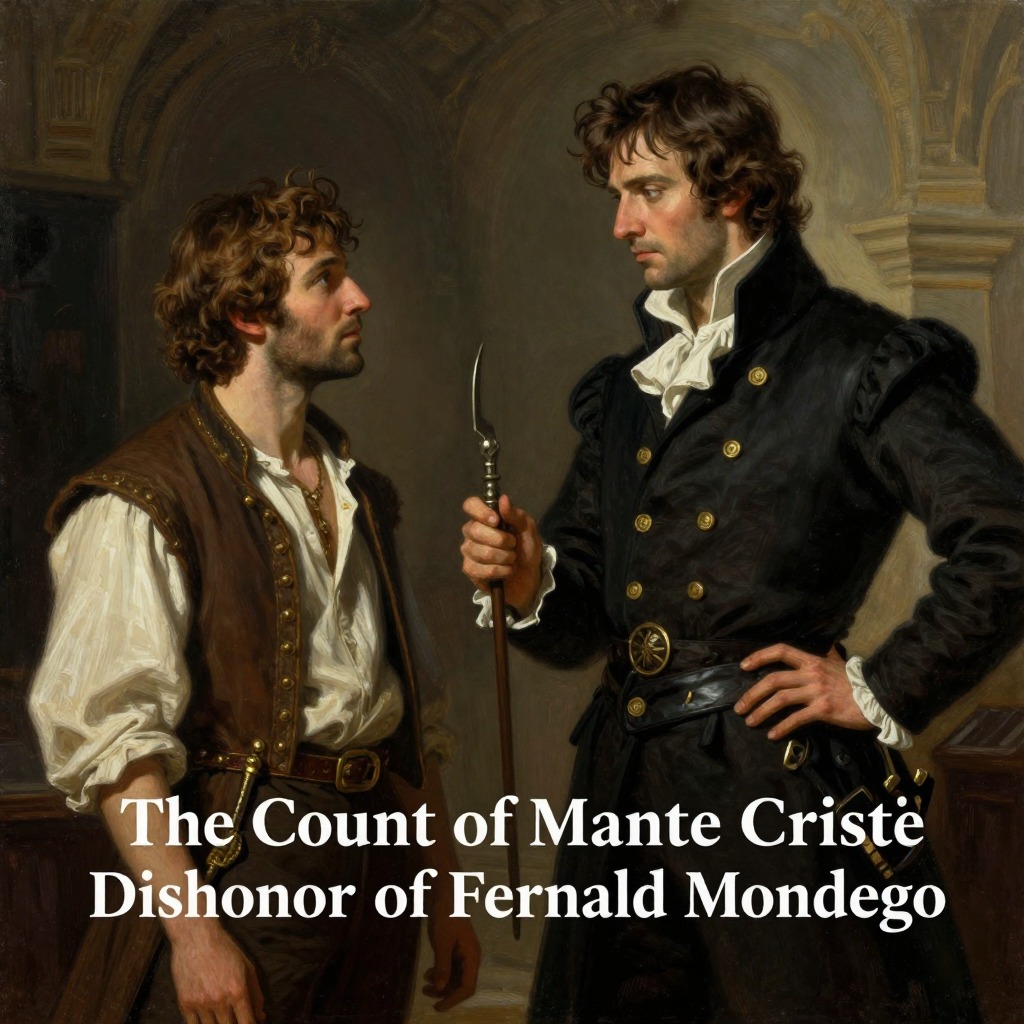
The central event concerning Ali Pasha in the novel is his betrayal by Fernand Mondego, a French officer in his service. Fernand, who had risen to the rank of governor-general under Ali's patronage, was entrusted with a mission to Constantinople to negotiate with the Sultan for the Pasha's life. Instead of securing a pardon, Fernand made a treacherous bargain. He surrendered the castle of Yanina to the Turks for a payment of two million crowns and, in a final act of infamy, sold Ali's wife, Vasiliki, and his young daughter, Haidee, into slavery for 400,000 francs. The betrayal was complete and devastating. Haidee later recounts the harrowing final moments: the Pasha, realizing he was surrounded, retreated to a kiosk on an island in the lake of Yanina, where he had prepared a final refuge. There, he was cornered by the Sultan's troops. In the ensuing battle, he fought with desperate courage, but was ultimately overwhelmed and killed. His head was displayed on the gates of Constantinople, a grim trophy of the Sultan's victory over a rebellious vassal. The betrayal was not merely a personal act of greed; it was a political crime that destroyed a dynasty and left a daughter orphaned and enslaved.
Legacy and Narrative Significance
Ali Pasha's legacy is most powerfully embodied in his daughter, Haidee. She is rescued from slavery by the Count of Monte Cristo, who raises her with the love of a father. Her story is the living proof of Fernand Mondego's crime. When the Count of Monte Cristo orchestrates the public exposure of Fernand (now the Count of Morcerf) before the Chamber of Peers, it is Haidee who delivers the final, damning testimony. She identifies Fernand as the man who betrayed her father, sold her and her mother, and caused the death of the loyal Selim. Her testimony, backed by the record of her own sale, is the instrument of Morcerf's utter ruin and disgrace. Thus, Ali Pasha, though dead before the main action of the novel begins, is a pivotal figure. His murder is the original sin that the Count of Monte Cristo, acting as an agent of divine retribution, is called upon to avenge. The Pasha's story also serves to illustrate the novel's themes of betrayal, the corrupting nature of ambition, and the inescapable hand of Providence, which ensures that even the most powerful tyrant's fall can be avenged by the most unlikely of agents.