Event 1
Noah Fly's death

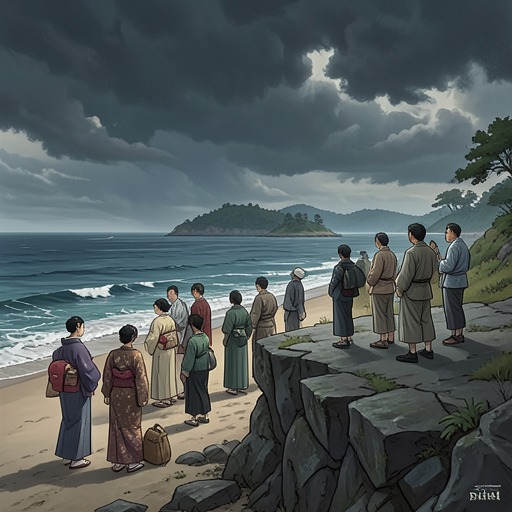
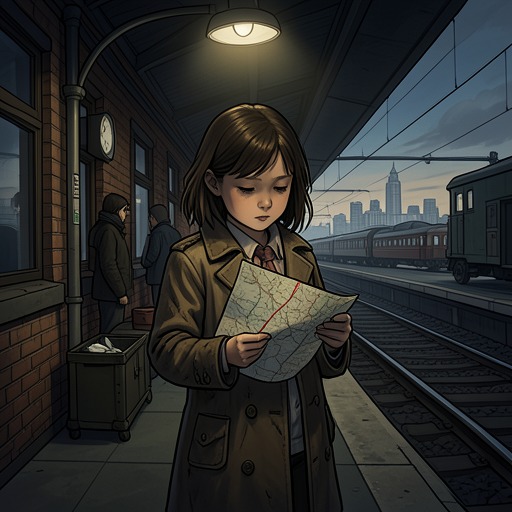
[Noah Fly's death](entity:event-recall-event-noah-fly-s-death-02ddb87220e0) is the childhood catastrophe that transforms [Lucy Fly](entity:character-recall-character-lucy-fly-3d51b5a94363)'s fearless play into an act with irreversible consequences. Recalled by [Lucy](entity:character-recall-character-lucy-680a57cd8fba), the scene presents his death not as a deliberate killing but as the outcome of a desperate escape: Noah is attacking her with stones when she launches herself from an apple tree onto him, and a rusty nail in one of her own planks fatally wounds him.
## Background and the confrontation
The event takes place during the summer holidays, when Lucy is seven or eight, in the garden beneath the large cooking apple tree she likes to climb. She has made a game of leaping from its branches, sometimes placing objects in the grass to make the jump more difficult. On this day, she is reading Pollyanna in the tree when her seven brothers return from a Boy Scouts fishing trip and spot her above them.
At Noah's command, the boys surround the tree and throw stones at Lucy, striking her arms and legs. She understands that climbing down would leave her in their grasp, while remaining on the branch could expose her to a potentially fatal barrage. The adults are not available to help: [Miriam Fly](entity:character-recall-character-miriam-fly-189263f870fc) is running a jumble sale at the town hall, and [George Fly](entity:character-recall-character-george-fly-0b78578504dc) is absent. As Noah reaches for a larger, sharper stone, Lucy backs along the branch and prepares to jump.
## The fall and Noah's death
Lucy pushes off the bough and lands on Noah. He falls onto a long, rusty nail protruding from one of the planks she had put in the grass for her jumping game. The plank remains attached to his back when he sits up; then he falls again, and the stone slips from his hand. He dies in hospital that night.
The fatal injury comes from the collision and the nail, not from a stated intention to kill. Lucy had meant to squash Noah, not puncture him. The distinction between what she intended and what happened is central to the event: the improvised hazards that had made her play more challenging become the means by which the confrontation ends in death.
## Immediate aftermath
The account does not dwell on the parents' devastation, instead emphasizing what changes for Lucy. She stops bothering the rest of the family and keeps to herself; she also no longer wants to sit in the tree. George eventually cuts the cooking apple tree down despite the town council's opposition, hacks it into pieces, and burns it. Lucy does not watch the bonfire and never learns whether the smoke brought tears to his eyes.
Lucy does not speak for the next three years. Her last conversation before that silence is with a nurse who takes her by the hand along a hospital corridor and asks whether she understands that the death was not her fault. Lucy answers uncertainly because she does not understand the question and cannot tell which response the nurse wants. The exchange leaves the question of responsibility emotionally unsettled even as the circumstances establish that Noah's death was unintended.
## Narrative significance
Lucy recounts the event retrospectively, making a childhood memory the means by which the reader learns both how Noah died and how Lucy's later reserve began. The scene turns a familiar setting of play—the tree, the lawn, and the objects arranged for a leap—into the setting of a fatal struggle. Its sharp reversal lies in Lucy's attempt to escape being stoned: the jump saves her from the immediate attack but brings about Noah's death. Her withdrawal, her refusal to return to the tree, and the tree's destruction mark the event's continuing presence in the family landscape.
Event 2
Lucy Fly's silence and return to speech

[Lucy Fly's silence and return to speech](entity:event-recall-event-lucy-fly-s-silence-and-7b144c2dff6c) is a turning point shaped by the accidental death of her younger brother, [Noah Fly](entity:character-recall-character-noah-fly-783a9e480179). After the accident, [Lucy](entity:character-recall-character-lucy-680a57cd8fba) does not speak for three years; when she finally does, it is at a public ceremony where others have already presumed to explain her silence. Her return to speech is therefore both an aftermath of trauma and an act of resistance to a story told about her by other people.
## Background and the beginning of silence
The silence follows an accident in which Noah was fatally struck by a plank of wood. Lucy had meant to squash him, not puncture him. Noah died in hospital that night. In the aftermath, Lucy kept to herself and no longer wanted to sit in the tree. [George Fly](entity:character-recall-character-george-fly-0b78578504dc) eventually cut down the cooking apple tree, despite the town council's wishes, and burned it. Lucy did not watch, and never knew whether the smoke brought tears to his eyes.
The last person Lucy spoke to was a nurse who took her by the hand from the hospital ward and led her along a corridor smelling of sickness and disinfectant. The nurse asked whether Lucy understood that the death was not her fault. Lucy answered, “Yes, no, yes,” because she did not understand the question and did not know which answer the nurse wanted. After that, she could not utter another word. The exchange leaves the question of blame unresolved for Lucy: the nurse offers reassurance, but Lucy cannot yet make sense of it.
## Three years without speech
At home, Lucy's silence either went unnoticed or brought relief. Her brothers had lost their appetite for tormenting her after the accident; at school, teachers left her alone, while other children whispered and kept their distance because they believed she could kill easily. The account calls the period three silent, blissful years, a description that sets Lucy's private experience against the fear and assumptions surrounding her. Silence simplifies life for her, even as it fixes her in other people's minds as strange and dangerous.
During those years Lucy wins the county junior chess contest. A local newspaper prepares a profile of “Lucy the Tragic Mute Genius,” imagining her loneliness and presenting chess as a desperate attempt to communicate. Lucy cannot tolerate that presumption. She had chosen chess precisely because speech was unnecessary: a check could be communicated through the eyes and eyebrows, or, if required, written on the back of a hand. The game thus offers her a form of communication on her own terms, not the rescue or substitute for speech the newspaper invents.
## The return to speech
At the prize-giving ceremony, Lucy opens her mouth and casually says, “Thanks,” into the microphone. The plainness of the word overturns the newspaper's elaborate account: she speaks as though she has been speaking every day. The narration calls the moment “Checkmate,” but qualifies the victory. Lucy has cornered herself too; once she has spoken again, she cannot recover the silence. Speech returns not through an announced cure but through a small, deliberate break in the role others have assigned her.
## Echoes of care
Years later, an ankle sprain on a mountain descent brings the earlier experience of nursing care back into view. Lucy slips off the path and lands with her ankle folded under her thigh. [Lily Bridges](entity:character-recall-character-lily-bridges-4ccf527227f8) checks the injury, loosens Lucy's shoe, holds her foot, and bandages the sprain. Lucy is struck not only by the treatment but by Lily's calm, competent voice, which she recognizes as resembling a voice heard before in another place. When Lily says she is a nurse, the recognition makes sense to Lucy.
Lily says nursing remains part of who she is even while she works in a bar, and describes it as looking after people and picking up the pieces. The scene does not erase Lucy's earlier silence or explain it away; instead, the familiar register of care links the hospital encounter to a later moment when Lucy is injured and able to receive help. The episode's lasting significance lies in that contrast: after an event she could not understand or speak about, Lucy's return to language begins with a single word, while the memory of being cared for resurfaces through another person's practiced attention.
Event 3
Lucy Fly's departure for Japan
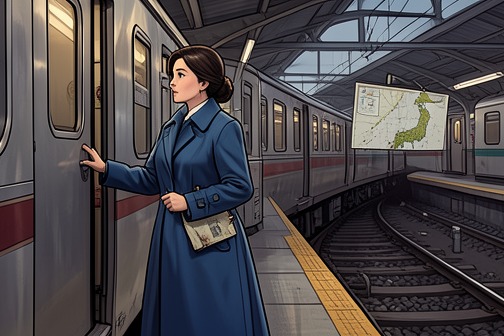
[Lucy Fly's departure for Japan](entity:event-recall-event-lucy-fly-s-departure-fo-da3b8216e2bc) is both a geographical break and a decision to make distance her form of freedom. She leaves [Yorkshire](entity:location-recall-location-yorkshire-1adea3c35af7), studies Japanese in London, and travels on without an explanation to her mother; the language she has pursued and the city she enters become the foundations of her adult life, while the estrangement she carries from home remains unresolved.
## The Impulse to Leave
As a teenager, [Lucy](entity:character-recall-character-lucy-680a57cd8fba) found a model for escape in maps and languages. While her friend [Lizzie](entity:character-recall-character-lizzie-e45debe8b469) imagined illnesses from a medical dictionary, Lucy kept the family's modest collection of maps and atlases beneath her bed, studying a different country each night by flashlight. At the [British Museum](entity:location-recall-location-british-museum-79b9ec91e23e), seeing the Rosetta Stone, she recognized what seemed to her the limitation of an education centered on the Roman alphabet. Its hieroglyphics suggested a message beyond the languages available to the people around her: she should learn one that no one she knew could read, much less speak.
That desire was not simply intellectual. Lucy's friendship with Lizzie offered a private world, including their invented version of French, but it could not provide complete separation from other people. The maps let Lucy imagine a more radical remove. Long after she left, she would understand [Japan](entity:location-recall-location-japan-2b426de89e42)'s distance from England as part of its appeal: it was almost as far away as she could go without beginning to circle the globe back toward home.
## Study and the Choice of Japan
Lucy left Yorkshire for London to study Japanese. London appealed as the exact opposite of the small town she had endured, and Japanese appealed after she weighed the writing systems: Chinese required more than six thousand characters, while Japanese used two or three thousand. The decisive argument, however, was geographical. Japan lay slightly farther from England, and that distance mattered to her.
At university, Lucy's studies and habits changed together. She discovered that alcohol and sex suited her better than the food she had previously lived on; her grades rose, kanji became easier to learn, and practicing the characters became pleasurable. After three years, she was ready to graduate. The education gave her a practical command of Japanese, but the choice of language also fulfilled the childhood wish for a private territory inaccessible to the people she had known at home.
## Leaving Without an Explanation
By the time Lucy left her university residence for Japan, she had made contact with her mother conditional: she would speak to [Miriam Fly](entity:character-recall-character-miriam-fly-189263f870fc) only if Miriam called or wrote first. Miriam did neither. Lucy therefore departed without needing to explain the decision to her. The account presents no tearful farewell; after most of the brothers had already left home, Lucy and Miriam had been left uncomfortably close, and the separation brought relief on both sides.
The family history surrounding the departure is already marked by absence. [George Fly](entity:character-recall-character-george-fly-0b78578504dc) had died of grief for [Noah Fly](entity:character-recall-character-noah-fly-783a9e480179) two years earlier, in the arms of a woman who was not Miriam. Lucy's move thus follows losses and estrangements rather than a reconciled family parting. Her silence toward Miriam is not an interruption that the journey repairs: it is one of the conditions under which she leaves.
## A Life Built in [Tokyo](entity:location-recall-location-tokyo-0b4edfa3fe2f)
In Japan, Lucy found an apartment and worked for several companies, editing documents and translating presentations and instruction manuals. Eventually she settled into a position at a small industrial translation company, where she put Japanese sentences into English, reorganizing their word order and supplying articles, plurals, and specificity. The work made her chosen language the means of her livelihood, even though she lacked training in the engineering and electronics behind many of the documents.
Tokyo also gave her the scale and anonymity she had sought. After [Mrs. Yamamoto](entity:character-recall-character-mrs-yamamoto-5d4b928720a9)'s string quartet disbanded, Lucy wandered the city on Sunday evenings; following the railway from station to station brought her to [Shinjuku](entity:location-recall-location-shinjuku-17bbde8f9594), where she first saw [Teiji](entity:character-recall-character-teiji-9925bed58f62) photographing a puddle outside the [Keio Plaza Hotel](entity:location-recall-location-keio-plaza-hotel-f868f4820a36). She later recalled being unable to walk away from him, despite not having thought of herself as lonely. The departure's consequence was therefore more than residence in a distant country: it placed Lucy in the city where a chance encounter could become an intimate attachment, and where familiar routes would later hold the memories of both connection and loss.
Event 4
Mrs. Yamamoto's fatal accident
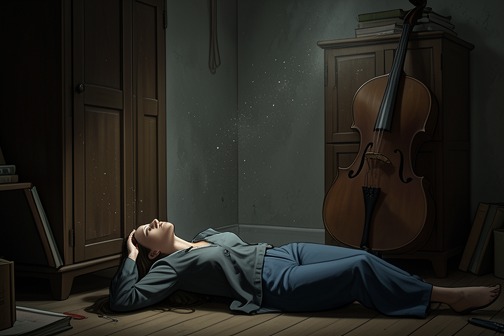
[Mrs. Yamamoto's fatal accident](entity:event-recall-event-mrs-yamamoto-s-fatal-ac-10c0098a1775) is an unintended death caused by the ordinary placement of [Lucy Fly](entity:character-recall-character-lucy-fly-3d51b5a94363)'s cello, but its consequences reach beyond the spare bedroom: it ends a cherished musical routine and leaves [Lucy](entity:character-recall-character-lucy-680a57cd8fba) unable to resume playing or contact the women who shared it.
## Background
For several years, Lucy played cello with [Mrs. Yamamoto](entity:character-recall-character-mrs-yamamoto-5d4b928720a9), [Mrs. Katoh](entity:character-recall-character-mrs-katoh-97c1e4054ffb), and [Mrs. Ide](entity:character-recall-character-mrs-ide-bde50eb4abb6) almost every Sunday. The sessions were the high point of her week; she began anticipating them by Wednesday or Thursday and did not imagine they would end. After each practice, she carried her cello to the spare bedroom and left it beside the wardrobe.
## The Accident
One Sunday, just as Lucy was about to leave her apartment, Mrs. Katoh telephoned to cancel that day's practice. Her voice was unusually deep and flat, without her customary giggle, and she told Lucy there would be no further sessions. Mrs. Yamamoto had gone upstairs that morning to dust the spare bedroom. Unaware that the cello was there, she was dusting the wardrobe when she tripped backward over it, fell, and struck her head on the floor. Her husband found her no longer breathing.
The instrument had been left in an unusual position. After the previous practice, Lucy had placed it behind the bed, a little out of the way, rather than beside the wardrobe. She could not explain why she had done so. Neither had Lucy intended to create a danger: she had not known Mrs. Yamamoto would enter the room to dust, and the cello became a fatal obstacle without her awareness.
## Aftermath and Significance
Lucy was so upset by Mrs. Yamamoto's death that she no longer wanted to play cello or see Mrs. Ide and Mrs. Katoh. She did not contact them and never asked the Yamamotos to return the instrument from the spare bedroom. The accident thus breaks both a weekly practice and Lucy's connection to the cello; although she wanted to preserve aspects of those days, the music itself became inseparable from the loss. A routine she had treated as a dependable pleasure ends abruptly through a small, unexplained change in where she set down her instrument.
Event 5
Lucy Fly and Teiji's first encounter

[Lucy Fly](entity:character-recall-character-lucy-fly-3d51b5a94363) and [Teiji](entity:character-recall-character-teiji-9925bed58f62)’s first encounter is the beginning of their intimacy and a scene that gives the relationship its defining images: rain, a photographed reflection, and the sense of being seen through a camera. [Lucy](entity:character-recall-character-lucy-680a57cd8fba) later remembers their meeting while under police questioning, imagining Teiji beside her before her memory carries her back to [Shinjuku](entity:location-recall-location-shinjuku-17bbde8f9594). The scene is therefore both an origin story and a recollection shaped by what follows: its apparent ease and tenderness stand against the losses and betrayals that eventually make Lucy retrace the city on foot.
## Background and Retrospective Frame
The meeting happens after [Mrs. Yamamoto](entity:character-recall-character-mrs-yamamoto-5d4b928720a9)’s string quartet has disbanded, leaving Lucy without her regular Sunday-evening activity. She wanders central [Tokyo](entity:location-recall-location-tokyo-0b4edfa3fe2f) alone, a habit she later connects to taking the [Yamanote Line](entity:location-recall-location-52575338bfcb) to a station and following the tracks to the next. She does not describe herself at the time as lonely, but encountering Teiji changes the prospect of walking away: she cannot bear to leave him and return to being alone. Her later account thus distinguishes the solitude she considered ordinary from the attachment that forms in this encounter.
The memory is not presented as an uninterrupted record. During the first meeting, Lucy cannot recall whether the two spoke, or precisely when she learned where they were going; she believes they walked together in silence. Much later, after she has been deserted by Lily and Teiji on the cliffs, she walks counterclockwise around Tokyo, thinking of the handkerchief and ice cream that passed between them and of their abandonment of her. The route brings her back to Shinjuku, near the place where she first met Teiji. Remembering the encounter from this later moment places its beginning inside a circuit of attachment, separation, and return.
## The Rainy Street and the Camera
On the night they meet, rain falls steadily around the high buildings of Nishi-Shinjuku. Lucy regards the towers less romantically than guidebook writers do: from the pavement they are dull hotels, banks, and government offices casting long shadows. She has no umbrella, which she considers cumbersome, and is content to let her clothes dry later. That indifference to shelter places her directly in the rain that defines the scene.
Outside the [Keio Plaza Hotel](entity:location-recall-location-keio-plaza-hotel-f868f4820a36), Teiji stands among streams of people carrying umbrellas and bends over a puddle to photograph it. Water runs over his hair and face, apparently without his noticing. Lucy watches him move around the puddle with his camera and sees him as resembling water and ice. His delicate fingers, sharp shoulder blades, and transparent brown eyes intensify her impression of someone fragile and sharply outlined against the neon-dark city. She finds him so beautiful that she cannot simply walk past.
Lucy approaches the puddle to see what has caught his attention. The hotel’s reflection divides the dirty water: one side holds lit windows, the other darkness and floating cigarette ends. She imagines the stubs as people jumping from the hotel, while Teiji seems to be looking more deeply into the water than she can. She steps close enough for the tips of her shoes to enter the puddle and reflect across the hotel. Teiji photographs the scene with her feet in it, then looks at her; he raises the camera again and takes the first pictures of her face. Lucy never sees those photographs. The encounter makes her part of his image before the two have established a remembered conversation.
## From Image to Intimacy
Lucy interprets the moment as intimate and treats her entry into Teiji’s photograph as an invitation. In her recollection, he has led her into the image and captured her with a single exposure; her feet and face are now inside his camera. The camera makes the passage from observation to physical closeness seem, to her then, like an obvious next step. That understanding belongs to Lucy’s retrospective account, not to any recorded verbal agreement: the precise words and transitions between the street and their journey are missing from her memory.
They cannot afford a room at the Keio Plaza Hotel, so they walk to Teiji’s apartment in [Shin-Okubo](entity:location-recall-location-shin-okubo-31465f8b9749), about twenty minutes away. The route leaves the neon towers for a different Tokyo of old houses, small apartment buildings, narrow gray streets, tiny shops, bars, and orange-lit eating places. They pass more puddles, but Teiji takes no further photographs until they reach his apartment. There, in lamplight with the curtains open, he takes one final picture: Lucy’s naked body as she kneels on the bed and leans back. Lucy says nothing in the scene about resisting the camera’s gaze; she regards it as kinder than a naked eye, which might blink or sneer, while the photograph postpones judgment until the film is developed.
Afterward, Teiji closes his eyes and does not open them for a long time. Lucy imagines that her image is framed beneath his eyelids. She climbs over him, and the narration renders their sexual encounter through the same water-and-ice imagery that first described his appearance: his ice body turns to water. Once their breathing has slowed, she remains above him, wondering how the intimacy happened so easily. She eventually lifts herself from his slender frame, feeling pink and aching, with a sensation unusually close to joy. The scene gives their relationship a beginning of physical immediacy, while leaving its emotional meaning filtered through Lucy’s vivid, uncertain recollection.
## The Meeting as a Recurring Map
The first encounter becomes a point of reference for the later geography of Lucy’s relationship with Teiji. In their time together, they walk around the streets, spend time at his uncle’s noodle shop, and spend whole weekends in bed. Lucy reads Japanese novels there and practices kanji in a notebook; she recalls their favorite outings as walks in warm rain, during which Teiji teaches her words for different kinds of rainfall. These later habits make the rainy Shinjuku meeting more than an isolated coincidence: it anticipates a shared life organized around walking, weather, and looking closely.
On her all-night circuit of Tokyo, Lucy passes Akihabara, where she and Teiji had looked at cameras although he never bought any. When she reaches Shinjuku, she thinks of [Sachi](entity:character-recall-character-sachi-a4efee1386a6), the woman Teiji had found in a small theater, and wonders how much time separated Sachi’s departure from Lucy’s arrival in his life. She considers the possibility that Teiji moved from Sachi to her and then to Lily as though the three women were successive stations. That comparison recasts the first meeting as one stop in a history Lucy cannot fully know. By the end of the walk, she has covered the distance of a marathon and circled Tokyo; the city’s repeated stations hold different periods of her life, while the original rainy encounter remains the place where her attachment to Teiji began.
Event 6
Lucy Fly and Lily Bridges's first meeting
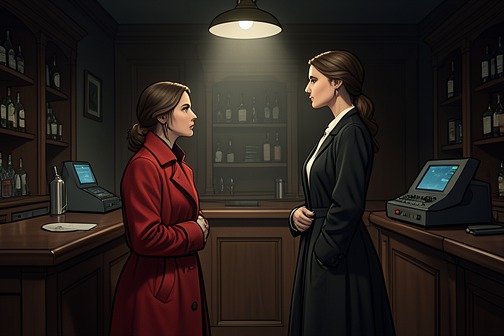
[Lucy Fly and Lily Bridges's first meeting](entity:event-recall-event-lucy-fly-and-lily-bridg-f36baa169310) takes place in a [Shibuya](entity:location-recall-location-shibuya-6dc30fd8b04c) bar, where a reluctant act of assistance grows into the beginning of a consequential friendship. Recounted by [Lucy](entity:character-recall-character-lucy-680a57cd8fba) while police question her, the encounter is shaped both by her guarded perspective and by the painful knowledge that Lily will not remain in her life.
## The Invitation and Its Context
A few months before the interrogation, [Bob](entity:character-recall-character-bob-71f5b16e99fd) asks Lucy to meet a newly arrived English teacher at a bar in Shibuya. Lucy knows Bob from a dentist’s waiting room, and he appeals to her because she has found her own place in [Japan](entity:location-recall-location-japan-2b426de89e42) and speaks Japanese better than the other teachers he knows. His request is practical: Lily needs help understanding the city and, if she wants it, finding somewhere to live. Lucy recognizes that Bob’s supposed idea is really a plan, but flattery wins her agreement.
She has little appetite for the gathering. Lucy rarely socializes with other foreigners, and since beginning her relationship with [Teiji](entity:character-recall-character-teiji-9925bed58f62), she has felt no need to seek out anyone else. Her expectation of Lily is shaped by envy before they have met: she imagines a tall, beautiful woman with pale skin and an elegant manner, someone who would attract attention without trying. Lucy describes herself as the ugliness that defines beautiful women’s beauty, and assumes that Lily will be another woman whose appearance makes her an object of admiration. This imagined rival gives the meeting an edge before Lily enters the scene.
## The First Encounter
At the bar, Lucy finds the English teachers talking loudly about work. Lily is the only person in the group she does not know. Although her skin is pale, she is short and angular, with elbows and knees that seem to jut out. Dyed auburn hair rises from her head before falling over one eye; her dark eyes and fingers twitch. Lucy finds her attractive, but also slightly comical, and the envy she had brought with her gives way to a smile.
Lily greets her in an East [Yorkshire](entity:location-recall-location-yorkshire-1adea3c35af7) accent. Lucy recognizes it immediately as resembling the voices of girls she knew at school. Years of travel and speaking other languages have left Lucy with a neutral, difficult-to-place voice, and she has little patience for people who carry their regional accents like declarations of identity. The contrast is more than a difference in speech: Lily arrives sounding unmistakably connected to the place Lucy has tried to leave behind, while Lucy presents herself as someone who has made distance from her origins part of her life in Japan.
## Lily's Need to Begin Again
As they talk, Lily explains that she left after a planned marriage collapsed. Her former fiancé was possessive and sometimes followed her to make sure she was not enjoying herself with anyone else. She wanted to escape him, but also to start over and travel. Japan is therefore not simply a place where she needs housing; it is part of an attempt to begin a different life after a relationship that had narrowed her freedom.
Lucy responds encouragingly and turns the conversation toward the immediate problem of finding an apartment. When Lily falters while describing her current accommodation, Lucy recognizes the kind of run-down building she means: a place inhabited by Western men who take advantage of their position as foreigners and pursue women. Her account is sharply judgmental, but it also makes clear why she considers better housing important. She offers to take Lily to look for an apartment and explains the obstacles: some landlords accept foreign tenants and some do not; the initial costs may include a deposit, rent in advance, and non-refundable key money; and Lily will need a Japanese guarantor. Lily says she has brought her savings and is not deterred, while Lucy warns that the expense will become clearer when she sees the prices.
## The Beginning of a Friendship
They arrange to meet the following weekend. Lucy assumes that helping Lily find a flat will be a one-time favor and that she will never see her again. That expectation marks the gap between the small practical shape of their first meeting and the much larger place Lily comes to occupy in Lucy’s story. Lucy remembers the beginning as clumsy and faltering, then observes that Lily was better at exits than entrances: an early description that makes their first meeting carry the shadow of the separation to come without yet disclosing its course.
The recollection also belongs to the tense present of Lucy’s police questioning. She is choosing what to tell the officers and explicitly keeps this account to herself for the moment. Looking back allows her to trace how the past became the present, but her memory is not offered as neutral background; it is part of her control over what the police can learn. In that frame, the bar meeting establishes both the ordinary origins of the connection and the intimacy that makes Lily’s later absence so consequential. The first encounter is not a dramatic declaration of friendship. It begins with Bob’s request, Lucy’s reluctant willingness, and a promise to help with an apartment—precisely the modest beginnings Lucy once thought she could leave behind after a single weekend.
Event 7
Lucy's discovery of Sachi in Teiji's photographs
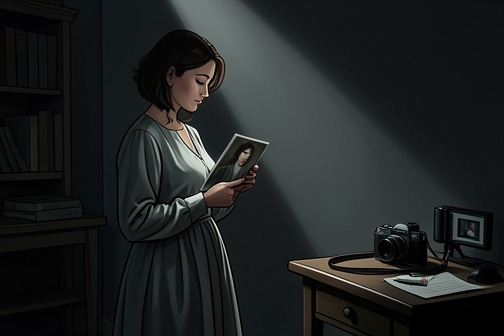
[Lucy](entity:character-recall-character-lucy-680a57cd8fba)’s discovery of [Sachi](entity:character-recall-character-sachi-a4efee1386a6) in [Teiji](entity:character-recall-character-teiji-9925bed58f62)’s photographs turns an act of curiosity into an intimate confrontation with a past Teiji had not shared. The pictures offer Lucy a partial history of another woman, while exposing the limits of what images can explain: they show Sachi’s changing appearance and circumstances, but not the full story of her relationship with Teiji or what became of her.
## The Search in Teiji’s Apartment
Lucy has been drawn to [Teiji’s camera](entity:object-recall-object-teiji-s-camera-3283d7842056) from their first encounter in [Tokyo](entity:location-recall-location-tokyo-0b4edfa3fe2f). Outside the [Keio Plaza Hotel](entity:location-recall-location-keio-plaza-hotel-f868f4820a36), she watches him photograph a puddle, then steps into its reflection; he captures her feet and face in one of the first pictures he takes of her. She understands the act as an invitation into his image, and imagines that being photographed has brought her inside him. Later, that sense of photographic intimacy becomes the prelude to a more unsettling discovery: Teiji has a private collection she has never been allowed to see.
After Teiji leaves, Lucy decides not to prolong her anxious speculation. She retrieves the spare key hidden in a crack beside his front door and lets herself into his apartment. Though she knows the room’s familiar nooks, specks, and stains, she also recognizes the boxes of photographs as forbidden territory. The first box contains pictures of Teiji’s childhood, which she puts aside. In the other, she bypasses photographs from his arrival in Tokyo and images taken of her, searching instead for the years in between—the time before he met her.
## Sachi’s Image Sequence
Among pictures of water, pavement, train stations, and tunnels, Lucy finds a photograph of a woman looking through a bus window. The woman has a soft, round face, deeply set eyes, and a bob brushing her chin, but her tired, angry expression makes Lucy wonder whether Teiji had loved her before he found Lucy. Rather than stopping at this first image, Lucy follows the photographs backward to find the beginning of the sequence.
The earliest picture shows Sachi alone on a small, dark stage, dressed in a soldier’s uniform with a gun over her shoulder. Her mouth is open in a silent shout. Lucy cannot tell whether Teiji attended the play because he already knew Sachi or encountered her there by chance. The photographs before the stage scene do not resolve the question: they show a man in a noodle shop, smiling stiffly at the camera through damp, red eyes.
Following Sachi forward, Lucy sees her in other theater photographs and in coffee shops, parks, beside a river, and at parties. The sequence shifts in emphasis. Sachi appears less often as an actress and more often sitting at parties, on worn tatami, or on a bed. Across the images her face becomes fuller and paler; she seems increasingly sad, and her tight-fitting clothes are crumpled and stained. The last picture Lucy sees shows Sachi lying face-down on the pavement, her head turned to one side and the corners of her mouth raised in an expression Lucy cannot distinguish as a grimace or a smile. The photographs preserve a sequence of visible changes, but leave Lucy unable to know what happened to Sachi or what the final image means.
## The Interruption and Teiji’s Account
Teiji enters without Lucy hearing him, or while she is too absorbed in the pictures to notice. He tells her that the photographs are private. Lucy is caught looking through the boxes and feels ashamed of having been discovered, though she admits to herself that she is sorry chiefly because she was caught, not because she looked. The breach makes the intimacy of their relationship newly uncomfortable: she knows the room, but has crossed a boundary Teiji did not open to her.
Lucy asks who the woman was. Teiji names her as Sachi and says that she is gone. He explains that their relationship ended, that Sachi left, and that he did not try to find her. He tells Lucy that he found her and no longer thinks of Sachi, describing loss as something followed by looking for the next thing. His answer gives Lucy a basic outline of their past, but does not fill the gaps the photographs have made vivid. It neither explains the deterioration she thinks she sees nor confirms what happened in the final picture.
## Jealousy, Guilt, and the Meaning of the Photographs
Lucy cannot accept Teiji’s assurance as a clean resolution. She finds it difficult to believe that he no longer thinks about Sachi, because she is already certain that she herself will not stop thinking about her. When Teiji and Lucy make love, Lucy cannot enjoy it: guilt over entering his apartment and looking through his photographs mingles with the image of Sachi’s unhappy face. Teiji’s lack of visible anger does not quiet her unease; instead, the photographs remain present in the relationship as a third, unseen presence.
The next morning’s bright weather means a planned hike can go ahead. Lucy welcomes the chance to see other people and get away from Teiji and Sachi, while also looking forward to seeing [Natsuko](entity:character-recall-character-natsuko-e6a24dffe9de). Her relief marks a practical consequence of the discovery: even after Teiji has explained who Sachi was, Lucy needs distance from both him and the images she has seen.
The episode also establishes a tension that recurs around Teiji’s photography. A photograph can make someone visible without making that person knowable, and the photographer controls what is kept while the viewer supplies meanings the image cannot settle. Lucy’s later reflections explicitly return to the question of what became of Sachi. In a separate episode, Teiji’s photographs of Lily help establish that Lily was alive after the time Lucy’s account had made consequential; those images can support a limited factual conclusion without proving who killed her. Read alongside Sachi’s sequence, that later use sharpens the distinction between what a photograph records and what its observer suspects. Lucy’s discovery therefore reveals both a hidden relationship and the unstable gap between looking closely and knowing the truth.
Event 8
The Yamanashi hike

[The Yamanashi hike](entity:event-recall-event-the-yamanashi-hike-aff3a617c509) is a weekend excursion that turns an ordinary group walk into a moment of physical vulnerability and unexpected intimacy between [Lucy](entity:character-recall-character-lucy-680a57cd8fba) and Lily. Its green mountain landscape offers a sharp contrast with [Tokyo](entity:location-recall-location-tokyo-0b4edfa3fe2f), while Lucy’s sprained ankle gives Lily the chance to care for her with a calm competence that reveals more about her than conversation alone had done.
## Departure and the group
Lucy recalls arriving at [Shinjuku](entity:location-recall-location-shinjuku-17bbde8f9594) early in the morning, where the station was already busy despite the weekend. Commuters in suits were boarding trains, people in crushed work clothes were heading home, and high-school students carried kendo swords in cases. Lucy had half hoped Lily might have overslept, but Lily was there with [Natsuko](entity:character-recall-character-natsuko-e6a24dffe9de) and others. Lily had invited [Bob](entity:character-recall-character-bob-71f5b16e99fd), who brought his colleague Richard, while Natsuko moved among the group, introducing herself and beaming. The outing was her undertaking: she would guide the party and explain the route.
The hikers on the train were mostly middle-aged or elderly, dressed in conspicuously specialized gear: Gore-Tex shoes, walking sticks, bright rucksacks, and hats suited to the trail. Lucy’s group looked less prepared, in jeans and leggings, old sneakers, and loose T-shirts; Richard wore a red bandanna. Lucy was glad Bob and Richard had come. She was in a solitary mood, and being alone within a large party felt easier than being confined to a threesome. Natsuko, by contrast, was at ease in the role of organizer, showing Lily the map and explaining where they were going.
## The mountain and Lucy’s unease
The mountains in [Yamanashi](entity:location-recall-location-yamanashi-1f9ad1046808) felt like another world after months of Tokyo air, which Lucy associated with people and traffic. The countryside smelled of soil, rain, and pine, and she felt lightheaded on reaching the mountain’s base. Lily came to stand beside her and praised the landscape, comparing it to walks she had taken with [Andy](entity:character-recall-character-andy-1d26f3c164d3) in the [Yorkshire](entity:location-recall-location-yorkshire-1adea3c35af7) Moors and on the Dales. The reference unsettled Lucy. Lily’s repeated recollections of Yorkshire made it difficult for Lucy to remain present in Yamanashi; she gave a perfunctory nod and went to find Bob.
The path passed old farmhouses with gardens of bright flowers and thick green trees, then left roads and houses for a dirt track among tall pines. A stream ran alongside much of the route, and the hikers crossed it more than once, with Bob and Lucy helping one another over before waiting for the others. As the climb grew harder, talk dwindled from chatter to scattered comments and then to breath and footsteps. Lucy valued this quiet, when the effort of walking seemed to use up conversation and leave each person alone with their thoughts.
After a couple of hours, the group reached a low peak. From there they could see distant mountains and valleys, villages, and paddy fields. Natsuko consulted her guidebook and pointed toward a range where she expected [Mount Fuji](entity:location-recall-location-mount-fuji-f6690b56a580) to be visible, but the group could not find it. Richard concluded that the guidebook must be wrong: if the mountain were there, he reasoned, its size would make it impossible to miss. The excursion thus offered no confirming landmark, only the open view and the group’s uncertainty about what it should contain.
## The fall and Lily’s care
The descent was fast. The group slipped and slid over rocks and roots, and Lucy let her feet carry her too quickly. Her ankle caught on a tree stump; she flew off the path and landed on her side with the ankle folded beneath her thigh. When she tried to stand, pain made her dizzy. She sat again and bit her lip, instinctively trying to displace the pain by concentrating on something else.
Lily rushed over and asked Lucy to pull up her trouser leg and lower her sock. She loosened Lucy’s shoe, held her foot, and prodded it firmly without causing further pain. Her assessment was that the ankle was not broken but badly sprained, and she set about bandaging it. The rest of the group watched. Bob squeezed Lucy’s shoulder and reassured her; Lucy replied defensively that she had not said the injury was bad. When Bob and Natsuko exchanged amused glances, Lucy noticed her own sharpness. Lily gave her a painkiller from a small bag in her rucksack and some water. After resting for a few minutes, Lucy could hop slowly and continue.
The pain remained sharp, but Lily’s treatment affected Lucy beyond the practical relief it offered. Lucy carried the warmth of Lily’s hands and the memory of being laid on the soil, bandaged, and tended to. Just as important was Lily’s unusually calm, competent voice. Bob, impressed by how she had handled the situation, asked whether she had received Girl Scout training. Lily explained that she was a nurse. Lucy already knew, as soon as Lily said it, that the fact made sense; she was glad Lily had been there, even as she minimized the severity of her injury.
## The walk’s aftermath
At the bottom of the mountain, Natsuko led the group along small roads to an onsen, where the hikers could soak after their climb. The men and women separated, and Lucy entered the changing room with Lily and Natsuko. Lily was uncomfortable undressing in front of other women, but did so rather than draw attention to herself by making a fuss. Lucy, by contrast, felt no embarrassment about communal bathing and enjoyed the space the hot water gave her. The difference in their ease with their bodies sharpens the contrast between them without interrupting their growing closeness.
Later, Lily advised Lucy to rest the ankle, apply a compress, and put her feet up. Their conversation turned from immediate treatment to Lily’s work and sense of self. She said she had always wanted to be a nurse and had never imagined another occupation. Though she was then working in a bar, she did not feel that she had ceased to be a nurse: she expected to return to the profession and described nursing as something she would always be. Lucy recognized in that identity the work of looking after people and picking up the pieces, and Lily turned the comparison back toward Lucy’s translating. The hike’s lasting significance lies in this movement from practical care to recognition: the injury exposes Lily’s enduring vocation, while Lucy’s gratitude and attention register how deeply the encounter has touched her.
Event 9
The Yoyogi Park night
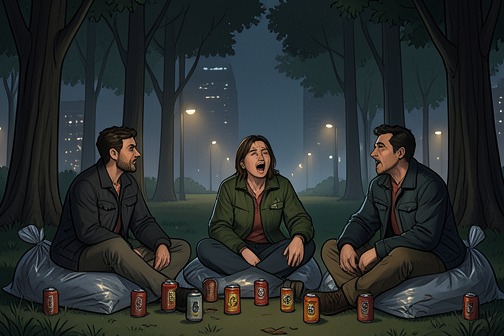
[The Yoyogi Park night](entity:event-recall-event-the-yoyogi-park-night-1a4d7e4eed97) is a late-night gathering shared by [Lucy Fly](entity:character-recall-character-lucy-fly-3d51b5a94363), [Teiji](entity:character-recall-character-teiji-9925bed58f62), and [Lily Bridges](entity:character-recall-character-lily-bridges-4ccf527227f8), remembered as a scene of improvised pleasure that acquires an ominous meaning in retrospect. In the park they drink, eat, and sing together; afterward, [Lucy](entity:character-recall-character-lucy-680a57cd8fba) secretly photographs Teiji and Lily. That image becomes a possible clue in her own retrospective account of how the night turned consequential, even as she admits that she may be searching for significance where none exists.
## The Gathering in the Park
Night has fallen while the three are at a bar. In [Yoyogi Park](entity:location-recall-location-yoyogi-park-d7e2817fe070), they sit on plastic bags taken from a convenience store, surround themselves with beer cans, and open packets of rice crackers containing tiny dried fish. The city lights show through the high trees. These ordinary, inexpensive details make the gathering feel improvised rather than ceremonial: a small refuge made out of whatever the friends have brought with them.
Lily begins to sing, and Lucy recognizes a striking difference between Lily’s voice and her habitual speaking manner. Her singing is rich and pure, without the whine Lucy associates with her speech. Lucy’s compliment is genuine. Singing briefly gives Lily a different presence within the group, one that Lucy can admire without qualification.
Teiji says that singing comes from a deep place, from the spirit rather than the lungs. He is drunk enough for his speech to slur, and Lucy observes that she has never heard him sing or express a wish to sing before. Lily asks him to teach her a Japanese song. After closing his eyes for a few seconds, he agrees, presenting it as an easy song known throughout [Japan](entity:location-recall-location-japan-2b426de89e42). The three slowly sing [Ue o Muite Arukou](entity:expression-recall-expression-ue-o-muite-arukou-f1c672fe24ee) together. Lily cannot grasp the words, makes loud approximations, and does not attend to Lucy’s attempts to translate them. The song therefore becomes a shared performance without shared understanding: the three voices join, while the words remain unevenly available to them.
## The Photograph and Lucy’s Doubt
When they collect their things to walk, Lucy notices that Teiji has left his camera on the ground. She picks it up and hangs it around her neck, intending to return it once he realizes it is missing. The gesture gives her temporary possession of an object she associates with Teiji’s habit of carrying his camera; it also creates the opportunity for a photograph he does not know is being taken.
Walking behind Teiji and Lily, Lucy removes the lens cap, raises the camera, and catches them together in the viewfinder. Her own eyes are harder to focus than the lens, but she manages the shot. The flash does not interrupt their singing or walking, and they appear not to notice. Lucy puts the camera away and chases after them. The urgency she feels about returning it follows the secret act: she has made the image, but quickly resumes the role of someone merely carrying Teiji’s forgotten property.
Looking back, Lucy revises her interpretation of the photograph. She suspects that the Yoyogi Park picture, rather than a photograph taken in a noodle shop, may have been her downfall. But she immediately qualifies that suspicion: perhaps she is superstitious, turning photographs into clues when there are no clues to find. The image consequently remains double-edged in her account. It records Teiji and Lily together, but its importance as evidence of anything beyond that moment is uncertain; the narrator’s hindsight cannot settle whether it was truly a turning point.
## The Walk Toward Dawn
The friends leave the park in the early hours and walk uphill toward Teiji’s apartment. Lily repeatedly falls down, says she will sleep on the pavement, and has to be lifted and helped onward. Alcohol has also weakened Teiji’s coordination. He walks into Lucy, and she realizes that she is doing most of the work of keeping the group moving.
Teiji spots a small warehouse dolly at the roadside and motions for Lucy to help. Together they lift Lily onto it and push her up the road. Her head rolls back, her red tuft of hair hangs over the platform, and her limbs fall in different directions; Lucy compares her appearance to a crushed spider. The image is an abrupt counterpoint to the song and food in the park: the night’s companionship now involves handling Lily’s helpless, awkwardly arranged body and hauling it through the nearly dawn-dark street.
The arrangement keeps changing as the walk continues. A few minutes later Lily is walking again and Lucy lies on the dolly; near the top of the street, Lucy is pushing it with Teiji and Lily squeezed together on it. She stops to rest and sees the sun between the buildings as a huge pink ball. They push the dolly into an alley between two shops, wedge it against a wall so it cannot slide, and collapse together on top of it. Lucy’s head is still filled with the voices singing in the park and with the dawn chorus. The scene ends not with a dramatic confrontation but with exhaustion, an improvised resting place, and the arrival of morning.
## Retrospective Shadow
The narrator’s later knowledge changes the emotional register of the episode without changing what the three do that night. Lucy observes that she could not have known, amid the cacophony of their voices, how much silence would soon fall over [Tokyo](entity:location-recall-location-tokyo-0b4edfa3fe2f), Lily, Teiji, and Lucy. The sentence makes the night’s sounds—singing, movement, and the bustle of a group still together—stand against the later absences. It also makes the gathering feel like a threshold only in retrospect: the participants themselves are not shown recognizing it as one.
The camera and the sound of its mechanism recur in the book’s later atmosphere of uneasy memory. In a later scene, Lucy hears what she identifies as the unmistakable click of a camera followed by the whirr of film advancing; she searches the trees for Teiji, hears the sound seem to echo around the park, and feels rain begin to fall. This later moment does not establish that Teiji is present, or that the sound belongs to the camera from the Yoyogi Park night. Instead, the recurrence links photography with Lucy’s continued expectation of him and with uncertainty about what she hears. The night’s photograph likewise remains suspended between a concrete record of Teiji and Lily walking together and Lucy’s unconfirmed belief that it marked her downfall.
## Significance
The gathering’s importance lies in the contrast between its ordinary actions and Lucy’s later effort to read them as signs. Beer, crackers, an imperfectly shared song, a forgotten camera, and a dolly borrowed from the roadside are all specific features of the night; none, by itself, explains what follows. The photograph offers Lucy an image she can return to, but not a definitive account of the relationships it records or of the consequences it may have had.
As a remembered scene, the event also shows how intimacy and distance coexist among the three. They sing together, carry one another through the streets, and reach the same makeshift resting place, yet Lily does not understand the song’s words, and Lucy is already making an image of Teiji and Lily from behind. The narrator preserves both sides of the night: its physical closeness and its limits of knowledge. Its final force comes from that gap between the lively group moving toward dawn and Lucy’s later awareness of the silence that followed.
Event 10
Lucy and Teiji's jazz-club date
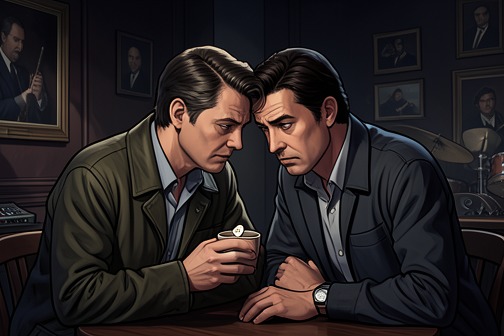
[Lucy](entity:character-recall-character-lucy-680a57cd8fba) and [Teiji](entity:character-recall-character-teiji-9925bed58f62)’s jazz-club date begins as a tentative invitation and becomes, for Lucy, both a rare shared plan and a declaration of possession. In the dark club, their intimacy appears to place them inside a private world; by morning, Teiji’s guarded response to Lucy’s personal story exposes a distance she had not understood. The event matters not simply as a romantic interlude but as a turning point Lucy remembers through desire, uncertainty, and the fear that she has misread their relationship.
## A First Planned Outing
Lucy did not especially like parties. In her student days, she had gone to them with a clear sexual purpose, while disliking the small talk, bathroom queues, and emotional scenes around rejection. She had no particular wish to attend parties in [Tokyo](entity:location-recall-location-tokyo-0b4edfa3fe2f) either, but thought Teiji might want to go because he had spent many nights at them with [Sachi](entity:character-recall-character-sachi-a4efee1386a6). With his electronic jazz playing on his CD player, she suggested a party, then a club, making herself nervous as she tried to find a way to invite him out.
Teiji was washing his only cup, a pale-green one with a chip, and handled it carefully as he listened. He did not want to revisit the places he had gone with Sachi; she was no longer there, and returning would feel strange. Instead, he suggested a new jazz club nearby, described to him by one of the noodle shop’s customers as small, cozy, and unusual. The proposal gave the evening a particular significance: it was the first time Lucy and Teiji had really planned to go somewhere together, and Lucy felt that they were going on a date.
Before leaving, Lucy glanced at herself in the mirror, smoothed her hair, and winked at her reflection. She did not wear makeup and did not think she had nice clothes, but the small gesture records her excitement at entering a shared occasion that neither of them had simply stumbled into.
## The Club and Its Intimacy
The club’s darkness made its small room seem to have no visible end. Lucy and Teiji could barely distinguish the other tables; the walls receded into blue-black shadow, while the piano and saxophone played in dim, dusty light. Though the musicians were only a few metres away, they seemed distant. Their melancholic, caressing music warmed Lucy and brought a smile to her face before she consciously recognized that she was happy.
The candlelight made Teiji’s skin shimmer, recalling Lucy’s first impression of him as water in the rain. The memory sharpened her desire. She sipped gin and touched Teiji beneath the table; he responded by kissing her and touching her in turn. They slipped from their cushioned chairs to the dark floor and had sex there. The last of Lucy’s gin spilled across Teiji’s face, and she licked it away while the saxophone played. The scene joins music, drink, touch, and the image of melting ice to the sensual intensity with which Lucy experiences him.
The room’s darkness also lets their encounter remain unseen. Lucy believes no one notices or cares enough to stop them, and she half hopes they will be caught. Her wish is not merely for the night to continue undisturbed: she wants the world to know Teiji is hers. The date’s apparent privacy therefore contains a competing impulse, toward public acknowledgment and possession. What feels to Lucy like a mutual romantic advance also reveals how urgently she wants their relationship to be legible as exclusive.
## The Morning After
The next morning, Teiji lies beside Lucy watching her. His camera is not in sight. He calls her a bit strange, a remark that stays clear in Lucy’s memory even though she cannot decide whether he spoke in English or Japanese. She questions whether the Japanese word she remembers would have sounded harsher, and whether being strange could be qualified at all. His expression seems worried, perhaps even afraid; Lucy has no answer and closes her eyes, pretending to be asleep.
Lucy later connects his reaction to the story she had told him after the club. She had described her first sexual encounter, hoping that by sharing something of her own she might return some of the confidence she felt she had taken from Sachi. She also thought Teiji might fall asleep, as he had during earlier stories. Instead, she believes he stayed awake through the night, listening and staring at her. The morning remark thus follows an intimacy Lucy had hoped would deepen trust, but which seems to have made Teiji see her differently.
Lucy has been called strange since childhood, yet she says that being strange had always seemed normal to her. That morning, however, she reads Teiji’s expression as evidence that he does not feel as close to her as she had assumed. She does not ask what he means or try to argue that his own nighttime photography is unconventional. To Lucy, Teiji is simply Teiji; the question of who is normal does not occur to her. Her silence leaves the remark unresolved, and her interpretation of his unease becomes more powerful than any explanation he might have given.
## Recollection and Consequence
Lucy remembers the date while reconstructing her past for the police, at a point when she says the night in question is blurred and must be recovered bit by bit. Her account of the jazz-club episode is therefore a flashback shaped by recollection rather than a detached report. She admits that she has been approximating Teiji’s language; the morning remark survives vividly, but even its original language is uncertain. The memory is precise about physical details—the chipped cup, the candle, the gin, the absent camera—and less certain about what Teiji’s words meant.
Afterward, Lucy does not go to Teiji’s apartment the following night. She fears he may not be there, or may tell her to leave because she is being strange. She plans a trip to [Sado Island](entity:location-recall-location-sado-island-e39917b9e8a0) and tells herself she will see him when she returns and try to repair the damage she believes she has caused. The date therefore ends not with an agreement or an explicit break, but with withdrawal and an attempted postponement. Its romantic promise remains real to Lucy, yet the morning after has already turned their first planned outing into a memory of threatened loss.
Event 11
Lily Bridges's disappearance
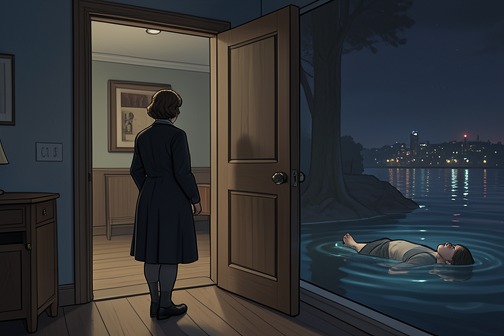
[Lily Bridges's disappearance](entity:event-recall-event-lily-bridges-s-disappea-24697c871c10) is the unresolved event around which the police question [Lucy Fly](entity:character-recall-character-lucy-fly-3d51b5a94363) and the narrative’s competing accounts of the last evening turn. Lily visits [Lucy](entity:character-recall-character-lucy-680a57cd8fba)’s apartment and leaves; Lucy says she follows several minutes later but does not find her. The later recovery of a woman’s torso in [Tokyo Bay](entity:location-recall-location-tokyo-bay-ee7dc4348373) makes the disappearance seem fatal, yet the remains are never officially identified as Lily’s, leaving both the event and Lucy’s part in it suspended between testimony, suspicion, and uncertainty.
## The Last Known Encounter
During the police interview, the investigator asks Lucy to recount the night Lily was never seen again and emphasizes that, as far as the authorities know, Lucy was the last person Lily spoke to. Lucy first gives a spare account: she is at home when the doorbell rings; Lily is there; they speak for about a minute, Lily leaves, and Lucy goes back inside. The brevity of this exchange offers little explanation for Lily’s departure or what passed between them. Lucy says she has already described it, but the investigator asks her to tell it again, making repetition itself part of the pressure surrounding the event.
Lucy then adds a second movement to the evening. About five minutes after Lily leaves, she says, she goes after her because there is something she has forgotten to tell her. She insists that she does not find Lily and assumes she is heading to the station: Lucy does not believe Lily knows that part of [Tokyo](entity:location-recall-location-tokyo-0b4edfa3fe2f) well, and sees no other likely destination. The investigator points out that the route from Lucy’s apartment to the station is straightforward and the streets are well lit. Lucy accepts those details but maintains that she did not find Lily and does not know where she went. The direct route sharpens the gap in her account rather than closing it: the expected destination is plausible, but Lily’s arrival there is not established.
## The Body and the Limits of Identification
A few days after Lily disappears, a young woman’s torso is fished out of Tokyo Bay, accompanied by two matching but unattached limbs. The recovered remains lack hands, and therefore fingerprints, so the police cannot make an official identification. Even so, the body is widely accepted as Lily’s. Lucy’s account makes clear the difference between public certainty and forensic confirmation: the newspapers report a missing British bartender, while the authorities have not formally established whose remains were found.
In the weeks before the renewed questioning, a copy of the Daily Yomiuri circulates through Lucy’s office. Its headline identifies the recovered torso as believed to be that of [Lily Bridges](entity:character-recall-character-lily-bridges-4ccf527227f8). The news alters how Lucy is treated at work: her colleagues no longer look at her properly, and she cannot tell whether they suspect her of murder or are simply unable to speak to her amid the horror of Lily’s death. Even [Natsuko](entity:character-recall-character-natsuko-e6a24dffe9de), who had wanted to believe Lucy, withdraws after seeing the headline. The disappearance thus acquires a second, social aftermath before the police lead Lucy away: suspicion isolates her from the people among whom she had been living.
## Conflicting Accounts and Suspicion
The police case includes a neighbor’s account of the evening. The neighbor says Lily knocked at Lucy’s door, saw Lucy speaking angrily to her in the doorway, and watched Lily walk away. A few minutes later, the neighbor says, Lucy followed, carrying a bundle. Lucy calls the bundle detail a lie, while acknowledging the other basic facts and choosing not to describe the conversation. Her narration therefore preserves the outline of the encounter while withholding its most charged content.
Lucy’s response complicates rather than settles the accusation. She wonders why the neighbor did not also say she saw Lucy tuck a revolver into her shirt after closing the door, or carry a dagger as she walked. The remarks do not supply a clear explanation of what happened to Lily; instead, they draw attention to how much the account depends on what a witness says she saw, what Lucy admits, and what Lucy elects to leave unspecified. The reader receives no independent resolution of the discrepancy between the neighbor’s description and Lucy’s denial of the bundle.
## Investigation and Narrative Uncertainty
At the point in the interview when Lucy considers what is known about Lily’s death, the facts remain few: Lily had been in Tokyo for several months, disappeared one night, and was presumed to be the woman whose torso and matching limbs were recovered days later. Lucy’s connection is concrete but limited in her telling: Lily came to her apartment, left, and was seen walking away; Lucy says she followed and failed to find her. The absence of an official identification and the missing details of the encounter keep the disappearance from becoming a fully established sequence of events.
The narrative presents this account through Lucy’s recollection under questioning, not through an independent view of Lily’s movements after she leaves. Lucy’s admission that she has not detailed their conversation, alongside her disputes with the neighbor’s testimony, makes her version both indispensable and incomplete. When police take her from the interview room to their car, she knows her colleagues are watching from the office window and does not wave goodbye. Lily’s disappearance has by then become more than a missing-person inquiry: it has reorganized the evidence around Lucy, unsettled her place at work, and left the central question—where Lily went after leaving the apartment—unanswered.
Event 12
Recovery of a torso believed to be Lily Bridges's

The recovery of a young woman’s torso and matching limbs from [Tokyo Bay](entity:location-recall-location-tokyo-bay-ee7dc4348373) made [Lily Bridges](entity:character-recall-character-lily-bridges-4ccf527227f8)’s disappearance seem like a death, without resolving the question of identity. The remains were widely believed to be Lily’s, but the absence of hands prevented fingerprint identification; the event therefore became both the central physical evidence in the case and a source of uncertainty that the press and [Lucy Fly](entity:character-recall-character-lucy-fly-3d51b5a94363)’s colleagues did not share equally.
## Background and Recovery
Lily had been in [Tokyo](entity:location-recall-location-tokyo-0b4edfa3fe2f) for several months when she disappeared one night. A few days later, a young woman’s torso was fished out of Tokyo Bay, along with a couple of unattached limbs that matched it. [Lucy](entity:character-recall-character-lucy-680a57cd8fba), recounting the case during a police interview, could not remember which limbs had been found. Her account emphasizes how partial the discovery was: the remains suggested a body assembled from separate pieces, not a complete person whose identity could be established at once.
The recovery became public through the Daily Yomiuri. A couple of weeks before the police came to Lucy’s office, someone brought in the newspaper and passed it quietly from desk to desk. By the afternoon it had reached Lucy. Its headline described a woman’s torso recovered from Tokyo Bay and said it was believed to be that of missing British bartender Lily Bridges. That wording presented the identification as a strong belief, not a confirmed fact, but it brought the possibility of Lily’s death directly into Lucy’s workplace.
## Identification and Evidentiary Limits
The remains could not be officially identified because there were no hands and therefore no fingerprints. Lucy distinguishes that forensic limitation from the wider assumption that the body was Lily’s: although the police could not make an official identification, the identification seemed broadly accepted. The headline’s cautious “believed to be” and the public certainty surrounding it thus occupied different levels of proof.
When police officers later told Lucy that there were new developments and asked her to come down to their car, she immediately thought of the missing parts of Lily’s body. She imagined that the pieces might have washed ashore with the tide or been caught in fishermen’s nets, and that the police might now have been able to put Lily back together and formally identify her. In her account, that imagined identification would have been a formality, because the newspapers had already conveyed the impression that the police knew the remains were Lily’s. Her anxious speculation shows how the recovery continued to govern her expectations even before she knew what the officers wanted.
## Suspicion and Aftermath
The newspaper report altered the atmosphere at Lucy’s office. After the headline circulated, her colleagues no longer looked at her properly. She cannot tell whether they considered her a murderer or were simply unable to speak to her in the wake of Lily’s death. [Natsuko](entity:character-recall-character-natsuko-e6a24dffe9de), whom Lucy regarded as a friend, had wanted to believe in her, but Lucy felt that even Natsuko had been driven away by the headline. The report’s effect was therefore immediate and social: before any formal identification, it attached the presumed death to the suspicion surrounding Lucy.
During the police interview, Lucy describes the neighbor’s account that connected her to Lily’s disappearance. The neighbor reportedly saw Lily knock at Lucy’s apartment, saw Lucy speak angrily with her in the doorway, and then saw Lily walk away; a few minutes later, the neighbor said, Lucy followed carrying a bundle. Lucy calls this account a lie, while acknowledging that she has not detailed the conversation she had with Lily. The recovery did not itself establish who killed Lily, but it gave these disputed observations the force of a possible explanation for the remains.
## Narrative Significance
The event’s importance lies partly in the distance between physical evidence and accepted story. The recovered fragments could not yield a formal identification, yet the newspaper headline and the response in Lucy’s office made Lily’s presumed death feel settled. Lucy’s narration preserves both the limits of what could be known and the pressure to treat the case as already understood. The body’s incompleteness leaves an unresolved question at the center of the investigation, while the public reading of that incomplete evidence helps make Lucy appear guilty before the question is answered.
Event 13
Lucy Fly's arrest and police questioning

[Lucy Fly](entity:character-recall-character-lucy-fly-3d51b5a94363)’s arrest and police questioning turn the disappearance of [Lily Bridges](entity:character-recall-character-lily-bridges-4ccf527227f8) into a test of how far suspicion, unstable memory, and a convincing story can be mistaken for proof. Taken from her [Tokyo](entity:location-recall-location-tokyo-0b4edfa3fe2f) office after Lily’s remains have been reported recovered from [Tokyo Bay](entity:location-recall-location-tokyo-bay-ee7dc4348373), [Lucy](entity:character-recall-character-lucy-680a57cd8fba) eventually describes a murder in vivid detail, then recognizes that she has fabricated the confession. Photographs received by police subsequently undermine the account, and she is released without charges.
## Context and Arrest
On the morning of her arrest, an earthquake wakes Lucy several hours before the police arrive. She stresses that the tremor is ordinary in Tokyo and does not mean that it caused or foretold the arrest. Still, her reaction reveals the nervousness that has accumulated since Lily’s death and [Teiji](entity:character-recall-character-teiji-9925bed58f62)’s disappearance: Lucy puts on a cycling helmet, retrieves a flashlight, and checks that her whistle and earthquake-water bottle are nearby before crouching in a corner. She cannot return to sleep easily, and her usual word game, built around different meanings of the Japanese word for earthquake, does not distract her. Memories of sleeping beside Teiji briefly comfort her, but the morning proceeds into an arrest she has already begun to expect.
That afternoon, Lucy is at work translating technical instructions for a new bicycle pump. The routine task has helped occupy her mind amid the recent disasters. When she notices her colleagues looking toward the office entrance, two policemen are there. Lucy tries to get ahead of the humiliation of being arrested in front of an unsupportive audience, telling coworkers that the officers probably only want to ask more questions. They say they are taking her to the station in connection with Lily’s disappearance and ask her to bring her alien registration card. Their explanation that there have been new developments makes Lucy fear that the missing parts of Lily’s body have been found and that the police can formally identify her.
The office has already changed since a copy of the Daily Yomiuri circulated a report that a woman’s torso had been recovered from Tokyo Bay and was believed to belong to Lily. Lucy recalls her colleagues avoiding her after reading it; she cannot tell whether they suspect her of murder or simply do not know how to respond to Lily’s death. The police arrive against that background of public suspicion, although the case has not yet established what happened to Lily.
## Questions, Witnesses, and Uncertain Memory
At the station, the questioning focuses on the night Lily disappeared. The investigator says Lucy was, as far as police know, the last person Lily spoke to. Lucy challenges the vagueness of the timeline, asking which night counts as the night of the disappearance, and recalls bringing in her washing when Lily called. She says she remembers nothing after that and supposes she returned to her laundry. A neighbor, however, saw her speaking with Lily outside her front door. Lucy answers that the witness presumably saw what she has just described; the investigator’s patient, expectant manner makes the exchange feel less like a settled account than a search for a confession.
The neighbor supplies another incriminating detail: Lucy appeared to be carrying a bundle. Lucy mocks the report and identifies the likely witness as the woman next door, who vacuums for hours and is her only immediate neighbor. She says she had been angry with Lily, but the reported bundle gives that anger an ominous possible interpretation. The evidence presented by police is circumstantial and dependent on another person’s observations; the questioning does not make the bundle’s identity or purpose certain.
As the interview continues, Lucy cracks her fingers one by one while [Kameyama](entity:character-recall-character-kameyama-d1590fb47270) waits. [Oguchi](entity:character-recall-character-oguchi-92612542369c) picks at the seam of his trouser knee, and Lucy reads his unease as an awareness of the crime she may have committed. Her own recollection of the night remains a blur that, she says, must be recovered bit by bit before she can tell Kameyama what happened. When he changes the subject, her thoughts range from trivial questions to her earlier responsibility for [Noah Fly](entity:character-recall-character-noah-fly-783a9e480179)’s death and [Mrs. Yamamoto](entity:character-recall-character-mrs-yamamoto-5d4b928720a9)’s death. The sequence links the current interrogation to Lucy’s broader inability to separate what she remembers, what she fears, and what she believes herself capable of doing.
## A Confession Made Under Interrogation
After Lucy begins talking, she tells police the story she thinks they want to hear. It has a clear emotional logic: jealousy of Lily, rage at being let down, and an obsessive love for Teiji that prevents Lucy from accepting that the relationship is over. She describes using a pair of stockings as a weapon, catching Lily off guard because Lily still trusts her enough to smile, and dragging Lily’s warm, lifeless body to a hiding place. The account’s fluency and sequence give it the shape of a complete solution to the case, but its apparent completeness is not independent evidence that it is true.
Lucy subsequently states that she did not kill Lily and that the confession was a story she spun. At the same time, she does not claim uncomplicated innocence. She is exhausted and says she no longer trusts herself, recalling how people have slipped through her grasp. She also considers the ways her own choices may have helped bring Lily into danger: she introduced Lily to Teiji, persuaded her not to return to [Britain](entity:location-recall-location-cc30c45755f2) when she wanted to, and wonders whether Lily would have come to her street that night if Lucy had answered the phone. Her formulation, “Not guilty, but not not guilty,” distinguishes legal responsibility for murder from the guilt and regret she attaches to her part in the relationships surrounding Lily.
Lily’s earlier disclosures provide context for her presence in [Japan](entity:location-recall-location-japan-2b426de89e42), but do not establish a motive for her murder. She told Lucy that she had left [Andy](entity:character-recall-character-andy-1d26f3c164d3), her possessive former boyfriend, after their engagement collapsed and she wanted to start over. She described his suspicion of men who spoke to or looked at her, and recounted finding a cheap listening device he had hidden in the lining of her handbag. Lily said she had delayed leaving because she expected him to follow her and feared the fights that would result. This history makes her effort to create distance intelligible; it does not verify Lucy’s invented account of the killing.
## New Evidence and Release
Lucy’s confession does not lead to charges. [Mrs. Katoh](entity:character-recall-character-mrs-katoh-97c1e4054ffb) hopes Lucy will come and stay at her home in Tokyo, while Lucy agrees partly because she still expects to be convicted. Instead, after a day has passed, Lucy learns she will be released. The case against her is circumstantial, and investigators have found no fingerprint or DNA sample from her on Lily’s body.
A new envelope delivered to police after Lucy’s details appear in national newspapers contains two photographs. The account describes the first: it shows Lily at a McDonald’s near Lucy’s home on the night of the murder, two hours after Lily was seen at Lucy’s front door. A cashier recognizes Lily and recalls that she and a Japanese male friend seemed distressed and had difficulty communicating. Lily leaves her cheeseburger untouched but drinks her Coke. The photograph places her with someone else after her encounter with Lucy, contradicting the confession’s account of Lucy killing her following that visit.
The evidence also separates Lucy’s brief outing from Lily’s death. Police determine that Lucy was outside for only about ten minutes with her stockings over one shoulder, and the neighbor had not reported hearing her go out again that night. The details that had seemed to support a murder narrative—the neighbor’s sighting, the bundle, and Lucy’s own confession—therefore fail to prove that she killed Lily. The photographs do not resolve every circumstance of Lily’s death, but they help explain why the police release Lucy without charges.
## Narrative Significance
The arrest sequence sets observation against inference at every stage. A neighbor sees Lucy speaking to Lily and apparently carrying a bundle; police treat these details as reasons to question her, while Lucy offers explanations that cannot initially be checked. She then supplies a far more dramatic account herself, but the confession proves less reliable than the small, external trace of Lily’s presence at the restaurant. The case turns not on how persuasive a story sounds, but on whether it holds against independently obtained evidence.
Lucy’s narration makes that distinction deliberately unstable. She insists that the morning earthquake is merely part of the day’s sequence, yet the tremor’s uncertain warning sound echoes the book’s larger uncertainty about what can be known in advance or reconstructed afterward. In the station, she moves between gaps in memory, fear of her own capacity for harm, and a confession composed to fit what she thinks the investigators want. Her release settles the immediate legal outcome but leaves her moral accounting unresolved: she is not convicted of Lily’s murder, yet she continues to regard her choices and silences as part of the story that led to Lily’s death.
Event 14
Lucy’s sexual assault by Brian Church
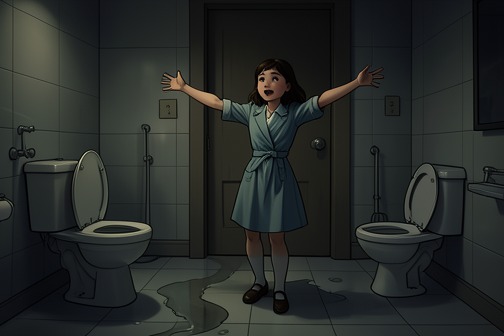
[Lucy’s sexual assault by Brian Church](entity:event-recall-event-lucy-s-sexual-assault-b-566d3a606e30) is a childhood trauma recalled through a break in memory. The scene’s gap separates an apparently ordinary school project from the locked bathroom where Brian assaults [Lucy](entity:character-recall-character-lucy-680a57cd8fba), while her later recollections expose how she tried to make sense of what happened.
## The Visit and the Missing Interval
Lucy arrives at Brian’s house with her geography project under her arm, excited to visit because she has heard that he came from [Russia](entity:location-recall-location-e36341713c23). After he greets her and leaves the room, she searches it for objects that might confirm her idea of Russia: dolls, ballet shoes, or bearskins. The details show how strongly she approaches him through an imagined foreign identity before she knows him.
The account then acknowledges a gap: Lucy cannot remember exactly what happened next. She presumes that she worked on the project with Caroline and that they found something to write about, perhaps wheat or corn, or drew a farm. Rather than filling in the missing time, the recollection marks its uncertainty and moves to the moment Lucy can remember clearly.
## The Bathroom Assault
Lucy is on the upstairs landing outside the bathroom and finds the door locked. After the toilet flushes, Brian comes out drying his hands on his trousers. He smiles and apologizes. Lucy looks directly into his pupils, imagining that they hold the memory of another life and country; she wants to see that life and read it as though it were a book.
Brian looks back at her, puzzled. His brow furrows, his lips tighten, and sweat gathers above his eyebrows. He follows Lucy into the bathroom and sexually assaults her. The account describes the violence without reconstructing the missing interval or supplying details beyond the assault itself; its abruptness is part of the memory’s form.
## Immediate Aftermath and Later Understanding
Lucy leaves the house twenty minutes later, sore, with the shape of a tap imprinted on her thigh. The ordinary household fixture becomes a concrete trace of the assault, carried away on her body. Her departure does not resolve what has happened: for the following weeks, she privately calls herself Olga and believes she may be pregnant, imagining the baby as Natasha.
That belief ends when Caroline fails to come to school and Lucy learns that Brian has gone out to sea in his canoe and died after his body washes ashore. Lucy describes the news as turning her from being half Russian to being half dead, then recognizes that there was no baby. A newspaper report also corrects the identity around which she had built her fantasy: Brian was from the Netherlands, not Russia.
## Narrative Significance
The recollection joins a declared failure of memory to sharply retained particulars: the locked door, Brian’s damp brow, the bathroom, and the tap-shaped mark. Lucy can only speculate about the project work that filled the interval, but she remembers the assault and the bodily consequence with precision. The contrast gives the episode its fractured structure without resolving the missing time.
Lucy’s imagined Russian identity and pregnancy are attempts, in the aftermath, to organize an experience she does not yet understand. The later correction of Brian’s nationality undercuts the story she had made from his eyes and imagined past. In recounting the episode to [Teiji](entity:character-recall-character-teiji-9925bed58f62), Lucy makes the assault speakable, though the memory remains marked by what she cannot recall.
Event 15
Brian Church's death

[Brian Church's death](entity:event-recall-event-brian-church-396308ad3a4f) is the abrupt end of [Lucy Fly](entity:character-recall-character-lucy-fly-3d51b5a94363)'s brief, invented future with him: after he paddles out to sea in his canoe and does not return, his body washes ashore. The death also exposes a falsehood in [Lucy](entity:character-recall-character-lucy-680a57cd8fba)'s private story about her origins, and, when she recounts it to [Teiji](entity:character-recall-character-teiji-9925bed58f62), leaves a visible chill between them.
## The imagined future
For the couple of weeks before the death, Lucy privately thought of herself as half Russian. She called herself Olga and imagined that she was pregnant, naming the baby she believed she carried Natasha. These beliefs made the days feel both fraught and exciting, but they were part of a fantasy rather than a lasting future: Lucy later recognizes that there was no baby.
## The canoe and the discovery
Caroline does not come to school one morning. Lucy learns that Caroline's father, [Brian Church](entity:character-recall-character-brian-church-0c96317692a7), had set off to sea in his canoe the previous afternoon and had not paddled back; his body was found on the shore that evening. The incident is reported in local newspapers. Through that report, Lucy discovers that Brian had not come from [Russia](entity:location-recall-location-e36341713c23), as she had believed, but from the Netherlands. His death therefore brings both a physical loss and a correction to the identity around which Lucy had built her short-lived fantasy.
## Lucy tells Teiji
Later, Lucy recounts the episode to Teiji while he holds her head and brushes his nose against her cheek. When she reaches Brian Church's suicide, Teiji draws back slightly. Lucy notices that her face has gone cold and wonders whether she has said too much; she then falls asleep. The next day, an unspoken distance remains between them. Teiji tries to hide that he has been shocked, but when he photographs Lucy on their walk to the station, the shutter no longer seems like his usual unconscious gesture: he peers through the viewfinder, shifts position, frowns, and finally takes the picture with resignation. The death thus returns not only as a childhood memory but as a disclosure that alters the closeness of the present encounter.
Event 16
The trip to Sado Island

[The trip to Sado Island](entity:event-recall-event-e09cc0ffc0bc) is a holiday that becomes a fault line in [Lucy](entity:character-recall-character-lucy-680a57cd8fba)’s relationships with [Lily Bridges](entity:character-recall-character-lily-bridges-4ccf527227f8) and [Teiji](entity:character-recall-character-teiji-9925bed58f62). Its ferry crossing, moped rides, and shared play by the sea briefly make the three seem joined in a lighthearted adventure. But when Lucy collapses on the island’s coast and later finds Lily and Teiji together at the mining museum, the trip’s apparent ease gives way to suspicion and abandonment. The return to [Tokyo](entity:location-recall-location-tokyo-0b4edfa3fe2f) closes the excursion without repairing that fracture.
## Departure and arrival
[Sado Island](entity:location-recall-location-sado-island-e39917b9e8a0) already carries a meaning for Lucy before she sets out. She understands the island as lying in an unlucky direction from Tokyo, a belief she connects to the misfortune associated with the northwest. Rather than being deterred, she feels drawn toward it. The destination thus carries an ominous charge even as the journey promises escape from the city.
Lily meets Lucy at [Tokyo Station](entity:location-recall-location-07dd6f24cf23), where they plan to take the shinkansen to [Niigata](entity:location-recall-location-218331c037b9) and then board a ferry. Lucy has told Teiji about the plan but does not expect him to come. She believes he has not traveled beyond Tokyo since arriving there at fourteen, and imagines the city as the world he has learned to follow through its streets, bridges, and rivers. His sudden appearance at the station overturns her expectation: just after Lucy has found Lily and brought her to the right part of the platform, Teiji comes through the ticket barrier, waving. Lucy jumps with joy. When she hugs him, he neither embraces her in the usual way nor stands entirely unresponsive; she feels his warmth and muscles, then pulls back to avoid making him uncomfortable.
The train carries them through the hills to Niigata, where they head directly to the port. In a burst of holiday excitement, they run to find a place on deck from which to watch mainland [Japan](entity:location-recall-location-japan-2b426de89e42) disappear. The crossing takes more than an hour over calm water. They arrive in [Ryotsu](entity:location-recall-location-fc3c8a5de838) in the late afternoon, with dark mountains rising beyond the fishing town. Lily studies the mountains while Teiji turns toward the sea, laughing and staggering in the wind. In the back streets, the three run around corners and peer through the windows of wooden houses. Teiji picks up a discarded piece of fishing net and chases Lucy; Lily calls after them, warning him not to throw it over Lucy or hurt her.
## The island as shared adventure
The group rents mopeds and leaves Ryotsu along the road toward the Sotokaifu coast, continuing by the sea to Nyuukawa and a northern destination. Lucy has reserved a simple traditional inn overlooking the [Sea of Japan](entity:location-recall-location-fa9eb64372c8). After leaving their bags and shoes, they go down to the rocks and sand. What begins as looking at the water becomes paddling in the small waves under the shore’s street lamps. The cold splashes over their tired feet, and the sand between the rocks disappears beneath their steps.
Lily runs through the water and Lucy follows, laughing. When Lily trips and falls backward into the sea, Lucy laughs so hard she fears she might not be able to stop even if Lily is hurt. Lily then pulls Lucy back into the water and throws her down. Their play continues along the wet sand: Lily runs off, and Lucy answers not by chasing her but by turning cartwheels, delighted that she can still hold her legs straight after about twenty-five years without doing them. A little later the two walk side by side, breathless, their faces and hands stung by the cold.
The intimacy of this beach scene changes when Lily points out Teiji’s clothes, folded on the shore and held down by a smooth gray stone. Lucy looks out and sees him swimming, a pale figure moving among the moonlit waves. He turns between swimming on his front and back, apparently relishing the water against his bare skin. The moment draws Lucy’s attention back to Teiji, but it also places her beside Lily as an observer of him: the three are together on the island, yet Lucy’s attention repeatedly measures the closeness between the other two.
## Collapse and abandonment
The next day, the friends ride toward [Senkaku Bay](entity:location-recall-location-930d79336133), where they intend to see its celebrated cliffs. Before setting off, Teiji loads a new roll of film into his camera and quickly photographs Lily and Lucy mounting their mopeds. On the ride, Lucy becomes caught up in an unexpected excitement and speeds ahead, though she knows she may lose control and cannot make herself slow down. At Senkaku Bay she stops so abruptly that she nearly goes over the handlebars.
Lucy starts toward the cliffs but becomes dizzy and increasingly ill. She considers the ride, a fish’s eye she ate for breakfast, and the cartwheels from the previous night as possible causes, but cannot continue. She apologizes to Lily and Teiji, falls to the ground, and loses consciousness. She is only vaguely aware of two astonished faces and perhaps Lily’s cool hand on her forehead as Lily turns her onto her side and puts something soft beneath her head.
When Lucy wakes, Lily and Teiji are gone. She cries and paces the clifftop, expecting them to return if they have gone for help; nearby campsites and hostels are only a short distance away. Eventually she rides on to Kinzan and the mining museum. There she finds Lily and Teiji coming out together. Teiji is wearing a new T-shirt bearing the island’s name in large blue and black letters. They are laughing about something and take several moments to notice Lucy. She stands in their path and remarks that they seem to have had a good time. They respond that they had been worried about her. The contrast between their shared laughter and Lucy’s long wait sharpens the scene: their account does not erase the fact that she woke alone and had to make her own way to find them.
## Return and continuing consequences
Later, Lily explains that she went down to look at the sea and take pictures, then encountered Teiji and had ice cream with him. With her arm tightly through Teiji’s, Lucy tries to assess what she actually witnessed: no kiss, touch, shared secret, flirtatious exchange, or photograph of Lily taken by Teiji. She continues to trust her instinct that something is wrong, while admitting that she is prepared to be proved mistaken. The distinction between what she saw and what she suspects remains unresolved; the trip supplies no decisive confirmation, only details that she replays against her uncertainty.
The three spend the afternoon visiting temples and museums, collect their bags in the early evening, and head for the ferry. As the jagged mountains recede from the deck, Lucy’s mind fills rapidly with images from the holiday: wooden temples, seagulls, the road passing beneath the mopeds, white futon covers and pillows, and moving puppets digging for gold. She is happy to be going home. At Tokyo Station, Teiji says goodbye to Lucy and Lily because work requires him to stay late and start early the next morning. Lucy and Lily enter the underground passages to find their separate platforms. Lucy takes the [Yamanote Line](entity:location-recall-location-52575338bfcb) clockwise; Lily goes counterclockwise, and their platforms face one another. Lucy cannot see Lily waiting on the opposite platform before her train arrives, an absence that extends the trip’s unsettled ending into the city.
In the days afterward, Lily repeatedly calls, but Lucy does not answer. On the fourth day, she leaves her apartment and walks through the night, following the Yamanote Line counterclockwise from [Gotanda](entity:location-recall-location-e0797055f787) toward station after station. The memories that accompany her route include the handkerchief and ice cream exchanged between Lily and Teiji and their leaving her on the cliffs. By morning Lucy has walked a marathon and circled Tokyo. The trip’s emotional aftermath is thus mapped onto movement through the city: the island journey took the three away from their ordinary paths, while Lucy’s solitary loop returns her through places associated with other relationships and back to where she began.
Event 17
The revelation of Teiji and Lily's romance
[The revelation of Teiji and Lily's romance](entity:event-recall-event-teiji-lily-95de7e213d7e) is the moment [Lucy Fly](entity:character-recall-character-lucy-fly-3d51b5a94363)’s suspicions become visible fact: first in a quiet exchange of ice cream and a handkerchief on [Sado Island](entity:location-recall-location-sado-island-e39917b9e8a0), then in a kiss at [Tokyo Station](entity:location-recall-location-07dd6f24cf23). The two discoveries transform [Lucy](entity:character-recall-character-lucy-680a57cd8fba)’s place in the relationship. What she had tried to treat as a possibility becomes an intimacy she cannot explain away, and the sight of it drives her out of the station and into a night-long circuit of [Tokyo](entity:location-recall-location-tokyo-0b4edfa3fe2f).
## Background and First Reading
Lucy’s attachment to [Teiji](entity:character-recall-character-teiji-9925bed58f62) begins in a city she is already traversing alone. After [Mrs. Yamamoto](entity:character-recall-character-mrs-yamamoto-5d4b928720a9)’s string quartet disbands, she has no settled plan for her Sunday evenings. She takes the [Yamanote Line](entity:location-recall-location-52575338bfcb) to a station and walks toward another, insisting in retrospect that she was not lonely, while admitting that, on seeing Teiji, she could not bear to leave him and be alone again. Their early closeness is built from shared places and quiet routines: walking around [Shinjuku](entity:location-recall-location-shinjuku-17bbde8f9594), spending time at his uncle’s noodle shop, and going out together on warm rainy nights.
That first encounter, outside the [Keio Plaza Hotel](entity:location-recall-location-keio-plaza-hotel-f868f4820a36), gives the later revelation a charged background. In steady rain, Lucy sees Teiji photographing a puddle while people stream past beneath umbrellas. He seems to her made of water and ice; when he finally looks through his camera toward her, she is drawn into the frame of his attention. Rain, looking, and being looked at thus belong to the history of their intimacy before Lily enters it. During the trip to Sado Island, Lucy watches Teiji and Lily with the same heightened attention, trying to interpret gestures that do not announce themselves in words.
## The Ice-Cream Scene on Sado Island
The first decisive evidence arrives by chance. Lucy has agreed to meet Teiji and Lily later at the town hall, but sets off early and comes upon them seated together on a street bench. They are close but not touching, and their silence stops her from crossing the road to greet them. Each holds an ice-cream cone. Lily licks melting ice cream from the side of hers; Teiji eats the bottom of his. When she says something, he takes a handkerchief from his pocket and gives it to her. She passes him her half-eaten cone while wiping her fingers, and he licks it as he waits.
For Lucy, the exchange says more than a kiss would have at that point. Teiji accepts Lily’s cone without looking at it; Lily uses his handkerchief without thanking him or apologizing. The ease of their actions makes Lucy think that they have already slept together. She stares, hoping to see something that will overturn her interpretation, but the small, unselfconscious gestures have already changed what she believes about their closeness. When Teiji returns the cone, Lily takes it; she looks up at the sky and closes her eyes, while the handkerchief remains bunched in her hand. Their silence seems to Lucy not awkward but familiar, the quiet of people who are already at ease with each other.
She walks away and paces until she is lost, trying to imagine when the intimacy began: on the beach, on the clifftop where she had been unconscious, on a hillside, or during one of the nights at the inn. She goes into a public toilet and tries to cry, but cannot. When she comes out and meets Teiji and Lily, she bursts into laughter. Later, she holds Teiji’s arm and reminds herself of what she has not seen: no kiss, touch, exchanged glance, or photograph of Lily taken by Teiji. She remains willing, briefly, to be proved wrong. The return journey to Tokyo therefore carries both a suspicion and Lucy’s effort to contain it.
## Confirmation at Tokyo Station
At Tokyo Station, Lucy and Lily say goodbye to Teiji because he must work late and early the next morning. They enter the underground passages together, then separate for trains traveling in opposite directions on the Yamanote Line: Lucy clockwise, Lily counterclockwise. Their platforms face one another. Lucy checks her departure time and sees that her train is due in a minute. When she looks across, Lily is missing from the expected place. Lucy pushes through the crowd, runs along her own platform, and searches Lily’s platform from end to end.
Instead of taking the next train and looking for Lily elsewhere, Lucy returns to the place where they parted from Teiji. She approaches the shinkansen barriers cautiously, buys a copy of the Daily Asahi at a kiosk, and peers from beside a pillar. There she sees Teiji and Lily face to face, standing so close that Lily’s foot is between his and their thighs nearly touch. Teiji whispers to her and they kiss. The scene confirms the suspicion formed on the island: they are together as lovers. Lucy’s response splits between the wish to escape unnoticed and an uncontrollable urge to make herself heard. She gives a loud, wolf-like cry; Teiji and Lily turn toward her, wide-eyed. She drops the newspaper and runs.
## The Walk and Its Aftermath
For four days Lucy refuses to speak to Lily or Teiji. Lily calls repeatedly, and Lucy lets the telephone ring through the morning; she wants to know that Lily is trying to reach her, even as she refuses to answer. Unable to stay in the apartment with the ringing, Lucy goes out in the evening and walks through the night. Starting from [Gotanda](entity:location-recall-location-e0797055f787), she follows the railway counterclockwise toward Osaki and continues from station to station. The images that recur as she walks are the handkerchief and ice cream, and the memory of being deserted by Teiji and Lily on the cliffs.
The route becomes a map of former attachments. At Shinbashi she recalls waiting for [Natsuko](entity:character-recall-character-natsuko-e6a24dffe9de) before a trip to Odaiba; near Yurakucho she remembers dinners with [Bob](entity:character-recall-character-bob-71f5b16e99fd) beneath the railway arches. At Akihabara she passes the place where she and Teiji looked at cameras, and at Ameyoko she remembers shopping with Natsuko. Yanaka Cemetery brings back the time before she went to Mrs. Yamamoto’s house. These are not merely landmarks: moving past them makes the city’s separate periods of her life coincide with the immediate loss of trust. She passes the northwest districts of [Takadanobaba](entity:location-recall-location-2b43bc473c55) and [Shin-Okubo](entity:location-recall-location-shin-okubo-31465f8b9749), eventually reaches Shinjuku and the place where she first saw Teiji, then continues past [Yoyogi Park](entity:location-recall-location-yoyogi-park-d7e2817fe070), hearing again the song she had sung there with Teiji and Lily.
By morning Lucy has walked the distance of a marathon and circled Tokyo. Her return to Gotanda does not resolve the rupture; it gives the betrayal a physical route through places associated with the lives she had built in the city. Back in her flat, she ignores the still-ringing phone and sinks into a hot bath, eyes closed against the night’s streets, stations, and remembered relationships. The revelation is therefore not only a disclosure about Teiji and Lily. It is the point at which Lucy’s confidence in her place beside Teiji gives way, and walking becomes her immediate means of enduring what she has seen.
Event 18
The unidentified body-parts case in Tokyo Bay

[The unidentified body-parts case in Tokyo Bay](entity:event-recall-event-473ab67d678b) begins with remains that seem to offer a grim answer to [Lily Bridges](entity:character-recall-character-lily-bridges-4ccf527227f8)’s disappearance, but never provide a secure identification. [Lucy Fly](entity:character-recall-character-lucy-fly-3d51b5a94363) recounts how an early assumption hardens into apparent certainty, then is overturned when police discover Lily’s actual body elsewhere. The case exposes the gap between a plausible story and forensic proof, while drawing suspicion toward [Lucy](entity:character-recall-character-lucy-680a57cd8fba) before the evidence changes its direction.
## Recovery and the First Identification
A few days after Lily disappeared, a young woman’s torso was fished out of [Tokyo Bay](entity:location-recall-location-tokyo-bay-ee7dc4348373) with a couple of unattached limbs that matched it. The remains had no hands, and therefore no fingerprints by which the police could make an official identification. Even so, the public assumption that the body was Lily’s spread widely. For Lucy, the identification was not established fact but an inference accepted in the absence of a name, a traceable identity, or a competing account of what had happened.
That uncertainty mattered because Lily had been seen at Lucy’s apartment on the evening she disappeared. A neighbor reported seeing Lily leave after an angry exchange with Lucy, then seeing Lucy follow a few minutes later carrying a bundle. Lucy calls the neighbor’s account a lie, while acknowledging that she has not denied the other facts or described the conversation. The bay remains thus entered the case alongside testimony that directed attention toward Lucy, though neither the presumed identification nor the neighbor’s interpretation could establish what had happened to Lily. They became the basis for suspicion before they became reliable proof.
## The Identification Reversed
The accepted identification began to unravel during Lucy Fly’s police interview. An investigator pointed out that friends and relatives usually resist identifying a newly discovered corpse as someone they love until the evidence compels them; Lucy, by contrast, had seemed unusually ready to accept that the remains in Tokyo Bay belonged to Lily Bridges. Her certainty, which had helped turn an uncertain match into the public story, now became a reason for suspicion in itself.
The investigator clarified that the bay remains had never been identified: the newspapers had assumed they were Lily’s, but the unknown woman’s body could not be identified. The distinction was more than a correction of the headlines. If the remains belonged to someone else, they could not explain Lily’s disappearance, and Lucy’s apparent willingness to treat them as Lily’s had obscured the question of where Lily actually was.
That question received a different answer when the police told Lucy that Lily’s body had been found the previous night in an unused shed behind a gas station, only a couple of minutes from Lucy’s home. Lily had been strangled. The discovery overturned the case’s central assumption: the body recovered from Tokyo Bay was still unidentified, while Lily’s murder had taken place close to Lucy’s apartment. The investigator also argued that Lucy could not have dismembered a whole body elsewhere in [Tokyo](entity:location-recall-location-tokyo-0b4edfa3fe2f) in the short time available, separating the practical limits of the accusation from the more basic fact that the bay corpse was not Lily.
## Photographs and the Limits of the Case
A day after details of Lucy’s case appeared in the national newspapers, police received an envelope containing two photographs. The first showed Lily at a McDonald’s near Lucy’s home on the night she was murdered, two hours after the neighbor had seen her at Lucy’s door. A cashier remembered Lily there with a Japanese man: the pair seemed distressed and had difficulty communicating. Lily left her cheeseburger untouched but drank her Coke. The image placed her alive elsewhere after the encounter that had concentrated suspicion on Lucy, and helped establish that Lucy’s brief venture outside that evening was not connected to the murder.
The second photograph showed a woman pressed into a confined space between brown walls, her head lolling and her dark eyes vacant. The police had no fingerprints from either photograph and did not know that [Teiji](entity:character-recall-character-teiji-9925bed58f62) had taken them. Lucy recognized his work, but recognition did not settle what the image proved: the photographs did not establish that Teiji had killed Lily, even as they showed that Lucy had not. They redirected suspicion without resolving the crime.
The distinction between evidence and inference shaped the case’s outcome. Police had no fingerprints or DNA on Lily’s body, and the circumstantial case against Lucy could not support charges; she was told she would be released. The photographs supplied a timeline and an alternative focus, not a complete account of Lily’s death. Meanwhile, the woman recovered from Tokyo Bay remained unidentified, her remains no longer mistaken for an answer to Lily’s disappearance. The case leaves its central questions unsettled: evidence can dismantle a false identification and weaken an accusation without identifying the unknown dead woman or proving who murdered Lily.
## The Unnamed Dead in Lucy’s Memory
The case persists beyond the police’s correction as an absence Lucy cannot name. Later, a noise in the sky recalls her old apartment and brings back images of Lily crouching beneath a table and lying in the shed; amid these memories, Lucy also remembers the woman scattered in pieces in the bay, whose name she will never know. Lily’s body has a place and a history in the investigation, but the other woman remains only as remains without identity. That contrast gives the case an afterlife in Lucy’s recollection: the mistaken identification is resolved, while the unknown victim’s anonymity endures.
Event 19
Lucy's arrest and release in the Lily Bridges murder case
[Lucy](entity:character-recall-character-lucy-680a57cd8fba)’s arrest and release in the [Lily Bridges](entity:character-recall-character-lily-bridges-4ccf527227f8) murder case turn on the unstable distance between suspicion, memory, and proof. Lucy is suspected after a neighbor reports an angry encounter with Lily outside her apartment and the apparent discovery of a young woman’s torso in [Tokyo Bay](entity:location-recall-location-tokyo-bay-ee7dc4348373). During questioning, Lucy supplies a fluent account of killing Lily, but ultimately says that she did not do it: the confession is a story she has spun, not an account of the murder. Photographs later undermine the case against her, while leaving the identity of Lily’s killer uncertain.
## Suspicion and the disputed evidence
At the point Lucy describes the case, Lily has been missing for several days when a young woman’s torso and a couple of matching, unattached limbs are recovered from Tokyo Bay. The body has no hands, and therefore no fingerprints, so the police cannot officially identify it. Nonetheless, the assumption that the remains belong to Lily spreads widely. The initial identification is consequential precisely because it appears persuasive without being confirmed.
The neighbor’s account supplies a more personal link between Lucy and Lily’s disappearance. She says Lily came to Lucy’s door, that she saw Lucy speaking angrily to her, and that Lucy followed Lily a few minutes later carrying a bundle. Lucy accepts that Lily visited and that they spoke, but calls the bundle claim a lie. She also points out that the neighbor did not report seeing a revolver concealed under her shirt or a dagger in her hand. Those details are Lucy’s own counterfactual taunts, not evidence that either weapon was present. The case thus begins with a witness’s observation, Lucy’s selective acknowledgment of it, and an unverified identification of the remains.
Lily’s ex-boyfriend is another suspect, but Lucy understands that he has an alibi: closed-circuit footage places him in Goole, England, on the day Lily disappeared. With that avenue apparently closed, suspicion falls more heavily on Lucy, whose connection to Lily is known and whose account of the evening is incomplete.
## Questioning and the invented confession
The questioning unfolds through Lucy’s first-person recollection, which repeatedly marks gaps in what she can remember. As she sits with [Kameyama](entity:character-recall-character-kameyama-d1590fb47270) and [Oguchi](entity:character-recall-character-oguchi-92612542369c), she cracks her fingers one by one and refuses to answer. Kameyama leans back, tired of waiting; Oguchi picks at the seam of his trouser leg and looks away when Lucy meets his glance. She thinks the horror of the crime she may have committed is settling on him. Yet her own account of that night is a blur, and she says she must recover it bit by bit before she can tell the police what happened.
Eventually Lucy starts talking. She gives the investigators a coherent sequence: jealousy of Lily, rage at being let down, obsessive love for [Teiji](entity:character-recall-character-teiji-9925bed58f62), and the use of a pair of stockings as a weapon. In her version, Lily trusts her enough to smile, is taken by surprise, struggles briefly, and is dragged away after being strangled. The detail and momentum of the account satisfy the police. But Lucy later states that she did not kill Lily and that the confession was a story she had spun. Its fluency does not establish its truth; it gives the investigators a compelling narrative where Lucy says she has no reliable memory.
Lucy’s willingness to remain under suspicion is not simple acceptance of the confession as fact. She is exhausted and distrustful of herself, thinking of people who have slipped through her grasp and fearing that she could kill again. She also assigns herself a kind of responsibility beyond the act of murder: she introduced Lily to Teiji, discouraged Lily from returning to [Britain](entity:location-recall-location-cc30c45755f2), and believes that refusing Lily’s phone call helped bring her to Lucy’s street that night. Her plea, as she frames it, is neither full innocence nor full guilt. She says she will let the police treat her as the murderer, though she insists that she did not kill Lily.
## The case changes
During the questioning, Kameyama challenges what he regards as Lucy’s unusual readiness to accept that the body from Tokyo Bay was Lily’s. Lucy initially does not understand his point. He then reveals that the remains found in the bay were unidentified and that the newspapers had assumed they belonged to Lily. The police had considered the assumption useful to Lucy’s apparent defense, since she could not plausibly have dismembered a body elsewhere in [Tokyo](entity:location-recall-location-tokyo-0b4edfa3fe2f) in so little time.
The decisive reversal is the discovery of Lily’s actual body in an unused shed behind a gas station, only a couple of minutes from Lucy’s home. Lily had been strangled. This discovery confirms her death but does not by itself establish who killed her. It also changes the meaning of the earlier case: the torso in the bay was not an identified body, and the central question is no longer whether those remains were Lily’s, but who killed Lily and where.
After details about Lucy appear in the national newspapers, the police receive an envelope containing two photographs. The first shows Lily at a McDonald’s near Lucy’s home on the night of the murder, two hours after Lily was seen at Lucy’s front door. A cashier recalls that Lily and her Japanese male companion seemed distressed and had difficulty communicating; Lily left her cheeseburger untouched but drank her Coke. The photograph places Lily alive after the reported doorstep encounter. It also gives the police a witness and a location beyond the neighbor’s account.
The second photograph shows a woman confined within close brown walls, her head lolling and her eyes empty. Neither photograph carries fingerprints. Lucy recognizes Teiji as the photographer, although the police do not know this. The images do not prove that Teiji killed Lily, but, as Lucy understands them, they show that she did not. Her suspicions about what Lily told Teiji in the restaurant, and whether he had a motive to kill her, remain conjecture rather than established findings.
## Release and unresolved responsibility
A day after Lucy speaks with [Mrs. Katoh](entity:character-recall-character-mrs-katoh-97c1e4054ffb), the police tell her she will be released without charges. The case against her is circumstantial, and investigators have found no fingerprints or DNA on Lily’s body. The photographs further weaken the prosecution’s account by showing Lily alive after the neighbor’s sighting and by separating Lucy’s brief trip outside from Lily’s death. Lucy had gone out with her stockings over one shoulder for only about ten minutes, and the neighbor reported hearing no later departure from Lucy’s apartment.
Release resolves the immediate legal danger but not the murder. The photographs point toward Teiji only indirectly, and Lucy herself warns against judging him too quickly: she knows how easily an inference can be mistaken for proof. Her release therefore does not produce certainty or a clean restoration of innocence. The police have insufficient evidence to charge her; Lucy, meanwhile, retains her sense of complicity in the chain of relationships and decisions that brought Lily to Tokyo and to her door. The case closes for Lucy legally while remaining open as a question of responsibility and of who killed Lily.
Event 20
Teiji离开东京前往北海道
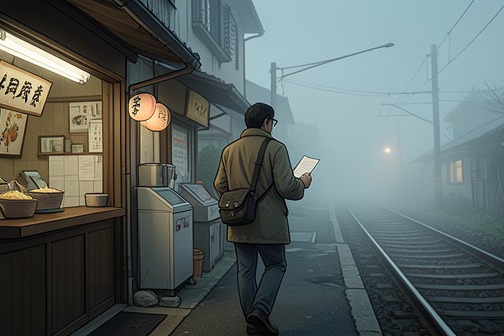
[Teiji](entity:character-recall-character-teiji-9925bed58f62)’s departure from [Tokyo](entity:location-recall-location-tokyo-0b4edfa3fe2f) for [Hokkaido](entity:location-recall-location-39a138d5986a) is a quiet but decisive separation: after a weekend on [Sado Island](entity:location-recall-location-sado-island-e39917b9e8a0), he returns changed, leaves a note and undeveloped film at the family noodle shop, and disappears north. Neither his note nor the photographs explain his reasons. For [Lucy](entity:character-recall-character-lucy-680a57cd8fba), who later learns even his surname from the police, the departure makes a man she had loved seem more elusive than ever.
## Background in Tokyo
Before he left, Teiji’s life was tied to a noodle shop in [Takadanobaba](entity:location-recall-location-2b43bc473c55) and to the quiet routines he shared with Lucy. His uncle Soutaro had grown up in northern Tokyo, was evacuated during the war, and returned to help rebuild the city. He and his father opened the shop, where they served noodles to local residents. Soutaro expected the business eventually to pass to his sister’s son, Teiji, who had come to Tokyo from Kyushu after his mother returned there with him.
Soutaro’s initial doubts about his nephew gave way to respect. Though he had thought the thin, brooding boy might not be suited to work, Teiji proved strong and diligent, mopping floors, throwing out old food, and preparing ingredient orders. He worked through the day, then went out in the evenings. In the shop’s future, Soutaro saw a family succession: he had never married and liked the thought that his nephew would inherit the business. But [Teiji’s camera](entity:object-recall-object-teiji-s-camera-3283d7842056) and his solitary habits made him a source of increasing concern. Soutaro wondered why he had no friends apart from Lucy, the foreign girl who spent time with him.
Lucy’s bond with Teiji had formed through shared presence more than speech. She had been walking Tokyo’s [Yamanote Line](entity:location-recall-location-52575338bfcb) and found herself in [Shinjuku](entity:location-recall-location-shinjuku-17bbde8f9594) on the night they met. They developed silent conversations and gestures, walked the streets, and spent time at the noodle shop while Teiji served customers and took out rubbish. They also spent weekends together, often going out into the rain on warm nights. This intimacy makes his eventual departure more than a change of address: it leaves Lucy without the companion around whom her private life in Tokyo had taken shape.
## The Departure
Soutaro had been ready to speak to Teiji about marriage, and hoped he would choose a wife who was not a foreigner. The sequence that followed unsettled that expectation. Teiji went away for a weekend on Sado Island; when he returned, he seemed jumpy and nervous. A couple of weeks later, he left a note on the shop counter, pinned beneath a roll of undeveloped film. The note said he was going north to Hokkaido to try his luck.
The account supplies no further explanation of what Teiji intended by trying his luck, or of what had happened on Sado Island to make him return nervous. Soutaro’s thoughts about marriage belong to the background, but the narrative does not establish that they caused Teiji to leave. The note communicates a destination and a broad intention, not a plan, a promise to return, or an account of his state of mind. That gap is central to the event: Teiji makes a deliberate departure, yet withholds the context that might let those left behind understand it.
## What He Leaves Behind
Soutaro had hoped the film might offer a clue. Once it was developed, however, the pictures showed deserted beaches, railway tracks without trains, boarded-up buildings, and abandoned trash cans. He turned them around and examined them from different angles, then put on old three-dimensional glasses from a wildlife magazine and looked again. The photographs remained images of emptiness rather than a message he could decipher. Soutaro eventually threw them away.
The departure also dismantled the future Soutaro had imagined for the shop. With a bad back and no prospect of continuing the business without Teiji, he retired and sold it to a stranger. At home, he began sketching flowers and birds against backgrounds of deserted places. His conclusion that he would not see Teiji again gives the move north the weight of a permanent loss, even though the evidence offered is a note and an absence rather than confirmation of what became of Teiji.
## Lucy’s Knowledge and the Aftermath
Lucy encounters the departure indirectly, during police questioning. When an officer identifies her relationship with Matsuda Teiji and reports that his uncle says he is in Hokkaido, she denies knowing anyone by that name. The surname itself shocks her: after living with Teiji’s presence, she realizes she had somehow never registered or retained his family name. The police’s information confirms that he has left Tokyo, but does not restore the sense that she knows him. Instead, she feels that he has eluded her.
After Lily and Teiji’s betrayal, Lucy walks through the night along the Yamanote Line, moving counterclockwise from [Gotanda](entity:location-recall-location-e0797055f787) and passing places attached to different periods of her life. In Shinjuku, near the spot where she first saw Teiji, she thinks of [Sachi](entity:character-recall-character-sachi-a4efee1386a6) and wonders whether Teiji moved from Sachi to her and then to Lily without a pause. This is Lucy’s speculation, not an explanation of Teiji’s departure; the remembered route turns the city into a map of relationships she can no longer trust. Later, when she imagines a visitor might be Teiji, she recalls that he is in Hokkaido and believes the police will not find him in the city or the mountains. The imagined reunion disappears before it can answer her question about why he left.
## Narrative Significance
The event is narrated through separated recollections and partial knowledge: Soutaro sees the note and studies the developed film, while Lucy learns from the police where Teiji has gone and tries to fit that fact into her memories. The different viewpoints do not combine into a full explanation. The film’s empty landscapes echo the absence left by the departure, but they cannot establish Teiji’s motives or what he will do in Hokkaido.
His leaving also reverses the intimacy of the earlier Tokyo scenes. Rain, shared walks, and silent gestures had made Lucy feel close to him; after he goes, even his surname becomes a missing piece of their history. Hokkaido is both a concrete destination reported by the police and a distance that keeps Teiji outside Lucy’s reach. The departure therefore functions as a break in their relationship and as a lasting uncertainty: he has gone north, but the people he leaves behind cannot turn that fact into an answer.
Event 21
Mrs. Yamamoto's accidental death
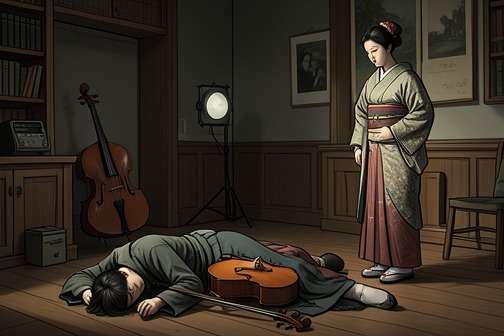
[Mrs. Yamamoto's accidental death](entity:event-recall-event-mrs-yamamoto-15977b45ebb8) turns on a small change in the placement of a cello and the uncertainty between causing a fatal accident and intending harm. [Lucy](entity:character-recall-character-lucy-680a57cd8fba) admits that she moved the instrument, but insists she did not mean for [Mrs. Yamamoto](entity:character-recall-character-mrs-yamamoto-5d4b928720a9) to fall; [Mrs. Katoh](entity:character-recall-character-mrs-katoh-97c1e4054ffb)'s response places the accident within a longer-known pattern of clumsiness rather than treating it as proof of deliberate violence.
## Circumstances of the Fall
Lucy recalls moving the cello to a different place before Mrs. Yamamoto fell over it. In the account Lucy gives, the move is consequential, but its fatal result was not something she anticipated: she says she did not know Mrs. Yamamoto would trip. The evidence establishes a direct physical link between the cello's new position and the fall, while leaving intention distinct from consequence.
## Lucy's Admission and Guilt
When Mrs. Katoh visits, Lucy assumes she has come to accuse her and launches into a hurried defense. She acknowledges moving the cello and apologizes, repeatedly stressing that the death was an accident and that she did not mean to kill Mrs. Yamamoto. Her urgent confession shows how closely she associates her act with the death, even as she denies intending its outcome.
## Mrs. Katoh's Account
Mrs. Katoh rejects the premise that Lucy must answer for the death as a deliberate act. She says Mrs. Yamamoto was habitually clumsy, that Mrs. Yamamoto herself acknowledged this, and that Mrs. Katoh had often warned her she would one day have an accident. Lucy tries to recall whether this was true but cannot even picture Mrs. Yamamoto's face, placing a gap in her own memory beside Mrs. Katoh's confident recollection. Mrs. Katoh also says she has read misleading newspaper reports and promises to help resolve matters so Lucy will soon be free.