Marco’s childhood, 1960s
The Carreras’ Uneasy Home
Marko Carrera grew up in an elegant home, where the discordant nature of his parents shaped the atmosphere: [Letizia](entity:character-recall-character-letizia-fe4ff2771ede) Del Vechio was restlessly passionate, devoted to radical architecture; [Probo Carrera](entity:character-recall-character-probo-carrera-f9641f12eb9f) was strict and quiet, devoted to engineering. Their marriage was filled with resentment, but
February 1962
A Brother’s Birth
When [Giacomo Carrera](entity:character-recall-character-giacomo-carrera-a3843893c15c) was born, Probo was waiting in the hospital corridor, smoking, and hastily writing playful good news notes in a science fiction book. Many years later, Marco found this note while organizing his father's carefully preserved collection of books, realizing how much private affection his silent father
Before Marco’s birth, 1959
The First Family Crisis
Before Marco was born, Erin fell from a high chair in the kitchen of her home and was unconscious at the [Meyer Children's Hospital](entity:location-recall-location-meyer-children-s-hos-e6d661510bbc) for two days. [Letizia](entity:character-recall-character-letizia-fe4ff2771ede) vowed to quit smoking as long as her daughter survived, but she did not keep her promise. The sci-fi books collected by Probo also
Marco’s childhood through age fourteen
The Hummingbird’s Smallness
Marco developed unusually slowly, always remaining much shorter than his peers. [Letizia](entity:character-recall-character-letizia-fe4ff2771ede) called him her hummingbird, proud of his beauty, agility, and slimness, using this to comfort herself; Probo, however, became increasingly worried, feeling that his slow development might indicate a health problem. The physical
Late 1970s, during adolescence
The Unnameable’s Omen
At the ski race held at Zuma Zeri-Duoe Santico, Dujo Kileli predicted that his opponent Tavera would fall and get injured. Tavera indeed fell in the fog and was seriously injured. This incident made Dujo, already famous for his childhood nickname "
Marco and Duccio’s adolescence
Friendship at the Tables
Du Qiao introduced Marco to gambling, starting with poker games between friends, later going to horse racing tracks to bet. The two skipped school to study horse racing and betting, usually winning more than losing. For Marco, betting brought money and excitement, and also led him into a world he could not
Autumn 1974 to June 1975
The Growth Treatment
At fourteen, Marco, Probo finally took action, no longer allowing himself to worry whether his son's underdevelopment was harmless. After examination found that Marco had insufficient growth hormone, Probo took him to [Milan](entity:location-recall-location-milan-15a5d3d0bc36) for experimental treatment. [Letizia](entity:character-recall-character-letizia-fe4ff2771ede) originally opposed intervening in nature, but after investigating the treatment plan
1973–74
The Parents’ Quarrel
Marco, Elena, and Giacomo heard their parents arguing about Marco's developmental delay. The argument started with whether he needed treatment and escalated into intense mutual accusations: [Letizia](entity:character-recall-character-letizia-fe4ff2771ede) insisted on her knowledge and beliefs, while Probo was afraid his son would suffer if left to his own devices. Elena intervened
A Sunday morning in 1974
The Fog Collision
One Sunday morning, during a fuel shortage and dense fog, Marco walked to the tennis match. He heard a woman cry, "Gospodinèèèè!" and then found two cars colliding. One of the cars looked like his father's Peugeot; the other car had a
An August evening in 1974
Irene’s Aborted Attempt
In Borgo, [Irene](entity:character-recall-character-irene-317f252d24ac) holds a rope and leaves home, saying she wants to secure the Valen sailboat at home before the storm comes. Marco realizes she intends to jump into the sea at I·[Mulinelli](entity:location-recall-location-mulinelli-d7f176c91a70) Beach; the dangerous currents there have taken several lives. Although Irene orders him to
August 23, 1981
Marco Meets Luisa
On a summer evening, 22-year-old Marco was preparing to have dinner with 15-year-old Luiza Latte. He had loved her for years; she had rejected her brother Giacomo's invitation but accepted Marco's. The two families had long-standing grievances, making the young
August 23, 1981
A Night of Love and Loss
Marco and Luiza spent their first night together in Balati Bay, and their long-repressed love finally became physical intimacy between them. At the same time, Erin walked into the turbulent sea of I·[Mulinelli](entity:location-recall-location-mulinelli-d7f176c91a70) Beach, and eventually drowned. The waves brought her body back to the shore
Weeks after Irene’s death, 1981
Marco Blames Duccio
After Erin's drowning, Marco and Giacomo blamed each other. Marco distanced himself from his parents and left home. He wrote a letter from Borgo to Louise, feeling ashamed of his emotional escape, and did not know whether he wanted to hold on to the pain or escape it. His
May 1979
The Doomed Flight
Although Dujo was afraid of flying, Marco convinced him to take a flight from [Pisa](entity:location-recall-location-pisa-62234cf92f7b) to [Ljubljana](entity:location-recall-location-ljubljana-14339e5214f4) for a gambling weekend. Their Copel Airlines charter plane inexplicably stopped in [Larnaca](entity:location-recall-location-larnaca-8a0fd76b29aa). Dujo was panicking on the plane, claiming all the passengers would die
The night of the Larnaca crash, 1979
The Last Night of Innocence
After returning to [Florence](entity:location-recall-location-florence-29107dc52cb3), Marco lay in bed, tossing and turning, thinking about the passengers and the Boy Scouts he had left behind. He couldn't help but doubt whether Dujo's ominous words were merely frantic nonsense, yet he couldn't talk about it with his friend. The plane had already been
Summer 1979
Marco Reveals the Escape
[Irene](entity:character-recall-character-irene-317f252d24ac) confronts Marco after the crash, asking whether he and [Duccio](entity:character-recall-character-duccio-96d42a7154bb) were supposed to be on the plane. Marco denies it and waits for her to press him, but she leaves without asking another question. He later seeks out two old friends and tells them the story, presenting himself as a convert to the belief that Duccio truly brings disaster.
That disclosure turns the escape into a public legend and makes Duccio’s life still harder. Marco knows he has betrayed the friend who saved his life, but he does not retract the story or find a way to repair the damage.
1983
Luisa Writes from Paris
Luisa writes to Marco from [Paris](entity:location-recall-location-paris-c02b439ce220), where she has moved with her family. She recalls taxis, their shared memories, and a dream in which they laugh together over a nonsensical phrase. Her letter is affectionate but also acknowledges the distance and the promise they once made not to write.
The correspondence preserves a private intimacy that neither of them has been able to convert into a shared life. Even as years separate them, Luisa remains a presence in Marco’s thoughts, and their letters become a parallel history of all that they do not do together.
Spring 1988
Marina’s Television Story
While recovering from a fever, Marco sees [Marina Molitor](entity:character-recall-character-marina-molitor-28040695241c) on [Rai Uno](entity:organization-recall-organization-rai-uno-30968861312a) telling a moving story about having been spared from the [Larnaca](entity:location-recall-location-larnaca-8a0fd76b29aa) flight so she could donate bone marrow to her sister. [Marina](entity:character-recall-character-marina-634ff8f0a512) says that the colleague who took her place died in the crash and that her sister later died as well. The story gives Marco the impression that they share a remarkable history of loss and survival.
He tracks Marina down at the airport the next day. Their mutual connection to the disaster and the apparent coincidence of their bereavements sweep them into a rapid romance, though her televised account is fabricated and her life is more troubled than Marco understands.
1988–89
A Sudden Marriage
Marco and [Marina](entity:character-recall-character-marina-634ff8f0a512) quickly build a life together: they move in, conceive a child, and marry within roughly a year. Their relationship appears to be founded on extraordinary coincidences, physical attraction, and a shared escape from earlier grief. Marco believes that he has finally found the happiness he had long wanted.
[Adele](entity:character-recall-character-adele-1a3585b237e6) is born, and the couple’s domestic life grows around their daughter. Marco interprets the family’s daily routines and their shared efforts as evidence of a secure union, missing the fact that Marina is concealing severe emotional instability and that their marriage rests on a story she invented.
When Adele is about three, early 1990s
Adele’s Thread
[Adele](entity:character-recall-character-adele-1a3585b237e6) tells Marco that a thread runs from her back to the nearest wall, and that she has to move carefully so nobody gets caught in it. Marco asks her patient questions and feels a shiver when she explains that he never walks behind her. He secretly tells [Marina](entity:character-recall-character-marina-634ff8f0a512) about the thread, and for a time the parents treat it as a tender private world rather than a source of alarm.
[The thread](entity:concept-recall-concept-the-thread-ecfd8df9fbb1) gives Adele a way to describe her fear of separation from her father, though Marco does not fully recognize its meaning. He glimpses a disturbing connection to [Irene](entity:character-recall-character-irene-317f252d24ac) and immediately represses it, choosing to live as though he has not seen the warning.
Adele’s kindergarten years, early 1990s
The School’s Alarm
[Adele’s thread](entity:object-recall-object-adele-s-thread-6d5f4884b3be) complicates ordinary outings: she refuses to leave a bus during a school visit because animals would make the thread dangerous, and later becomes distressed at a new school. When the school director learns what the family has known for years, she calls it a perceptual disturbance and urges them to consult a specialist.
Marco and [Marina](entity:character-recall-character-marina-634ff8f0a512) begin taking [Adele](entity:character-recall-character-adele-1a3585b237e6) to [Dr. Nocetti](entity:character-recall-character-dr-nocetti-5ccacdd30963), whom the child calls the Wizard Manfrotto. His presence introduces professional interpretation into a family that Marco already distrusts, and the parents begin to understand that the thread is not merely an imaginative game.
Before Adele starts elementary school
The Wizard’s Interpretation
[Dr. Nocetti](entity:character-recall-character-dr-nocetti-5ccacdd30963) tells Marco and [Marina](entity:character-recall-character-marina-634ff8f0a512) that [Adele’s thread](entity:object-recall-object-adele-s-thread-6d5f4884b3be) does not connect her to the walls but to her father: it expresses a close and exclusive bond, likely rooted in her fear of losing him. He recommends that Marco spend much more time with her, ideally more than Marina does. The parents reorganize their lives, and Marco assumes most of [Adele](entity:character-recall-character-adele-1a3585b237e6)’s daily care.
The change brings Marco closer to his daughter but opens a gulf in Marina’s life. Their different responses to parenting create the first visible cracks in the marriage, while the therapist’s interpretation leaves Marco feeling blamed for a problem he believes he did not cause.
January before Adele starts elementary school
Fencing Ends the Thread
Without consulting [Marina](entity:character-recall-character-marina-634ff8f0a512), Marco enrolls [Adele](entity:character-recall-character-adele-1a3585b237e6) in fencing. The sport’s masks and quick movements appeal to the child, and she soon stops talking about the thread, walking around people as they pass behind her, or crying at school. Marco believes the fencing has addressed the source of her fear.
[Dr. Nocetti](entity:character-recall-character-dr-nocetti-5ccacdd30963) and Marina instead maintain that the thread vanished because Marco became more present. Marco accepts their explanation to avoid reopening the conflict, though he feels that his contribution has been erased. The concession becomes another fracture in his marriage and deepens his suspicion of psychoanalytic authority.
1990s, before the separation
The Affair Behind the Marriage
In [Paris](entity:location-recall-location-paris-c02b439ce220) for a conference, Marco calls Luisa and meets her at the Lutetia. Their old attraction returns, and they resume seeing each other during conferences near Paris. Though both are married and have children, they frame their intimacy as a renunciation rather than an affair, eventually making a vow of chastity in the same hotel room while listening to “Sacrifice.”
Marco believes that avoiding sex means he is not betraying [Marina](entity:character-recall-character-marina-634ff8f0a512). He keeps letters, emails, hotel records, and other evidence, failing to grasp that Marina will discover them. His attachment to Luisa becomes a hidden force inside a marriage already weakened by years of unspoken resentment.
October 1999
Carradori Breaks Confidentiality
[Daniele Carradori](entity:character-recall-character-daniele-carradori-76448b1fc7e6), [Marina](entity:character-recall-character-marina-634ff8f0a512)’s psychoanalyst, visits Marco at his eye clinic and questions him about his marriage, his history with Luisa, and the letters they exchanged. Believing Marco may be in danger, [Carradori](entity:character-recall-character-carradori-8dcf666d445d) has violated professional confidentiality to warn him of Marina’s plans. He initially doubts the danger when Marco denies the relationship, but Marco eventually admits that he still loves Luisa and has continued writing to her.
Carradori tells him that Marina has stopped attending sessions and that their marriage is over. He also warns that Marina is pregnant by another man. The encounter transforms Marco’s assumptions: the concealed crisis in his home is far more serious than he knew.
October 1999
Marina’s Aborted Plan
[Carradori](entity:character-recall-character-carradori-8dcf666d445d) has come to believe that [Marina](entity:character-recall-character-marina-634ff8f0a512) is preparing a lethal act against Marco, shaped by her jealousy and her increasingly dangerous state of mind. He intervenes by breaking confidentiality and going directly to Marco, hoping to stop the plan before it can be carried out. His warning is the first time Marco learns that Marina has been lying to both him and her analyst.
The plan does not proceed after Carradori’s intervention. Marina instead turns toward a less immediately violent course of action, but her rage and instability continue to determine the collapse of the marriage and the family’s future.
Around 2000
Marina Files for Separation
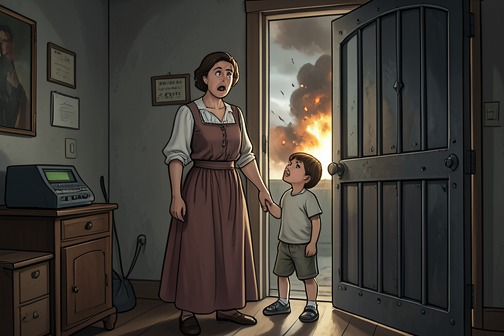
[Marina files for separation on fault grounds](entity:action-recall-action-marina-6bfe8b4810ac), accusing Marco of violence, abuse, infidelity, kidnapping, threats, and other misconduct. Most of the allegations are invented or distorted, but the appeal includes one true incident: when a military aircraft breaks the sound barrier over the [Bolgheri](entity:location-recall-location-bolgheri-29e467e49d78) house, Marco briefly bolts outside in terror, leaving [Marina](entity:character-recall-character-marina-634ff8f0a512) and infant [Adele](entity:character-recall-character-adele-1a3585b237e6) inside.
Reading the appeal at [Palazzo Caffarelli](entity:location-recall-location-palazzo-caffarelli-42a42167d233), Marco recognizes that his reflexive flight is the only accusation that touches a real failure. For several seconds, he had thought not of his family but of Luisa. The memory makes his sense of innocence more complicated even as the legal attacks threaten his relationship with Adele.
Around 2000
Adele Goes to Germany
After the separation, [Marina](entity:character-recall-character-marina-634ff8f0a512) takes [Adele](entity:character-recall-character-adele-1a3585b237e6) to [Germany](entity:location-recall-location-a3c24dd56e42) to live with the [Lufthansa](entity:organization-recall-organization-lufthansa-87f933c12cd2) pilot who is the child’s father. [Adele’s thread](entity:object-recall-object-adele-s-thread-6d5f4884b3be) returns, and she becomes unable to leave the house. Marco eventually brings her back to Italy, where the thread disappears again and she resumes a more stable life with him.
The move and return make the damage of the adults’ choices visible in Adele’s behavior. Marco sees that her symptoms rise and fall with the security she feels, but he continues to misunderstand how much of her experience has been shaped by family upheaval.
Around 2001
Luisa Ends Their Relationship
After a year in which Marco and Luisa finally live out their relationship more openly, Luisa withdraws. Marco is desperate and begs her not to make their separation a verdict on his character or their past. He has regained [Adele](entity:character-recall-character-adele-1a3585b237e6) and is trying to rebuild a life, but he still loves Luisa and experiences her departure as a second abandonment.
Their separation does not end the attachment. It leaves both of them with a private history of near-unions, missed chances, and letters, each trying to explain why their lives never aligned.
August 23, 1981, discovered in 2008
The Father’s Last Urania
While inventorying Probo’s nearly complete science-fiction collection, Marco notices that the final novel is dated [August 23, 1981](entity:time-recall-time-august-23-1981-aa9ee8ce1075), the day [Irene](entity:character-recall-character-irene-317f252d24ac) died. He reconstructs the dates of missing volumes to match moments of family crisis, including Irene’s childhood fall and the 1966 flood, when Probo helped rescue books and animals.
The collection becomes a private calendar of his father’s life, ending on the same day the family lost Irene. Marco writes to Giacomo about the books and asks him to help decide what to do with the family’s possessions, using the inventory as an opening toward reconciliation.
2008
The Father’s Models Find a Home
Marco gives Probo’s architectural models to institutions and transfers the father’s elaborate railway models to a railway-modeling group. The modelers treat the work with reverence, revealing that Probo had shared his passion quietly with people who admired him even though he rarely let them close.
The act of finding homes for the models helps Marco preserve his father’s work rather than simply dispose of it. It also shows how much of Probo’s inner life had remained outside the family’s knowledge, even in a house filled with his creations.
2009
The Hidden Book in Irene’s Room
While checking the empty family home, Marco enters [Irene](entity:character-recall-character-irene-317f252d24ac)’s preserved bedroom and notices a poetry book he had never seen on her desk. A folded note inside contains her study of universal suffering, suicide, and Buddhist teaching, along with a private warning addressed to someone named Lorenzo. The note shows that Irene had been privately trying to understand her pain long before her death.
Marco realizes that the family knew little about Irene’s inner life even as she had watched and understood theirs. The discovery turns her untouched room from a shrine into evidence of a hidden crisis and deepens his regret over what no one asked her.
2003–04
The Parents Become Ill
Probo announces that he wants to move to Marylebone, [London](entity:location-recall-location-1bfd335cdd1b), a place he has privately loved since his youth. Before he can act on the idea, he is diagnosed with cancer, and Marco takes on the work of accompanying him through surgery, chemotherapy, and the long sequence of treatment decisions that the family calls the Via Crucis.
[Letizia](entity:character-recall-character-letizia-fe4ff2771ede) is soon diagnosed with an advanced uterine cancer of her own. Marco now cares for both parents while also raising [Adele](entity:character-recall-character-adele-1a3585b237e6), and Giacomo returns from the [United States](entity:location-recall-location-united-states-2f533bc8d0b9) to help. The illness forces the family together, but it does not erase the estrangement and guilt that have accumulated over decades.
Spring 2005
The Parents’ Final Month
[Letizia](entity:character-recall-character-letizia-fe4ff2771ede) dies first, with Marco and Giacomo beside her. Luisa comes from [Paris](entity:location-recall-location-paris-c02b439ce220) for the funeral, and Marco and Giacomo travel with her to the airport. There, Marco realizes that his brother has loved Luisa too, and that the same memories and attraction he believed belonged only to him also belong to Giacomo.
Probo’s condition worsens, and he repeatedly begs Marco to take him away. Marco gives him morphine and then uses his medical knowledge to hasten his father’s death. Probo’s last words concern the [London](entity:location-recall-location-1bfd335cdd1b) home he had wanted to reach. Marco keeps the act to himself and is left with the ashes of both parents and a new, unresolved guilt.
January 2005
Luisa Writes of the Hummingbird
After several years of silence, Luisa writes to Marco about an article on the Aztecs and their belief that warriors could become hummingbirds after death. She says that she misses him and apologizes for having made a mess of their lives. Her letter revives their emotional connection during the period in which Marco is caring for his parents.
Marco answers with an intense letter, and they resume writing as they have for much of their lives. Their correspondence becomes a refuge from the realities that keep them apart, even as their renewed intimacy fails to resolve what happened between them.
August 2015
Marco Learns About Giacomo
In [Bolgheri](entity:location-recall-location-bolgheri-29e467e49d78), Luisa finally tells Marco that Giacomo had loved her as well. Marco is shocked because he had spent years believing that Giacomo’s distance from him stemmed from resentment and had blamed him for [Irene](entity:character-recall-character-irene-317f252d24ac)’s death. Luisa’s revelation forces him to reconsider the history of his brother’s departure and his own accusation.
Marco is especially wounded that Luisa withheld the truth through years of renewed correspondence and later encounters. He accuses her of allowing him to carry a false guilt and ends the relationship again, deciding that this time he will not return to it.
2010, age twenty-one
Adele Chooses Motherhood
[Adele](entity:character-recall-character-adele-1a3585b237e6) tells Marco that she is pregnant and intends to raise the child without identifying or involving the father. She calls the baby [Miraijin](entity:character-recall-character-miraijin-83afcc2daf41), meaning the Man of the Future, and believes the child will be born on a special date. Marco is startled by her insistence but accepts that she will not be persuaded to change her decision.
Adele’s choice binds her more closely to Marco, who had expected her to leave and build an independent life. He worries that their bond may be too dependent, yet he follows her wishes through the pregnancy and agrees to be present at the birth.
October 20, 2010
Miraijin Is Born
Marco supports [Adele](entity:character-recall-character-adele-1a3585b237e6) through a water birth at [Santa Maria Annunziata Hospital](entity:organization-recall-organization-santa-maria-annu-5ed546df9acd). In the warm water, he feels unexpectedly present and useful, and the brief moment when the three of them share the bath becomes one of the happiest family experiences he has known. The baby is a girl, though Adele had expected a boy.
Adele tells him that the Man of the Future is a woman. Marco accepts the name [Miraijin](entity:character-recall-character-miraijin-83afcc2daf41) and begins to understand his role as a grandfather who will also help raise her. The child’s birth gives him a purpose that begins to organize the losses and responsibilities of his life.
2010–12
Adele Builds Her Own Life
After returning to Italy, [Adele](entity:character-recall-character-adele-1a3585b237e6) grows into a capable young woman who studies motor sciences, works at a gym, and devotes herself to surfing and climbing. Marco accompanies her to remote beaches and mountain routes, gradually learning to wait while she travels with her friends. She remains close to him, but he tries to prepare for her eventual independence.
Adele’s life appears to be a successful recovery from the family turmoil of her childhood. Her thread has not returned, and she has found work, community, and a sense of freedom in outdoor pursuits. Marco’s pride in her coexists with the anxious expectation that she will eventually fly away.
Around 2012
Adele Dies Climbing
[Adele](entity:character-recall-character-adele-1a3585b237e6) dies in a climbing accident in the Apuan Alps when her rope breaks against the rock. Marco rejects the idea that the accident was an ordinary risk of the sport: the rope had been the practical counterpart of the thread she once spent her childhood protecting. He refuses to join her friends’ efforts to sue the manufacturer and cannot bear to investigate the circumstances.
Her death makes Marco a parent who has lost a child, a state he experiences as a responsibility as much as a grief. [Miraijin](entity:character-recall-character-miraijin-83afcc2daf41) is still a toddler, and Marco understands that he must remain alive and care for her even when he cannot imagine surviving the loss.
Eight days after Adele’s death
Carradori’s Oxygen Mask
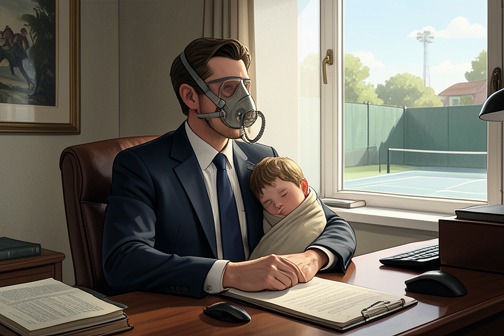
Marco calls [Daniele Carradori](entity:character-recall-character-daniele-carradori-76448b1fc7e6), who has since left psychoanalysis to provide emergency psychological care through the [World Health Organization](entity:organization-recall-organization-world-health-org-e8717df8dcd9). Marco admits that he is close to giving up but cannot abandon [Miraijin](entity:character-recall-character-miraijin-83afcc2daf41). [Carradori](entity:character-recall-character-carradori-8dcf666d445d) offers to inform [Marina](entity:character-recall-character-marina-634ff8f0a512) and her other daughter, [Greta](entity:character-recall-character-greta-5e470c27c752), and urges Marco to preserve ordinary pleasures rather than let grief dictate every choice.
Carradori explains the oxygen-mask principle: Marco must first keep himself alive, because only then can he care for Miraijin. He encourages Marco to play tennis and take the child along rather than surrender activities that still give him a reason to continue. The advice makes practical rebellion possible when Marco cannot yet imagine emotional recovery.
After Adele’s death, around 2012
The Portable Hammock
[Carradori](entity:character-recall-character-carradori-8dcf666d445d) brings Marco a small Japanese hammock with a portable frame after realizing that the child’s care seems to make every pleasure impossible. Marco begins taking [Miraijin](entity:character-recall-character-miraijin-83afcc2daf41) with him to tennis tournaments and conferences, setting up the hammock wherever she can sleep safely. She becomes part of the life he is trying to resume rather than a reason to retreat from it.
The hammock provides a practical excuse for Marco to resist mourning’s rules. It allows him to stay with Miraijin while doing things he once enjoyed, and gives their grandfather-granddaughter bond a visible, portable center.
After Adele’s death, early 2010s
Marco Returns to Gambling
Marco resumes gambling, a pleasure he had abandoned for years. Through tennis he has become close to [Luigi Dami Tamburini](entity:character-recall-character-luigi-dami-tamburin-490eac3ec073), whose social dinners sometimes conceal a serious underground gambling room. Marco moves beyond the harmless games and enters the secret, high-stakes sessions, bringing [Miraijin](entity:character-recall-character-miraijin-83afcc2daf41) in her hammock and checking on her while he plays.
Gambling gives Marco a dangerous intensity that ordinary life does not provide. The child’s presence helps him leave at the right time, but the return also draws him toward an encounter with his past and the old friend he once helped destroy.
February 29, 2016
The Unnameable Returns
At [Dami Tamburini](entity:character-recall-character-dami-tamburini-25968c76b995)’s gambling gathering, Marco recognizes [Duccio Chilleri](entity:character-recall-character-duccio-chilleri-5157d50187ec), now aged and physically diminished. [Duccio](entity:character-recall-character-duccio-96d42a7154bb) pulls him aside and warns him not to play: he has been hired to bring Marco bad luck, and the host wants to see him cry. The warning recalls the old eye-of-the-storm legend and the long-ago betrayal that severed their friendship.
Marco apologizes for the role he played in Duccio’s disgrace but refuses to leave. He says he does not believe in bad luck and that he owes Duccio his life. He shows him [Miraijin](entity:character-recall-character-miraijin-83afcc2daf41) sleeping in the hammock, presenting her as the force that keeps him grounded and protected.
February 29, 2016, late night
The Leap-Day Poker Victory
Despite [Duccio](entity:character-recall-character-duccio-96d42a7154bb)’s warning, Marco remains at the table and plays against [Dami Tamburini](entity:character-recall-character-dami-tamburini-25968c76b995). The game turns into a personal contest, and Marco wins an extraordinary sum—840,000 euros—while Dami loses heavily. Marco recognizes that his own compulsive play and refusal to stop have brought him close to financial ruin.
Rather than take the money, Marco tells the other players how gambling makes him despise a life he actually values. He explains that he does not want the imagined luxury, servants, or escape the winnings seem to promise; his real purpose is to care for [Miraijin](entity:character-recall-character-miraijin-83afcc2daf41). His confession moves the room and turns the night into a decisive reckoning with himself.
The morning after the 2016 poker game
The Photographic Archive Returns
Marco refuses the 840,000 euros and asks instead for the return of [Letizia](entity:character-recall-character-letizia-fe4ff2771ede)’s photographic archive, which he had donated to the [Dami Tamburini Foundation](entity:organization-recall-organization-dami-tamburini-f-8b56d624fb4b). He realizes that surrendering the archive had been a way of getting rid of a difficult inheritance rather than honoring his mother’s presence in the world.
The exchange gives Marco a different measure of winning. He recovers something genuinely precious without turning the victory into money or a new life of consumption, and he finally accepts that the archive belongs with the family history he has tried to preserve.
December 2018
The Hummingbird Explained
Luisa writes to Marco after reading about [emmenalgia](entity:expression-recall-expression-emmenalgia-0fdda140a0af), a word for the longing to persevere and remain steadfast. She tells him that he truly is a hummingbird: his energy goes toward staying still while the world changes around him. She also recognizes that her own restlessness has made life with him impossible, because she has never been able to stop moving long enough to share his stillness.
The letter reframes their lifelong separation without undoing it. Luisa’s insight brings her a new sadness and Marco a reason to answer, though he decides he cannot begin another relationship with her.
December 27, 2018
Marco’s Final Letter
Marco replies to Luisa, acknowledging that his life has changed repeatedly through illness, loss, divorce, and responsibility, even though he has always wanted to hold on to what remains. He tells her that he has a mission now: to raise [Miraijin](entity:character-recall-character-miraijin-83afcc2daf41), whom he believes will become the new person the world needs.
He says that Luisa was once the first and last thought of every day, but that his first and last thoughts now belong to Miraijin. He ends their correspondence, not because his love has vanished but because his remaining strength is committed to the child in his care.
Marco’s final years, imagined from 2016 toward 2030
A Future Imagined
Marco increasingly believes that the suffering of his life has led toward [Miraijin](entity:character-recall-character-miraijin-83afcc2daf41). He sees her unusual beauty, ability to imitate and learn, and influence on others as signs that she could help humanity recover from a collapsing world. He imagines her growing into a public voice for truth, care, and ordinary decency, while he stays behind and supports her.
The vision becomes both a hope and a burden. Marco prepares her for a future in which she may be threatened and forced into hiding, while the imagined world around her fractures into conflict over truth and freedom. His purpose gives meaning to his losses, but it also makes him fear the day when illness will take him away from her.
Around 2029–30
Pancreatic Cancer
After years of regular medical checks, Marco is diagnosed with an extensive pancreatic carcinoma. The disease advances with startling speed, echoing the sudden bodily transformations that have marked his life since adolescence. He understands that he is unlikely to survive and that his imagined future with [Miraijin](entity:character-recall-character-miraijin-83afcc2daf41) will soon be interrupted.
Marco chooses not to restart treatment and moves to the family house in [Bolgheri](entity:location-recall-location-bolgheri-29e467e49d78). Rather than let the illness dictate a prolonged decline, he begins preparing to die on his own terms, with Miraijin’s help and with the people who have remained important to him gathered nearby.
In the final weeks of Marco’s life, 2030
Miraijin’s Promise
Marco asks [Miraijin](entity:character-recall-character-miraijin-83afcc2daf41) to help him end his life. At first she is devastated and begs him to reconsider, but she later writes that she understands and will help him. She suspends her work with the future-oriented program and returns to be with him, proud that he trusted her with such a grave request.
Her decision is not presented as a casual act: she has to accept the scale of what her grandfather has asked, and arrange the practical help he needs. Their bond, built through years of care and mutual trust, now carries the weight of his final choice.
June 2, 2030
The Final Gathering
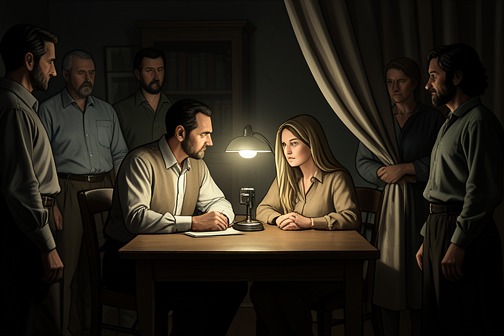
At [Bolgheri](entity:location-recall-location-bolgheri-29e467e49d78), [Miraijin](entity:character-recall-character-miraijin-83afcc2daf41) gathers Marco’s surviving family and friends: Giacomo, Luisa, [Marina](entity:character-recall-character-marina-634ff8f0a512), [Greta](entity:character-recall-character-greta-5e470c27c752), [Daniele Carradori](entity:character-recall-character-daniele-carradori-76448b1fc7e6), her partner [Oscar](entity:character-recall-character-oscar-a322eac993da), and [Rodrigo](entity:character-recall-character-rodrigo-fce154a35019), who will assist Marco. Marco is weak but still alert, and he works to make the gathering feel like a gift rather than a spectacle of suffering. He explains that his decision is his own and that no one else should be treated as responsible.
Marina leaves the gathering, while the others remain. Marco and Giacomo apologize to each other, and Luisa kisses him at last, ending decades of restraint. Marco recognizes that the day is the farthest from his birthday and jokes that he is no righteous man; her answer, that he is, lets their old intimacy briefly return.
June 2, 2030, shortly after the gathering
Marco’s Assisted Death
Marco explains the drugs and procedure in clinical terms, emphasizing that he is mentally clear and acting autonomously. He begins the sedative infusion himself, and [Rodrigo](entity:character-recall-character-rodrigo-fce154a35019) is to administer the final medication after he has fallen asleep. The medical language keeps the moment controlled, though the family’s presence makes clear how much emotion lies beneath the practical arrangements.
Before losing consciousness, Marco touches [Miraijin](entity:character-recall-character-miraijin-83afcc2daf41)’s hair and joins his right hand to hers at the matching moles between their fingers, their private family mark. He thinks of [Irene](entity:character-recall-character-irene-317f252d24ac), [Adele](entity:character-recall-character-adele-1a3585b237e6), and his parents, and leaves the child to the world he believes she can help repair. Rodrigo completes the procedure as those gathered remain with him.