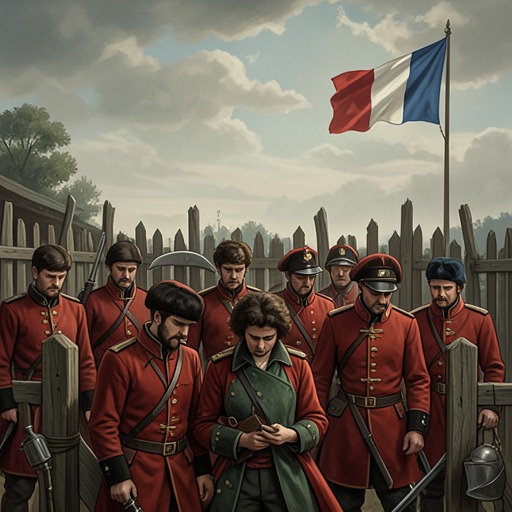
Event 1
French and Indian War
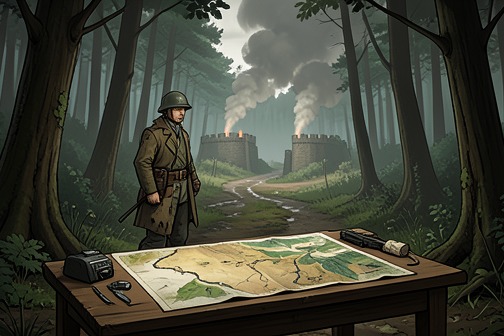
The [French and Indian War](entity:event-recall-event-french-and-indian-war-451c86e49f5d) is the imperial conflict that frames the novel’s events, joining British and French campaigns to Indigenous diplomacy and the struggle for control of contested territory. The narrator presents it not as a secure path to possession for either European power, but as a war whose consequences reach across the frontier and unsettle the communities drawn into it.
## Setting and strategic stakes
The story takes place in the third year of the latest war between England and France over a country that, the narrator says, neither was destined to retain. The forested frontier is described as a theater of repeated military reversals: forts at important points along the route are captured and recaptured, destroyed and rebuilt as the balance of victory shifts. The region’s strategic importance makes it a place where European rivalry is conducted through movement, fortification, and campaigns far from established settlements.
The opening account links the war’s immediate danger to British military weakness. After a British army was routed by a smaller French and Indigenous force, the frontier was left exposed and fear spread among the colonists. In that climate, reports of [Montcalm](entity:character-recall-character-montcalm-99c7b6440ce6)’s advance toward the lake defenses prompted an urgent appeal for reinforcements from Munro. His post, Fort William Henry, lay less than five leagues from Fort Edward, where [General Webb](entity:character-recall-character-general-webb-a9c5d5da0e05) commanded more than five thousand men. The narrator emphasizes the disparity between Munro’s inadequate force and Webb’s capacity to assemble a much larger one, making the question of assistance a measure of British command and preparedness.
## Imperial claims and Indigenous alliances
The war’s alliances are neither fixed nor simply imposed by European commanders. Montcalm tells [Magua](entity:character-recall-character-magua-828b407c90b0) that the French campaign is intended to subdue the English position and drive out the English settlers, who have agreed to leave; he argues that France therefore no longer treats them as enemies. Magua, however, regards the fighting as an unfinished obligation and resists the idea that French policy can simply determine when his people’s hatchet should be buried. Montcalm urges him to guide the Hurons in their conduct toward the new allies, revealing both the French reliance on Indigenous forces and the limits of the commander’s authority over them.
The Delaware community likewise occupies an unsettled position. Though it has followed Montcalm into English territory and threatens Mohawk hunting grounds, it withholds help at a critical moment. The account connects this reluctance to an old treaty that had once made the Delawares dependent on the Six Nations for military protection and left them hesitant to fight their former masters. Their explanation to French emissaries—that their hatchets are dull and need time to be sharpened—allows them to avoid an immediate rupture, and Montcalm chooses to tolerate this passive ally rather than risk making it an open enemy.
Magua exploits the Delawares’ vulnerable standing among the French by pointing out that they have sheltered English scouts, including men who have fought against French allies. The narrator notes that their villages, hunting grounds, women and children, and part of their military strength lie within French territory. His accusation therefore carries more than a personal sting: the Delawares’ choices in the war place their people and lands at risk of French suspicion and retaliation.
## The war’s divisions and human consequences
[Hawkeye](entity:character-recall-character-hawkeye-794033ec36cb) describes the broader disorder produced by European policy: tribes who speak closely related languages may fight on opposing sides, while the Delawares themselves are divided. He contrasts these shifting alignments with older enmities that do not disappear simply because Indigenous fighters have been drawn into a European quarrel. His account makes the war’s political structure visible from the frontier: alliances may change with imperial needs, but local histories and rivalries continue to shape decisions.
The conflict also fractures Indigenous communities internally. Hawkeye tells Duncan that white men have been chiefly responsible for a long and painful history that has turned brother against brother and brought the Mingo and Delaware onto the same path. The narrator’s account of the [Delaware encampment](entity:location-recall-location-ba8a2b07ada4) reinforces the political stakes: French suspicion threatens not only its warriors but also its distant settlements and hunting grounds. The war’s territorial struggle thus affects the security and autonomy of communities whose lands have become part of the competing empires’ military calculations.
## Military action and narrative significance
The campaign gives rise to the novel’s immediate dangers, but its outcomes depend on more than European armies. At a critical point, Uncas organizes the Delaware force: he appoints Hawkeye to command twenty men, offers Duncan an equivalent position that Duncan declines, assigns responsibilities to other Indigenous chiefs, and leads more than two hundred warriors into the forest. The episode presents Indigenous leadership and military organization as active forces in the conflict, not merely auxiliaries to French or British command.
The war’s central irony is stated in the opening frame: Britain and France fight for possession of a country neither will retain. Within the story, that contest produces fortifications, displacement, divided alliances, and danger to Indigenous lands, while European claims of ownership coexist with the agency of the people expected to fight for them. The French and Indian War is therefore both the historical pressure behind the plot and a narrative of unstable imperial power on a contested frontier.
Event 2
Battle of the Monongahela
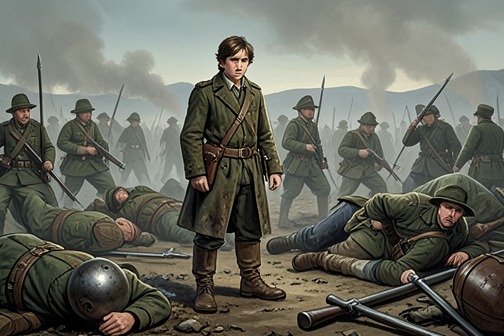
The [Battle of the Monongahela](entity:event-recall-event-0bb3924d3076) stands in the novel’s historical background as a British defeat with consequences far beyond the battlefield: it weakened confidence in British leadership, exposed a wide frontier, and magnified colonial fears of attack. The narrator also gives George Washington a decisive role in preventing the army’s annihilation, while pointing to the unequal recognition of his achievement in European accounts.
## Background and Course
The battle is presented as a recent disaster in the third year of the war between England and France for control of a country neither would ultimately retain. A British army, led by a commander chosen for his military reputation, was routed by a smaller French and Indigenous force. The narrator describes the British army as saved from destruction through the composure and courage of a young Virginian, George Washington, who had warned the European general of the danger.
## Immediate Consequences
The defeat left a broad frontier exposed. In the colonies, reports of the disaster fed existing fears of raids and massacres; the narrator emphasizes how fear enlarged the perceived danger until reason and confidence gave way to alarm. The event also damaged Britain’s standing: its military failures abroad and lack of resolve at home diminished the confidence of both British servants and colonists, who suffered the consequences despite not being responsible for the decisions that led to the defeat.
## Washington and the Memory of the Battle
The narrator identifies Washington’s actions at the battle as the principal reason he was later selected to command the American armies. Yet the account draws attention to a disparity in historical memory: while his reputation resounded throughout America, the narrator says that Washington’s name does not appear in the European accounts of the battle that he had searched. The episode thus links military achievement to the politics of whose service receives recognition.
## Wider Frontier and Alliance Context
The battle’s consequences belong to a wider struggle over territory and military allegiance. The novel depicts Indigenous nations as divided by older enmities, treaty obligations, and the competing demands of France and Britain, rather than as a single, uniform force. The Delawares, for example, withhold military assistance from [Montcalm](entity:character-recall-character-montcalm-99c7b6440ce6) despite following him into English territory; the narrator attributes their reluctance in part to an ancient treaty that had once placed them under the military protection of the Six Nations. Their stated need for time to sharpen their hatchets allows Montcalm to accept a passive ally rather than risk turning them into open enemies.
[Hawkeye](entity:character-recall-character-hawkeye-794033ec36cb) later describes colonial policy as having confused the distinctions between Indigenous friends and enemies: Hurons and Oneidas who speak nearly the same language fight one another, while the Delawares are divided. His account connects these shifting wartime alignments to the battle’s larger setting, in which European conflict draws Indigenous communities into struggles shaped by both their own relationships and colonial pressures. The narrator’s account of the exposed frontier and the novel’s later depiction of contested alliances make the battle more than a military setback: it is one part of a continuing contest over territory, security, and political influence.
Event 3
Battle at Glen's Falls
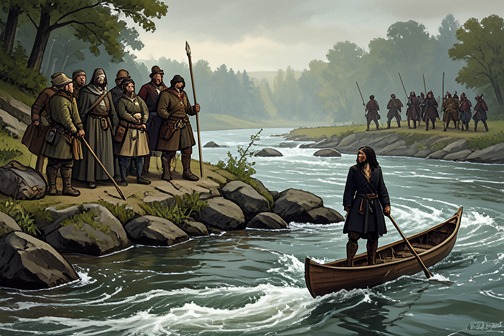
The [Battle at Glen's Falls](entity:event-recall-event-d6694f558cf5) is a running contest between a pursued party and Huron attackers in which the falls and island provide both a refuge and a deadly obstacle. [Hawkeye](entity:character-recall-character-hawkeye-794033ec36cb), Uncas, and Duncan hold off successive assaults, but the defenders' tactical success does not secure their escape: a Huron takes their canoe into the current, leaving the party stranded.
## Causes and Setting
The action takes place among the rocks, chasm, and island at the falls, where Duncan, [Alice](entity:character-recall-character-alice-c37947fad76f), [Cora](entity:character-recall-character-cora-6e22b7e6c0a0), [David Gamut](entity:character-recall-character-david-gamut-c4fcf423dde1), Hawkeye, and the [Mohicans](entity:organization-recall-organization-0bcf7e176fae) have gathered. The party is already under pursuit. When Duncan calls the sisters to move, a sudden tumult of cries spreads through the woods and around the falls, followed by rifle fire from the opposite banks. The attack reveals that the party is surrounded, while the narrow chasm offers only a limited place of shelter.
The river shapes the encounter as decisively as the armed opponents do. Hawkeye warns that the Hurons know their numbers and are unlikely to abandon the chase; soon several swimmers appear among driftwood at the island's head. One is swept over the falls before he can reach safety. Duncan's impulse to help him is checked by Hawkeye, who argues that exposing their position would bring further danger and that their ammunition must be conserved.
## The Assault and Defense
After the initial exchange, the attackers withdraw, and the defenders wait among the island's shrubs and stones. At dawn, the absence of an immediate renewed attack briefly encourages Duncan to hope that the enemy has been repelled. Hawkeye rejects that conclusion. His warning proves accurate: four Hurons emerge from the driftwood and rush the defenders across the rocks.
Hawkeye fires on the leading attacker, and Uncas joins the defense as the fighting closes. Duncan and Hawkeye then advance against the remaining opponents, but their pistols fail to stop them. Hawkeye and one Huron struggle for control of a knife until the scout overpowers him. Duncan, whose sword breaks in the encounter, is left to defend himself at close quarters; Uncas intervenes when Duncan is in danger, allowing him to break away from the struggle. The fighting is therefore won through coordination and individual intervention rather than through the defenders' firearms alone.
## The Lost Canoe and Immediate Outcome
The lull does not last. When Uncas calls out, the party discovers that their canoe is moving across the eddy toward the river's swift current, propelled by a hidden Huron. Hawkeye raises his rifle, but it will not fire; without powder, the defenders cannot stop the canoe or pursue it by their intended route. The Huron signals success as he is carried downstream, while cries from the woods answer him.
The battle ends without the party's capture, but their position has worsened: they have survived the attacks yet lost their means of escape by water. The episode thus turns a defensive success into a fresh predicament, as the natural obstacle that helped protect them also limits their choices.
## Wider Conflict
The larger military setting is shaped by unstable alliances and competing claims to territory. The Hurons have followed [Montcalm](entity:character-recall-character-montcalm-99c7b6440ce6) into English territory, while a Delaware faction has also entered the region but withheld help when it was most needed. The account attributes that restraint in part to the Delawares' old obligations to the Six Nations and their reluctance to fight their former masters. Montcalm tolerates their inaction rather than risk turning a passive ally into an enemy.
Hawkeye later describes how white political maneuvering has confused Indigenous alliances: Hurons and Oneidas who speak closely related languages fight one another, while Delawares are divided between factions. In his account, attachment to one's own people's quarrels persists despite changing imperial policy. That political disorder forms the background to the pursuit at the falls, where the combatants' immediate struggle is also part of a broader contest involving colonial power, Indigenous alliances, and hunting lands.
Event 4
Huron capture of Heyward's party
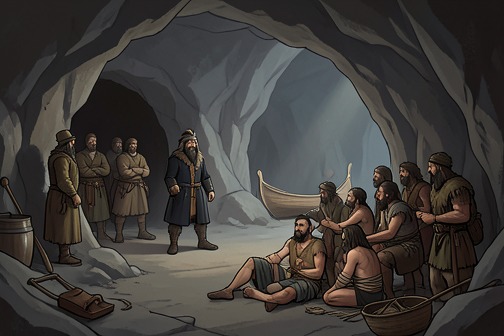
The [Huron capture of Heyward's party](entity:event-recall-event-66a711308859) turns a brief refuge into captivity and sets the group on a dangerous route away from Fort William Henry. [Magua](entity:character-recall-character-magua-828b407c90b0)'s discovery of the [cavern](entity:location-recall-location-0e6fa910435e) brings the Hurons down upon [Duncan Heyward](entity:character-recall-character-duncan-heyward-18bf852b2113), [Cora Munro](entity:character-recall-character-cora-munro-c9bfd1876e83), [Alice Munro](entity:character-recall-character-alice-munro-accef94b409c), and [David Gamut](entity:character-recall-character-david-gamut-c4fcf423dde1); once captured, they become both prisoners in transit and instruments in Magua's political and personal designs.
## Discovery and Capture
The party's shelter is exposed when [Alice](entity:character-recall-character-alice-c37947fad76f)'s sudden alarm draws Heyward's attention to the cavern entrance. He sees Magua, whose eyes have adjusted to the dim interior, and realizes that their hiding place has been betrayed. Heyward fires at him, but Magua disappears around a ledge and raises a call that the other Hurons answer. They enter the cavern from both ends, break through the brush barrier, and take Heyward and his companions into the open.
The capture is secured by superior numbers and a carefully managed approach to the island. The Hurons bring their canoe to the cavern's outlet and signal the prisoners to board. With resistance futile, Heyward leads the way in, followed by the sisters and Gamut. The captors navigate the river to its south bank, near the place where the party had reached it the previous evening.
## Transfer and March Under Guard
After landing, the Huron band divides. A chief takes Heyward's horse and departs with most of the warriors, leaving six guards with the prisoners and Magua at their head. Heyward had hoped the Hurons were keeping him for delivery to [Montcalm](entity:character-recall-character-montcalm-99c7b6440ce6), but the division of the party renews his anxiety and leaves him under Magua's immediate control.
Magua soon orders the group onward. Heyward helps the sisters mount and quietly tries to reassure them; Gamut and Heyward must travel on foot because their horses are gone. Heyward looks toward Fort Edward for signs of rescue, but the party proceeds south, away from the road to William Henry. Its silent march under Huron escort makes the capture more than a temporary confinement: the prisoners are being carried into a situation whose destination and purpose remain uncertain to Heyward.
## Magua's Leverage and Motives
Magua's control of the captives gives him leverage over [Colonel Munro](entity:character-recall-character-colonel-munro-6138cc933901). When [Cora](entity:character-recall-character-cora-6e22b7e6c0a0) asks what he intends and offers to bear the consequences herself if Alice is released, Magua makes clear that he holds the old man's daughters as a means of retaliation. He proposes that Alice may return to the [Horican](entity:location-recall-location-horican-2a8b9e19e928) if Cora promises to tell no falsehood, turning the sisters' separation and safety into terms of negotiation.
The larger course of the story reveals that Magua's public arguments and private aims do not always coincide. In addressing the Hurons, he invokes the deaths of their warriors and the customary need to honor the dead, urging that a captive be made to accompany them into the afterlife. He also presents a more cautious policy to the Huron council, combining appeals to tribal prudence with hints of eventual victory. The capture therefore supplies him with prisoners around whom he can organize both vengeance and political persuasion.
## Consequences and Significance
The episode shifts Heyward's party from concealment to forced movement. Their hopes of immediate rescue are diminished as they are carried across the river and marched away under guard; the separation of the larger Huron band leaves Magua directly responsible for the captives. Their vulnerability also becomes a source of bargaining power, particularly in Magua's effort to make Cora answer for injuries he associates with Munro.
The capture establishes a recurring conflict between the treatment of people as individuals and their use as political or retaliatory instruments. Magua's speeches to the Hurons turn collective memory and the deaths of fellow warriors into arguments for action, while his dealings with Cora make the sisters' safety part of his personal feud. In this way, the party's imprisonment links the immediate adventure to the wider pressures of colonial warfare, Huron strategy, and remembered injury.
Event 5
Battle at the hilltop rescue
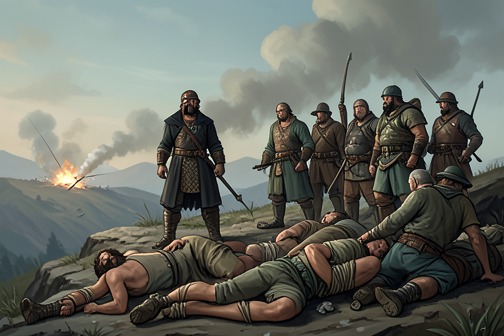
The [Battle at the hilltop rescue](entity:event-recall-event-9b5b5168f199) is the decisive reversal in which [Hawkeye](entity:character-recall-character-hawkeye-794033ec36cb), Uncas, and [Chingachgook](entity:character-recall-character-chingachgook-ce6cb241194d) interrupt the Hurons’ preparations to kill their captives. The rescue releases [Duncan Heyward](entity:character-recall-character-duncan-heyward-18bf852b2113) and the Munro sisters from immediate danger, but its close-quarters clash with [Magua](entity:character-recall-character-magua-828b407c90b0) ends not in his capture or death but in his escape, leaving the conflict unresolved.
## The captives and Magua’s appeal
Before the fighting begins, Magua recounts Huron losses and invokes the suffering of the dead warriors’ families. He presents vengeance as a collective obligation, asking whether the Hurons can bear their losses without answering them. The warriors respond first with sympathy and shame, then with fury; when Magua identifies vengeance as available, they rush toward the prisoners.
Heyward throws himself between the sisters and their attackers, briefly checking the advance. Magua redirects the band, urging them to prolong the captives’ suffering. Heyward and [David Gamut](entity:character-recall-character-david-gamut-c4fcf423dde1) are seized, and Heyward, [Cora](entity:character-recall-character-cora-6e22b7e6c0a0), and [Alice](entity:character-recall-character-alice-c37947fad76f) are bound separately. The Hurons prepare methods of execution, while Magua pursues a more personal form of revenge. Alice rejects his proposal that the captives separate, insisting that they die together. Magua’s thrown tomahawk misses her but prompts Heyward to break free and grapple with an attacker.
## The rescue and hand-to-hand combat
A rifle shot kills the Huron who is about to strike Heyward. The Hurons recognize the shot as the work of Hawkeye, who advances with his rifle as a club. Uncas charges into the band and takes position before Cora; Chingachgook follows, and the attackers recoil as the rescuers arrive. Magua rallies the Hurons and rushes Chingachgook, beginning a fight fought at close quarters, without firearms.
Uncas kills an opponent with a tomahawk; Heyward takes Magua’s weapon and joins the fight, while Hawkeye knocks down another Huron with his rifle. As Magua threatens Cora, Uncas intervenes. Heyward, Hawkeye, and Uncas strike the Huron together, and the rest of the battle gives way to the contest between Magua and Chingachgook.
## Magua’s escape and the battle’s outcome
Magua and Chingachgook grapple and roll through dust and leaves as their companions hesitate, unable to intervene safely. Chingachgook gains the advantage, and Magua falls motionless. Hawkeye raises his rifle to deliver what he takes to be a final blow, but Magua rolls away, drops over the precipice, and lands in a thicket below. The Delawares start after him, but Hawkeye calls them back. Magua escapes, and the rescue ends with the captives saved from the immediate attack but their enemy still at large.
## Repetition, memory, and political conflict
The battle’s pattern returns later when Magua again uses a public speech to enlist Huron grief and remembrance of the dead in support of vengeance. His rhetoric turns particular losses into a demand for collective action, while the listeners’ reactions mark the shift from mourning to violence. The return of this tactic makes the rescue more than a physical contest: it reveals the political force of performed memory and the continuing danger posed by Magua’s ability to mobilize it.
The escape also anticipates the later confrontation in which Uncas speaks before the Delawares about his family’s history and the displacement of his people. In a separate moment of political leadership, Uncas gives Hawkeye command of twenty men, offers Duncan a position of equal authority, and leads more than two hundred warriors toward the enemy. The hilltop rescue thus forms part of a wider struggle in which public speech, remembered injury, and military command shape the pursuit of Magua.
Event 6
Heyward's party returns to Fort William Henry through French lines
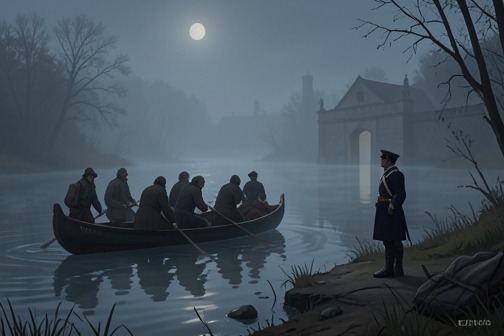
[Heyward's party returns to Fort William Henry through French lines](entity:event-recall-event-09f3c985fabc) in a hazardous night crossing that turns on fog, uncertain direction, and a sudden recognition at the fort. The escape ends when [Alice](entity:character-recall-character-alice-c37947fad76f) calls to her father from the mist: [Colonel Munro](entity:character-recall-character-colonel-munro-6138cc933901) orders his soldiers not to fire, the sally-port opens, and the sisters are reunited with him.
## The crossing under cover of fog
From the mountain, [Hawkeye](entity:character-recall-character-hawkeye-794033ec36cb) leads the party toward the plain opposite a western sally-port, about half a mile from where he pauses for [Duncan Heyward](entity:character-recall-character-duncan-heyward-18bf852b2113). The travelers have moved faster than the fog descending over the lake, so they wait for the mist to conceal the enemy camp. The [Mohicans](entity:organization-recall-organization-0bcf7e176fae) scout ahead, while Hawkeye follows to learn from their observations and assess the nearby ground.
Their route is threatened by a French picket positioned directly across their path. Hawkeye discovers the obstacle and warns the others that the party could blunder into the soldiers even in the fog. As the mist thickens, Heyward places himself between [Cora Munro](entity:character-recall-character-cora-munro-c9bfd1876e83) and [Alice Munro](entity:character-recall-character-alice-munro-accef94b409c) and hurries after Hawkeye; within a short distance, the travelers can scarcely make out one another.
## Confusion between the armies
The party believes it has crossed much of the distance to the fort when a French challenge sounds close by. Their attempt to pass as friends of France fails: the picket orders its men to fire, and fifty muskets discharge into the fog. The shots miss the fugitives, but the French pursue. Hawkeye proposes returning fire, hoping to make the French mistake it for a sortie and pause for reinforcements; instead, gunfire spreads across the plain, making the party's position more precarious.
A mistaken sense of direction compounds the danger. Hawkeye realizes that the sound they took to be the fort came from the French, and that they have been moving toward the woods, where hostile pursuers are closing in. Heyward shifts [Cora](entity:character-recall-character-cora-6e22b7e6c0a0)'s support to Uncas, and the party turns back toward the fort as its pursuers draw near.
## Recognition and rescue
The crisis breaks when Alice calls out to her father from the mist and begs him to spare his daughters. Colonel Munro recognizes her voice and orders the defenders to hold their fire, open the sally-port, and drive off the French with their weapons rather than risk striking the returning party. Heyward reaches the opening by following the sound of its hinges, recognizes his battalion of the [Royal Americans](entity:organization-recall-organization-814d4745e0c7), and leads them against the pursuers until they are cleared from before the works.
Cora and Alice stand bewildered for a moment after the sudden change from flight to safety. Colonel Munro then rushes out of the mist, embraces both daughters, and gives thanks that he has been restored to them. The reunion resolves the crossing's immediate peril and brings the sisters back within the fort.
## Place in the siege narrative
The return is a narrow escape rather than a military victory: the fog that conceals the party also blurs its route and makes recognition between friend and enemy uncertain. Its decisive turn comes not from a clear view of the fort, but from Alice's voice, which enables Munro to distinguish his daughters from the enemy and restrain his own defenders.
The reunion precedes the fort's surrender. Later, [Montcalm](entity:character-recall-character-montcalm-99c7b6440ce6) tells Munro that the fort must be destroyed for the interests of his sovereign, while promising military privileges to the garrison. Munro signs terms allowing the defenders to retain their arms, colors, and baggage as they leave the following morning. The return thus restores the family briefly within the besieged fort, but does not prevent its eventual capitulation.
Event 7
Montcalm presents Webb's letter
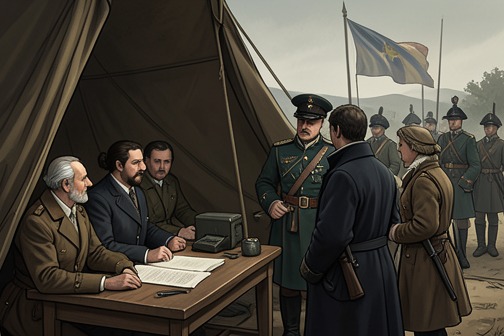
[Montcalm](entity:character-recall-character-montcalm-99c7b6440ce6) presents [Webb’s letter](entity:object-recall-object-webb-s-letter-9f6ba4e08759) at the decisive moment in the negotiations for Fort William Henry, turning the garrison’s expectation of relief into proof of abandonment. The episode leads from disclosure to surrender and then to a devastating test of Montcalm’s authority: the negotiated protections do not prevent the attack on the departing British column.
## Negotiations and the letter
Montcalm opens the conference by acknowledging that Munro’s resistance has been gallant and sustained as long as hope remained. Munro answers that such praise will mean more when it has been better earned. The exchange places military honor at the center of the discussion even as the fort’s prospects grow increasingly bleak.
When Munro challenges Montcalm to say whether he knows where to expect [General Webb](entity:character-recall-character-general-webb-a9c5d5da0e05)’s army, Montcalm offers an open letter and invites him to read Webb’s own words. The letter advises a speedy surrender and states that Webb cannot send a single man to the garrison’s rescue. Duncan verifies the signature and confirms that it is the captured letter. Its contents turn uncertainty into certainty: the garrison has been left without relief.
## From shock to capitulation
The disclosure overwhelms Munro. His military pride gives way to chagrin, and he interprets Webb’s conduct as a betrayal that brings disgrace upon his household and his age. Duncan urges him to preserve their honor by continuing to resist, and Munro briefly rallies, declaring that they will return to the ramparts.
Montcalm then makes clear that holding the fort is impossible and that its destruction serves French interests, but offers terms designed to preserve the defenders’ military standing. The garrison may retain its arms, colors, and baggage, and its march will be conducted honorably. Munro, moved by the unexpected generosity, asks Duncan to settle the arrangements. The treaty provides for the fort to be yielded the following morning, with the garrison keeping the specified possessions and, in military terms, its honor.
The surrender has a lasting personal consequence for Munro. The shock of Webb’s letter leaves his proud character changed, and the narrative says he never recovers from it before his early death. The event thus compromises not only the fort’s defense but also the old commander’s remaining hopes and strength.
## The limits of the agreement
The negotiated terms are observed in the formal transfer: the French take possession of the works, and Montcalm’s army watches the British departure without taunting the defeated. Nearly three thousand English people move across the plain toward the road to the Hudson, including soldiers, women, children, and the sick and wounded. The column’s exposed passage places the capitulation’s protections under immediate strain.
Montcalm has also tried to restrain his Huron allies. He reminds [Magua](entity:character-recall-character-magua-828b407c90b0) that the hatchet is buried between the English and the French commander, and insists that the Hurons must treat the departing English as no longer enemies. Magua rejects the peace as incompatible with his own grievance and demands recognition of the injury he has suffered. Montcalm yields to his request for acknowledgment, aware that his influence over the allied warriors depends on concession rather than command.
As the column leaves the fort, disorder gives Magua an opportunity to signal the attack. More than two thousand Indigenous warriors rush from the forest and assault the departing people. The French army remains in formation, and the narrative condemns its failure to stop the violence; Montcalm’s earlier efforts to secure honorable terms cannot substitute for effective protection once his allies act beyond his control. The episode therefore links the letter’s revelation of British abandonment to a second collapse of security: surrender ends the siege, but does not keep the defeated safe.
Event 8
Siege of Fort William Henry
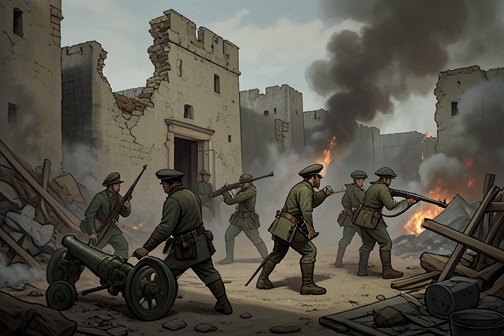
The [Siege of Fort William Henry](entity:event-recall-event-siege-of-fort-william-h-18fa9269c2cd) is the campaign that ends with the British garrison surrendering the fort to [Montcalm](entity:character-recall-character-montcalm-99c7b6440ce6) after days of bombardment and mounting shortages. Its decisive turn is a capitulation presented as an honorable military settlement: the garrison may keep its arms, colors, and baggage, and is promised an orderly departure. The ensuing attack on the departing force exposes the limits of those protections and the unstable authority of the alliances surrounding the siege.
## Causes and Conditions
The siege places [Colonel Munro](entity:character-recall-character-colonel-munro-6138cc933901)’s defenders in a wilderness fortress with inadequate means to resist Montcalm’s concentrated attack. The French general’s batteries are well positioned on the plain and served vigorously, while the British works are hastily prepared. Although Montcalm does not seize the neighboring heights, the fort remains under sustained pressure, and the British cannot rely on relief from [General Webb](entity:character-recall-character-general-webb-a9c5d5da0e05)’s army on the Hudson.
The defenders’ position deteriorates as the siege continues. [Duncan Heyward](entity:character-recall-character-duncan-heyward-18bf852b2113) tells Munro that the camp cannot remain tenable much longer, that more than half the fort’s guns have burst, that the walls are crumbling, and that provisions are failing. The men also show signs of alarm and discontent. Munro understands the danger but insists that the king’s arms and the garrison’s honor require continued resistance while relief remains possible.
## Negotiation and Surrender
After a parley, Munro sends Heyward to meet Montcalm in his place. Montcalm tells the British officers that retaining the fort is impossible and that French interests require its destruction, but offers terms intended to preserve the defenders’ military standing. The garrison may carry its colors to England, retain its arms, and conduct its march and surrender in a manner Montcalm describes as honorable.
Munro receives the terms with surprise and recognizes the apparent generosity of his opponent. Heyward remains to arrange the capitulation. During the night, Munro signs an agreement that the fort will be yielded in the morning and that the garrison will keep its arms, colors, and baggage. In military terms, the arrangement allows the defeated force to retain its honor even as it relinquishes the stronghold.
## Transfer of the Fort
At dawn, French drums sound and the French army forms to receive its commander. The success is formally announced, and a selected guard is assigned to enter the fort as control passes to the French. The preparations take place beneath the guns of the works that have just been contested.
Inside the British lines, the departure has a different character. The soldiers assemble with empty weapons and leave under the weight of defeat and wounded pride. Heyward is also charged with protecting the Munro sisters from insult and reminding any French or Indigenous intruders of the capitulation terms, with a warning that misconduct will be reported to Montcalm. The order makes clear that the agreement’s protections depend, in practice, on discipline and enforcement during the withdrawal.
## Alliance and Aftermath
The surrender occurs within a French–Huron alliance whose members do not share identical aims. [Magua](entity:character-recall-character-magua-828b407c90b0) argues that the British have agreed to leave and therefore are no longer enemies, while also declaring that his hatchet remains prepared for future conflict. Montcalm’s effort to restrain his ally sits uneasily beside the larger political need to retain Indigenous support. The later account emphasizes that French authorities tolerate the Delawares’ reluctance to fight rather than risk turning a passive ally into an enemy; the Delawares cite time needed to sharpen their hatchets, while their former obligations to the Six Nations help explain their hesitation.
The capitulation’s promised order fails to secure the departing garrison. More than two thousand Indigenous warriors rush onto the plain, and the withdrawal becomes a massacre despite the terms Montcalm had offered. The episode therefore turns on a sharp contrast between negotiated military honor and the inability of the agreement to protect the soldiers once the French command’s control proves insufficient. Its consequences continue through the story: the Delawares’ divided political position becomes a source of French suspicion, while the wider conflict keeps drawing people and communities into a war shaped by competing imperial claims and Indigenous alliances.
Event 9
Massacre of the Fort William Henry garrison
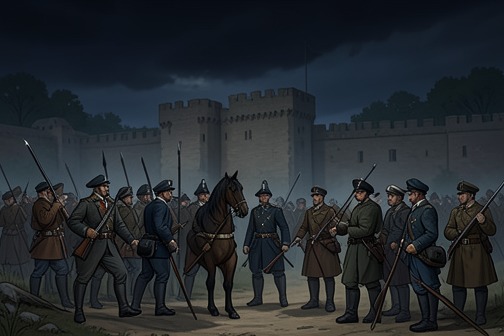
The [Massacre of the Fort William Henry garrison](entity:event-recall-event-35c0c2a10c1a) is the attack on the British troops and civilians as they left the surrendered fort under agreed terms. It turns a formal capitulation into a catastrophe, exposes the limits of French control over its allies, and leaves the narrator with a lasting judgment on [Montcalm](entity:character-recall-character-montcalm-99c7b6440ce6)’s failure to protect the departing column.
## Surrender and Evacuation
Montcalm told the British that the fort could not be retained and would be destroyed, but promised that the garrison would receive the privileges due to soldiers. When [Duncan Heyward](entity:character-recall-character-duncan-heyward-18bf852b2113) asked about the British colors, Montcalm said they could be carried to England and shown to the king. [Colonel Munro](entity:character-recall-character-colonel-munro-6138cc933901) then signed a capitulation providing for the fort’s surrender in the morning, with the garrison retaining its arms, colors, baggage, and, in military terms, its honor. The narrator presents the agreement as a carefully defined promise, not an unconditional surrender.
At the evacuation, the French took possession of the gates and raised their flag over the fort. Nearly three thousand British men, women, and children moved across the plain toward the road through the woods. The French army stood assembled nearby and observed the departure, keeping the stipulated military honors and making no taunts. Many sick and wounded had to walk because the available vehicles and pack animals were occupied; the column’s orderly movement therefore carried a visible burden of exhaustion and vulnerability.
## The Attack on the Column
As the column crossed the open ground, a dispute over a provincial soldier’s possessions drew Indigenous onlookers closer. The crowd then became alarmed when a Huron seized a woman’s shawl and took her child. The narrator describes the killing of the child and mother as the immediate crisis in the scene. [Magua](entity:character-recall-character-magua-828b407c90b0) raised a whoop, and more than two thousand warriors emerged from the forest and attacked the departing people.
The soldiers tried to form solid ranks to deter the assault, but some lost their muskets in the confusion. The attack spread across the plain, while civilians and soldiers were trapped in the moving crowd or forced to flee. [Alice](entity:character-recall-character-alice-c37947fad76f) saw her father, Colonel Munro, cross toward the French army to claim the escort promised in the capitulation. From above, [Cora](entity:character-recall-character-cora-6e22b7e6c0a0) and Alice later witnessed the violence continuing as the French troops remained in place; the narrator says the attack subsided only when plunder displaced revenge as the assailants’ immediate purpose.
## Causes and Political Context
The novel places the massacre within an unstable alliance rather than treating it as an isolated eruption. Magua had pledged not to act against the interests of the French king, but he had also declared that his hatchet would remain active until it was red with blood. Once the British had agreed to leave, he challenged the logic of continuing the war against them, yet the episode shows that such political reasoning did not secure their safety.
The Delawares’ position further reveals the strains within the French coalition. They had followed Montcalm into English territory and were encroaching on Mohawk hunting grounds, but withheld military support, citing the time needed to sharpen their hatchets. The narrator explains their reluctance as connected to an old treaty that had once made them dependent on the Six Nations for protection. Magua later used their alleged hospitality to British scouts as a diplomatic accusation: the Delawares’ villages, hunting grounds, women, children, and part of their fighting strength lay within French territory, leaving them vulnerable to suspicion from their allies.
[Hawkeye](entity:character-recall-character-hawkeye-794033ec36cb) describes white political maneuvering as having confused Indigenous alliances and turned related or neighboring peoples against one another. The narrative also connects this disruption to older grievances: white actions, the scout says, had helped turn brother against brother and bring the Mingo and Delaware onto the same path. These passages frame the massacre within colonial competition for territory and military allegiance, while making clear that the British evacuation agreement did not settle the conflicts shaping the region.
## Consequences and Judgment
The narrator names the episode the Massacre of William Henry and treats it as a defining stain on Montcalm’s reputation. His courtesy, generosity, and military honor, evident in the surrender negotiations, are set against his failure to prevent the attack. The French troops’ presence at the plain, their earlier observance of the agreed honors, and their subsequent inaction sharpen the contrast between the promise of protection and the result. The narrator argues that political calculation overcame principle, and that Montcalm’s celebrated reputation may cause this failure to be forgotten.
The massacre also shadows the later pursuit of the Munro sisters and the rescue efforts led by Uncas. When Uncas gathered Delaware leaders, he appointed Hawkeye to command twenty men and offered Duncan Heyward an equal responsibility; Heyward declined the command and volunteered to serve beside the scout. More than two hundred Delaware warriors then marched out under Uncas’s direction. The episode thus remains active in the plot beyond the evacuation itself: it gives urgency to the rescue, while the novel’s wider account of divided Indigenous alliances links personal danger to the larger disorder of colonial warfare.
Event 10
Hawkeye and Uncas's escape from the Huron village
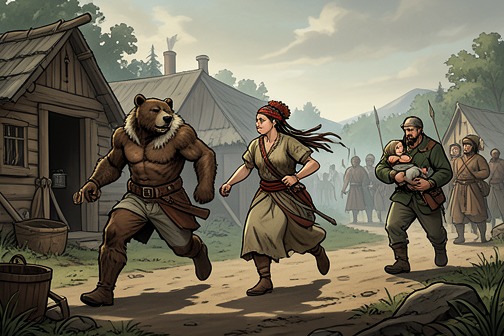
[Hawkeye and Uncas's escape from the Huron village](entity:event-recall-event-1db3a6cd4b74) is a sequence of coordinated disguises and risky diversions that turns captivity into a temporary path to freedom. [Hawkeye](entity:character-recall-character-hawkeye-794033ec36cb) first helps [Duncan Heyward](entity:character-recall-character-duncan-heyward-18bf852b2113) rescue [Alice](entity:character-recall-character-alice-c37947fad76f), then returns to free Uncas; the two leave the village while [David Gamut](entity:character-recall-character-david-gamut-c4fcf423dde1) impersonates the captive long enough to cover their retreat.
## The rescue takes shape
Heyward’s disguise as a healer gives him access to Alice, who is being held in a [cavern](entity:location-recall-location-0e6fa910435e). Hawkeye, concealed as a bear, helps him overpower [Magua](entity:character-recall-character-magua-828b407c90b0) when the Huron chief approaches. When Alice proves too weak to flee unaided, Hawkeye directs Heyward to wrap her in Indigenous clothing and carry her, warning that even a visible foot could reveal her. Outside the cavern, Heyward tells the waiting Hurons that he has driven the illness from the woman and is taking her away to restore her strength. The explanation satisfies the gathered relatives, allowing him to leave with Alice.
## Hawkeye returns for Uncas
Hawkeye does not accompany Heyward. He explains that Uncas, held by the Hurons and at risk of punishment, must not be left behind. To reach the captive, Hawkeye uses his bear disguise again, while David Gamut helps keep the Hurons away from the lodge. Inside, Uncas is bound hand and foot. At first he takes the disguised scout for a real animal; a prearranged hiss reveals Hawkeye, and David cuts Uncas’s bonds. Hawkeye then gives Uncas a knife, and the two prepare to leave.
## The escape and its cost
Hawkeye and Uncas move out under the cover of the bear disguise and David’s performance. David agrees to remain behind and impersonate Uncas, despite Hawkeye’s warning that discovery could put him in danger. The deception delays the Hurons long enough for the fugitives to approach the woods. When the villagers discover the substitution, David sings a funeral anthem, and the alarm spreads through the encampment. The Hurons mobilize, but Hawkeye and Uncas have already gained distance. Their escape secures Uncas’s immediate freedom, while David’s choice leaves him exposed to the anger of the people he has deceived.
## Consequences and significance
The episode depends on disguises that must be sustained through performance: Hawkeye imitates an animal, Heyward presents himself as a healer, and David takes Uncas’s place. Each disguise works because it exploits what the Hurons expect to see or hear, but each carries the risk of sudden discovery. The escape also divides the party’s immediate objectives: Heyward takes Alice toward the Delaware camp, while Hawkeye turns back to aid Uncas. Their departures therefore do not end the danger; they separate the fugitives and leave the rescue effort to continue under threat of pursuit.
Event 11
Magua’s diplomatic visit to the Delaware camp
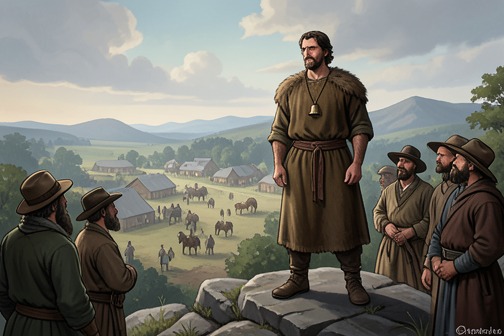
[Magua’s diplomatic visit to the Delaware camp](entity:event-recall-event-d47b94a8cd9f) turns hospitality into a contest over prisoners, alliances, and political judgment. He approaches as a recognized Huron orator, observes the camp’s cautious welcome, and combines courtesy with calculated pressure; the encounter culminates in a formal assembly that gives his claims a public audience.
## Arrival and Diplomatic Protocol
[Magua](entity:character-recall-character-magua-828b407c90b0) appears unarmed on the rocky terrace above the Delaware village, signals amity, and enters with the community’s permission. Silver ornaments and small bells accompany his approach, but the reception remains grave and watchful. Recognized as [Le Renard Subtil](entity:expression-recall-expression-le-renard-subtil-1130a76fa1e4), a chief known for speaking the languages of the northern peoples, he exchanges greetings with the Delaware leaders rather than addressing the whole camp at once.
A Delaware chief takes Magua by the wrist and invites him into his lodge for a morning meal. With several elders attending, they walk away calmly, leaving the rest of the village curious but outwardly patient. The meal is deliberately ordinary in manner: their conversation concerns the hunt, although both sides understand that the visit must have a consequential purpose. Once the meal is over, the hosts remove the dishes and the discussion turns to the political business beneath the courtesies.
## The Negotiation and Its Pressures
Magua first tests whether the Delawares will yield ground on [Cora](entity:character-recall-character-cora-6e22b7e6c0a0) and on the use of their territory. His question about whether Huron hunters may have room in the mountains meets the reply that the Lenape rule their own hills. He then argues against conflict between Indigenous nations by invoking the greater presence of the pale faces, framing cooperation as a shared interest.
He also brings gifts, largely trinkets taken from women killed at William Henry. Their value is slight, but Magua distributes them with care: the most valuable go to the leading warriors, while compliments accompany the gifts to others. The performance warms the reception, and his host calls him a wise chief. The material exchange thus helps establish goodwill while the source of the objects connects the diplomacy to the recent violence at William Henry.
Magua next raises the Delawares’ exposure to French suspicion. He says that English scouts have been in their lodges and implies that the French governor may view the tribe’s hospitality to English enemies as disloyalty. The Delaware chief acknowledges that unfamiliar moccasins have been tracked into the camp, but defends the rule that strangers are welcome. Magua sharpens the distinction between a welcome stranger and a spy, then identifies the feared English enemy as [La Longue Carabine](entity:expression-recall-expression-la-longue-carabine-a37de6f8faa3). He claims that [Hawkeye](entity:character-recall-character-hawkeye-794033ec36cb) is among the Delaware prisoners, and the revelation immediately unsettles the leaders and spreads through the village.
## From Private Counsel to Public Assembly
As the Delawares confer, Magua remains outwardly still while watching their reactions. The account presents him as anticipating the measures they will take and understanding how their honor and safety constrain them. The private council is brief; it is followed by a solemn national assembly, a rare gathering called for matters of exceptional importance. More than a thousand people assemble as the morning advances.
The visit’s significance lies in this movement from controlled hospitality to collective deliberation. Magua has not simply asked for assistance: he has joined gifts and kinship language to warnings about imperial alliances and the presence of a celebrated enemy, making the Delawares weigh their obligations against the danger of choosing sides. His arrival therefore prepares the larger political confrontation in which he will address the gathered nation and pursue his objectives before the community as a whole.
Event 12
Council of Tamenund
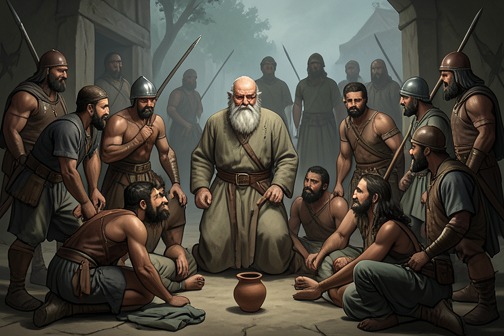
The [Council of Tamenund](entity:event-recall-event-0af5dce93025) is a Delaware assembly and judicial hearing whose decisions reshape the captives’ fate and establish Uncas as the leader of a national expedition. In a public circle before the revered elder [Tamenund](entity:character-recall-character-tamenund-29c9af459085), competing claims are tested through deliberation and demonstrated skill; the recognition of Uncas’s descent from the [Turtle](entity:creature-recall-creature-turtle-fac90659836e) lineage then transforms the gathering from a tribunal into a council of war.
## Assembly and proceedings
After Tamenund’s people receive him with reverence, the prisoners are brought into a dense circle before the council. [Cora](entity:character-recall-character-cora-6e22b7e6c0a0) stands beside [Alice](entity:character-recall-character-alice-c37947fad76f), protecting her with an arm; [Duncan Heyward](entity:character-recall-character-duncan-heyward-18bf852b2113) remains near them, while [Hawkeye](entity:character-recall-character-hawkeye-794033ec36cb) takes a place slightly behind. Uncas is absent at first. An elder asks which prisoner is [La Longue Carabine](entity:expression-recall-expression-la-longue-carabine-a37de6f8faa3), and uncertainty over the name becomes the council’s first test of identity and credibility.
Hawkeye claims the name associated with his reputation, explaining that his kin called him Nathaniel, the Delawares call him Hawkeye, and the Iroquois call him the Long Rifle. To settle the dispute, the chiefs have the two apparent claimants fire at an earthen vessel. Hawkeye’s first shot seems accidental to many observers, but a second shot passes through the vessel’s opening and pierces its base. The demonstration establishes his identity before the assembly, redirecting attention from Heyward to the scout.
## [Magua](entity:character-recall-character-magua-828b407c90b0)’s appeal and the council’s judgment
Magua uses the hearing to press his own claims. Earlier, he had shaped the Hurons’ grief over their fallen warriors into a demand for revenge, arguing that a captive should be sent after the dead with burial goods. At the council he again works through public speech, presenting the pale faces as acquisitive intruders and the red people as rightful inhabitants of a land once rich in game and free of roads. His account frames the dispute as one about land, power, and the consequences of colonial expansion.
Tamenund’s judgment nevertheless follows the council’s stated commitment to justice. He orders that the stranger be given food and tells Magua to take his own people and depart. The ruling does not settle every claim peacefully: when Magua asks to leave with Cora, Tamenund acknowledges that she is unwilling but allows her to go with him, declaring that the Delawares must not act unjustly. Cora rejects the proposed marriage, and Heyward offers a ransom, but the council’s decision stands. Magua leaves with Cora while the others remain behind.
## Uncas’s recognition
Uncas enters the gathering as a captive, composed despite the hostility directed toward him. When the council condemns him to a trial by fire, the discovery of a small tortoise tattooed on his chest changes the proceedings. The mark identifies his inherited connection to the Turtle lineage. Uncas names himself as the son of [Chingachgook](entity:character-recall-character-chingachgook-ce6cb241194d) and a descendant of the great Unamis; Tamenund recognizes him as the heir who can fill his place at the council fire.
Uncas explains why his family has been absent from Delaware councils. His forebears withdrew as pale settlers spread across their former country, moving toward the river and hunting grounds where they could live apart. He describes the family’s hope of returning when the [Manitou](entity:concept-recall-concept-manitou-d504a7e40776) calls them back. The account makes the recognition more than a personal reprieve: it gives the Delawares a living link to an older political lineage and to lands lost through colonial settlement.
Tamenund then questions Uncas’s friendship with Hawkeye, whose reputation includes killing Delaware warriors. Uncas answers that he calls a man a friend when that man proves himself one, and insists that Hawkeye is welcome if Uncas himself is welcome. The exchange tests whether recognition of Uncas’s rank will also change the council’s treatment of his companion; it establishes their alliance as part of the new order taking shape around the young leader.
## From judgment to mobilization
Once Magua has departed with Cora, Uncas turns the council’s attention toward action. A young warrior strips the bark from a small pine; others remove its branches and mark its trunk with red paint. Uncas appears with much of his clothing removed and his face darkened, then circles the post in a measured dance while singing a war song that invokes the Great Spirit and asks for aid. The song moves between reverence, alarm, and a battle cry, giving the gathering a ritual form for collective resolve.
Respected chiefs join the dance, and Uncas strikes the post with his tomahawk, publicly assuming command of the expedition. A hundred young men then destroy the symbolic tree, treating it as the enemy and thereby declaring the campaign a national war. Uncas looks to the sun as the truce with Magua ends; the assembled warriors abandon the symbolic contest and prepare to pursue the real one. The council thus closes not with reconciliation but with a decision to mobilize, while Tamenund withdraws and the women, children, and elders move toward safety.
## Significance
The assembly’s decisions emerge through a sequence of public performances: claims are spoken, Hawkeye’s identity is demonstrated by a shot, Uncas’s ancestry is disclosed through a bodily emblem, and collective authority is enacted through song and ritual. These proceedings present Delaware political judgment as structured by deliberation, inherited status, friendship, and obligations of justice, even as the ruling over Cora exposes the limits of protection available to a captive under competing claims.
The council also binds recognition to loss. Uncas’s account traces his family’s absence from the council fire to the spread of settlers across their land; his newly acknowledged authority is therefore inseparable from displacement. The assembly restores him to a place in Delaware leadership, but its immediate outcome is war, and its final movement sends the nation toward conflict rather than recovering the country his ancestors left.
Event 13
Magua’s departure with Cora
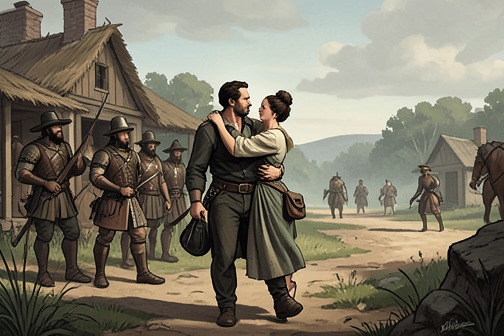
[Magua’s departure with Cora](entity:event-recall-event-4a2eec7a366a) is the decisive outcome of the Delaware council: although the Delawares’ judgment gives [Magua](entity:character-recall-character-magua-828b407c90b0) the right to leave with what he brought, [Hawkeye](entity:character-recall-character-hawkeye-794033ec36cb)’s offer to take [Cora](entity:character-recall-character-cora-6e22b7e6c0a0)’s place cannot change the ruling. Cora goes with Magua, while [Alice](entity:character-recall-character-alice-c37947fad76f) remains with Duncan and Hawkeye is left behind to urge the others to protect her.
## Causes and Background
Magua’s leverage rests on the Delaware decision that their spoken judgment cannot be taken back. When he seizes Cora and prepares to leave, Duncan appeals for mercy and offers a ransom, but Magua rejects the pale faces’ wealth. The council’s hospitality rules, rather than the rescuers’ wishes, govern the immediate outcome.
The choice follows a longer pattern in which Magua treats captives as instruments of personal and political advantage. Earlier, he had demanded that Cora follow him and live as his wife, presenting that demand as the price of sparing her sister and father further loss. At the council, however, his refusal of ransom and insistence on leaving with Cora show that money will not secure her release.
## The Exchange That Fails
Hawkeye tries to redirect Magua’s choice by offering himself as a more valuable prisoner. He warns that Magua may prefer to take him rather than face the consequences of carrying off Cora, and finally accepts Magua’s implied bargain, asking that Cora be released. The proposal briefly draws the crowd’s approval, but Magua rejects it and declares that he has only one mind.
Cora acknowledges that she is Magua’s prisoner and says she will follow at the proper time, but insists that violence is unnecessary. She thanks Hawkeye for his offer and asks him to ensure that Alice reaches the homes of civilized people. Her appeal shifts the scene from the failed attempt to exchange captives toward the protection of the sister she must leave behind.
## Departure Under Delaware Law
Duncan threatens to follow Magua, but Hawkeye restrains him, warning that pursuit may lead into an ambush. Uncas reminds Magua that Delaware justice comes from the [Manitou](entity:concept-recall-concept-manitou-d504a7e40776) and gives him a limited interval to depart before a pursuit begins. Magua taunts the Delawares as he leaves, but no one stops him: the council allows him to pass with Cora under the rules of hospitality.
Cora’s departure separates the sisters and leaves Alice in the care of Duncan and Hawkeye. Magua exits the council with his captive, while the others remain bound by the ruling they cannot reverse. The episode turns a formal guarantee of safe passage into the means by which Magua regains control of Cora, even as it establishes that the Delawares will not violate their own law to prevent him.
Event 14
Uncas’s Delaware war mobilization
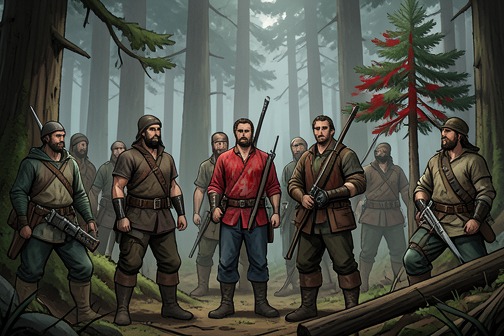
[Uncas’s Delaware war mobilization](entity:event-recall-event-edbdef4c2139) is the collective decision to pursue [Magua](entity:character-recall-character-magua-828b407c90b0) after he takes [Cora](entity:character-recall-character-cora-6e22b7e6c0a0) away. It transforms the Delawares’ anger into an expedition: Uncas publicly claims leadership, the warriors commit themselves to war, and a force of more than two hundred enters the forest under his command.
## Causes and Immediate Context
After Magua departed with Cora, Uncas watched her until she vanished among the trees, then withdrew from the gathered Delawares. Their camp became restless as the people awaited his lead. The pursuit also followed a period of political and rhetorical maneuvering: Magua had used the Hurons’ grief for their dead to demand revenge, and later appealed to the Delawares with gifts, praise, and reminders of their exposed position between French and English power. The mobilization marks the point at which the Delawares’ response becomes action rather than debate.
## The War Rite and Uncas’s Leadership
The preparations proceeded through public signs. A young warrior stripped bark from a small pine; others removed its branches and marked its trunk with red paint. Uncas appeared with most of his clothing removed and his face partly painted black, then circled the post in a measured dance while singing a war song that invoked the Great Spirit, acknowledged his own weakness, and asked for aid. The repeated song and dance gave the gathering a shared form for expressing resolve.
A respected Delaware chief joined the dance, followed by other warriors. Uncas then struck his tomahawk into the post and raised his battle cry. That act announced his authority over the expedition. A hundred young men surged forward and destroyed the symbolic target, and the narrator presents their participation as making the undertaking a war of the whole nation. The rite had converted individual anger into a public commitment.
## From Commitment to Expedition
Uncas signaled that the truce with Magua had reached its end, and the warriors turned from symbolic action to preparations for the actual pursuit. Women carried children, elders, and valued possessions into the forest for safety; [Tamenund](entity:character-recall-character-tamenund-29c9af459085) also withdrew after a moving parting with Uncas. [Duncan Heyward](entity:character-recall-character-duncan-heyward-18bf852b2113) took [Alice](entity:character-recall-character-alice-c37947fad76f) to safety before seeking out [Hawkeye](entity:character-recall-character-hawkeye-794033ec36cb).
Uncas organized the force and appointed commanders. He presented Hawkeye as a proven and trustworthy warrior, then gave him twenty men to command. He explained Heyward’s standing among the English troops and offered him an equivalent responsibility, but Heyward declined, choosing instead to serve as a volunteer beside Hawkeye. More than two hundred Delaware warriors obeyed Uncas’s order to march.
## The March and Its Stakes
The force entered the forest without encountering anyone who could provide warning or intelligence, then halted at the scouts’ positions for a private council. The chiefs proposed plans, but none suited Uncas’s desire for an immediate attack. Remembering Cora’s danger and Magua’s insolence, he had to restrain his own urgency and accept deliberation in keeping with his people’s practice. The mobilization therefore establishes both his authority and its limits: he leads the expedition, but must work through counsel and collective custom.
Event 15
Battle of the Huron village
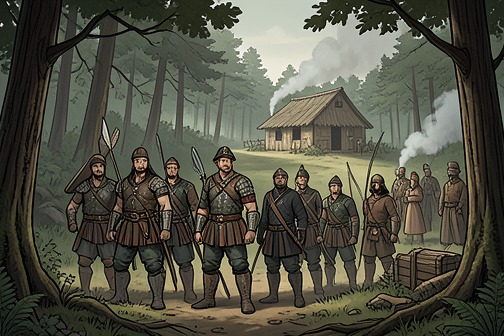
The [Battle of the Huron village](entity:event-recall-event-battle-of-the-huron-vil-6e197c833e2b) is the climax of the Lenape campaign against the Hurons: a coordinated forest fight becomes an assault on the Huron settlement, where Uncas and his allies force [Magua](entity:character-recall-character-magua-828b407c90b0) to flee. Its outcome is not celebrated as an uncomplicated triumph; the next day, the Lenape mourn amid the signs of a community destroyed by vengeance.
## Causes and Alliances
The Lenape had followed [Montcalm](entity:character-recall-character-montcalm-99c7b6440ce6) into English territory and were striking at Mohawk hunting grounds, yet had withheld assistance from their French allies at a crucial moment. The account attributes their reluctance to an old treaty that had once placed them under the Six Nations’ military protection. They told Montcalm’s emissaries that their hatchets were dull and needed time to be sharpened; Montcalm accepted this passive alliance rather than risk turning it into open opposition.
Magua exploited the resulting distrust when he appeared among the Lenape. He reminded them that their French allies might hear that they had sheltered English scouts and a warrior who had killed many of the French commander’s friends. The charge put pressure on the Lenape at a moment when their distant villages, hunting grounds, women, and children lay within French territory. The battle therefore grows out of both immediate pursuit and the precarious political position of a people divided between older obligations and present alliances.
## Mobilization and Command
Uncas took command of a force of more than two hundred Lenape warriors. He assigned [Hawkeye](entity:character-recall-character-hawkeye-794033ec36cb) twenty men, explained [Duncan Heyward](entity:character-recall-character-duncan-heyward-18bf852b2113)’s rank among the English, and offered him a position of equal authority. Heyward declined command and chose to serve as a volunteer beside Hawkeye. Uncas appointed other chiefs to positions of responsibility and set the party moving.
The advance was cautious rather than a direct charge. At a council near the scouts’ positions, the chiefs considered several plans; Uncas wanted to attack immediately, driven by concern for [Cora](entity:character-recall-character-cora-6e22b7e6c0a0) and anger at Magua, but accepted the more cautious counsel of his countrymen. The difference between his urgency and the collective deliberation shapes the ensuing action: the Lenape coordinate their strength in the forest rather than committing it all at once.
## The Forest Fighting
The first exchange began when a volley from Huron rifles struck the Lenape from behind, killing one warrior. Hawkeye ordered his men to take cover and advance. The skirmish expanded as the Hurons fell back toward their allies, increasing their numbers and pressing Hawkeye’s group. Huron fighters began working around the Lenape flank, making it difficult for them to remain under cover and weakening their fire.
The balance changed when the fighting at Uncas’s position erupted below Hawkeye’s. The Hurons had committed too few men to resist Uncas’s attack, and their effort to reinforce the main line reduced the pressure on Hawkeye. He then used a sudden coordinated rush: his warriors shifted around their trees and charged into the woods, though the Hurons’ return fire killed three of the foremost Lenape. The attackers forced the defenders back to the far edge of a thicket, where resistance again threatened to stall the advance.
A rifle shot and war cry from behind the Hurons announced [Chingachgook](entity:character-recall-character-chingachgook-ce6cb241194d)’s intervention. Attacked from both front and rear, the Hurons broke and fled across the clearing. Chingachgook’s shot then killed a dozen Hurons clustered among the pines; Uncas emerged from the forest with a hundred warriors and sent them after the divided enemy. The combination of concealment, converging attacks, and pursuit turned the scattered forest engagements into a rout.
## The Village and Magua’s Escape
Uncas pursued Magua with particular urgency, leaving himself almost alone before Hawkeye and his companions reached him. Magua retreated toward the Huron village. There the defenders made a stand around the council lodge, but the assault quickly overwhelmed them. Uncas, Hawkeye, and even the aging [Colonel Munro](entity:character-recall-character-colonel-munro-6138cc933901) fought in the attack; Magua escaped the immediate clash with two surviving companions while the Lenape remained occupied with the fallen.
Uncas pressed after him, followed by Hawkeye, Heyward, and [David Gamut](entity:character-recall-character-david-gamut-c4fcf423dde1). Magua briefly seemed ready to turn and fight, but instead slipped into a thicket and entered a cave already known to the pursuers. The battle thus destroys the Huron settlement as a place of organized resistance without ending the pursuit of Magua.
## Aftermath and Significance
The following day, the Lenape are described as a nation of mourners. The battle has avenged their recent quarrel with the Hurons and the older grievance against the Mengwe, but the destruction of the Huron community brings no songs of victory. The settlement’s darkened surroundings and the ravens above the mountains mark the devastation; those who return from the fighting put aside its emblems and join the communal lament.
The ending sets the cost of vengeance against the momentum of military victory. The Lenape have defeated a rival community, yet the narrative turns immediately from combat to collective grief. The battle is therefore both the culmination of Uncas’s campaign to reach Magua and a bleak demonstration that victory in this frontier conflict leaves a community in mourning rather than secure or restored.
Event 16
Cora、Uncas与Magua的最后冲突
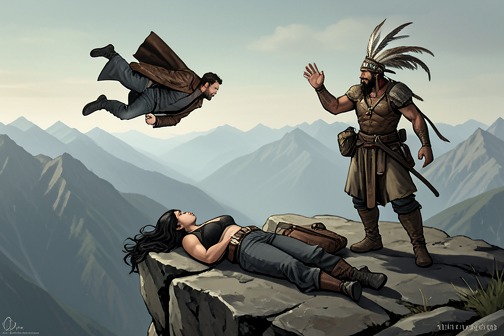
The final confrontation among [Cora Munro](entity:character-recall-character-cora-munro-c9bfd1876e83), Uncas, and [Magua](entity:character-recall-character-magua-828b407c90b0) turns the pursuit into a chain of irreversible losses: [Cora](entity:character-recall-character-cora-6e22b7e6c0a0) is killed by one of Magua’s companions, Uncas is killed by Magua, and [Hawkeye](entity:character-recall-character-hawkeye-794033ec36cb) shoots Magua as he tries to climb to safety. Its outcome closes the personal conflict, but leaves the rescuers facing the deaths they could not prevent.
## Causes and Stakes
Magua has taken Cora away, and Uncas, [Duncan Heyward](entity:character-recall-character-duncan-heyward-18bf852b2113), and Hawkeye pursue the party up the mountain. As the pursuers gain on them, Uncas calls on Magua to stop, but Cora herself halts on a ledge near the summit and refuses to go farther. Magua offers her a choice between following him and death; she does not respond to his demand.
The scene carries the long-running conflict between Magua and his pursuers into a narrow, perilous space. Cora’s refusal interrupts the escape, while Uncas’s arrival brings the pursuit to its decisive encounter. The others are close enough to witness what follows, but not to prevent it.
## Deaths on the Ledge
As Magua raises his weapon toward Cora, Uncas leaps onto the ledge. In the interruption, one of Magua’s companions kills Cora. Magua turns on the man responsible, but the falling Uncas comes between them. Magua then attacks Uncas; despite his failing strength, Uncas strikes down Cora’s killer before Magua kills him.
Heyward calls from above for mercy, but Magua does not relent. By the time Hawkeye reaches the ledge, Cora, Uncas, and the other combatants there are dead. The timing is central to the tragedy: Uncas arrives in time to confront Magua, but not in time to save Cora, and his own intervention ends with his death.
## Magua’s Escape and Death
Magua climbs toward the mountain’s edge while Heyward and Hawkeye close in. Hawkeye raises his rifle, but hesitates when he sees [David Gamut](entity:character-recall-character-david-gamut-c4fcf423dde1) among the figures above. Magua uses the delay to attempt a leap across a fissure; he falls short, catches a shrub at the edge, and finds a foothold beneath him.
When Magua makes another effort to climb, Hawkeye steadies his rifle and fires. Magua’s hold loosens, and he falls from the mountain. His death ends the pursuit, but it follows rather than prevents the deaths on the ledge.
## Consequences
The confrontation defeats Magua and brings the immediate pursuit to an end, yet the rescuers arrive too late to save Cora and Uncas. Hawkeye’s shot settles the conflict with Magua; it cannot reverse the losses that have already occurred. The scene thus closes the struggle through a stark contrast between victory over the enemy and the irreparable cost of that victory.
Event 17
Cora与Uncas的葬礼
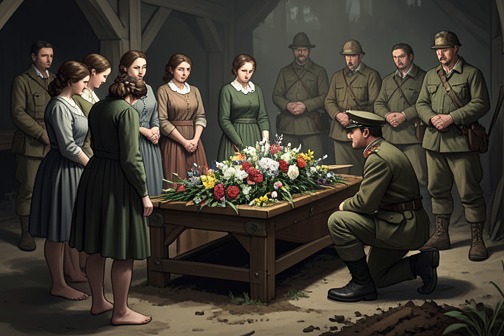
The funerals of [Cora Munro](entity:character-recall-character-cora-munro-c9bfd1876e83) and Uncas are the final communal rites of the novel, joining the Lenape’s mourning for two dead companions to a stark recognition of the [Mohicans](entity:organization-recall-organization-0bcf7e176fae)’ decline. [Cora](entity:character-recall-character-cora-6e22b7e6c0a0) is buried with care by Lenape women, while Uncas receives the honors of a chief; at his grave, [Chingachgook](entity:character-recall-character-chingachgook-ce6cb241194d) and [Hawkeye](entity:character-recall-character-hawkeye-794033ec36cb) clasp hands over the fresh earth, and the community’s grief becomes inseparable from the loss of a people.
## The mourning assembly
The morning after the battle, the Lenape are a nation of mourners. Their lodges stand deserted as people of every age and station gather in a silent circle around the dead. Six young women tend Cora’s bier, strewing fragrant herbs and forest flowers over the robes that conceal her. Near her lies her father, [Colonel Munro](entity:character-recall-character-colonel-munro-6138cc933901), bowed by grief; [David Gamut](entity:character-recall-character-david-gamut-c4fcf423dde1) and [Duncan Heyward](entity:character-recall-character-duncan-heyward-18bf852b2113) stand nearby, each confronting the loss in his own way.
The rites make room for both shared sorrow and distinct forms of remembrance. Women voice an unstructured, wailing eulogy, taking up the lament in turn. In moments of heightened grief, the girls remove the flowers from Cora’s bier, then return them tenderly as the lament resumes. The ceremony turns from silence to song without diminishing the restraint that surrounds the dead.
## Cora’s burial
When the women lift Cora’s bier and begin a measured procession, Gamut asks Munro whether they should follow and give her a Christian burial. Munro rises and joins the procession, carrying his grief with the bearing of a soldier. Heyward and the other friends follow, while the Lenape men remain gathered around Uncas.
The women carry Cora to a small knoll shaded by young pines. They wait until Hawkeye, who understands their customs, assures them that their care has been well received. They place her in a birch-bark shell, lower it into the grave, and cover the fresh earth with leaves and other customary natural objects. Hawkeye then indicates that their offices are complete and that Gamut will lead the Christian observance. The women step aside and listen quietly as he offers sacred song, a moment of accommodation between different funerary practices rather than a rejection of either.
## Uncas’s funeral and the Lenape lament
Uncas is buried in a separate ceremony as a chief. His body is dressed in the tribe’s finest ornaments, but the display cannot conceal his death. Hawkeye returns after the others have gone and pauses to look at his friend before the Delawares close the final covering. The Lenape gather around Uncas’s temporary grave, which is intended eventually to give his bones a resting place among his own people.
The body is laid facing the rising sun, with the implements of war and the chase beside it for the final journey. An opening in the protective shell is left so that the spirit may communicate with its earthly dwelling, and the grave is concealed against disturbance. The burial thus honors Uncas not only as a fallen warrior but as someone whose place among his people remains significant beyond death.
The Lenape’s lament names the qualities by which they remember him. A young woman calls him the panther of his tribe and recalls his fleetness, bright eye, and battle voice; she also invokes his mother, asking Uncas to tell her that the Delaware girls wept for her son. The women’s eulogies and the grave’s careful preparation make communal memory part of the funeral itself.
## Chingachgook, Hawkeye, and the ending
Chingachgook finally speaks as Uncas’s father. He honors his son as good, dutiful, and brave, but describes himself as a blazed pine standing alone in a clearing of the pale faces: the Mohicans have lost their lands and their people. Hawkeye answers that Chingachgook is not alone. Though their origins differ, he insists that their lives have followed the same path and recalls the years Uncas spent fighting and resting at his side.
Chingachgook takes Hawkeye’s outstretched hand, and the two men bow their heads together as they weep over Uncas’s grave. The gesture makes their friendship the emotional close of the rites, without undoing the loss that has brought them there. [Tamenund](entity:character-recall-character-tamenund-29c9af459085)’s final judgment extends that grief beyond the family: the pale faces rule the earth, and the time of the red men has not yet returned. The funerals therefore close the story both as acts of care for the dead and as a lament for the Mohicans’ passing.