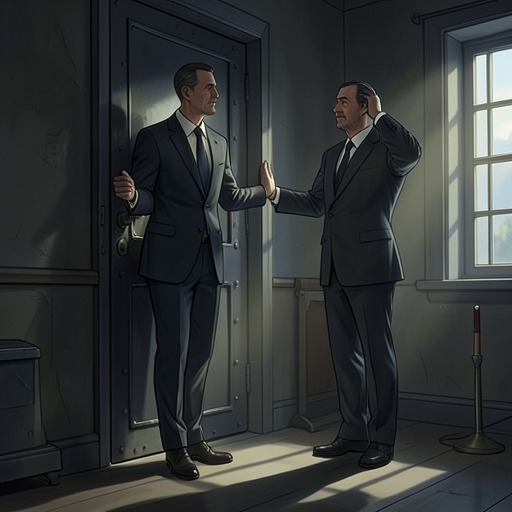
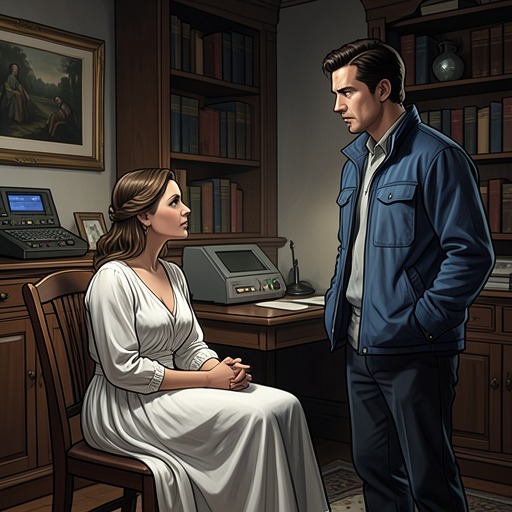
Event 1
Murder of Borgny Stem-Myhre
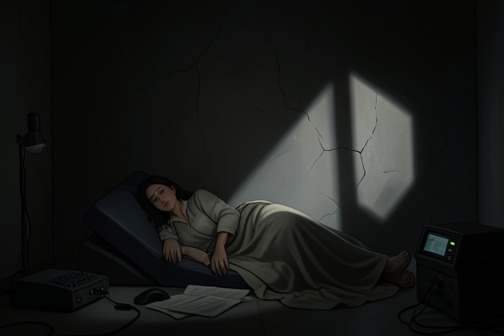
[Murder of Borgny Stem-Myhre](entity:event-recall-event-murder-of-borgny-stem-m-6728959f3296) is both a death and the opening of a mystery: the novel places the reader inside Borgny’s disoriented awakening before explaining how she died, while the investigation later establishes the method without immediately identifying the killer. The contrast between her limited, fearful perspective and the case file’s measured details makes the crime’s hidden mechanism central to the event’s significance.
## Opening and Discovery
Borgny wakes in darkness after being sedated. She is distressed and unable to understand what has happened to her; she senses that someone may be nearby and imagines a predator moving silently behind her. When she tries to turn and defend herself, she meets only empty space. The scene gives the reader no reliable view of her attacker, only Borgny’s fear and her uncertainty about how long she has been unconscious.
The account later reveals that Borgny tried to remove the object obstructing her mouth. Her attempt precipitated the fatal mechanism, though the opening withholds its full explanation. The delay matters: the reader first encounters the event as Borgny does, without the knowledge needed to interpret the danger.
After she leaves the Mono, nobody is known to have seen her again. Investigators considered whether she had gone toward a taxi stand, but records from Norgestaxi and [Oslo](entity:location-recall-location-oslo-aa85218d6b1a) Taxi did not connect her to a ride to Sagene. Two Polish bricklayers discovered her when they arrived for work, noticed that the padlock on the basement’s iron door had been forced, and went inside. Borgny was found fully clothed in the middle of the room, her body in a twisted position.
## Forensic Findings and Cause of Death
The medical examiner placed Borgny’s death between 10 and 11 p.m. and found traces of [Ketanomin](entity:object-recall-object-4d7a15313682), a fast-acting sedative that could be administered intramuscularly. The report identified drowning as the cause of death: blood from wounds in her mouth entered her airway, preventing oxygen from reaching her blood and leading to cardiac arrest and cerebral hypoxia. The clinical finding reframed the apparent mechanics of the murder. The needles caused the wounds, but the obstruction in her mouth made it impossible for her to clear the blood.
The report recorded 24 symmetrically arranged puncture marks in Borgny’s mouth, most of them exactly seven centimetres deep. Investigators had no explanation for the pattern or a known instrument that could have produced it. The opening scene supplies a partial answer before the case file does: Borgny finds a wire across her lips and pulls at it, setting the concealed mechanism in motion. The forensic account later clarifies why that attempt proved fatal, while the evidence available to investigators still leaves the device and its maker unidentified.
The crime scene yielded little conventional trace evidence. There were no fingerprints, DNA, or shoe impressions; the concrete floor had been cleaned the day before for heating cables and new flooring. A later report noted two small grey-black stones that did not match the gravel at the scene. The medical examiner suggested they could have fallen from the tread of a boot onto the concrete, making similar stones found elsewhere potentially useful as evidence. The report was subsequently supplemented with traces of iron and coltan on the inner surfaces of two of Borgny’s molars, another unusual detail whose significance the evidence presented here does not resolve.
## The Murder in the Novel’s Wider Pattern
The account of Borgny’s death is followed by a December passage from an unnamed first-person voice in a dark editing room. Around the work lamp are newspaper photographs of people who appear happy and unaware, taken before their families’ grief became public. The speaker says the police have not yet recognized a connection among the murders, though that will change. This shift widens the crime from a single unexplained death into part of a pattern, while withholding the speaker’s identity and the nature of the connection.
The passage also sets the speaker’s abstract belief that killing can be an act of mercy against the victim’s concrete desire to live. That contrast gives the crime’s staged, concealed mechanism a second significance: the reader has encountered Borgny’s fear and struggle before hearing a voice that reasons about murder at a distance. The narrative lets those opposed perspectives coexist without resolving the identity of the speaker or explaining, at this point, how Borgny’s murder connects to the others.
## Later Reinterpretation and Narrative Design
The novel later shifts into Part III in [Stavanger](entity:location-recall-location-stavanger-4aa33f470c02), where its pattern of delayed explanation continues through a separate investigative revelation. [Harry Hole](entity:character-recall-character-harry-hole-f71813160d7c) suddenly understands that [Tony Leike](entity:character-recall-character-tony-leike-f78d2a737905)’s encounter with [Adele Vetlesen](entity:character-recall-character-adele-vetlesen-8694194e9d43) was not a rape, and that this was precisely the motive. That reversal belongs to another strand of the case, not an established explanation of Borgny’s murder; its relevance here is structural. The book allows an apparent account to stand until a new recognition changes what the investigators—and the reader—think the evidence means.
Event 2
Murder of Charlotte Lolles
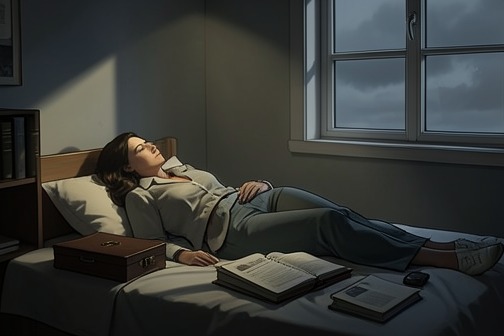
The [Murder of Charlotte Lolles](entity:event-recall-event-murder-of-charlotte-lol-a0229b5bbc0f) is one of the killings that reveals a pattern behind the investigation: Charlotte disappeared after leaving work, and her death shared distinctive features with [Borgny Stem-Myhre](entity:character-recall-character-borgny-stem-myhre-906c9cb74b58)’s. Clues from the scene and later links to travel and a mountain hut widened the case, while leaving crucial questions about what happened to Charlotte and who was involved unanswered.
## Background and Disappearance
Charlotte was 29, the daughter of a French father and a Norwegian mother, and lived alone in Lambertseter, [Oslo](entity:location-recall-location-oslo-aa85218d6b1a). She was trained as a lawyer and was working on a major property dispute. Although she had a partner, Erik Fokkestad, her colleagues knew little about him. Investigators checked him and excluded him as a suspect: when Charlotte was killed, he was attending a geology seminar in Yellowstone National Park. She had planned to accompany him but stayed in [Norway](entity:location-recall-location-7fceb8f3598f) because of her work on the dispute; the parties to that case were also established to have no connection to her murder.
Her colleagues last saw her at the office at about nine on Tuesday evening. She was apparently never seen at home. Her briefcase and case papers were later found beside her body, behind a wrecked car in [Maridalen](entity:location-recall-location-maridalen-26f5a94bb740). A colleague described Charlotte as ambitious and accustomed to working late, friendly but reserved; the description suggested how little her coworkers knew about her private life, rather than offering an explanation for her disappearance.
## The Scene and Medical Findings
The condition of Charlotte’s briefcase and the marks on the car helped reconstruct a possible struggle. Traces of car paint and rust were found beneath her fingernails, consistent with the scene. Scratches around the trunk lock suggested that she had tried to open it, and examination showed the lock had been forced at least once with a crowbar, though not by Charlotte. [Harry Hole](entity:character-recall-character-harry-hole-f71813160d7c) inferred that she might have been chained to something inside the trunk and had tried to reach it; he further suspected that the killer had taken the object away. These were investigative hypotheses, not established facts, and the object’s identity and purpose remained unknown.
The medical report placed Charlotte’s death between eleven at night and midnight. It recorded a sedative and 24 punctures in the mouth, with death by drowning caused by blood from the wounds. The report noted no other external violence and no sign of sexual assault. The unusual combination closely matched the findings in Borgny Stem-Myhre’s case, including traces of iron and coltan on the victims’ teeth. That recurring material evidence made the resemblance more than a superficial similarity, though it did not by itself identify a weapon or a perpetrator.
## Links to the Wider Investigation
The investigation later connected the victims’ movements to [Ustaoset](entity:location-recall-location-ustaoset-a909398bfbb4). On [November 7](entity:time-recall-time-11-7-2da5760d45ad), [Adele Vetlesen](entity:character-recall-character-adele-vetlesen-8694194e9d43), who had been reported missing by her partner, bought a train ticket from [Drammen](entity:location-recall-location-drammen-bb2fe05fd420) to Ustaoset; Borgny Stem-Myhre had bought a ticket from Kongsberg to the same mountain region on the same date. Ustaoset was an area rather than a single town, with mountain huts used by hikers, so the shared destination supplied a route for investigators to examine without proving that the women travelled together.
A further lead came from [Iska Peller](entity:character-recall-character-iska-peller-b8c41f86c1f3)’s account, which was charged for two beds at each of four [Norwegian Trekking Association](entity:organization-recall-organization-1f248d88e561) huts, about a day’s walk apart. The last hut on that route, [Hävasshütte](entity:location-recall-location-h-vassh-tte-003de602b696), was close to Ustaoset, and the records placed the booking there on November 7. The two-bed bookings and the overlapping date and location sharpened the investigation’s focus on the hut route, but the evidence presented does not establish Charlotte’s identity as the second guest or prove her presence there.
## Witness Account and Significance
[Elias Skog](entity:character-recall-character-elias-skog-7802f68caa39) later told a woman in [Stavanger](entity:location-recall-location-stavanger-4aa33f470c02) that, on the night at Hävasshütte, he had been woken by sounds outside. In a moonlit scene he saw a man and a woman beneath the outhouse roof. The woman appeared to him to be dancing, while the man held a hand over her mouth and pulled her into the outhouse. At the time, Elias misread what he saw and went back to sleep; after reading about the murders, he reconsidered the woman’s movements as an attempt to get free and the man’s action as an effort to stop her calling for help. His account raised the possibility of an assault at the hut, but it did not identify either person as Charlotte or establish what occurred inside.
Charlotte’s murder therefore functions as both a distinct crime and a piece of a larger pattern. The repeated medical findings, the unexplained signs around the trunk, and the converging travel and hut records gave investigators grounds to connect cases while keeping inference separate from proof. The surviving account leaves the most consequential uncertainties intact: what the missing object was, whether Charlotte was among those linked to Hävasshütte, and who killed her.
Event 3
Murder of Marit Olsen
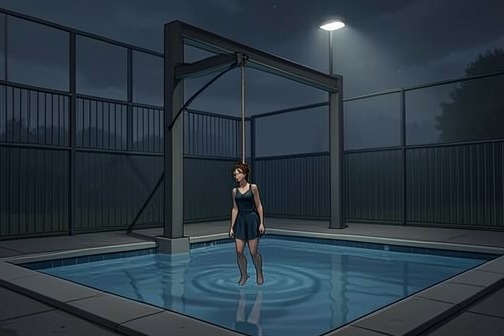
[Murder of Marit Olsen](entity:event-recall-event-murder-of-marit-olsen-973a0dc98d8d) takes place at night at [Frognerbadet](entity:location-recall-location-frognerbadet-c97ffc17d233), the enclosed public pool in [Frogner Park](entity:location-recall-location-frogner-79c39e41fa18). The killer forces the sitting member of [Storting](entity:organization-recall-organization-633e0aba9695) from a ten-metre diving tower, using a rope to make the fall fatal. The scene sets the victim’s clear desire to continue living against the deliberate arrangement of her death; later, [Harry Hole](entity:character-recall-character-harry-hole-f71813160d7c) identifies the killing as the third in a series of murders with a shared pattern.
## Setting and Circumstances
The scene begins at about 10:45 p.m. The temperature is still nine degrees Celsius, and Marit remembers that the forecast promises even milder weather the next day. Frogner Park is empty. The pool, fenced off within the much larger park, seems to her like a place deserted out of season. That isolation is not merely atmosphere: the nearby city remains active, but its traffic and lights are too far away for anyone to hear her.
The setting also carries Marit back to childhood. She recalls stories of drowned fishermen said to haunt Tronholmen, where her grandparents lived, and remembers being frightened in the bedroom there. Those memories give the empty pool a private, ghostly significance. Yet Marit is not simply absorbed in fear or resignation. She notices that she is still breathing and thinks about the life she wants: travel to unfamiliar countries, seeing her nieces grow up, and hoping the world might become more reasonable. The contrast makes the scene’s central loss precise: her future remains imaginable to her even as the killer is closing it off.
## The Assault and the Fall
Before the tower, Marit has been threatened with a knife and made to move through a gap in the pool’s fence. She had been ordered to climb over the fence but could not do so. Her fear prevents her from acting as she is told; when she tries to explain, the attacker silences her and directs her onward through the opening. The sequence establishes that she is being controlled and moved, not that she has chosen to enter the deserted pool or approach the tower.
At the top, Marit sees the empty basin and a large clock whose hands have stopped at 5:10. She wishes it were working so she could see the seconds she is still taking from death. The clock’s stopped time becomes a concrete counterpoint to her thoughts of the future: time appears suspended in the abandoned pool, while her own remaining time is being forced toward its end. The assailant tells her to jump. When his voice changes, Marit recognizes him, but the scene does not disclose his identity. A push sends her over the edge.
The rope is old-fashioned [Bast-fibre rope](entity:object-recall-object-6ae138a6b914), twisted from the fibres of linden and elm, with no elasticity. It tightens as Marit falls, but does not stop her body from striking the bottom of the pool. The account records the killing without presenting it as an accident: the rope and the tower are part of the method by which the attacker turns a forced jump into a fatal act. Once the body has fallen, the pool is quiet again.
## Staging, Public Space, and Aftermath
Marit sees the empty stands as resembling a courtroom without spectators or a public execution without a crowd. The comparison gives her death a public dimension even though no audience is present. She understands that her final appearance may go unnoticed, and that she has not been able to make her fate into a signal that others will see. The scene thus distinguishes the physical publicness of the location from actual public attention: the pool is a civic leisure space, but at night it offers no witnesses to protect her.
At nine the following morning, police have cordoned off the pool by closing the entire fence and placing an officer at the entrance. Reporters circle the site and consider how to get close enough for pictures. Their interest is sharpened by Marit’s prominence as a member of Storting, with some treating that status as grounds for public access to images of the crime. The response reverses the emptiness of the night: the site is now crowded with people seeking access, but their presence comes after the murder and serves the appetite for a view rather than Marit’s safety.
## Place in the Murder Investigation
Harry Hole later rejects the description of the case as a double murder and calls it a triple murder. His reasoning is that Marit is a woman alone at night, taken to a place where her life is ended by an unconventional method; he regards this as the third instance of the pattern in [Oslo](entity:location-recall-location-oslo-aa85218d6b1a). His assessment links her murder to the other killings without, in this scene, explaining their individual circumstances or establishing the killer’s identity.
[Gunnar Hagen](entity:character-recall-character-gunnar-hagen-5c0a9d04c570) agrees that keeping the inquiry small would reduce the risk of the [Kriminalamt](entity:organization-recall-organization-kriminalamt-c16c2ed7aea2) or the [Norwegian Ministry of Justice](entity:organization-recall-organization-cab2de460aad) learning that the murders are being investigated. He also sets a condition: if the investigation becomes public, it must not be connected to the [Violent Crime Division](entity:organization-recall-organization-25ad48fb9e46). The consequence is an inquiry framed by secrecy and institutional risk. Marit’s murder therefore has two distinct forms of significance in the narrative: it is the end of a life whose future she still wanted, and it becomes evidence in [Harry](entity:character-recall-character-harry-51d33e4b3663)’s effort to recognize a wider sequence before the investigation can safely be acknowledged.
Event 4
Harry Hole returns to Oslo
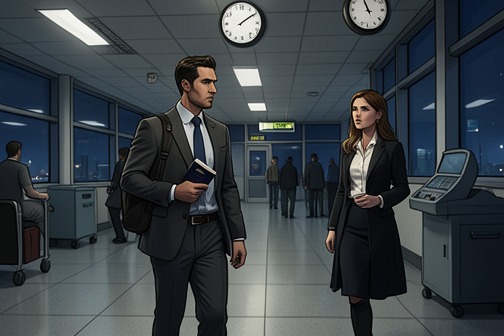
[Harry Hole](entity:character-recall-character-harry-hole-f71813160d7c)’s return from [Hong Kong](entity:location-recall-location-hong-kong-2f4c74df5dce) is both a physical homecoming and a reluctant re-entry into police work. He arrives in [Oslo](entity:location-recall-location-oslo-aa85218d6b1a) carrying the damage of the Snowman case and the loss of the life he had hoped to preserve, while [Kaja Solness](entity:character-recall-character-kaja-solness-95df543c72a3) and [Gunnar Hagen](entity:character-recall-character-gunnar-hagen-5c0a9d04c570) are trying to draw him into an investigation involving two apparently identical murders. His return does not resolve his injuries or restore his confidence; it places him back beside the work he believes he can no longer do.
## The journey out of Hong Kong
Before the flight, [Kaja](entity:character-recall-character-kaja-ad2bcaf19333) asks when it leaves and says she will meet [Harry](entity:character-recall-character-harry-51d33e4b3663) outside in three hours. He refuses that arrangement, saying he has things to attend to and will go straight to the airport. He asks for his passport, and Kaja hands over both the passport and the ticket. Her gesture is an act of trust; his expression gives her no reassurance about what he will do with it.
At [Chek Lap Kok Airport](entity:location-recall-location-423a2758af06), the clock above Gate C4 shows quarter to eight, and Kaja has nearly given up waiting. She knows from Gunnar Hagen what the case files do not say: after the Snowman murders, Harry’s former partner [Rakel](entity:character-recall-character-rakel-2c44e586e09b) and her son [Oleg](entity:character-recall-character-oleg-6dd3681b73b4) had fallen into the killer’s hands, and they left the country as soon as the case was over. Harry responded by putting his resignation on Hagen’s desk and walking away. Kaja has understood the departure as evidence of how badly the case hurt him, not simply as a professional disagreement.
Kaja has shown her boarding pass and is on her way to the gangway when she sees Harry jogging through the terminal in the slanting sunlight. He has a plain shoulder bag, a duty-free bag, and a cigarette. At the counter he stops, sets down the bag, and looks at her with resignation rather than handing over his passport. Kaja returns from the way to the aircraft to meet him. The return begins, then, not with an easy decision but with a pause at the threshold: Harry has made it to the airport, yet has not made himself proceed.
## A guarded passage
Harry gives Kaja an opened carton of Camel cigarettes with one packet missing. The duty-free bag contains no bottles, a detail that relieves her. On the flight, Kaja stays awake long enough to see the aircraft take off and Hong Kong disappear beneath the haze. She notices Harry watching the drinks trolley approach and declining the offered drink with his eyes closed. The restraint is small and concrete, but it matters against the background of a man whose injuries include more than the physical consequences of the previous case.
Kaja’s view of him remains uncertain. She wonders whether Hagen is right that Harry is the man they need. Her question is not answered by the journey itself: Harry is present, but presence is not yet confidence, and boarding does not amount to recovery. Kaja falls asleep before the flight can settle that uncertainty. Her dream of a locked door, a lonely cold birdcall from the woods, and warm sunshine leaves the passage suspended between the promise of return and the difficulty of entering whatever waits beyond it.
## The search at Oslo airport
The SAS flight from London lands in Oslo ten minutes ahead of schedule, but Harry is suddenly missing from Kaja’s company. Hagen and [Björn Holm](entity:character-recall-character-bj-rn-holm-0f5270abeba6) are told this while on their way to the airport. Hagen spots Kaja sitting on her suitcase by the taxi desk, nods to her, and hurries with Holm toward the arrivals area. Showing his identification, he gets past a guard and moves through the airport, leaving customs officers and dogs behind as he searches the rooms beyond the metal tables.
The episode turns Harry’s return into a problem of access and pursuit. Kaja has completed the journey beside him, yet on arrival he has slipped away from her. Hagen’s urgency reflects more than the inconvenience of finding a missing colleague: the investigation has been waiting for Harry, and the police are not prepared to treat his disappearance from the terminal as the end of the matter. The search also reprises the uncertainty of the departure counter. At both ends of the journey, Harry is close enough to the work to be expected, but not reliably available to the people expecting him.
## The case that brings him back
When Hagen speaks with his former chief inspector, he acknowledges that the last case went deeply wrong for Harry and that people close to him were pulled into it. He recognizes that such an experience could make someone wish for another life. Yet Hagen argues that police work is what Harry can do. His appeal is personal, but its urgency rests on the case: there are two murders, their method is not yet known, and they appear identical. Hagen says that the experience bought at such a cost in the previous investigation has taught them what kind of danger they face.
Harry does not present himself as ready to return. He proposes that Hagen assign someone suitable and describes himself as broken. When Hagen says they can put him back together, Harry answers that he is beyond repair. Hagen counters that no one else in the country has his competence and experience with serial murders; Harry’s suggestion to bring in an American does not dislodge that claim. Their exchange makes the return’s central conflict explicit: Hagen treats Harry’s experience as a resource the investigation cannot replace, while Harry experiences the same history as damage that has left him unfit for the job.
## From homecoming to renewed investigation
The return’s significance becomes clearer as the investigation develops. The murders are not an abstract appeal to Harry’s reputation. One victim, [Borgny Stem-Myhre](entity:character-recall-character-borgny-stem-myhre-906c9cb74b58), was last seen after leaving the Mono; later, two Polish bricklayers found her fully clothed in the middle of a cellar. Her death involved an unusual pattern of wounds in her mouth and drowning caused by blood from those wounds, while investigators found no useful fingerprints, DNA, or footwear impressions. The case offers precisely the kind of unfamiliar, apparently deliberate violence that makes Hagen’s appeal to Harry’s serial-murder experience consequential.
The inquiry also begins to connect separate lives through journeys and mountain accommodation. Kaja’s investigation finds that the missing [Adele Vetlesen](entity:character-recall-character-adele-vetlesen-8694194e9d43), aged twenty-eight and from [Drammen](entity:location-recall-location-drammen-bb2fe05fd420), bought a train ticket to [Ustaoset](entity:location-recall-location-ustaoset-a909398bfbb4) for [November 7](entity:time-recall-time-11-7-2da5760d45ad); Borgny bought a ticket to the same mountain region from Kongsberg on that date. A search of [Iska Peller](entity:character-recall-character-iska-peller-b8c41f86c1f3)’s account reveals payment for two beds in each of four mountain huts, roughly a day’s walk apart, including [Hävasshütte](entity:location-recall-location-h-vassh-tte-003de602b696), about half a day on foot from Ustaoset. Later, [Elias Skog](entity:character-recall-character-elias-skog-7802f68caa39)’s account of a moonlit night at Hävasshütte supplies a disturbing possible witness perspective: he had seen a man pull a woman into the outdoor toilet, initially mistaking her movements and the hand over her mouth for part of a sexual encounter. Only after reading about the murders did he reconsider what he had seen.
These later findings give the return a consequence larger than Harry’s arrival or his immediate argument with Hagen. The case draws together disappearances, travel records, isolated mountain routes, and a witness’s belated recognition of possible violence. Harry comes back without claiming that he has recovered; the investigation instead begins to demonstrate why his experience is needed. The homecoming is therefore deliberately incomplete: he is returned to the place and work he fled, while the question of whether he can withstand that work remains open.
Event 5
Harry Hole takes up the murder investigation

[Harry Hole](entity:character-recall-character-harry-hole-f71813160d7c)’s decision to investigate the deaths as a connected case marks the shift from separate, baffling crimes to a developing serial-murder inquiry. The turn is driven not by a single confession or obvious clue, but by repetition across forensic reports, travel records, and a witness’s belated reinterpretation of what he saw at [Hävasshütte](entity:location-recall-location-h-vassh-tte-003de602b696). As [Harry](entity:character-recall-character-harry-51d33e4b3663) connects those fragments, the investigation’s central question changes: the deaths may be linked, but the apparent explanation for one key episode is itself mistaken.
## From separate cases to a pattern
Harry studies the files on [Borgny Stem-Myhre](entity:character-recall-character-borgny-stem-myhre-906c9cb74b58) and Charlotte Lolles and finds an unnerving correspondence. Both women had traces of a sedative in their blood, and both autopsy reports recorded the same unusual pattern of 24 punctures in the mouth. In each case, the cause of death was drowning. The reports also noted iron and coltan on the victims’ teeth, a detail that had gained significance only after the material was found in both cases. For Harry, the recurrence makes the reports read less like accounts of unrelated killings and more like repeated parts of a single method.
The cases nevertheless differ in their circumstances. Borgny had last been seen leaving Mono after an evening event; she had told a colleague she was going home to prepare for a photo shoot. No nearby taxi driver recognized her or recalled taking her toward Sagene. Two Polish construction workers later found her in a cellar after noticing that its padlock had been forced. The medical estimate placed her death between 10 and 11 p.m. Charlotte’s death was estimated to have occurred between 11 p.m. and midnight. These distinct timelines do not undo the forensic resemblance; instead, their close succession strengthens Harry’s suspicion that the same person may be responsible.
The physical evidence offers no easy identification. Investigators had found no fingerprints, DNA, or footwear impressions at Borgny’s scene. The cleaned concrete floor provided a specific explanation for the absence of shoe marks, but not an identity. A later report recorded two small, grey-black stones that did not match the gravel there and could have come loose from a boot on hard ground. It also noted the iron and coltan traces. The stones remain a possible investigative lead rather than a solved clue, illustrating how Harry’s inquiry must work with evidence that points outward without yet naming a suspect.
## Reconstructing the victims’ movements
The investigation broadens when [Kaja Solness](entity:character-recall-character-kaja-solness-95df543c72a3) reports a connection involving [Adele Vetlesen](entity:character-recall-character-adele-vetlesen-8694194e9d43), a 28-year-old woman from [Drammen](entity:location-recall-location-drammen-bb2fe05fd420) who had been reported missing by her partner in November. A search of [Norwegian State Railways](entity:organization-recall-organization-7415b7ff3603) ticket records showed that Adele had bought an online ticket from Drammen to [Ustaoset](entity:location-recall-location-ustaoset-a909398bfbb4) for [November 7](entity:time-recall-time-11-7-2da5760d45ad). Borgny Stem-Myhre had also bought a ticket to Ustaoset for that date, travelling from Kongsberg. Their shared destination and date bring the missing-woman inquiry into the developing murder investigation.
Further transaction searches disclose another link. [Iska Peller](entity:character-recall-character-iska-peller-b8c41f86c1f3)’s account had been charged for two beds in each of four mountain huts, with the huts roughly a day’s walk apart. The bookings described a four-day route; the final hut, Hävasshütte, was only half a day’s walk from Ustaoset. These records give the inquiry a concrete route to follow and place more than one of the women’s movements in the same remote mountain region. They do not, on their own, establish who travelled together or what happened there, but they make Hävasshütte a significant point in the investigation.
That landscape also sharpens the practical stakes of reconstructing events. [Kaja](entity:character-recall-character-kaja-ad2bcaf19333) later crosses the snow-covered terrain by snowmobile with Utmo, travelling through a broad, featureless expanse beneath [Hallingskarvet](entity:location-recall-location-hallingskarvet-97c9d26efda7). The journey underlines the distance between the mountain area and ordinary help or observation: a route that can be traced in records may still be difficult to reconstruct on the ground. In the inquiry, geography is not decorative background; it shapes what witnesses could see, how people moved, and how much evidence might remain.
## A witness’s mistaken interpretation
[Elias Skog](entity:character-recall-character-elias-skog-7802f68caa39)’s account supplies a crucial scene from the night at Hävasshütte. On the night of his own murder, he had told a woman in [Stavanger](entity:location-recall-location-stavanger-4aa33f470c02) that he had seen something there that he later thought might have been a rape. He had been awakened by sounds outside a bedroom window and looked out into a moonlit night. Beneath the roof overhang of the outhouse, he saw two people: the woman faced him, while the man stood behind her, keeping his face out of view. Elias interpreted the woman’s movements and the man’s hand over her mouth as part of a sexual encounter, and went back to sleep without seeing what followed.
Only after reading about the murders did Elias reconsider what he had witnessed. The woman might have been struggling to get free, and the man might have been stopping her from calling for help. His account therefore enters the investigation in two stages: first as a possible observation of an assault, then as a scene whose meaning may have been misread. Harry asks [Krongli](entity:character-recall-character-krongli-a64d3ee19c84) whether he was present, but the evidence here does not establish an answer. What it does establish is the danger of treating a witness’s interpretation as equivalent to what the witness actually saw.
## From suspicion to investigative commitment
Harry’s response to the case files is physical as well as analytical. While reading Charlotte’s report, he recognizes how closely it resembles Borgny’s, and the repeated pattern triggers an intense reaction. He tears the file in two, carries the pieces to a rubbish container, and tries to push them beneath the other bags. He then returns to his apartment and waits through the night. As traffic begins along Pilestredet, successive police sirens draw his attention; the first could mean anything, but by the third he no longer finds that explanation convincing. The scene places his recognition amid an accumulating sense that the crimes are not isolated.
When Harry speaks with [Gunnar Hagen](entity:character-recall-character-gunnar-hagen-5c0a9d04c570), he asks for a team of three. Hagen points out Harry’s missing middle finger, while Harry drinks coffee and insists on keeping the investigative group small. Hagen agrees that fewer participants reduce the risk that the [Kriminalamt](entity:organization-recall-organization-kriminalamt-c16c2ed7aea2) or the Ministry of Justice will learn that they are investigating the case. Harry corrects the working description: this is not merely a double murder, but a triple murder, because he believes [Marit Olsen](entity:character-recall-character-marit-olsen-4d132862f7af) belongs to the same pattern. His conclusion is an investigative judgment, not yet a confirmed finding, but it determines the inquiry’s scope. Hagen makes clear that if the investigation becomes public, it must not be attributed to the [Violent Crime Division](entity:organization-recall-organization-25ad48fb9e46).
The event’s decisive change is thus both intellectual and procedural. Harry moves from comparing two files to treating three deaths as connected, then organizes a deliberately small inquiry under conditions of institutional secrecy. The early first-person account of a killer who says the police have not yet recognized the connection forms a dark counterpoint: the reader knows that a link exists before the investigators do. Harry’s work closes that gap gradually, through repetition and re-reading rather than immediate certainty. Later, the novel’s abrupt recognition that the Hävasshütte episode was not a rape, and that this mistaken assumption concealed the motive, further revises the apparent meaning of the evidence. The investigation begins with a pattern of deaths; its progress depends on learning not only which details repeat, but which explanations must be discarded.
Event 6
Mikael Bellman arrests Harry Hole at the Frognerbadet crime scene
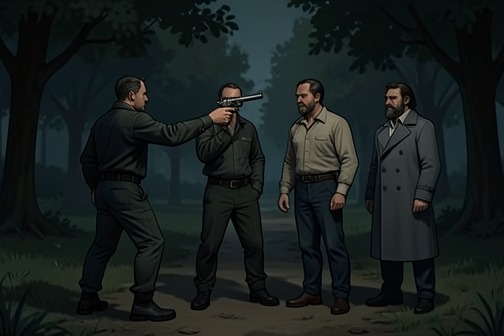
At the [Frognerbadet](entity:location-recall-location-frognerbadet-c97ffc17d233) crime scene, [Mikael Bellman](entity:character-recall-character-mikael-bellman-cebc376d993d) arrests [Harry Hole](entity:character-recall-character-harry-hole-f71813160d7c) after ordering him to leave and treating his continued presence as grounds for detention. The confrontation makes an institutional power struggle personal: Bellman publicly casts [Harry](entity:character-recall-character-harry-51d33e4b3663) as a discredited outsider, while the arrest gives him a procedural pretext to remove a potential investigator from the scene. Harry is released after two hours, but [Gunnar Hagen](entity:character-recall-character-gunnar-hagen-5c0a9d04c570) later connects Bellman’s action to the dispute over who controls the murder investigation.
## Setting and confrontation
Harry encounters three men as he cautiously steps out from a bush. One points a semi-automatic Austrian Steyr pistol at him. The armed man is [Truls Berntsen](entity:character-recall-character-truls-berntsen-98cf91ca6fe5), known as Beavis; his heavy underbite and snorting laugh make him recognizable to Harry. A shorter man, [Jussi Kolkka](entity:character-recall-character-jussi-kolkka-b43e65d632ee), stands nearby with his hands in his coat pockets. Harry knows that Kolkka carries a weapon and identification under a Finnish-sounding name. The third man, Bellman, wears an elegant gray trench coat and stands slightly apart. The other two appear to take their cue from him, giving the encounter the character of an arrest already directed by its senior figure before he announces it.
Bellman’s appearance contrasts with the hostility of his gaze. Harry registers his carefully styled dark-gray hair, fine features, long eyelashes, and sun-browned skin dotted with small pigment marks; what impresses him most, however, is the concentrated hatred in Bellman’s look. The encounter is therefore not framed as a neutral exchange between officials. Bellman’s contempt is visible before he states his demand, and his companions’ positions make that contempt carry the force of institutional authority.
## From exclusion to arrest
Bellman orders Harry to leave and never again come near a crime scene being investigated by the [Kriminalamt](entity:organization-recall-organization-kriminalamt-c16c2ed7aea2). Harry answers that he has heard the instruction but does not understand it, and tries to offer the police a tip concerning [Marit Olsen](entity:character-recall-character-marit-olsen-4d132862f7af). Bellman interrupts, dismisses Harry as an alcoholic, lawbreaker, and nuisance, and tells him to go back under the stone from which he emerged. The insult does more than reject Harry’s offer: it defines him, in Bellman’s account, as someone whose presence can only damage the police.
After telling Harry to disappear immediately, Bellman announces that he is under arrest. His stated basis is that Harry has been asked three times to leave the crime scene and has not complied. The sequence turns the earlier orders into a procedural rationale: Harry’s attempt to remain useful is recast as defiance. When Harry protests, Berntsen grabs his arm. Harry’s cigarette falls onto the wet ground; as he bends to retrieve it, Kolkka drives a knee into his back, sending him forward so that his forehead strikes the ground. Dirt and bile fill his mouth as Bellman speaks close to his ear.
Bellman then says that Harry is resisting arrest and reminds him that he had been ordered to put his hands behind his back. The claim follows the physical takedown, converting the officers’ force into a further accusation against Harry. Bellman places a hand on Harry’s backside. Harry understands the danger of responding physically: Bellman would have two witnesses to support a charge of assaulting an officer, which could carry a five-year sentence. Rather than give him that opportunity, Harry controls himself, places his arms behind his back, and turns his head away.
## Restraint and release
As Harry submits, the wind parts the fog above the scene. He sees a slender white diving tower against the gray sky and something, perhaps a rope, swinging from its highest platform. The arrest thus leaves the crime scene’s disturbing image in view even as Bellman takes control of Harry’s body and removes him from it. Harry focuses his attention on [Rakel](entity:character-recall-character-rakel-2c44e586e09b) rather than on Berntsen’s laughter or Bellman’s cologne. The cuffs close with a quiet click, and Bellman watches from the parking lot on Middelthuns gate as the men drive away.
Harry spends two hours on a bunk in the detention cell. When he next opens his eyes, Hagen is outside struggling with the key and apologizes for having been in a meeting. He tells Harry that he has spoken with the prosecutor and that Harry can be released; the cells are for temporary detention, not punishment or conviction. The release clarifies the limited formal outcome of Bellman’s action. Harry has been detained, but the account does not describe a conviction or a sentence arising from the encounter.
## Institutional stakes
Hagen explains that he should have anticipated both the leak that the police intended to track Harry down and Bellman’s attempt to prevent it. He places the arrest within a dispute over police savings, rationalization, and jurisdiction: whether a small country such as [Norway](entity:location-recall-location-7fceb8f3598f) can sustain two specialist departments with overlapping powers, the [Violent Crime Division](entity:organization-recall-organization-25ad48fb9e46) and the Kriminalamt. The disagreement has flared again under the Kriminalamt’s new deputy leader, Bellman. This context makes the arrest more than an isolated clash over access to a scene. Bellman uses the authority of the department investigating there to exclude Harry at a moment when Hagen’s side is seeking him out.
The encounter’s immediate reversal is stark: Harry approaches the scene offering information, is physically overpowered, and leaves in handcuffs; two hours later he is released without the detention becoming a conviction. Its broader consequence is to expose how jurisdictional rivalry can shape the treatment of an investigator before the merits of his contribution are considered. Bellman’s insults, the armed presence of Berntsen and Kolkka, and the arrest procedure all reinforce the same message: control of the crime scene also means control over who is allowed to investigate.
Event 7
Kriminalamt assumes control of the murder investigation
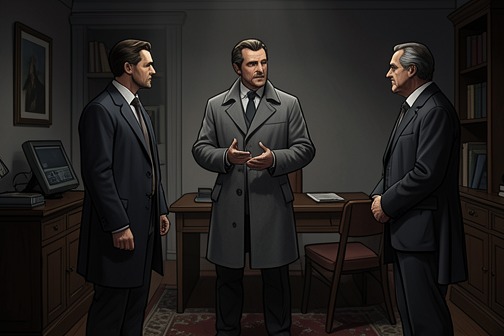
The [Kriminalamt](entity:organization-recall-organization-kriminalamt-c16c2ed7aea2)’s attempt to assume control of the murder investigation is both an administrative power struggle and a practical obstruction to solving the case. [Mikael Bellman](entity:character-recall-character-mikael-bellman-cebc376d993d)’s push to centralize authority collides with [Oslo](entity:location-recall-location-oslo-aa85218d6b1a) police’s insistence that the force closest to the crimes must retain a say in how they are investigated; as the agencies contest control, information is withheld and the investigation stalls.
## Background to the dispute
The conflict predates the murders. [Gunnar Hagen](entity:character-recall-character-gunnar-hagen-5c0a9d04c570) describes an old rivalry between the Oslo police’s [Morddezernat](entity:organization-recall-organization-morddezernat-51f5ce27c59f) and the Kriminalamt, sharpened by debate over whether [Norway](entity:location-recall-location-7fceb8f3598f) has enough resources to maintain two specialist units with overlapping powers. A proposal to consolidate murder investigations in a single competence center promised more centralized use of limited resources, but also threatened the local department’s authority and continued existence.
Bellman, newly returned to the Kriminalamt as its deputy head after working at [Europol](entity:organization-recall-organization-7c8c715daac1) in The Hague, became the principal force behind the agency’s bid for greater control. His first controversy concerned the proposed appointment of his former Europol colleague, [Jussi Kolkka](entity:character-recall-character-jussi-kolkka-b43e65d632ee), a Finnish-trained officer who lacked the formal qualifications required to hold police status in Norway. After the union objected, Kolkka was brought in temporarily through an exchange arrangement. The episode establishes a pattern: Bellman presses against existing rules, and institutional resistance produces a workaround rather than ending the conflict.
## The change in authority
Bellman’s next move was to interpret the regulations so that, in major murder cases, the Kriminalamt could decide whether a case belonged to the agency or to the relevant local police force. Previously, that decision rested the other way around. The shift was not merely a technical adjustment: it would let the national agency determine the reach of its own jurisdiction.
Hagen argues that the Oslo police must be able to decide which cases it can handle alone, when it needs assistance, and which cases should be transferred altogether. In his account, the Kriminalamt was established to support local police with specialist expertise in difficult investigations, not to place itself above them as an authority with final say. He also objects to Bellman drawing the [Norwegian Ministry of Justice](entity:organization-recall-organization-cab2de460aad) into the dispute, because the ministry’s interest in consolidating all murder investigations could convert a contested interpretation into a lasting institutional settlement.
The disagreement is therefore about more than which team gets a particular case. Hagen warns that concentration in one center risks narrowness and professional insularity, while reducing the value of local knowledge, broad competence, and recruitment of new investigators. The proposed system may be presented as rationalization, but from the Oslo department’s perspective it threatens both investigative diversity and its own role.
## The murders become a jurisdictional test
The conflict becomes acute after Charlotte Lolles is found dead behind a Datsun and the Oslo investigators recognize a resemblance to the earlier murder in the basement of a new building. Although both bodies were found in Oslo, the Kriminalamt claims the linked double murder as its responsibility and begins investigating on its own. Hagen understands the case as a test: the Ministry’s future support for the agency’s expansion is expected to depend on the outcome.
That political pressure changes the meaning of investigative success. [Harry Hole](entity:character-recall-character-harry-hole-f71813160d7c) asks whether the contest is now about solving the case before the Kriminalamt does. Hagen resists reducing the issue to a simple race, but confirms that the agencies’ conduct has made cooperation difficult. Bellman refuses to share information with Oslo police, and the investigation there comes to a standstill. The agency’s bid for control thus produces the very practical consequence that the dispute ostensibly ought to prevent: investigators working on the same murders cannot freely pool what they know.
The Oslo police chief then receives a call conveying that the Ministry of Justice would welcome the Kriminalamt taking over the case until the jurisdictional question is finally settled. This is a proposed interim transfer, not evidence that the larger dispute has been resolved. For [Harry](entity:character-recall-character-harry-51d33e4b3663), the sequence makes the institutional stakes plain: Bellman’s agency has an opening to establish control, while the local department is left trying to investigate without access to the other side’s information.
## Public statements and contested knowledge
Bellman’s public handling of a later death reinforces the conflict over who controls not only the investigation but also its account. At a press conference, he says that police have neither a lead nor a suspect and that suicide has not been ruled out. When a journalist asks whether the death may be connected to the other two, Bellman answers that the police have not excluded a connection, while rebuking the reporter for treating that qualification as a statement of belief.
The exchange distinguishes carefully between what investigators know, what they are considering, and what they are willing to say publicly. Bellman’s insistence on that distinction is procedurally defensible, but the press conference also shows how institutional authority is performed: he controls the wording, interrupts a question, and declines to turn uncertainty into a public conclusion. Against Hagen’s account of information withheld within the police, the scene makes uncertainty itself part of the contest.
The murders’ wider pattern emerges through evidence rather than through the agency’s public declarations. [Borgny Stem-Myhre](entity:character-recall-character-borgny-stem-myhre-906c9cb74b58) was last seen after leaving the Mono, where she had attended a fashion event; two Polish bricklayers later found her in a basement. The forensic investigation identified a narrow time of death, traces of a fast-acting sedative, and an unusual pattern of mouth injuries, but no usable fingerprints, DNA, or footwear impressions. Those facts show why recognizing links between cases matters, while also underlining how little a public statement about the absence of leads can convey about the work still required.
## Wider investigation and significance
The inquiry subsequently connects Borgny’s movements to a larger set of questions. [Adele Vetlesen](entity:character-recall-character-adele-vetlesen-8694194e9d43), reported missing by her partner, had bought a train ticket from [Drammen](entity:location-recall-location-drammen-bb2fe05fd420) to [Ustaoset](entity:location-recall-location-ustaoset-a909398bfbb4) for [November 7](entity:time-recall-time-11-7-2da5760d45ad), the same date Borgny had bought a ticket to the same mountain area from Kongsberg. Investigators also find that [Iska Peller](entity:character-recall-character-iska-peller-b8c41f86c1f3)’s account was charged for pairs of beds in four association huts, roughly a day’s walk apart; the final hut, [Hävasshütte](entity:location-recall-location-h-vassh-tte-003de602b696), lay about half a day’s walk from Ustaoset. These details broaden the case beyond the Oslo crime scenes and make the investigation’s coordination more consequential, though they do not settle the jurisdictional argument.
A later account by [Elias Skog](entity:character-recall-character-elias-skog-7802f68caa39) adds another troubling element: at Hävasshütte, he saw a man take a woman into the outhouse and initially interpreted the scene as sexual activity. Only after reading about the murders did he reconsider whether the woman might have been trying to escape. The episode demonstrates how an apparent explanation can conceal a different event, and why investigators need to compare testimony and evidence rather than rely on first impressions. Much later, Harry’s sudden recognition that the encounter was not a rape reframes the episode as relevant to motive, showing that the investigation’s most important conclusions may depend on interpreting the evidence correctly rather than merely claiming institutional possession of it.
The takeover dispute therefore remains more than a contest between Bellman and Hagen. It sets centralized authority against local responsibility, resource efficiency against breadth of expertise, and public certainty against evidence that is still changing meaning. The Kriminalamt’s claim to the case creates a test of institutional power, but the investigation’s progress depends on connections across people, places, and records—precisely the work that the refusal to share information puts at risk.
Event 8
Formation of Harry Hole's clandestine investigation team
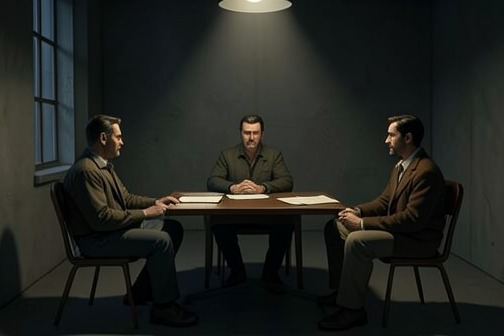
[Formation of Harry Hole's clandestine investigation team](entity:event-recall-event-formation-of-harry-hole-601dc334d550) is the moment a politically risky murder inquiry becomes a three-person operation: [Harry Hole](entity:character-recall-character-harry-hole-f71813160d7c), [Kaja Solness](entity:character-recall-character-kaja-solness-95df543c72a3), and [Björn Holm](entity:character-recall-character-bj-rn-holm-0f5270abeba6) investigate on the understanding that their department can disown their work. [Gunnar Hagen](entity:character-recall-character-gunnar-hagen-5c0a9d04c570) approves the team but attaches a condition of secrecy and deniability. Their headquarters, a stark room inside [Botsen Prison](entity:location-recall-location-botsen-3b31dde40338), gives the arrangement a physical form: the investigators are close to the police institution, yet hidden from its ordinary offices and oversight.
## The Case and the Need for Secrecy
[Harry](entity:character-recall-character-harry-51d33e4b3663) asks Hagen for a team of three, consistent with his preference for working without a large investigative group. Hagen accepts the small size partly because fewer participants mean less chance that the [Kriminalamt](entity:organization-recall-organization-kriminalamt-c16c2ed7aea2) or [Justizministerium](entity:organization-recall-organization-justizministeriu-5bf8477f414d) will learn that they are investigating the murders. Their disagreement over the case’s scope is immediate. Hagen refers to a double murder and hesitates over whether [Marit Olsen](entity:character-recall-character-marit-olsen-4d132862f7af) belongs in the same series; Harry insists that the pattern makes it a triple murder. He points to the repeated circumstance of a woman alone at night being taken somewhere and killed in an unconventional way, and argues that [Oslo](entity:location-recall-location-oslo-aa85218d6b1a) is small enough for the investigators’ paths to cross with the Kriminalamt’s if they are not careful.
The secrecy is not merely administrative. Hagen sets out what will happen if the investigation becomes public: the department will express regret that some of its personnel were involved, while presenting the inquiry as a lone operation conducted by the notorious outsider Harry without the department leadership’s knowledge. Harry is expected to confirm that account. The team therefore begins with an explicit division between the work it undertakes and the version of events its institution is prepared to acknowledge. Its small size limits exposure, but the cost of that protection falls especially on Harry, who is assigned the role of scapegoat in advance.
The underlying evidence helps explain why Harry is unwilling to treat the deaths as separate cases. [Borgny Stem-Myhre](entity:character-recall-character-borgny-stem-myhre-906c9cb74b58) had last been seen leaving the Mono after an evening event; neither the available taxi drivers nor the records Harry reviews place her in a cab to Sagene. Two Polish construction workers later found her fully clothed in a basement, lying in a twisted position. The medical findings were unusually specific: she died between ten and eleven at night, ketamine was present in her blood, and blood from wounds in her mouth caused her to drown. The examiner recorded 24 symmetrically arranged punctures, each seven centimeters deep except for those that passed through the face. No fingerprints, DNA, or shoe impressions were found. The baffling method, combined with the absence of ordinary traces, gives the investigation a distinctive puzzle rather than a routine case file.
## Recruitment and the Team’s Terms
The team takes shape through a separate act of institutional permission. [Beate Lonn](entity:character-recall-character-beate-lonn-3bd8acd67209) tells [Kaja](entity:character-recall-character-kaja-ad2bcaf19333) that she is being released for fourteen days to work on the murders, with a first report due on her desk in five working days. Kaja’s response is intensely enthusiastic, though she tries to keep it under control. Harry then confirms that Hagen agrees to her participation. The declared membership is limited to Holm, Kaja, and Harry; the case they are working on is confidential, and they are to meet in Harry’s office at seven the next morning.
That instruction makes the operation both definite and provisional. The three investigators have a start time, a reporting obligation, and an agreed boundary around who knows their subject, but they do not have an ordinary office or an openly sanctioned major investigation. The strict early report deadline also sits beside the demand for secrecy: Kaja must report upward on their work while the team avoids attracting the attention of the organizations that might take control of it. Harry’s condition that the team remain small is thus reflected in the roster, while Hagen’s condition determines how the roster can be represented if discovered.
## A Headquarters Beneath the Institution
The choice of headquarters is made when Harry asks Hagen where they will establish it. Hagen looks toward the gray walls of Botsen Prison, and Harry recognizes the suggestion as a joke—until it proves to be their destination. At 6:58 the following morning, Harry, Kaja, and Holm walk through a 400-meter underground tunnel connecting police headquarters to the [Oslo District Prison](entity:location-recall-location-001dec5e31b0). The passage has served practical and less benign purposes: it can be used to bring prisoners to questioning, as a winter running route, and, in earlier times, for unofficial rough treatment of especially resistant prisoners.
At the tunnel’s end, the trio duck beneath the stairs leading to the cell block. Harry unlocks an iron door, and stale warmth meets them. The room is a windowless concrete space lit by cold blue neon, with gray-blue linoleum and bare walls. It has no heating of its own and none of the usual comforts of a working office. Its equipment is limited to tables, chairs, and three computers, with a brown-crusted coffee machine and a jug of water on the floor. The nearby prison boilers account for the room’s heat; the practical necessities are present, but only just. Kaja accepts the place with dry good humor, while Holm compares its atmosphere to hell. Mobile reception is unreliable, though the room has an internet connection.
The location gives the clandestine arrangement its defining contrast. The team is not outside the police system: its room lies beneath the police-and-prison complex and can be reached directly from headquarters. Yet the tunnel, locked iron door, lack of windows, and uneasy history of the passage make the work feel secluded from ordinary institutional life. The room is at once a functioning workplace and a deliberately marginal one, equipped for investigation but stripped of visibility and comfort.
## What the Team’s Investigation Connects
The subsequent investigative clues show the kind of pattern Harry’s insistence on a third murder is meant to pursue. Kaja finds that [Adele Vetlesen](entity:character-recall-character-adele-vetlesen-8694194e9d43), a 28-year-old woman from [Drammen](entity:location-recall-location-drammen-bb2fe05fd420) reported missing by her partner in November, bought a train ticket online on [November 7](entity:time-recall-time-11-7-2da5760d45ad) from Drammen to [Ustaoset](entity:location-recall-location-ustaoset-a909398bfbb4). Borgny Stem-Myhre bought a ticket from Kongsberg to the same destination for that date. The shared destination turns a missing-person report into a possible link with a woman whose murder had already resisted explanation.
A further transaction connects the inquiry to [Iska Peller](entity:character-recall-character-iska-peller-b8c41f86c1f3). Her account was charged on November 20 for two beds in each of four mountain huts, with the huts about a day’s walk apart. The final hut was [Hävasshütte](entity:location-recall-location-h-vassh-tte-003de602b696), where the pair had been on November 7, roughly half a day’s walk from Ustaoset. These details supply a route and a date, not yet a complete explanation: tickets and hut bookings establish converging movements, while the relationship between those movements and the killings still has to be tested.
An account from [Elias Skog](entity:character-recall-character-elias-skog-7802f68caa39) adds another layer to the team’s eventual reconstruction. At Hävasshütte, he woke to noises and saw a man behind a woman beneath the outhouse roof. The man covered her mouth and pulled her into the outhouse. Elias initially interpreted what he saw as the beginning of sex; after reading about the murders, he reconsidered whether the woman might have been struggling to escape and the covered mouth meant to silence a cry for help. Later, when Harry learns that [Tony Leike](entity:character-recall-character-tony-leike-f78d2a737905) raped Adele at Hävasshütte, he realizes that the apparent explanation still does not fit: it was not a rape, and that distinction is the motive. The eventual reversal demonstrates why the team’s work cannot rest on a pattern alone. The shared night and isolated setting matter, but the meaning of what happened there has to be re-examined as new information arrives.
## Significance of the Formation
The team’s formation establishes two parallel investigations: the search for what connects the victims, and the struggle to keep that search alive without exposing its members to institutional interference. Harry supplies the forceful claim that the murders form a series; Hagen supplies a narrow authorization whose survival depends on concealment; Kaja and Holm complete a deliberately small working group. Their first office is not a conventional command center but a room reached by a tunnel beneath the prison, where three computers and a water jug stand in for the resources and security the team lacks.
The arrangement also foreshadows the investigation’s method. The investigators must follow scattered particulars—an unrecognized woman after a bar, matching train destinations, two beds booked across four huts, and a witness’s mistaken reading of a night-time encounter—without assuming that an apparent connection has already disclosed its meaning. Hagen’s proposed public account makes that uncertainty personally dangerous for Harry: if the work fails or is exposed, the department has already prepared to describe it as his unauthorized solo venture. The team begins, then, with cooperation among its three members and institutional abandonment waiting as its fallback.
Event 9
The Serial Murders of Borgny Stem-Myhre, Charlotte Lolles, and Marit Olsen

[The Serial Murders of Borgny Stem-Myhre, Charlotte Lolles, and Marit Olsen](entity:event-recall-event-borgny-stem-myhre-charl-0d1e0d16b6c1) form a case whose apparent pattern is clearer than its cause: the investigators come to suspect a common perpetrator or perpetrators, but cannot yet establish who was present at the crucial mountain hut or why the women were killed.
## Pattern and Initial Evidence
In a first-person account, an unidentified speaker describes collecting newspaper photographs of people who had seemed happy and secure before their deaths. The speaker observes that the police have not yet connected the murders, but expects them to do so. This strand places the crimes inside a larger pattern before the investigation has recognized one, while withholding the speaker’s identity and the truth behind the killings.
The case file gives the investigators concrete grounds to look for a link. [Borgny Stem-Myhre](entity:character-recall-character-borgny-stem-myhre-906c9cb74b58) was last seen leaving the Mono after an evening event; she had told a friend and colleague she planned to go home and prepare for a photo shoot. No nearby taxi driver identified her or recalled taking her to Sagene. Two Polish construction workers later found her in a cellar after noticing that its iron-door padlock had been forced. The medical examination placed her death between 10 and 11 p.m. and found [Ketanomin](entity:object-recall-object-4d7a15313682) in her blood. Her death was attributed to drowning following injuries to her mouth; the unusual pattern of punctures left investigators unable to identify the instrument used. Investigators also lacked ordinary trace evidence, in part because the concrete floor had been cleaned the previous day for building work.
The inquiry’s geographical and chronological clues begin to draw the victims together. A search of missing-person records identifies [Adele Vetlesen](entity:character-recall-character-adele-vetlesen-8694194e9d43), who had been reported missing by her partner in November. Ticket records show that Adele bought a train ticket from [Drammen](entity:location-recall-location-drammen-bb2fe05fd420) to [Ustaoset](entity:location-recall-location-ustaoset-a909398bfbb4) for [November 7](entity:time-recall-time-11-7-2da5760d45ad); Borgny Stem-Myhre had bought a ticket from Kongsberg to the same destination on that date. A separate account search finds that [Iska Peller](entity:character-recall-character-iska-peller-b8c41f86c1f3) paid for two beds in each of four mountain huts, with the huts roughly a day’s walk apart. The final hut, [Hävasshütte](entity:location-recall-location-h-vassh-tte-003de602b696), was near Ustaoset, and the records place the booking there on November 7. These records do not by themselves establish what happened, but they move the investigation from resemblance between deaths toward a shared location and possible company.
## The Hut and the Reinterpreted Witness Account
[Harry](entity:character-recall-character-harry-51d33e4b3663) weighs the travel and booking records as evidence of proximity, not proof of a shared crime scene. His assessment is that Charlotte Lolles was very likely with Adele Vetlesen, while Borgny Stem-Myhre and [Marit Olsen](entity:character-recall-character-marit-olsen-4d132862f7af) had both been near Ustaoset. The records therefore point toward overlapping company and place, but leave a crucial gap: the investigators still do not know who else was at Hävasshütte or what happened there.
[Elias Skog](entity:character-recall-character-elias-skog-7802f68caa39)’s account gives that gap a human witness, though not an immediate explanation. During the night at the hut, he was awakened by sounds outside his bedroom window and saw a man and a woman near the outhouse. He took their movements for a sexual encounter and returned to sleep before seeing what happened next. Only after reading about the murders did he reconsider what he had observed: the woman might have been trying to get free, and the man’s hand over her mouth might have been meant to stop her calling for help. The scene is thus introduced through a witness’s mistaken interpretation, and the murders retrospectively alter its meaning without making his observation conclusive.
Later, Harry’s working interpretation shifts again. He initially considers the possibility that [Tony Leike](entity:character-recall-character-tony-leike-f78d2a737905) assaulted Adele at the hut, but then recognizes that the encounter was not what he had assumed and that this reversal supplies the motive. The realization changes the meaning of the apparent pattern: the hut connects people and events, yet the connection is not explained by the straightforward violent crime Harry first imagined. The evidence available here stops at that turning point; it does not establish the full motive or identify all those present.
## The Killer’s Theory of Mercy
The opening first-person voice offers a private theory of what makes a murderer. It rejects the idea that the capacity to kill belongs only to a distinct class of people, presenting it instead as part of ordinary human existence and, in extremity, a means of survival. From that premise, the speaker recasts murder as an acceleration of the death that awaits everyone and therefore as a possible act of mercy. This is not an explanation established by the investigation, but the speaker’s own moral framework for the crimes.
The passage also exposes a tension within that framework. The speaker argues that life consists of suffering, yet recognizes how readily warmth, water, and the desire to continue living can make a person surrender dignity, position, or principles. In that moment, the speaker’s supposed clarity depends on resisting the pull of life itself. The stark opposition between blinding light and clear-sighted darkness makes the doctrine sound less like a settled answer than a conviction the speaker must repeatedly enforce. Its claim to have found the truth behind murder thus stands apart from the investigators’ unresolved work: a self-justification is present, but the evidence does not yet establish how it accounts for each killing.
## The Uneven Pattern of the Case
Harry’s later inventory makes clear that the suspected connection does not rest on a single repeated method: two women were killed in a similar manner and had Ketanomin in their blood, while another woman was found hanged from a diving tower with a rope from an old rope factory. The inventory also includes Elias Skog, who drowned in his own bathtub. Although the victims appeared to have been at Hävasshütte at the same time, the investigation had not established who else was there, what occurred at the hut, or what motive linked the deaths. The case therefore remains suspended between a compelling overlap and an unproved explanation: the evidence can bring people and places together without yet showing that every death belongs to one comprehensible design.
Event 10
Night at Håvasshütte
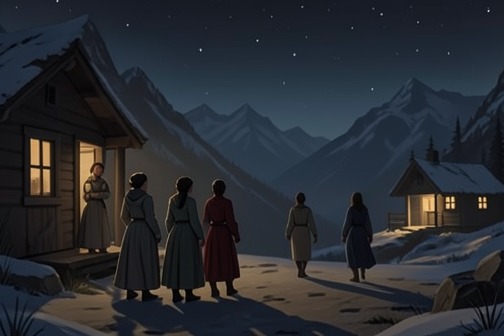
[Night at Håvasshütte](entity:event-recall-event-h-vassh-tte-5fcf58ea20db) is the concealed intersection of several women’s journeys into the mountains and a possible assault witnessed, but misunderstood, by [Elias Skog](entity:character-recall-character-elias-skog-7802f68caa39). The night acquires its meaning retrospectively: investigators join scattered rail and lodging records, while Elias’s account transforms an apparently sexual encounter outside the cabin into something he later feared might have been an attack.
## Routes and records
The investigation places the relevant stay on [November 7](entity:time-recall-time-11-7-2da5760d45ad). [Adele Vetlesen](entity:character-recall-character-adele-vetlesen-8694194e9d43), a 28-year-old woman from [Drammen](entity:location-recall-location-drammen-bb2fe05fd420) reported missing by her partner in November, had bought a train ticket online from Drammen to [Ustaoset](entity:location-recall-location-ustaoset-a909398bfbb4) for that date. [Borgny Stem-Myhre](entity:character-recall-character-borgny-stem-myhre-906c9cb74b58) had separately purchased a ticket from Kongsberg to the same destination. The matching journeys gave investigators a specific point of convergence in a sparsely settled mountain region, rather than merely a general resemblance between women who enjoyed hiking.
[Marit Olsen](entity:character-recall-character-marit-olsen-4d132862f7af)’s route was less direct in the records. Investigators found no registered train ticket for her, but a payment made with a dining-car card was recorded at 2:13 p.m. the previous day, while the train was between Äl and [Geilo](entity:location-recall-location-geilo-d8a0ca47b8c7), before reaching Ustaoset. [Harry Hole](entity:character-recall-character-harry-hole-f71813160d7c) initially observed that the train continued to [Bergen](entity:location-recall-location-bergen-b2eab2ba8384), so the payment alone did not establish Marit’s destination. A hotel record supplied a further connection: a double room in Ustaoset had been registered to [Rasmus Olsen](entity:character-recall-character-rasmus-olsen-a6282754d727), whose registered address matched Marit’s. The records thus supported the inference that Marit was travelling with her husband, while leaving the ticket trail incomplete.
A separate account added [Iska Peller](entity:character-recall-character-iska-peller-b8c41f86c1f3) to the pattern. On November 20, her account was charged for two beds in each of four mountain huts, spaced about a day’s walk apart. The itinerary suggested a four-day trek; its last hut was [Hävasshütte](entity:location-recall-location-h-vassh-tte-003de602b696), about half a day’s walk from Ustaoset. The account showed that Iska had paid for two people at the hut on November 7. Adele had also paid for two people to stay there that night. Investigators could identify neither Adele’s companion nor, from the payment alone, the identity of the second person travelling with Iska. Another payment made by proxy came from someone in [Stavanger](entity:location-recall-location-stavanger-4aa33f470c02), but [Katrine Bratt](entity:character-recall-character-katrine-bratt-f2968dfe50e1) considered that person’s identity less important to the immediate connection.
## The cabin and the missing register
Hävasshütte was unstaffed, so investigators could not simply telephone an attendant and ask who had stayed there. [Kaja Solness](entity:character-recall-character-kaja-solness-95df543c72a3) explained that visitors to tourist huts were required to enter their names and addresses in a guestbook and note their intended onward route. The rule was practical as well as administrative: if someone vanished in the mountains, rescue teams could use the record to decide where to begin searching. [Kaja](entity:character-recall-character-kaja-ad2bcaf19333) went to Ustaoset to find out who had accompanied Adele, hoping that Adele and her companion had entered their full names and addresses.
The guestbook requirement gives the night a double significance. A record intended to make isolated travel safer could also preserve the meeting of people who might otherwise have left no trace of sharing a place. But the payment records and the register were not interchangeable: the accounts established bookings for pairs, whereas they could not by themselves name the companions. The distinction kept the investigation’s central question open even as the separate journeys began to converge.
## What Elias saw
The most troubling account came from Elias, who later described what he had seen at Hävasshütte. On the night in question, noises outside his bedroom window woke him. In moonlight he saw two people standing in shadow beneath the overhang of the outhouse. The woman faced him; a man stood behind her, positioned so that Elias could not see his face. From inside, he interpreted the scene as the beginning of sex. The woman appeared to him to be belly-dancing, and he took the man’s hand over her mouth as an attempt to keep the others from waking.
Elias did not see what happened next. The man pulled the woman into the outhouse, cutting off Elias’s view. Disappointed that the episode had ended before he could watch more, Elias went back to sleep. Only later, after reading about the murders, did he reconsider the scene: the woman’s movements might have been an effort to escape, and the hand over her mouth might have been intended to stop her calling for help. The shift does not make Elias’s original interpretation reliable evidence of what occurred; it shows how easily an apparent private encounter could conceal coercion from a witness who did not recognize it as danger.
## Discovery and investigative significance
The link between the mountain stay and Borgny’s death was built from travel records, not from proof that she was killed at the hut. After leaving the Mono, where a fashion-magazine launch had run from seven to eight, Borgny had told a colleague she was going home to prepare for a jungle-meets-punk photo shoot. No nearby taxi driver in the records recognized her or reported taking her to Sagene. She was not seen again until two Polish bricklayers arrived for work, noticed that the cellar’s iron-door padlock had been forced, and found her fully clothed on the floor in a twisted position. The path from the hut to that discovery remains distinct from the evidence that she had travelled to Ustaoset.
The medical findings sharpened the contrast between the apparently ordinary journey and the violence surrounding the case. Borgny’s death was estimated to have occurred between ten and eleven that night. Ketamine was found in her blood, but the cause of death was drowning in blood from wounds inside her mouth. The examiner counted 24 symmetrically placed punctures, each seven centimetres deep except those that passed through her face. Investigators did not know what instrument had made them, and the concrete floor yielded no fingerprints, DNA, or shoe or boot impressions. These findings do not locate the killing at Håvasshütte; rather, they explain why the night’s shared routes and Elias’s obscured view mattered so much. When Harry Hole later asked [Krongli](entity:character-recall-character-krongli-a64d3ee19c84) whether he had been there, the question brought the remembered scene into direct contact with the investigation, but the account itself did not resolve the identities of the two figures.
Event 11
Adele Vetlesen's Disappearance
[Adele Vetlesen](entity:character-recall-character-adele-vetlesen-8694194e9d43)’s disappearance turns an apparently closed missing-person case into a disputed trail of identities, tickets, and travel records. A train booking connects her to [Borgny Stem-Myhre](entity:character-recall-character-borgny-stem-myhre-906c9cb74b58); a postcard and official inquiries seem to place her in [Rwanda](entity:location-recall-location-d1e0bd5741f5); then a check of [Kigali](entity:location-recall-location-kigali-8524b29cabf8)’s immigration records undermines the account. The evidence establishes neither where Adele went nor who, if anyone, traveled under her name. Instead, each apparent confirmation makes the question of her identity more urgent.
## The [Ustaoset](entity:location-recall-location-ustaoset-a909398bfbb4) connection
Adele was 28, from [Drammen](entity:location-recall-location-drammen-bb2fe05fd420), and had been reported missing by her partner in November. The first concrete link to the other women under investigation was a [Norwegian State Railways](entity:organization-recall-organization-7415b7ff3603) booking: on [November 7](entity:time-recall-time-11-7-2da5760d45ad), Adele bought a train ticket online from Drammen to Ustaoset. For that same date, Borgny Stem-Myhre had bought a ticket from Kongsberg to the same destination. The matching journey does not establish that the women met, but it gives the investigation a specific shared place and day rather than a merely circumstantial resemblance between cases.
Ustaoset is described as a mountain region, not a conventional town. Its summer cabins and network of larger tourist huts draw hikers across the mountains, often on skis and carrying heavy packs. That setting makes the matching tickets notable: two women were independently booked to travel to the same mountain area on the same date. The destination points the investigators toward a possible connection, while the evidence at this stage leaves the nature of that connection unresolved.
## A postcard and an apparent African itinerary
When [Harry Hole](entity:character-recall-character-harry-hole-f71813160d7c) and [Kaja Solness](entity:character-recall-character-kaja-solness-95df543c72a3) ask why the police had stopped investigating Adele’s disappearance, [Geir Bruun](entity:character-recall-character-geir-bruun-c6926be861b7) points to a postcard from Rwanda. It said that Adele had met the man of her dreams and that Bruun would have to pay the rent alone until she returned in March. The message supplied an apparent explanation for her absence, but it did not give a precise location or independently establish that Adele had written it.
The police produce the card: its photograph shows a cone-shaped mountain disappearing into cloud, without identifying the mountain or its location. A Rwandan stamp bears a Kigali postmark. The handwriting is angular and difficult for [Harry](entity:character-recall-character-harry-51d33e4b3663) to read, but Adele’s mother confirms that it is her daughter’s. An inquiry also finds Adele on the passenger list for a Brussels Airlines flight to Kigali on [November 25](entity:time-recall-time-11-25-6428373ac885), via Entebbe, Uganda. Interpol’s hotel search turns up a guest named Adele Vetlesen at the [Gorilla Hotel](entity:location-recall-location-21e15cfab2d2) in Kigali. Taken together, the postcard, flight listing, and hotel record appear to support a journey to Rwanda.
Yet these records do not resolve the missing-person case. The police explain that Adele remains on the list because no one knows her present whereabouts, and a postcard from abroad does not technically change that status. The officer also raises the possibility that she could have been abducted and compelled to write the card, invoking human trafficking and the region’s violence. That is presented as a possibility, not as a finding about what happened to Adele; the official evidence of travel will soon prove less secure than it first appears.
## Kigali contradicts the flight record
At the airport in Kigali, an immigration employee checks the date and reports that no Adele Vetlesen was on the flight. The plane from Entebbe was a 37-seat DH8, and the immigration cards were filed by date, making the check a bounded search rather than a general inability to locate a record. The discrepancy directly challenges the apparent corroboration that had placed Adele on the November 25 flight.
Harry asks whether the airline or immigration record could contain an error. The official considers that unlikely and explains that passport photographs are checked before a passport is scanned; its number is then checked against the international ICAO register. This procedure makes entry with a false passport in Adele’s name seem doubtful to the official. But it does not explain how Adele’s name appeared on the booking, or whether the person who booked under that name was the person who crossed the border.
## An alternative identity
Harry asks to see the records for the other foreign women who arrived on that flight. The employee initially challenges his right to the information, then returns six minutes later with four names and their immigration documents: Eva Rosenberg, [Juliana Verni](entity:character-recall-character-juliana-verni-9152949303f2), Veronica Raul Gueno, and Ciaire Hobbes. Harry reasons that the mismatch could arise if someone booked the flight as Adele Vetlesen but entered Rwanda using her own genuine passport. In his account, the booking name and the identity presented at immigration need not match, because passport numbers were not checked when the ticket was booked.
The four women had all listed hotels in Kigali, but none had named the Gorilla Hotel, where a guest called Adele Vetlesen had been recorded. Eva Rosenberg had supplied a Stockholm home address. These details do not identify any of the four as Adele, nor do they show that one of them used Adele’s booking. They do, however, shift the investigation from asking only whether Adele traveled to Kigali to testing whether someone else’s documented identity could have produced the appearance that she did.
## What the disappearance leaves unresolved
The case’s successive records carry different kinds of weight: the train ticket links Adele and Borgny to one destination on one date; the postcard appears to explain Adele’s departure; the flight list and hotel search seem to confirm it; and the airport’s immigration check breaks that sequence. None of the later findings erases the earlier ones. Instead, their conflict makes the distinction between a name on a booking, a signature on a card, and a person admitted across a border essential to the inquiry.
At the point reached here, Adele’s whereabouts remain unknown. The four Kigali arrivals provide a set of identities to examine, not a solution, while the apparent Rwanda itinerary can no longer be treated as straightforward proof that Adele herself made the journey. Her disappearance therefore remains both a missing-person case and a problem of attribution: the available records describe movements under her name, but do not yet establish who made them.
Event 12
2002 Nyiragongo Eruption
The [2002](entity:time-recall-time-2002-982bcb93791d) eruption of [Nyiragongo Volcano](entity:location-recall-location-088d6d02fc17) reshaped [Görna City](entity:location-recall-location-39c80c2ec4c9) and left a concrete house half buried beneath lava. Recounted to [Harry Hole](entity:character-recall-character-harry-hole-f71813160d7c) by [Eddie van Boorst](entity:character-recall-character-eddie-van-boorst-94df4f440a98), the disaster is more than a mark on the landscape: it explains the altered building around them and introduces the volcano as a recurring force whose destructive power can also be turned to human purposes.
## Identification and Setting
An unread text message [Harry](entity:character-recall-character-harry-51d33e4b3663) receives identifies [Nyiragongo](entity:location-recall-location-nyiragongo-1ad3427e77f5) as a volcano in [Congo](entity:location-recall-location-abe123025556) near Görna City and notes that its most recent eruption was in 2002. Later, Eddie van Boorst dates the eruption to three years before the conversation with Harry. Together, those details establish the event as recent enough to have transformed the city and its buildings within the characters’ lifetimes.
The account places the eruption in a region already shaped by conflict and mineral extraction. Harry learns that coltan, used in mobile phones, is mined in areas of Congo beyond stable control, with the ore moved into [Rwanda](entity:location-recall-location-d1e0bd5741f5). That regional context does not explain the eruption, but it locates the disaster within a setting where natural hazards and human violence coexist.
## The Lava’s Course and Destruction
Eddie tells Harry that lava crossed the centre of Görna City and swept away his villa on the shore of [Lake Kivu](entity:location-recall-location-2f3f74d4a7b0). Wooden houses burned, while his concrete house survived, partly buried under the lava flow. The contrast is stark: the eruption erased one home and left another standing, but only after changing its position in the city’s landscape.
The building’s former ground floor had been left below street level, which initially makes its well-stocked cellar seem puzzling to Harry. Eddie explains that what Harry takes for a cellar was the house’s ground floor before the eruption. The black stone and glazed surfaces, along with the floor’s position beneath the road, are physical traces of how profoundly the lava altered the structure around them.
## A House Rebuilt Around the Disaster
The house’s survival depended in part on its orientation. Eddie says its windows and doors faced away from Nyiragongo Volcano. The former entrance had opened onto the street, but after the eruption he had a new door installed where Harry entered. The house was not simply repaired: its access was rearranged in response to the direction of the volcanic threat.
Harry observes that the lava might have destroyed the wooden door and filled the whole floor. Eddie’s explanation makes the danger concrete without suggesting the building escaped unharmed. The villa was gone; the concrete house remained, half entombed, and its altered doorway recorded the practical adjustments required to inhabit a place repeatedly exposed to lava.
## Recurrence and Narrative Significance
Eddie says Nyiragongo has erupted before and sends lava toward the city every ten to twenty years. People nevertheless return. In his account, the volcano is both a recurrent danger and a force whose presence has become part of local life; the interval between eruptions does not remove the threat, but makes it one that inhabitants continue to live alongside.
That destructive power acquires a darker significance when Eddie discusses what happens to bodies. He contrasts sinking a corpse in Lake Kivu, where it is not truly gone, with the exceptional lava lake in Nyiragongo’s crater. He says that objects dropped there would be vaporized by temperatures of about one thousand degrees Celsius, and describes the volcano as a means by which people in [Görna](entity:location-recall-location-g-rna-d59b41a49776) might try to dispose of a body. The eruption’s aftermath therefore informs both the architecture of Eddie’s house and the novel’s treatment of how violence can exploit the region’s geology.
Event 13
Rwandan Genocide
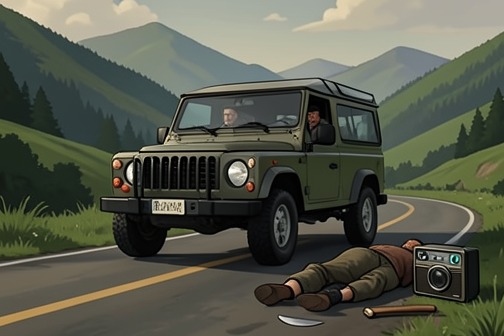
The [Rwandan Genocide](entity:event-recall-event-fe4fbe35b1b3) enters the narrative through Joe’s recollection to [Harry Hole](entity:character-recall-character-harry-hole-f71813160d7c) during a drive through [Rwanda](entity:location-recall-location-d1e0bd5741f5). Joe describes 800,000 people being killed within a matter of weeks in 1994, and recalls the road as both a route of flight and a landscape marked by the dead. The scene makes the scale of the violence concrete through the account of neighbors turning on neighbors and bodies obstructing the way.
## Joe’s Account
As Joe drives a Land Rover along a paved road through green hillsides, he names the figure that frames his recollection: 800,000 people killed within weeks in 1994. The landscape they pass is not presented as remote from that history. Joe points out the road as one along which many people fled, connecting the present journey to the mass displacement he remembers.
## Incitement and Neighbor Against Neighbor
Joe describes Hutus going to their own neighbors and killing them with machetes because they were Tutsis. He also recalls radio broadcasts urging Hutus to kill Tutsi spouses, presenting murder as a duty. The words “[Cut down all the fall trees.](entity:expression-recall-expression-cut-down-all-the-f-1ba35325ec08)” appear within this recollection, sharpening the account’s depiction of how the violence was voiced and encouraged.
## The Road and Its Dead
In Joe’s memory, the road bore the physical aftermath of the killings: bodies lay everywhere, piled on top of one another, and in some places made passage impossible. His brief reference to vultures feeding on the dead reinforces the starkness of the scene without interrupting the forward motion of the drive. The contrast between the road’s current traffic and Joe’s account of its earlier obstruction makes the journey a passage through a landscape carrying the traces of mass death.
Event 14
Adele Vetlesen Murder
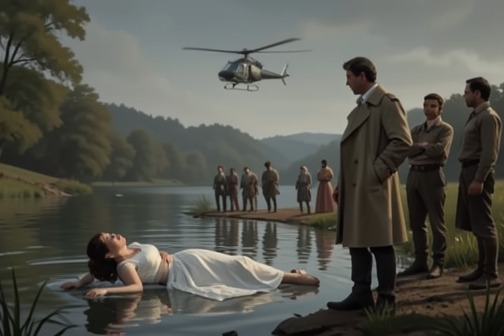
[Adele Vetlesen](entity:character-recall-character-adele-vetlesen-8694194e9d43)’s murder is pieced together from the recovery of her body at [Lyseren Lake](entity:location-recall-location-e7b6a9b4d1dd) and the clues linking its disposal to the later killing of [Marit Olsen](entity:character-recall-character-marit-olsen-4d132862f7af). The case turns on a reversal in [Harry Hole](entity:character-recall-character-harry-hole-f71813160d7c)’s reasoning: the rope was not acquired to kill Marit, but used first to dispose of Adele’s body, while a separate revelation overturns the assumption that Adele was raped at [Hävasshütte](entity:location-recall-location-h-vassh-tte-003de602b696).
## Background and discovery
The murder enters the investigation amid a wider pattern whose connection the police have not yet recognized. In the killer’s account, photographs of victims show them before their deaths, smiling and apparently secure in the lives ahead of them. The narrator presents these images as part of a private collection, while anticipating that the police will soon connect the murders. This parallel voice gives Adele’s case a place in the larger pattern without, at this point, supplying a complete account of her death.
Adele’s body is recovered from Lyseren Lake. [Mikael Bellman](entity:character-recall-character-mikael-bellman-cebc376d993d) arrives by helicopter, examines the body on a stretcher, and looks down toward the people gathered between the building and the lake. Among them are [Kaja Solness](entity:character-recall-character-kaja-solness-95df543c72a3), [Beate Lønn](entity:character-recall-character-beate-l-nn-cfbce693e830), and [Harry](entity:character-recall-character-harry-51d33e4b3663), who is speaking with the local police officer [Skai](entity:character-recall-character-skai-26675e19cf66). Bellman treats the location as his crime scene; Harry disputes that characterization, saying he is searching for missing people and that they appear to have found the person they sought. The exchange establishes the competing purposes at Lyseren: Bellman is pursuing a murder investigation, while Harry is following the disappearance that has brought him back to the lake.
## Reconstructing the disposal
Harry’s explanation begins with a question that had troubled him: why would a killer travel to a remote, disused ropeworks merely to obtain rope, especially rope that could be traced back to its source? He realizes that the journey was not made for the rope’s later use in Marit Olsen’s murder. The killer needed the site for another purpose, took the rope there, and carried the remainder home. Having it on hand later made it available for Marit’s killing. The same object therefore connects two crimes, but not in the order Harry had first assumed: it served in Adele’s disposal before it became a weapon against Marit.
Harry’s reconstruction identifies the lake’s deep side as the place where Adele’s body was submerged. Her trousers had been filled with stones, and the waistband and legs tied closed before the body was thrown into the water. The method makes the lake itself part of the disposal plan: the stones were used to weigh the clothing and body down. Skai had previously pointed out the deep side of the lake, a detail Harry now recognizes as an important clue rather than incidental local knowledge.
The medical evidence supports Harry’s distinction between killing Adele and disposing of her body. He expects the autopsy to show that she had a serious wound to the throat and no water in her lungs, which would indicate that she was already dead before entering the lake. The available account presents this as Harry’s prediction of the post-mortem result, rather than as a confirmed finding. It nevertheless changes the proposed sequence: the water concealed the body; it was not necessarily the cause of death.
## Links to the other murders
Adele’s case is connected to the murders of Charlotte Lolles and [Borgny Stem-Myhre](entity:character-recall-character-borgny-stem-myhre-906c9cb74b58) through the discovery of [Ketanomin](entity:object-recall-object-4d7a15313682) in all three victims. Beate Lønn identifies the drug as a fast-acting, inexpensive copy of Ketalar, used for anesthesia while allowing patients to breathe on their own. It had been banned in [Norway](entity:location-recall-location-7fceb8f3598f) and the European Union during the 1990s because of side effects and was then found mainly in developing countries. The criminal investigation service had pursued it as a major lead for a time but without a result. Its recurrence links the victims, but the evidence cited here does not establish who supplied or administered it.
The connection between Adele and Marit is more material and specific: the rope taken to Lyseren, used in Adele’s disposal, was later used to kill Marit. This sequence turns a seemingly puzzling journey into evidence of two linked acts rather than a single-purpose trip. It also demonstrates the limits of reading a clue only through the crime in which it is first noticed; the rope’s origin matters because it reveals where Adele’s body was handled and why the killer went there.
## Reversal and significance
The investigation’s understanding of Adele’s experience changes again when Harry learns that [Tony Leike](entity:character-recall-character-tony-leike-f78d2a737905) had been believed to have raped her at Hävasshütte. Harry had not expected this account and had already found the proposed assault difficult to reconcile with what he knew of Leike. He then recognizes that it was not a rape, and that this fact was the motive. The revelation overturns the apparent explanation rather than simply adding another detail to it; the account provided here does not specify the full motive or establish further circumstances, so the conclusion remains bounded by Harry’s recognition.
The case is thus disclosed in stages: the lake and weighted clothing explain how the body was hidden; the rope explains the killer’s journey and links Adele’s disposal to Marit’s murder; the recurring drug connects Adele with Charlotte and Borgny; and the final realization revises the assumed sexual motive. The order of disclosure matters. Readers first encounter a killer who treats murder as part of a larger pattern, while Harry’s inquiry reconstructs the practical sequence from evidence at Lyseren. Adele’s murder becomes legible not through a single decisive clue but through the revision of several earlier interpretations.
Event 15
Forgery of Adele Vetlesen's African Itinerary
The [Forgery of Adele Vetlesen's African Itinerary](entity:event-recall-event-899089944fae) is a staged international journey designed to make a missing Norwegian woman appear to have travelled to Africa and postponed her return. By comparing passenger and immigration records with a postcard and hotel signature, [Harry Hole](entity:character-recall-character-harry-hole-f71813160d7c) and [Kaja Solness](entity:character-recall-character-kaja-solness-95df543c72a3) showed that the woman who travelled under Adele's name was [Juliana Verni](entity:character-recall-character-juliana-verni-9152949303f2). Their reconstruction turned what looked like evidence that Adele had gone abroad into evidence that someone had carefully manufactured her disappearance.
## The Norwegian trail
[Adele Vetlesen](entity:character-recall-character-adele-vetlesen-8694194e9d43), 28, was from [Drammen](entity:location-recall-location-drammen-bb2fe05fd420) and had been reported missing by her partner in November. A search of [Norwegian State Railways](entity:organization-recall-organization-7415b7ff3603) records found that she had bought an online ticket from Drammen to [Ustaoset](entity:location-recall-location-ustaoset-a909398bfbb4) for [November 7](entity:time-recall-time-11-7-2da5760d45ad). On that same date, [Borgny Stem-Myhre](entity:character-recall-character-borgny-stem-myhre-906c9cb74b58) had bought a ticket from Kongsberg to the same mountain area. The matching destination gave investigators a concrete link between two women whose journeys otherwise might have seemed separate.
Other booking records extended the trail into the mountains. [Iska Peller](entity:character-recall-character-iska-peller-b8c41f86c1f3)'s account was charged on November 20 for two beds in each of four mountain-association cabins, spaced about a day's walk apart. The last was [Hävasshütte](entity:location-recall-location-h-vassh-tte-003de602b696), where the group was recorded as being on November 7, about half a day's walk from Ustaoset. The charge date and the date of the stay are distinct details; together with the matching train destinations, they place the investigation's questions about Adele and Borgny in the same remote region.
Borgny's last known movements sharpened the significance of that route. After leaving the Mono, where a fashion-magazine event had ended between seven and eight in the evening, she told a friend and colleague she was going home to prepare for a photo shoot. Investigators thought she might have gone to a taxi stand, but no nearby driver recognized her in the available photographs or recorded a trip to Sagene. Two Polish construction workers later found her, fully clothed, in a basement after noticing that its iron door's padlock had been forced. Her disappearance after the evening event made the question of who could have intercepted or redirected her movements central to the investigation.
## How the African itinerary was staged
A passenger list for Brussels Air showed Adele Vetlesen flying to [Kigali](entity:location-recall-location-kigali-8524b29cabf8) on [November 25](entity:time-recall-time-11-25-6428373ac885), but no traveller under that name was registered at Kigali's passport control. [Harry](entity:character-recall-character-harry-51d33e4b3663) explained the discrepancy through the use of a false passport issued in Adele's name: the passenger could depart [Oslo](entity:location-recall-location-oslo-aa85218d6b1a) under that identity, then present her own genuine passport on arrival. Because the immigration checkpoint did not require passengers to show their flight tickets, the mismatch between ticket and passport could pass unnoticed unless investigators compared the records.
The postcard appeared to support the supposed journey, since it had been posted in Kigali on the day Adele was said to have arrived. Its picture undermined that story: it showed [Nyiragongo](entity:location-recall-location-nyiragongo-1ad3427e77f5), a volcano in [Congo](entity:location-recall-location-abe123025556), not [Rwanda](entity:location-recall-location-d1e0bd5741f5). Jean Hue also compared its signature with the signature on the guest card completed at the [Gorilla Hotel](entity:location-recall-location-21e15cfab2d2) by the woman registered as Adele Vetlesen. The signatures were not by the same person. The postcard's date and location therefore did not authenticate Adele's presence; combined with the image and handwriting, they made the document part of the deception.
Harry inferred that the real Adele was still in [Norway](entity:location-recall-location-7fceb8f3598f) when she was forced to write the postcard. He believed another person then carried it to Africa and mailed it there to make it appear that Adele had travelled, met the man of her dreams, and would not return before March. That account of coercion and Adele's whereabouts was an investigative hypothesis, not something the travel documents independently proved. The documents did establish that the apparent itinerary could not safely be read as a record of Adele's own movements.
## Juliana Verni and the death in [Leipzig](entity:location-recall-location-8d916753a217)
A card issued to Juliana Verni was found at Kigali's airport immigration office. Information obtained through [Katrine Bratt](entity:character-recall-character-katrine-bratt-f2968dfe50e1) indicated that Juliana did not appear on an airline passenger list for travel to Rwanda that day or in any hotel using modern electronic booking. Three days later, however, she appeared on a Rwandair passenger list in Kigali. Harry and [Kaja](entity:character-recall-character-kaja-ad2bcaf19333) used this mismatch to identify Juliana as the person who had travelled and checked into the Gorilla Hotel under Adele's name, then posted the card written by the real Adele.
Kaja stated that Juliana was found dead in Leipzig three days after returning from Kigali. Harry agreed that Juliana had travelled under Adele's identity, but the two investigators treated the circumstances of her death as evidence of a further accomplice, not as proof of that person's identity: they suspected that she had worked with someone who later killed her to erase traces of their joint crime. The forgery thus pointed beyond a false travel record, toward a collaboration whose connection still had to be established.
## The mountain night in retrospect
A later account by [Elias Skog](entity:character-recall-character-elias-skog-7802f68caa39) adds a disturbing, though not conclusive, dimension to the Hävasshütte connection. Awake in a moonlit night, Elias saw two people beneath the outhouse's roof: a woman facing him and a man behind her, his face hidden. He initially interpreted her movements as dancing and the man's hand over her mouth as an attempt to keep the pair quiet. After reading about the murders, he reconsidered the scene as a possible assault, with the woman struggling to get free and the hand preventing her from calling for help.
Elias's recollection does not identify the woman as Adele or establish exactly what happened. Its importance lies in the change of interpretation: an episode first mistaken for a private sexual encounter could instead have been violence, and it took the later news of the murders to make that possibility legible. Set beside the ticket records and cabin bookings, the memory keeps the mountain journey from resolving into a simple itinerary. The African evidence exposed a false route; the account of Hävasshütte left the actual night, and the people moving through it, under suspicion.
Event 16
Murder of Juliana Verni
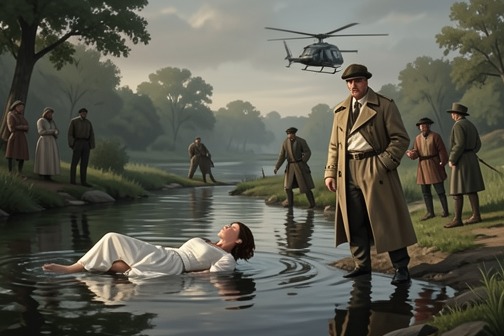
[Juliana Verni](entity:character-recall-character-juliana-verni-9152949303f2)’s murder turned an apparent drowning into a crucial link in a wider investigation. Found in the Elster in [Leipzig](entity:location-recall-location-8d916753a217) on December 2, three days after returning from [Kigali](entity:location-recall-location-kigali-8524b29cabf8), Verni had been killed in a way that echoed the earlier murder of [Borgny Stem-Myhre](entity:character-recall-character-borgny-stem-myhre-906c9cb74b58) and suggested that her African journey had been part of a plan whose other participants remained hidden.
## Discovery and Initial Findings
When [Harry Hole](entity:character-recall-character-harry-hole-f71813160d7c) learned that Verni had been recovered from the Elster, the initial description of her death as drowning seemed to leave open the possibility of an accident. He rejected that explanation: she had not drowned in the river. [Kaja Solness](entity:character-recall-character-kaja-solness-95df543c72a3) asked whether the case involved the same distinctive injuries found in another murder, and [Harry](entity:character-recall-character-harry-51d33e4b3663) confirmed that there were exactly twenty-four. The shared number transformed a report of a body found in water into evidence of a recurring method, connecting Verni’s death to the investigation’s existing pattern without yet identifying who was responsible.
## The African Journey and Concealed Identity
The investigation placed Juliana Verni inside a chain of travel and impersonation rather than treating her death as an isolated killing. She had gone from Leipzig to [Oslo](entity:location-recall-location-oslo-aa85218d6b1a) and then flown to Kigali using [Adele Vetlesen](entity:character-recall-character-adele-vetlesen-8694194e9d43)’s identity. In Kigali, she registered at the [Gorilla Hotel](entity:location-recall-location-21e15cfab2d2) under Adele’s name and sent a postcard that had apparently been written earlier by the real Adele, probably under coercion. Verni returned from Kigali and was found dead in Leipzig three days later. The false identity and reused postcard concealed the true traveler while tying Verni’s movements to Adele’s disappearance.
That route intersected with the earlier inquiry into Borgny Stem-Myhre. Adele, who had been reported missing by her partner in November, had bought a train ticket from [Drammen](entity:location-recall-location-drammen-bb2fe05fd420) to [Ustaoset](entity:location-recall-location-ustaoset-a909398bfbb4) for [November 7](entity:time-recall-time-11-7-2da5760d45ad); Borgny had bought a ticket to the same mountain region for that date. Investigators also found that [Iska Peller](entity:character-recall-character-iska-peller-b8c41f86c1f3)’s account had been charged for two beds in each of four mountain huts, including [Hävasshütte](entity:location-recall-location-h-vassh-tte-003de602b696), where the group was recorded on November 7. These travel and lodging records made the mountain journey a point of connection among the cases, while Verni’s later trip under Adele’s name suggested that the concealed network extended beyond [Norway](entity:location-recall-location-7fceb8f3598f).
Harry Hole and his colleagues concluded that Verni had probably worked with another person, who then killed her to erase evidence of their joint crime. Harry noted that her record included drugs, prostitution, and vagrancy, and judged that she could readily have been hired for a job if the payment was sufficient. Yet the suspected accomplice had left no detectable telephone calls between Verni’s mobile and Norway. Her murder therefore both echoed the earlier pattern and removed a potential witness: the evidence exposed Verni’s role in the false journey, but not the identity of the person who had arranged it or killed her.
## The Hävasshütte Night Reconsidered
[Elias Skog](entity:character-recall-character-elias-skog-7802f68caa39)’s account of the night at Hävasshütte became crucial when investigators revisited what he had seen. Awakened by noises outside, he noticed a woman and a man beneath the outhouse roof. The woman faced him; the man stood behind her, obscuring his face, and covered her mouth as he pulled her inside. Elias initially mistook the scene for a sexual encounter. Only after learning of the murders did he consider that the woman might have been trying to escape and that the man might have been silencing her. The episode therefore offered a belated, uncertain witness account of the violence surrounding the mountain-hut cases.
[Tony Leike](entity:character-recall-character-tony-leike-f78d2a737905) was later identified as the man involved, but Harry Hole’s sudden reassessment overturned the assumption that the episode had been a rape: it had not been, and that distinction supplied the motive. The revelation changed the meaning of Elias’s memory and sharpened the case’s central problem of interpretation: an apparently familiar explanation had obscured what had actually happened. Juliana Verni’s murder belonged to that larger pattern of concealed identities and misread events; the investigation could connect her death to the hidden operation without yet making its unseen organizer visible.
## The Killer’s Perspective and the Limits of the Revelation
An early first-person interlude places the murders within an unidentified killer’s own explanation of violence. In a dark workroom, the speaker studies newspaper photographs of victims taken when their families still believed life lay open before them, while noting that the police have not yet recognized a connection between the killings. The contrast between those hopeful images and the speaker’s certainty gives the investigation an unsettling parallel: while detectives are still assembling a pattern, the killer already sees one.
The speaker treats the capacity to kill as present in every person and casts murder as an acceleration of an unavoidable death, even describing it as an act of mercy. This is a self-justifying philosophy, not an explanation that resolves the case. Set beside the later disclosures about Verni’s journey and the mountain-hut events, it invites the reader to reconsider how much the concealed operation depends on controlling what others believe they have seen. Yet it does not identify the person behind Verni’s murder or establish her exact role in the speaker’s account; the connection between the crimes becomes clearer while the organizer’s identity remains hidden.
Event 17
Murder of Borgny Stem-Myhre in Oslo
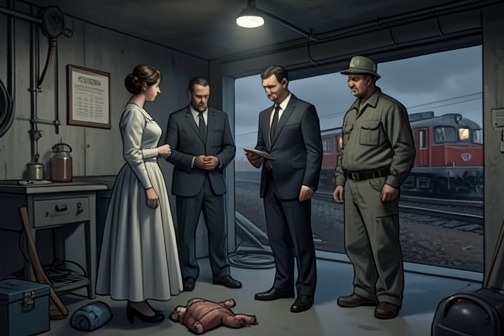
The [Murder of Borgny Stem-Myhre in Oslo](entity:event-recall-event-1ea41dc3d263) is a pivotal case in the investigation because it joins a seemingly isolated killing to a shared mountain-hut stay and to other deaths. Borgny disappeared after leaving a fashion event; her body was found in a building-site basement, where the unusual forensic evidence offered investigators few immediate answers. Later, travel records and comparisons with another murder gave the case a wider pattern, while also raising doubts that the crimes followed the familiar logic of a serial killer.
## Disappearance and discovery
On the evening of December 16, Borgny attended a launch event at Mono, where a new issue of the fashion magazine Sheness was being presented. The event ended at eight. She told a friend and colleague that she planned to go home to prepare for a photo shoot themed around jungle and punk fashion. Investigators thought she had headed for a taxi rank, but none of the drivers whose records were checked recognized her or recalled taking a passenger to Sagene. After leaving Mono, she was not seen again.
Two Polish bricklayers discovered Borgny the next time they came to work. They noticed that the padlock on a basement door had been forced and entered the room, where they found her fully clothed. The basement was at a construction site in the middle of the city. The circumstances of the discovery made the site itself an unlikely source of explanation: its concrete floor had been cleaned the day before, ahead of work to install heating cables and flooring.
## Forensic findings and the empty scene
The medical examiner placed Borgny’s death between ten and eleven at night. Her blood contained traces of ketamine, a fast-acting sedative that could be administered intramuscularly. The examination attributed her death to drowning associated with blood from wounds in her mouth. Investigators had found no comparable case and could not identify the instrument used.
The scene yielded almost no conventional trace evidence. There were no fingerprints, DNA, or shoe or boot marks on the recently cleaned concrete. A later report noted two small grey-black stones that did not match the gravel at the site. The examiner suggested they could become useful if similar stones turned up elsewhere, since small stones can lodge in a heavily treaded boot and fall out on a hard surface. The report also recorded traces of iron and coltan on the inner surfaces of two of Borgny’s molars. These details did not immediately solve the murder, but they gave the investigation unusual physical clues to carry forward.
## The link to the mountain hut
A connection emerged through travel records. [Adele Vetlesen](entity:character-recall-character-adele-vetlesen-8694194e9d43), a twenty-eight-year-old woman from [Drammen](entity:location-recall-location-drammen-bb2fe05fd420) who had been reported missing by her partner in November, had bought a train ticket online from Drammen to [Ustaoset](entity:location-recall-location-ustaoset-a909398bfbb4) for [November 7](entity:time-recall-time-11-7-2da5760d45ad). Borgny had bought a ticket from Kongsberg to the same mountain area for the same date. The coincidence mattered because investigators later established that Borgny and Adele had spent the same night at the same hut.
A search of account transactions added detail to the route. [Iska Peller](entity:character-recall-character-iska-peller-b8c41f86c1f3)’s account had been charged for two beds at each of four huts operated by the trekking association, with the huts about a day’s walk apart. The last was [Hävasshütte](entity:location-recall-location-h-vassh-tte-003de602b696), where the group had been on November 7, only half a day’s walk from Ustaoset. The bookings and tickets placed Borgny’s journey within a chain of shared destinations, rather than leaving her disappearance as an unexplained departure from [Oslo](entity:location-recall-location-oslo-aa85218d6b1a).
## A weapon and a changing pattern
The investigation connected Borgny’s murder with Charlotte Lolles’s through a suspected weapon. [Harry Hole](entity:character-recall-character-harry-hole-f71813160d7c) proposed that both women had been killed with the Leopoldsapfel. A lead about its purchase pointed investigators toward [Görna](entity:location-recall-location-g-rna-d59b41a49776) in [Congo](entity:location-recall-location-abe123025556), a few hours’ drive from [Kigali](entity:location-recall-location-kigali-8524b29cabf8); a woman with an East German accent had been there during the relevant period. A copy of a passport retained by police when a replacement was issued matched the buyer’s description, and the name on it was [Juliana Verni](entity:character-recall-character-juliana-verni-9152949303f2). The evidence supported a connection between the cases, though the identification and weapon link formed part of the investigation’s developing reconstruction.
[Harry](entity:character-recall-character-harry-51d33e4b3663) resisted treating the murders as a conventional serial-killer sequence. The victims differed in age, background, appearance, and sex; the crime scenes also varied, and investigators had no indication that the killings were connected to sexual acts. Borgny and Charlotte appeared to share a method, but the other cases did not establish a consistent signature. In Harry’s reading, the shared night at the hut was more significant than a simple repetition of method or victim type.
The crimes nevertheless appeared to change in their degree of exposure. Harry and [Kaja Solness](entity:character-recall-character-kaja-solness-95df543c72a3) reasoned that the killer had grown bolder: Adele, believed to be the first victim, had been hidden, while Charlotte was found behind a wrecked car in a forest and Borgny in a basement at an urban construction site. They regarded [Marit Olsen](entity:character-recall-character-marit-olsen-4d132862f7af)’s murder as a further change, suggesting that the killer’s self-control was beginning to fail. Borgny’s death therefore stood both as a link in the emerging sequence and as a point in an apparent escalation.
## Narrative significance
A separate first-person passage describes a collection of newspaper photographs of victims before their deaths, selected without the grieving families’ stories or the accounts of the discoveries. Its speaker observes that the police have not yet recognized the connection between the murders, but will do so soon. The contrast between the victims’ apparently secure lives in the photographs and the later investigation gives Borgny’s case a second frame: she is not only a name in a file or a clue in a pattern, but one of the people whose ordinary past was abruptly converted into evidence.
The murder’s meaning remains subject to revision as the investigation proceeds. When Harry revisits what [Elias Skog](entity:character-recall-character-elias-skog-7802f68caa39) saw at Hävasshütte, he abruptly concludes that the episode had not been a rape and that this misunderstanding was itself the motive. The revelation changes how the hut encounter is read and sharpens the distinction between what appeared to happen and what the investigation eventually understood. Borgny’s case thus functions as part of a mystery whose clues gain significance retrospectively: the journey, the shared night, and the evidence at the basement scene only become legible as the separate lines of inquiry converge.
Event 18
Murder of Charlotte Lolles in the Forest
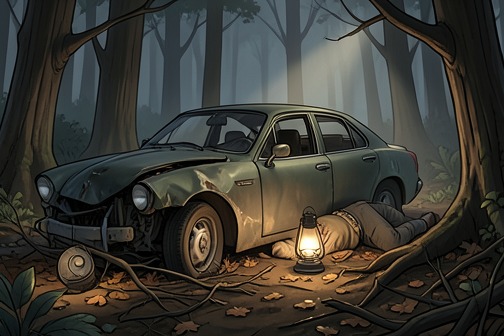
The [Murder of Charlotte Lolles in the Forest](entity:event-recall-event-2c4d3ba8573d) is one of the killings that gradually reshapes an investigation initially trying to determine whether several deaths belong to a single pattern. Charlotte’s body was found behind a wrecked car in the woods. Investigators later considered her murder likely to share a weapon with [Borgny Stem-Myhre](entity:character-recall-character-borgny-stem-myhre-906c9cb74b58)’s, even as the differences between the cases made a conventional serial-murder explanation uncertain.
## Discovery and Timeline
Charlotte was discovered behind a wrecked car in a forest, a location that contrasted with Borgny’s discovery in the basement of an office-building construction site in the city. [Harry Hole](entity:character-recall-character-harry-hole-f71813160d7c)’s later comparison of the cases treated their different settings as part of the problem: the murders did not present a consistent, immediately recognizable pattern.
The reported time of Charlotte’s death was between 10 p.m. and midnight on January 3. [Mikael Bellman](entity:character-recall-character-mikael-bellman-cebc376d993d) said that he was in Hamar for dinner with investors during that period. He had travelled by train and could not produce his ticket, but said that twelve people at the dinner could potentially confirm his account. The statement supplies a time-and-place claim, not independent confirmation of it.
## Links to the Other Murders
The investigation identified a possible common instrument in Charlotte’s and Borgny’s killings. [Harry](entity:character-recall-character-harry-51d33e4b3663) said that the two were most likely murdered with the Leopoldsapfel, a suspected weapon whose acquisition led investigators beyond [Norway](entity:location-recall-location-7fceb8f3598f). [Kaja Solness](entity:character-recall-character-kaja-solness-95df543c72a3) relayed that a woman with an East German accent had been in [Görna](entity:location-recall-location-g-rna-d59b41a49776), in [Congo](entity:location-recall-location-abe123025556), and Harry connected that lead to the woman believed to have bought the weapon. A passport copy from [Leipzig](entity:location-recall-location-8d916753a217) matched the buyer’s description and identified [Juliana Verni](entity:character-recall-character-juliana-verni-9152949303f2) as a person of interest in that trail.
The suspected shared weapon did not settle whether the killings formed a conventional serial-murder series. Harry argued that the cases lacked a distinct, recurring signature: the victims differed in background and appearance, the crime scenes were dissimilar, and the evidence did not suggest a repeated sexual motive. The possibility that Charlotte and Borgny had been killed with the same instrument was therefore a specific point of connection, not proof that every murder arose from the same motive or method.
## The [Hävasshütte](entity:location-recall-location-h-vassh-tte-003de602b696) Connection
A separate line of inquiry placed the murders against the background of a night at Hävasshütte. [Adele Vetlesen](entity:character-recall-character-adele-vetlesen-8694194e9d43) and Borgny Stem-Myhre had both bought tickets to [Ustaoset](entity:location-recall-location-ustaoset-a909398bfbb4) for [November 7](entity:time-recall-time-11-7-2da5760d45ad), and records showed that [Iska Peller](entity:character-recall-character-iska-peller-b8c41f86c1f3) paid for two beds at each of four mountain huts, including Hävasshütte, where the party had stayed on that date. Investigators treated the shared hut as a reason to suspect that the victims were not selected at random.
The connection mattered because it offered a possible link among people whose later deaths otherwise appeared markedly different. It did not erase the uncertainty about Charlotte’s specific circumstances; rather, it supplied the investigation with a broader relational pattern to test against the physical evidence and the suspected weapon.
## Narrative and Investigative Significance
The case is presented through accumulating clues rather than a single complete account of the killing. A recovered body, a time window, a disputed alibi, and a possible weapon purchase each provide only part of the explanation. The reader’s understanding changes as investigators compare Charlotte’s death with Borgny’s and reconsider whether apparent similarities indicate one killer, a shared motive, or merely one strand in a more complicated sequence.
That gradual reconstruction also reflects the novel’s larger tension between concealment and recognition. An early first-person passage establishes that the police have not yet recognized the connection between the murders, while Harry’s later analysis insists that the visible differences matter as much as the suspected common weapon. Charlotte’s murder consequently serves not only as a death to be explained, but as a test of how far a pattern can be trusted before its missing parts are known.
Event 19
Murder of Marit Olsen at Frogner Baths
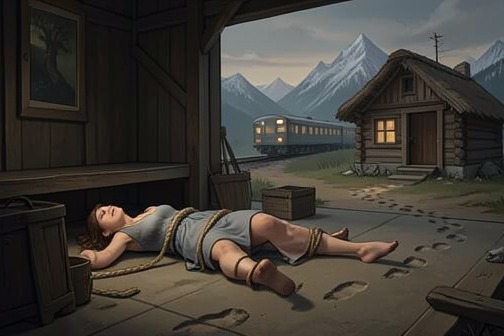
The [Murder of Marit Olsen at Frogner Baths](entity:event-recall-event-c7459ac11931) is a central case in the investigation led by [Harry Hole](entity:character-recall-character-harry-hole-f71813160d7c): its use of a distinctive rope, its apparent staging, and its links to travel through [Ustaoset](entity:location-recall-location-ustaoset-a909398bfbb4) and [Hävasshütte](entity:location-recall-location-h-vassh-tte-003de602b696) help redirect the search toward a wider chain of events. The evidence presented here does not reconstruct the killing itself in detail; instead, it shows how investigators interpret its clues and how later information changes the meaning of the apparent pattern.
## The Case and Its Emerging Links
The investigation treats Marit’s death as part of a possible series. In a conversation with [Mikael Bellman](entity:character-recall-character-mikael-bellman-cebc376d993d), [Harry](entity:character-recall-character-harry-51d33e4b3663) disputes the description of the rope factory as a crime scene, but stresses that the rope made there was the one used to kill Marit. He also points to the trail that led investigators to [Elias Skog](entity:character-recall-character-elias-skog-7802f68caa39) and Hävasshütte, and reports that they have found a fourth victim, [Adele Vetlesen](entity:character-recall-character-adele-vetlesen-8694194e9d43). The discovery gives Harry a concrete measure of his team’s progress against an investigation that, he says, has produced no comparable result after two months.
The links around Ustaoset add a separate strand. Adele, reported missing by her partner in November, had bought a train ticket from [Drammen](entity:location-recall-location-drammen-bb2fe05fd420) to Ustaoset for [November 7](entity:time-recall-time-11-7-2da5760d45ad). On that same date, Marit had bought a ticket from Kongsberg to the same destination. The shared destination connects their movements, though the ticket evidence alone does not establish what happened to either woman there.
A further record places two people together in the mountain-hut network. [Iska Peller](entity:character-recall-character-iska-peller-b8c41f86c1f3)’s account was charged for two beds in each of four huts, each roughly a day’s walk from the next. The final hut was Hävasshütte, where the pair had been on November 7; it was only half a day’s walk from Ustaoset. Together, the tickets and booking records make the area important to the inquiry without, by themselves, resolving the relationships among the travelers.
## Display, Control, and the Suspected Pattern
Harry considers whether Marit’s murder marks a change in the killer’s behavior. [Kaja](entity:character-recall-character-kaja-ad2bcaf19333) suggests that the murderer may have lost control, but Harry offers a competing interpretation: the killing at [Frognerbadet](entity:location-recall-location-frognerbadet-c97ffc17d233) may have been a conspicuous appeal for attention, a new level of calculated display. In his reading, the choice of rope was at most careless; otherwise, the killer had left no obvious traces. The exchange leaves open whether the apparent boldness signals deteriorating control or deliberate confidence.
The case file on [Borgny Stem-Myhre](entity:character-recall-character-borgny-stem-myhre-906c9cb74b58) provides a contrast, not a description of Marit’s death. Borgny disappeared after leaving the Mono and was later found in a basement; the medical report recorded ketamine and an unusual pattern of injuries, while investigators found no fingerprints, DNA, or footwear impressions. Harry studies the forensic material as he revisits the cases. Its specificity helps explain why the investigators are searching for a connection, but the evidence here does not establish that every crime in the series was carried out in the same way.
## Movements and the Question of Opportunity
[Tony Leike](entity:character-recall-character-tony-leike-f78d2a737905) later said that he could be suspected of Marit’s murder because he had not spent the whole evening at home with his fiancée. He said he had gone cross-country skiing for two hours on the illuminated trail at Sorkedal. The statement offers a possible period of opportunity, but the evidence cited here does not confirm that he committed the murder.
Another account shifts attention to the night at Hävasshütte. Elias Skog told a woman in [Stavanger](entity:location-recall-location-stavanger-4aa33f470c02) that he had awakened to sounds outside his bedroom window and seen two people near the outhouse. At the time, he interpreted the scene as a sexual encounter; after reading about the murders, he reconsidered whether the woman might have been trying to escape and whether the man’s hand over her mouth was intended to silence her. This recollection connects the hut to a possible act of violence, but does not by itself establish what that incident was or how it relates to Marit’s killing.
## Investigation and Reinterpretation
The inquiry’s understanding develops through competing explanations rather than a single decisive clue. Harry argues that Marit’s killing was staged to attract attention, while other evidence draws the investigators toward shared routes and the mountain huts. These threads make the apparent series more legible, but they also warn against treating every crime as an identical expression of one motive.
The novel’s December interlude from the killer’s perspective sharpens that tension. Its narrator describes collecting newspaper photographs of victims alive and smiling, while noting that the police have not yet recognized the connection among the murders. The narrator’s claim to have found what makes a person a murderer supplies an ominous counterpoint to the investigators’ gradual work: the killer imagines a settled truth, while the case remains an unfinished process of inference. Later, when Harry learns that the apparent assault at Hävasshütte was not what it first seemed, he recognizes that the new information changes the pattern at once. The murder of Marit remains part of that larger puzzle, but the evidence presented here does not specify its final explanation.
Event 20
Elias Skog's Bathtub Murder
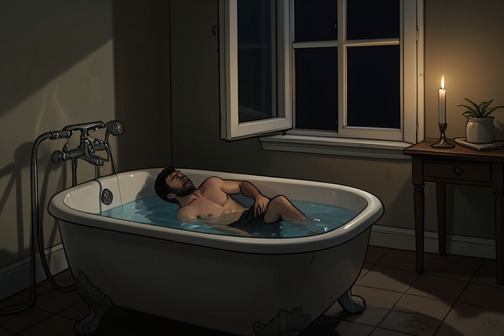
[Elias Skog's Bathtub Murder](entity:event-recall-event-07fa02d44848) becomes a turning point in the investigation not simply because Skog is killed, but because the circumstances of his death appear to address the investigators directly. The slow, painful death suggests sadism; the killer's departure before it ends complicates that reading. Later disclosures show that Skog may have carried information connecting the earlier victims to [Hävasshütte](entity:location-recall-location-h-vassh-tte-003de602b696), giving his murder a possible investigative motive while leaving the killer's identity unconfirmed by the evidence presented here.
## The Killing and Its Apparent Meaning
[Harry Hole](entity:character-recall-character-harry-hole-f71813160d7c) and [Kaja Solness](entity:character-recall-character-kaja-solness-95df543c72a3) distinguish Skog's death from the earlier murders by the suffering inflicted on him. [Kaja](entity:character-recall-character-kaja-ad2bcaf19333) reads the prolonged death as evidence of a sadistic streak. [Harry](entity:character-recall-character-harry-51d33e4b3663) agrees that the sadism is now visible in a way it had not been before, while observing that the Leopoldsapfel, too, is a torture instrument. The difference is not simply in the method: to Harry, the killing also looks like a deliberate display of control, as if the murderer intends to show that the police cannot catch him.
That interpretation is unsettled by what happened after the attack began. Skog's landlady reported hearing knocking after the guest had left. Harry considers it strange that a genuinely sadistic killer would leave without witnessing the victim's suffering and death. The departure therefore jars with the apparent cruelty of the murder. Rather than treating the scene as straightforward evidence of the killer's character, Harry and Kaja consider whether the sadism itself could be a performance, intended to manipulate the profile they will construct and lead them onto a false trail.
## Skog's Last Disclosures
A later tip gives Skog's murder a possible connection to the earlier cases. After seeing a report on [Aftenposten](entity:organization-recall-organization-aftenposten-053f726f6171)'s website that Harry was leading the investigation, an unidentified sender contacted him, claiming that Skog had talked before he was glued into his bathtub. The message contained a detail not known publicly: the bathtub and the glue. Harry recognizes that this specificity, together with the secrecy of his telephone number, distinguishes the sender from the usual callers offering unsupported theories. The message is not proof of who killed Skog, but it suggests access to information withheld from the public.
The sender, subsequently identified in the conversation as a police officer who had spoken with Skog's contacts, reports that Skog had discussed the murders with [Stine](entity:character-recall-character-stine-9f6b4108bd20) Olberg on the evening he was killed. They met on a bus leaving the city. Skog told her that he had been at Hävasshütte with the murdered women, and that he was surprised nobody had yet discovered they had all been at the same cabin. He had considered going to the police, but hesitated because he did not want to become involved.
This account makes Skog more than an isolated victim in the investigation's emerging pattern: shortly before his death, he may have been weighing whether to disclose a connection between the women. It remains a report of what he told Stine, relayed through another person, rather than independent confirmation of every part of his account. Its importance lies in how it redirects attention toward the cabin and toward the information Skog may have possessed.
## [Tony Leike](entity:character-recall-character-tony-leike-f78d2a737905) and the Unresolved Accusation
Skog's conversation with Stine also introduced Tony Leike. According to the report, Stine acted as though she knew nothing about the three murders. Skog then mentioned a man from the cabin whom she would certainly know; the man was described as a celebrity, or at least someone aspiring to celebrity. The account identified him as Tony Leike. That disclosure places Leike in the same setting Skog associated with the murdered women, but it does not by itself establish that Leike killed Skog or committed the earlier murders.
The distinction matters when [Mikael Bellman](entity:character-recall-character-mikael-bellman-cebc376d993d) later confronts Leike. Bellman says the police know that Leike called Skog from [Oslo](entity:location-recall-location-oslo-aa85218d6b1a) and was in [Stavanger](entity:location-recall-location-stavanger-4aa33f470c02) two days later, then asserts that Leike killed him and asks for his motive. The narration identifies this as the opening move of the traditional nine-stage FBI interrogation model: Bellman joins the established fact of the phone call to claims about Leike's presence in Stavanger and responsibility for the murder. The confrontation is therefore not presented as a neutral summary of settled proof. It is an interrogation tactic that uses one known detail to make additional accusations sound established.
## Investigative Significance
The murder operates on two levels: it removes a potential witness and appears to plant an interpretation of the killer as sadistic and invulnerable. The possibility that this display was meant to distort the investigators' profiling turns the scene itself into a contested clue. What seems to reveal the killer's nature may instead have been chosen to shape the police response.
At the same time, the reported bus conversation supplies a concrete lead that is independent of that psychological interpretation: Skog said the murdered women had all been at Hävasshütte, and he had considered taking that information to the police. His death consequently sharpens the question of what he knew and why someone might have wanted to silence him. The available evidence supports suspicion and investigative direction, not a final identification of the killer. Bellman's accusation against Leike, the confidential message, and Skog's reported disclosure each contribute a different piece, while leaving their reliability and relation to one another open to examination.
Event 21
Tony Leike's Arrest and Release
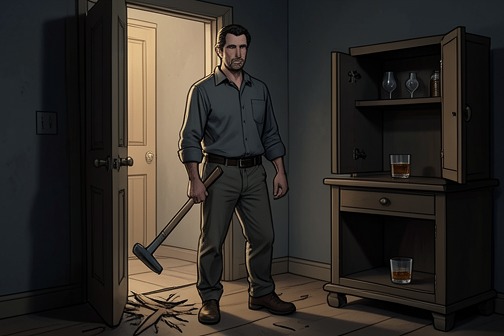
[Tony Leike](entity:character-recall-character-tony-leike-f78d2a737905)'s arrest and release mark a sharp reversal in the murder investigation: [Harry Hole](entity:character-recall-character-harry-hole-f71813160d7c) assembles grounds for a warrant, but [Mikael Bellman](entity:character-recall-character-mikael-bellman-cebc376d993d) intervenes to arrest Leike first, and the suspect's alibis soon threaten the case. The episode shifts the question from whether Leike can be connected to the crimes to whether the police can justify holding him—and who will bear responsibility if they cannot.
## Grounds for the arrest
[Harry](entity:character-recall-character-harry-51d33e4b3663)'s case against Leike rests on a specific contradiction. Two days before [Elias Skog](entity:character-recall-character-elias-skog-7802f68caa39) was murdered, Leike had called him; later, Leike told Harry that he did not know Skog and had not spoken with him at [Hävasshütte](entity:location-recall-location-h-vassh-tte-003de602b696). Harry presents that denial as the leading ground for seeking a warrant. He adds Leike's conviction for aggravated assault, which Leike himself had described as attempted murder, then refers, without giving the lawyer much detail, to matches involving [Congo-Kinshasa](entity:location-recall-location-4660b3dfee70) and Lyseren. The application seeks authority both to arrest Leike and to search his home.
The evidence sits within a widening pattern of connections. [Borgny Stem-Myhre](entity:character-recall-character-borgny-stem-myhre-906c9cb74b58) disappeared after leaving the Mono and was later found dead in a basement; investigators had not identified a link among the murders. Records showed that Borgny and [Adele Vetlesen](entity:character-recall-character-adele-vetlesen-8694194e9d43) had each bought a train ticket to [Ustaoset](entity:location-recall-location-ustaoset-a909398bfbb4) for [November 7](entity:time-recall-time-11-7-2da5760d45ad), while [Iska Peller](entity:character-recall-character-iska-peller-b8c41f86c1f3)'s account was charged for two beds in each of four mountain huts, including Hävasshütte. That hut was only half a day's walk from Ustaoset. These links made the mountain stay a promising line of inquiry, but they did not by themselves establish that Leike had committed the murders.
Harry presents his arguments to a police lawyer who marks both arrest and search on the application but asks for time to consider it. Harry believes the first argument will matter most and senses that the warrant is likely, yet he still has to wait. At one o'clock, he finally calls [Kaja Solness](entity:character-recall-character-kaja-solness-95df543c72a3) with the news that the warrant has come through. She confirms that she has her vest and weapons; the tactical team will handle the weapons, and Harry tells her to bring the warrant from his mailbox.
## The operation and Bellman's intervention
Ten minutes later, Harry and [Kaja](entity:character-recall-character-kaja-ad2bcaf19333) are travelling west through [Oslo](entity:location-recall-location-oslo-aa85218d6b1a) in a blue Delta tactical van. Harry explains that he had called the shared office where Leike rented space and learned that Leike was working from home. He then dialled Leike's landline and hung up as soon as Leike answered, confirming that he was there. Harry had specifically asked Milano to lead the operation. Eight tactical officers ride with them as they pass through the Ibsen Tunnel.
At Leike's home, the arrest does not unfold as Harry planned. When [Björn Holm](entity:character-recall-character-bj-rn-holm-0f5270abeba6) appears in the doorway, Harry sees Holm and the other forensic technicians inside, already conducting a search. He understands in an instant that someone else has reached the scene and reacts by striking Holm. Two tactical officers move forward with their weapons raised, uncertain about what they are seeing. Harry then orders one of them to report that the situation is under control and that the suspect has been arrested by Bellman. The distinction matters: although Harry's investigation and warrant application brought the operation to this point, Bellman has taken control of the arrest.
Harry later explains how Bellman could move so quickly. The prosecutor's office was across the street, in the same building as the forensic technicians. Bellman could obtain a warrant from a prosecutor in minutes, while Harry had spent two hours waiting for his. In Harry's account, the difference is not a stronger case but access and speed: Bellman gets to the suspect first and places the arrest under his own authority.
## Leike's alibis
Bellman questions Leike, who has Harry's dates and times for the murders on a sheet of paper. For Borgny's death, between ten and eleven on December 16, Leike says he was in the Peer Gynt Hall at Ibsen House in Skien, speaking about his coltan project. The event organizer and more than a hundred potential investors had attended and could confirm his presence. Skien, he points out, is about two hours from Oslo.
For the murder of Charlotte Lolles, which took place between ten in the evening and midnight on January 3, Leike says he was at a dinner with investors in Hamar. He says he travelled by train, although he can no longer find the ticket, and points to twelve people who were at the table as possible witnesses. His manner is apologetic, but the substance is damaging: he has offered an account that could place him away from Oslo during at least two of the killings. Bellman recognizes that the case now faces a practical obstacle; Leike is expected to be released that day if those alibis hold.
## Political fallout and the limits of the case
Bellman confronts Kaja over the information she gave him. He says that she called to tell him what Harry had discovered about Leike and that Harry intended to arrest him. Bellman says he relied on her tip, arrested Leike, and publicly suggested that the case was nearly solved. Now, with Leike apparently able to account for himself during at least two murders, Bellman expects that the suspect will have to be released and fears a lawsuit from his father-in-law, Galtung, whose lawyers can be mobilized nationwide. He also anticipates questions from the justice minister and believes that his own position—not Harry's or [Gunnar Hagen](entity:character-recall-character-gunnar-hagen-5c0a9d04c570)'s—is at risk.
The arrest therefore produces consequences beyond the immediate loss of a suspect. Bellman's public claim that the case was nearly solved has tied his reputation to an investigation whose central accusation is already under pressure. Kaja's disclosure has helped him act, but it also makes her part of the chain of decisions that led to the arrest. For Harry, the sequence exposes the gap between having investigative grounds to pursue Leike and having enough evidence to keep him in custody. The release does not erase the mountain-hut connections or resolve what happened there; it leaves the investigation with clues that still need interpretation and an arrest that cannot bear the weight placed on it.
Event 22
Kaja Solness Leaks Investigation Information to Bellman
[Kaja Solness Leaks Investigation Information to Bellman](entity:event-recall-event-48e0867e558b) is the breach that turns an internal lead against [Tony Leike](entity:character-recall-character-tony-leike-f78d2a737905) into a public and institutional liability. [Kaja](entity:character-recall-character-kaja-ad2bcaf19333) passes [Mikael Bellman](entity:character-recall-character-mikael-bellman-cebc376d993d) what [Harry Hole](entity:character-recall-character-harry-hole-f71813160d7c) has learned and tells him that [Harry](entity:character-recall-character-harry-51d33e4b3663) intends to arrest Leike. Bellman acts on the information, but when the case against Leike collapses under his alibis, he makes Kaja responsible for helping him avert the consequences. The episode exposes the personal leverage beneath the investigation: Kaja’s trust in Bellman, and her feelings for him, become instruments in his effort to control events around Harry.
## The Investigation and the Information at Stake
The leak comes amid an effort to establish how the murder victims were connected. Kaja’s investigation has traced an important part of their movements to [Ustaoset](entity:location-recall-location-ustaoset-a909398bfbb4). A missing woman, [Adele Vetlesen](entity:character-recall-character-adele-vetlesen-8694194e9d43), had bought a train ticket there from [Drammen](entity:location-recall-location-drammen-bb2fe05fd420) for [November 7](entity:time-recall-time-11-7-2da5760d45ad); [Borgny Stem-Myhre](entity:character-recall-character-borgny-stem-myhre-906c9cb74b58) had also bought a ticket to Ustaoset for the same date. Kaja further found that [Iska Peller](entity:character-recall-character-iska-peller-b8c41f86c1f3)’s account had been charged for two beds in each of four mountain huts, with the [Hävasshütte](entity:location-recall-location-h-vassh-tte-003de602b696) among them. Harry judged the findings significant because they placed Charlotte Lolles probably in Iska’s company, while Borgny and [Marit Olsen](entity:character-recall-character-marit-olsen-4d132862f7af) had also been near Ustaoset. The pattern was suggestive, but it did not by itself establish who had committed the murders.
The leak concerns a different and more immediate decision: Harry’s pursuit of Leike. Bellman later tells Kaja that she called him with Harry’s findings and his intention to arrest Leike. He says he trusted her, arrested Leike on the strength of her tip, and then indicated to the press that the case was virtually solved. What had been information within the investigation thus became the basis for a public expectation that Bellman could no longer safely fulfill.
## Bellman Turns the Leak into Pressure
The consequences sharpen when Bellman tells Kaja that Leike has a watertight alibi for at least two of the murders and will have to be released that day. The prospect of a lawsuit from Leike’s influential father-in-law and questions from the Minister of Justice make the failed arrest a threat to Bellman’s position. He insists that the blame will fall on him, not on Kaja, Harry, or [Gunnar Hagen](entity:character-recall-character-gunnar-hagen-5c0a9d04c570), and tells her that she must help prevent that outcome.
His proposed solution is not a further investigative step. Bellman orders Kaja to go out with Harry that evening, relying on the fact that Harry likes her, and to make sure he is away from home between eight and ten. He presents the request as a short diversion—dinner, a film, or a drink—but gives no explanation in this scene of what is meant to happen during those two hours. That limit matters: the episode establishes Bellman’s attempt to manage Harry’s whereabouts, not the full purpose or result of the plan.
Bellman’s knowledge of Kaja and Harry’s private contact makes the order more coercive. He tells her that he watched them smoking together on her terrace, having arrived late and remained in his car while they failed to notice him. His intervention therefore rests on both official power and surveillance of her personal life. Kaja’s shock at his having watched them, and her question about how she is supposed to accomplish what he asks, register a shift from the intimacy she had wanted to a relationship in which Bellman directs and monitors her.
## Kaja’s Divided Position
The later conversation with Harry makes the emotional leverage explicit, while keeping its precise effect on Kaja partly uncertain. Harry suspects Bellman may have offered her a senior position in the new, powerful criminal investigation agency. He also says he assumes she has attached her heart to a married man who claims he will leave his wife and children for her but never will. These are Harry’s interpretations, not a confirmed account of Bellman’s promises or Kaja’s reasons for passing on the information. The evidence does establish that she is emotionally involved with him and that his demand places that attachment beside the professional risk created by the leak.
Bellman’s appeal to their relationship does not absolve Kaja of the disclosure. She supplied information that enabled him to arrest Leike and announce a near-resolution before the evidence could bear that conclusion. At the same time, Bellman’s response reveals an asymmetry: he has already acted publicly, faces the institutional danger, and now tries to transfer the burden of managing Harry to Kaja. Her position is both compromised and constrained; she has participated in the breach, but the pressure placed on her is not simply a matter of shared professional responsibility.
## Harry Recognizes the Betrayal
When Kaja later asks why Harry did not confront her, he explains how he ruled out [Björn Holm](entity:character-recall-character-bj-rn-holm-0f5270abeba6) as the source. Holm was a skilled forensic investigator, but Harry judged his surprise when they met at Holmenveien to be genuine; Holm, in Harry’s assessment, did not know that he was pursuing Leike and therefore could not have discovered the information on Harry’s computer and passed it to Bellman. Once Holm was excluded, Harry concluded that only one other person could have supplied it: Kaja.
Harry says he did not accuse her because he assumed she had a reason. That restraint is not proof that he considered the leak harmless. He recognizes the betrayal, but also suspects that Bellman has drawn Kaja in through promises and affection. His distinction between knowing what she did and understanding why she did it gives the scene its unresolved tension: the breach is identified, yet their trust is not reduced to a simple question of guilt and punishment.
## Significance and Unresolved Stakes
The episode shows how a leak can distort an investigation before the underlying case is settled. Bellman’s arrest and public confidence in a solution rest on information passed through Kaja, while the alibis force a reversal and expose the cost of treating a promising lead as a conclusion. The earlier evidence around Ustaoset remains a pattern to interpret; it does not validate the decision to present Leike’s arrest as the end of the case.
The demand that Kaja keep Harry away between eight and ten adds a second, still-open consequence to the disclosure. Bellman is not merely reacting to the wrongful arrest; he is trying to shape Harry’s movements through Kaja, whose personal relationship with him makes the request possible. Harry, meanwhile, knows enough to identify her as the likely source but withholds accusation. The event therefore ends not with a settled account of Bellman’s plan or Kaja’s future, but with the investigation entangled in a private betrayal that may yet determine what Harry can discover.
Event 23
Bellman's Attempt to Make Harry Take the Blame for Leike's Wrongful Arrest
[Mikael Bellman](entity:character-recall-character-mikael-bellman-cebc376d993d)’s attempt to make [Harry Hole](entity:character-recall-character-harry-hole-f71813160d7c) take the blame for [Tony Leike](entity:character-recall-character-tony-leike-f78d2a737905)’s wrongful arrest turns a search of [Harry](entity:character-recall-character-harry-51d33e4b3663)’s home into a negotiation over evidence, reputation, and institutional responsibility. Bellman presents an uncertain drug find as leverage, then offers Harry a public role as the lone culprit in a story designed to insulate the [Kriminalamt](entity:organization-recall-organization-kriminalamt-c16c2ed7aea2) from the consequences of Leike’s release.
## The Search at Harry’s Home
The confrontation begins with a conspicuously crude entry. The door has been forced with a crowbar, as the splinters on the stairs show: no finesse, only what Harry recognizes as a typical police break-in. He enters the dark living room after looking toward [Kaja Solness](entity:character-recall-character-kaja-solness-95df543c72a3), who remains beside the car with her arms crossed. The only light comes from the open bar cabinet, enough to reveal Bellman sitting in shadow by the window. The intrusion has already made the official search feel less like a neutral procedure than an exercise of power.
Harry offers Bellman a drink and asks what grounds he has for the search. Bellman says that he assumes Harry has a warrant, then explains the stated basis: an anonymous tip alleged that Harry had smuggled drugs into the country by using an innocent third person and might be keeping the drugs at home. The accusation is serious, but the evidence Bellman describes is not yet conclusive. A police dog has found a yellowish-brown lump wrapped in aluminum foil; Bellman says it might be opium, but it could just as well be modeling clay or ordinary clay. Analysis is still only being considered. The search therefore produces a discovery, not an identification.
## Evidence Turned into Leverage
Bellman does not treat the uncertain substance merely as something to be tested. He tells Harry that, if Harry agrees to do him a service, he might decide that the lump is modeling clay and spare the department an analysis. He frames the choice as a manager’s exercise in prioritizing resources, but the proposed exchange is plain: Bellman can let a potentially incriminating object remain unresolved if Harry cooperates. The uncertainty that ought to call for investigation becomes the instrument of pressure.
Harry asks directly what service Bellman wants. Bellman says he wants Harry to play the scapegoat. The demand makes the search’s purpose newly legible. Bellman is not simply investigating the tip; he is using the circumstances of the search to secure Harry’s agreement to a separate account of the Leike affair. The dog’s find, the anonymous allegation, and the possibility of an opium analysis are all folded into the bargaining position, while no confirmed identification of the substance is offered.
## The Proposed Account of Leike’s Release
Bellman explains that the police have had to release Tony Leike because Leike has a watertight alibi for at least two murders. The remaining evidence against him, Bellman says, is a phone call to one of the murder victims. The case against Leike has thus narrowed sharply: the release follows from the weakness of the available evidence, not from a discovery that settles the murders. Bellman also acknowledges that the police may have been too aggressive with the press, while Leike and his future father-in-law could cause serious trouble for them.
A press release is due that evening. Bellman wants it to say that Leike’s arrest was made under a warrant Harry had manipulatively persuaded a young police lawyer to issue. In this account, Harry acted alone and bears the full responsibility; the Kriminalamt was only marginally involved. Bellman’s version further has the Kriminalamt recognize that something was wrong after the arrest, intervene in its conversation with Leike to clarify the facts, and secure his immediate release. The proposed statement does not merely assign Harry blame for a mistaken decision. It rearranges the department’s role, presenting it as a distant participant that noticed the error and corrected it.
## Harry’s Response and the Stakes
Harry notices the brown ring left by the Jim Beam bottle on the living-room table and resists the temptation to lift it to his mouth. The gesture places his restraint beside Bellman’s effort to control the narrative: the bottle offers an immediate escape, while the proposed press release offers a convenient public fiction. Neither resolves what happened in the investigation. Harry instead tests whether the account will withstand scrutiny, asking whether the press will believe it after Bellman has recently claimed the credit for Leike’s arrest in a posture of victory.
That question exposes the weakness at the center of Bellman’s plan. The release would transfer responsibility to Harry, but the public presentation has already given Bellman a visible share of the credit. His proposed distinction between Harry’s sole initiative and the Kriminalamt’s belated correction may therefore be difficult to sustain. The scene establishes Bellman’s intention and the terms of his pressure, but the available evidence does not establish that Harry signs the statement, accepts the blame, or agrees to remain silent. Its decisive turn is the revelation that Bellman is prepared to use an unresolved drug allegation and an official press account to shift the institutional cost of Leike’s release onto Harry.
Event 24
The Hävasshütte Murders
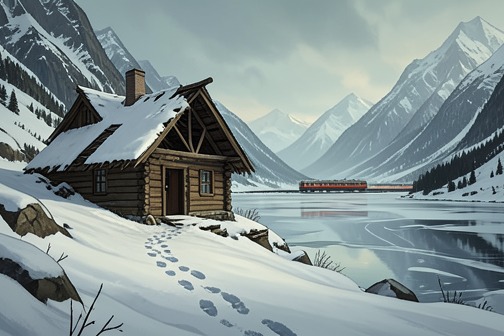
[The Hävasshütte Murders](entity:event-recall-event-04e3c02bb21e) are a series of killings connected to a particular mountain-hut gathering, whose isolation left investigators with few witnesses and whose significance emerged only as separate victims and journeys were linked. The investigation initially entertained the pattern of a serial killer, but [Harry Hole](entity:character-recall-character-harry-hole-f71813160d7c) came to see that the victims’ connection to a specific place and time—and a crucially misread episode at the hut—offered a more focused explanation.
## Scope and Setting
The cases reached the police as separate deaths and lines of inquiry. In the material presented to investigators, the murders involved at least four people, but the evidence did not establish that every killing took place at [Hävasshütte](entity:location-recall-location-h-vassh-tte-003de602b696). [Borgny Stem-Myhre](entity:character-recall-character-borgny-stem-myhre-906c9cb74b58), for example, was found in a cellar after disappearing in [Oslo](entity:location-recall-location-oslo-aa85218d6b1a). What drew such cases together was the emerging connection to the hut and to a particular period, rather than a simple pattern of victims chosen from one demographic group.
The hut stood in a remote mountain region, and reaching it meant travelling between lodgings on foot. During a later journey through the area, [Kaja Solness](entity:character-recall-character-kaja-solness-95df543c72a3) crossed a broad, featureless snowfield beneath the mass of [Hallingskarvet](entity:location-recall-location-hallingskarvet-97c9d26efda7); the stopped snowmobile left her, in her own estimate, far from the nearest settled place. The landscape’s scale helps explain the practical difficulty of finding witnesses or assistance there. Isolation was not merely a backdrop to the case: it shaped what could be seen, reported, and checked.
## Routes and Guests
A travel record supplied an early link between two women. [Adele Vetlesen](entity:character-recall-character-adele-vetlesen-8694194e9d43), a 28-year-old from [Drammen](entity:location-recall-location-drammen-bb2fe05fd420), had been reported missing by her partner in November. On 7 November, she bought a train ticket online from Drammen to [Ustaoset](entity:location-recall-location-ustaoset-a909398bfbb4). For that same date, Borgny Stem-Myhre had bought a ticket from Kongsberg to Ustaoset. Ustaoset was a mountain region rather than a single town, and the shared destination made the journeys significant without, by itself, proving what happened to either woman there.
A second set of records connected the hut to a multi-day route. [Iska Peller](entity:character-recall-character-iska-peller-b8c41f86c1f3)’s account had been charged for two beds at each of four huts belonging to the trekking association, with the huts roughly a day’s walk apart. Hävasshütte was the last on the route; investigators were told that the party had been there on 7 November, about half a day’s walk from Ustaoset. The dates and bookings gave the investigation a way to compare movements and lodging, but they did not yet identify the person responsible.
Borgny’s last known movements gave the route evidence a human context. She had attended an event at the Mono, where a new issue of the fashion magazine Sheness was launched, then told a friend and colleague that she was going home to prepare a photo shoot. She was thought to be heading for a taxi stand, but the taxi records and drivers checked by police did not place her in a cab to Sagene. No one was known to have seen her after she left the venue. Two Polish bricklayers later found her in a cellar after noticing that its iron-door padlock had been forced.
## Reconstructing the Night
The medical examiner placed Borgny’s death between 10 and 11 p.m. and recorded traces of [Ketanomin](entity:object-recall-object-4d7a15313682), a fast-acting sedative. The report also described a highly unusual pattern of injuries, but the investigators did not know what instrument had caused them. At that point, the case had neither a recognized weapon nor technical traces such as fingerprints, DNA, or footwear impressions. The cellar floor had been cleaned the previous day for heating cables and flooring, further limiting what investigators could recover. These findings made the crime distinctive while leaving its perpetrator difficult to identify.
The hut’s central witness question was unusually stark: Iska Peller was the only person known to be alive who had stayed there that night, yet investigators understood that she had spent the day and following night asleep, ill and alone in a sleeping room. Adele, by contrast, had been there with a man she had met only shortly beforehand. No one in her circle seemed to know him. Investigators also had records of men who had contacted her by telephone or online, but reaching them would take time. The gap between a crowded list of possible connections and the absence of usable eyewitness testimony became a central problem in reconstructing the gathering.
[Elias Skog](entity:character-recall-character-elias-skog-7802f68caa39)’s account offered a belated view of one episode outside the sleeping quarters. On the night in question, noises woke him; looking out in the moonlight, he saw a man and woman beneath the overhang of the outhouse. He could not see the man’s face. At the time, Elias interpreted the encounter as sexual and went back to sleep without understanding it as an emergency. After reading about the murders, he reconsidered what he had seen: the woman might have been struggling to get free, and the man’s hand over her mouth might have been intended to stop her calling for help. Elias later told a woman on a bus in [Stavanger](entity:location-recall-location-stavanger-4aa33f470c02) that he had witnessed what he now feared could have been an assault. His account thus reached the investigation only after his first interpretation had failed him.
## From Hypothesis to Motive
When [Mikael Bellman](entity:character-recall-character-mikael-bellman-cebc376d993d) reviewed the known names, times, and likely routes with his team, he argued that the victims did not look like random selections from a demographic group. Their connection to a specific place and time suggested a concrete motive, potentially one that could be rationally explained. He asked the investigators to consider what could unite at least four murders. Jealousy and voices commanding a person to kill were offered as hypotheses, not established findings. The distinction mattered: the pattern at the hut could direct the investigation, but it did not yet explain why the killings had occurred.
Bellman also used the press conference as part of the investigation. He publicly recapped established developments: rope connected to the [Mark Olsen](entity:character-recall-character-mark-olsen-b0b70340a08d) murder had been traced to a rope factory on Lyseren, Adele Vetlesen had been found as another victim, and the weapon used in two of the murders had been identified as the so-called Leopoldsapfel. He then announced that Iska Peller would arrive in Oslo from [Australia](entity:location-recall-location-29432536e761) and return to Hävasshütte with an investigator to reconstruct the evening. Ordinarily, police would not have disclosed a witness’s name. Here, Bellman meant the announcement to reach the killer: it signalled that the police had located someone from the guest list and were sending two people, a witness and an investigator, back to the remote hut.
The interpretation of Elias’s sighting shifted again when [Harry](entity:character-recall-character-harry-51d33e4b3663) learned that [Tony Leike](entity:character-recall-character-tony-leike-f78d2a737905) had raped Adele Vetlesen at Hävasshütte. Harry could imagine Leike as violent, but the identification did not settle what Elias had witnessed. Harry then recognized that the apparent assault had not been a rape. That reversal supplied the motive: the decisive fact was not simply that an assault had taken place, but that the event was something else. The account leaves the precise alternative unstated at this point, while making clear that Harry’s realization abruptly brings the pattern into focus.
## Narrative Significance
The novel first presents a killer’s private theory of murder: the speaker claims that the capacity to kill belongs to ordinary humanity and recasts murder as an act of mercy. At the same time, the police have not yet recognized the connection among the killings, though the speaker expects them to do so. This contrast sets the investigation against a self-justifying voice whose certainty does not amount to a reliable explanation of the crimes.
The case’s revelations arrive through a sequence of corrected readings. Ticket records establish a shared destination, bookings place guests on a route, and Elias’s memory changes meaning after he learns of the murders. Harry’s final recognition similarly reverses the assumption that the hut episode was a rape. The investigation therefore depends not only on discovering facts, but on understanding what earlier facts actually signify. The remote setting withholds witnesses; the delayed testimony withholds meaning. Together, those conditions make the Hävasshütte gathering the point at which apparently separate cases can be reconsidered as a connected pattern.
Event 25
Tony Leike's Wrongful Arrest and Release
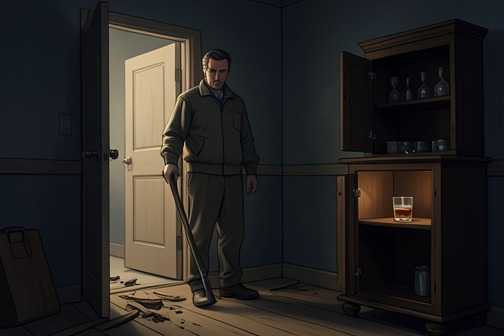
[Tony Leike](entity:character-recall-character-tony-leike-f78d2a737905)'s wrongful arrest and release mark a reversal in the murder investigation: the police lose their publicly celebrated suspect, while [Mikael Bellman](entity:character-recall-character-mikael-bellman-cebc376d993d) pressures [Harry Hole](entity:character-recall-character-harry-hole-f71813160d7c) to accept responsibility for the mistake. The release does not resolve the crimes. Instead, it lays bare how institutional reputation shapes the account of the arrest and sends the investigation back toward [Hävasshütte](entity:location-recall-location-h-vassh-tte-003de602b696).
## The Case Behind the Arrest
The suspicion surrounding Leike had grown from a network of clues linking separate people to the same mountain region. [Borgny Stem-Myhre](entity:character-recall-character-borgny-stem-myhre-906c9cb74b58) disappeared after leaving a bar in [Oslo](entity:location-recall-location-oslo-aa85218d6b1a); later, two builders found her body in a cellar. Investigators established that she had bought a train ticket to [Ustaoset](entity:location-recall-location-ustaoset-a909398bfbb4) on the same date as [Adele Vetlesen](entity:character-recall-character-adele-vetlesen-8694194e9d43), a missing woman from [Drammen](entity:location-recall-location-drammen-bb2fe05fd420). [Iska Peller](entity:character-recall-character-iska-peller-b8c41f86c1f3)'s account records also showed payment for pairs of beds in four mountain huts, each about a day's walk from the next. The final hut, Hävasshütte, was close to Ustaoset. These details connected missing people and murder victims to a shared route, but did not by themselves establish who had killed anyone.
A further lead came from [Elias Skog](entity:character-recall-character-elias-skog-7802f68caa39). On the night of his own murder, he had told a woman in [Stavanger](entity:location-recall-location-stavanger-4aa33f470c02) about seeing a man and a woman outside the lavatory at Hävasshütte. From his window, he saw the woman moving and the man holding a hand over her mouth, then watched the man pull her inside. Elias initially interpreted the scene as a possible rape. His account gave the investigation a witness to an alarming incident at the hut, but it was an interpretation made from a brief, shadowed view, not a confirmed explanation of what had happened.
The arrest therefore rested within a still-unsettled investigation, not a solved case. The distinction becomes essential when the police must release Leike: the evidence has generated a suspect and a compelling narrative, but the narrative cannot stand in for proof. Later, when [Harry](entity:character-recall-character-harry-51d33e4b3663) revisits Elias's account, he realizes that what appeared to be a rape was not one, and that this correction makes the motive intelligible. The change recasts the scene that had helped direct suspicion rather than simply confirming the initial reading of it.
## Bellman's Bargain
Bellman confronts Harry with a proposed press statement and an ultimatum. The statement is to say that Bellman, as head of the investigation, took responsibility for publicly defending Leike's arrest despite already suspecting that one of the police officers had made a mistake. It then presents Harry as the experienced chief inspector who insisted on coming forward and whom Bellman allowed to do so. The wording shifts the public account of the failure toward Harry while preserving Bellman's claim that he had managed the situation responsibly.
The pressure is personal as well as professional. Harry understands that refusing to sign would expose him to charges of drug smuggling and possession. Bellman puts the prepared statement and a pen on the table; the room is too dark for Harry to read the page, but Harry signs anyway. That small, decisive gesture makes the arrangement concrete: he accepts a version of events he cannot even inspect in the light, under the threat of prosecution. Bellman takes the paper and leaves, presenting the outcome as being in everyone's interest.
Leike is released with immediate effect. The change is stark: the man whose arrest had been treated as a breakthrough is no longer in custody, and Harry's signature makes him the public face of the error. When Harry follows Bellman downstairs, [Kaja Solness](entity:character-recall-character-kaja-solness-95df543c72a3) is still waiting beside her car with her arms crossed. The scene ends not with an explanation between the investigators, but with Harry leaving the building after Bellman and [Kaja](entity:character-recall-character-kaja-ad2bcaf19333) remaining at the car.
## The Public Story
Bellman carries the bargain into the police's public and internal accounts. The next morning, two of the three largest newspapers feature Leike getting into a car outside police headquarters; the third uses an archive photograph of Harry from a television talk show. The images turn the release into a contest over who will be associated with the failed arrest. Bellman tells his officers that Harry has accepted full responsibility, and describes that acceptance as no more than fair.
The same announcement is delivered to an exhausted investigative team of thirty-six people, three times the size of a normal murder inquiry. Bellman acknowledges that the group has worked for a long time without a genuine result and says he had allowed himself and his colleagues to enjoy the apparent triumph of arresting Leike. Now there is no main suspect. The change makes the cost of the premature celebration visible: the team must keep working after the public success has collapsed, while the newspapers and the signed statement give the reversal a ready-made face.
Bellman's account also serves his position at a moment of mounting pressure. The head of the Criminal Investigation Service has told him that the ministry has called to ask about progress, and Bellman warns the room that their time is running out. His handling of the release thus joins two different necessities: controlling the damage from an arrest he had defended and keeping an underperforming investigation moving before higher authorities intervene.
## The Investigation After the Release
The release does not make the hut evidence disappear. Bellman tells the team that new leads all begin at Hävasshütte, redirecting attention from the discarded main suspect to the place where the accounts and movements of several people converge. Leike's departure from custody is therefore a reversal in the investigation's public status, not its conclusion. The central question remains what happened at the hut and how that night connects to the murders.
The later reassessment of Elias's testimony sharpens the meaning of the reversal. His description had encouraged investigators to see a possible sexual assault, but Harry's realization that the scene was not a rape changes the interpretation of the evidence and exposes how a plausible reading can still be wrong. The wrongful arrest episode makes that problem institutional as well as deductive: an uncertain account can harden into a public claim, and a failed claim can be managed through blame rather than resolved through evidence. With Leike released and Harry named as responsible, the case returns to the less settled work of interpreting what the clues actually show.
Event 26
Tony Leike's Disappearance
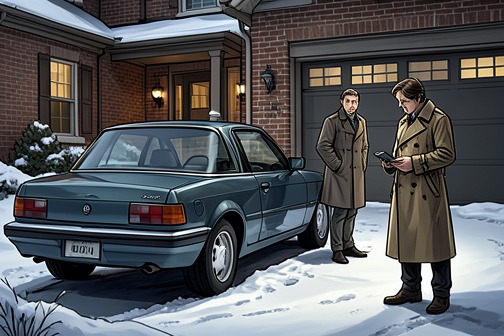
[Tony Leike](entity:character-recall-character-tony-leike-f78d2a737905)’s disappearance turns a planned police operation into an immediate uncertainty: the man [Mikael Bellman](entity:character-recall-character-mikael-bellman-cebc376d993d) wants to place in danger as bait cannot be found. Leike’s absence from home and work, the lack of any recorded flight or ferry journey, and the possibility that he has gone to the mountains leave investigators with a destination but no confirmation. His disappearance matters not only because the sting collapses, but because it places the initiative beyond the police’s control at the moment they are trying to draw a killer out.
## The Search for Leike
The news reaches [Harry Hole](entity:character-recall-character-harry-hole-f71813160d7c) through [Kaja Solness](entity:character-recall-character-kaja-solness-95df543c72a3) after Bellman has issued an order to find Leike. The search has produced no contact: Leike is neither at home nor at the office, and he has left no messages. Investigators have also checked passenger lists for airlines and ferry companies, but no Leike appears on them. Those negative results narrow the available possibilities without establishing where he has gone.
The lead comes from [Lene Gabrielle Galtung](entity:character-recall-character-lene-gabrielle-galt-8980b1765ddf). An investigator reaches her, and she suggests that Leike might have gone into the mountains to think, something she says he does fairly often. Because his car is still in the garage, [Kaja](entity:character-recall-character-kaja-ad2bcaf19333) reasons that, if he has gone there, he must have taken the train. It is a chain of inference, not a confirmed sighting: no one has found him, and the evidence does not establish that he has reached the mountains.
[Harry](entity:character-recall-character-harry-51d33e4b3663) supplies the likely destination, [Ustaoset](entity:location-recall-location-ustaoset-a909398bfbb4). He recalls that Leike had described the landscape there as his own. That personal association gives the search a specific direction, but it does not resolve the central uncertainty. Leike is still missing, and the report that he has not checked into a hotel offers no further confirmation of his whereabouts.
## The Mountain Connection
Ustaoset is significant in the investigation beyond its association with Leike. Earlier inquiries connected the missing [Adele Vetlesen](entity:character-recall-character-adele-vetlesen-8694194e9d43) to the same mountain region as [Borgny Stem-Myhre](entity:character-recall-character-borgny-stem-myhre-906c9cb74b58): both had bought train tickets there for [November 7](entity:time-recall-time-11-7-2da5760d45ad), one from [Drammen](entity:location-recall-location-drammen-bb2fe05fd420) and the other from Kongsberg. The connection made the area relevant to the wider inquiry before Leike disappeared, though it does not prove that he has returned there now.
A separate account inquiry found that [Iska Peller](entity:character-recall-character-iska-peller-b8c41f86c1f3)’s account had been charged for two beds in each of four mountain huts, with the huts roughly a day’s walk apart. The last was [Hävasshütte](entity:location-recall-location-h-vassh-tte-003de602b696), which lay about half a day’s walk from Ustaoset; the booking record placed the pair at that hut on November 7. These details establish a route and a shared mountain setting in the investigators’ reconstruction of the case. They also explain why a possible journey to Ustaoset is more than an arbitrary guess, while leaving Leike’s present location unverified.
The landscape has already been rendered as isolating and difficult to read. During a journey by snowmobile, Kaja Solness sees snow and wind flatten the terrain into a surface like the sea, with [Hallingskarvet](entity:location-recall-location-hallingskarvet-97c9d26efda7) rising ahead; the motor eventually stops, leaving the travelers far from ordinary habitation. That scene does not establish where Leike has gone, but it gives the mountain setting a concrete narrative character: distance and apparent openness can conceal how difficult it is to locate someone there.
## The Abandoned Sting
Bellman’s plan had been to make Leike visible to the person the police were trying to catch. The investigators believe the murderer may be targeting everyone who was at Hävasshütte on the relevant night. Bellman therefore intended to persuade Leike to speak in a newspaper interview about the difficult period he was going through and to mention that he planned to spend time alone at a particular secluded place. The interview would present him as an accessible target while allowing the [Kriminalamt](entity:organization-recall-organization-kriminalamt-c16c2ed7aea2) to arrange a trap.
Leike’s disappearance removes the intended lure before the plan can be carried out. Kaja tells Harry that the operation is no longer possible; the conversation does not report that Leike agreed to the interview, that the location was selected, or that the sting was ever launched. His absence thus changes the police strategy rather than producing an encounter with the suspected killer. Bellman’s proposal had depended on Leike’s cooperation and a controlled appearance in public, but neither can be relied upon once he cannot be found.
## Iska Peller as the Alternative
Bellman’s next proposal is to use Iska Peller instead. She is in [Australia](entity:location-recall-location-29432536e761) and, according to Kaja, is under police protection. Bellman knows that Harry has been in contact with [Neil McCormack](entity:character-recall-character-neil-mccormack-e030f3248e7a) and wants Harry to persuade Iska to return and serve as bait. The change makes the practical consequence of Leike’s disappearance explicit: the police do not simply suspend the operation, but seek another person whose presence might draw the suspected murderer out.
Kaja says Bellman is applying the same kind of pressure he used previously, though the exchange does not specify the pressure in detail. Her request places Harry between Bellman’s plan and the woman being asked to take Leike’s place. The disappearance therefore carries a second consequence beyond the failed search: it shifts the proposed risk to Iska and makes Harry’s involvement part of the effort to revive the sting. The evidence leaves Leike’s whereabouts unresolved; the immediate outcome is a change of target, not his recovery or a completed operation.
Event 27
The Hävasshütte Sting Operation
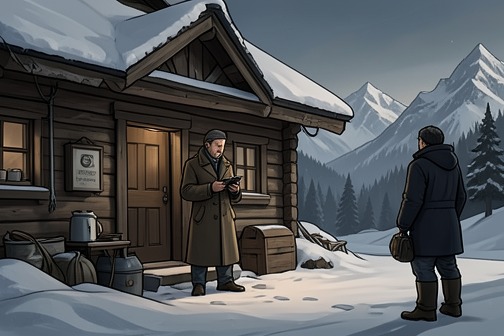
[The Hävasshütte Sting Operation](entity:event-recall-event-252212966163) turns a witness’s return to an isolated mountain hut into bait for a suspected killer. Its design depends on deception at two levels: the police advertise a seemingly ordinary reconstruction of the night at [Hävasshütte](entity:location-recall-location-h-vassh-tte-003de602b696), while concealed teams wait in the surrounding snow. The operation’s central gamble is that the killer knows the terrain, will believe the witness is exposed, and will come close enough for the police to intervene.
## The Hut and the Witness
The operation grows out of a pattern connecting the murders to Hävasshütte and the journeys that brought people there. [Borgny Stem-Myhre](entity:character-recall-character-borgny-stem-myhre-906c9cb74b58) disappeared after leaving the Mono in [Oslo](entity:location-recall-location-oslo-aa85218d6b1a); no taxi driver questioned by investigators recognized her or recalled a trip to Sagene. Two Polish builders later found her fully clothed in a cellar. The medical findings made the case especially disturbing: she had been drugged, and blood from wounds in her mouth had caused her to drown. Investigators found 24 evenly distributed punctures, each seven centimetres deep except those that passed through her face, but could not identify the instrument.
A search of railway-ticket records supplied another link. [Adele Vetlesen](entity:character-recall-character-adele-vetlesen-8694194e9d43), a missing 28-year-old from [Drammen](entity:location-recall-location-drammen-bb2fe05fd420), had bought a ticket to [Ustaoset](entity:location-recall-location-ustaoset-a909398bfbb4) for [November 7](entity:time-recall-time-11-7-2da5760d45ad)—the same date that Borgny had bought a ticket to the same mountain region from Kongsberg. [Iska Peller](entity:character-recall-character-iska-peller-b8c41f86c1f3)’s account records showed payments for two beds in each of four mountain huts, roughly a day’s walk apart; the final hut was Hävasshütte, about half a day’s walk from Ustaoset. The bookings and shared destination gave investigators a route and a place to revisit, but did not by themselves settle what had happened there.
A further clue came from [Elias Skog](entity:character-recall-character-elias-skog-7802f68caa39), who had spoken to a woman in [Stavanger](entity:location-recall-location-stavanger-4aa33f470c02) on the evening he was murdered. He told her that, during the night at Hävasshütte, he had woken to noises outside a bedroom window. In moonlight he saw a man holding a woman’s mouth and dragging her into the outhouse. At the time, Elias mistook the scene for sex; after reading about the murders, he reconsidered whether the woman had been struggling to escape. His account made the outhouse part of the police’s reconstruction and gave the planned return to the hut a specific investigative purpose.
## The Public Bait
At a press conference, Bellman announced that Iska Peller had contacted the police and would arrive in Oslo from [Australia](entity:location-recall-location-29432536e761) that evening. The next day, she would go to Hävasshütte with an investigator to reconstruct the night as far as possible. Bellman said the police hoped she could describe the other guests. The announcement disclosed a witness’s identity and plans—information the police would ordinarily keep confidential—because its intended audience included the killer.
The wording was calibrated to make the visit appear less important and less protected than it was. The police had discussed how to suggest that Peller might help bring the killer down without drawing attention to the danger of sending her into the mountains with only one investigator. [Harry Hole](entity:character-recall-character-harry-hole-f71813160d7c) particularly valued the phrases that introduced the matter as the final point about witnesses and described the police as merely hoping she could help. Those choices were meant to imply that Peller was not regarded as a crucial witness and that no major security measures were considered necessary. The real plan was the opposite: Bellman’s announcement was a lure, and the apparent lack of protection was part of its design.
Bellman then reinforced the impression before the television microphones. He said Peller would travel with one of the police’s most experienced investigators and remain at the hut for 24 hours. Harry Hole, standing at the back of the room, acknowledged the signal. The number and apparent simplicity of the arrangement were crucial to the deception: the killer was meant to picture one witness and one officer alone in a remote place, not a coordinated police presence.
## Concealing the Trap
The terrain made Hävasshütte both useful and dangerous. The hut sat in a hollow accessible from the northeast or south; steep cliffs blocked an eastern approach, while fissures and crevasses made the western ground treacherous for anyone unfamiliar with it. The police hoped the killer’s knowledge of the area would encourage a sense of security, while the restricted approaches made it possible to watch the likely routes.
Harry Hole, [Kaja Solness](entity:character-recall-character-kaja-solness-95df543c72a3), and [Jussi Kolkka](entity:character-recall-character-jussi-kolkka-b43e65d632ee) reached the hut after a helicopter landing near Neddalsvannet and a ski journey across the plateau. Other officers were concealed in groups of four, about three kilometres apart, dug into the snow around the valley. The night’s brilliant glare reflected from the snow made even looking out of the hut difficult. In the isolated mountains, only the [Telenor](entity:organization-recall-organization-telenor-6524969dd183) network was available; some officers used walkie-talkies because their mobile contracts relied on other networks. The conditions turned communications, visibility, and distance into operational constraints rather than background details.
The visible scene was staged to match the press conference. Kaja Solness played Iska Peller, and Kolkka took the role of the lone investigator accompanying her. They periodically went outside, gestured toward the hut and the route they had taken, and pointed in the direction of the outhouse, as if retracing the events of the fateful night. Harry Hole stayed hidden inside, and he brought his skis and poles in with him so that only [Kaja](entity:character-recall-character-kaja-ad2bcaf19333)’s and Kolkka’s equipment showed outside. From a distance, the evidence of a small, unprotected visit was meant to look convincing.
[Harry](entity:character-recall-character-harry-51d33e4b3663) had insisted on Kolkka as the apparent escort not because he had forgotten the earlier incident at Justisen, but because Kolkka’s close-combat experience might prove valuable if the plan failed. Harry hoped the killer would approach during daylight, when one of the teams in the snow could overpower him. If the killer came at night and was not spotted until he reached the hut, the three people inside would have to handle the danger themselves. The plan therefore rested on both concealment and readiness for the possibility that concealment would not be enough.
## What the Operation Can and Cannot Establish
The sting is a calculated response to the gap between what investigators know and what they can prove. The killer’s earlier first-person account presents a wall of photographs of victims alive, before their families’ lives were shattered, and claims that the police have not yet recognized the connection between the murders. The operation answers that vulnerability with a public signal: the police have found a witness from the hut’s guest list and are returning to the scene. But that signal is also a performance designed to shape the killer’s expectations, not a neutral account of investigative progress.
The scene Elias described was itself open to misreading. He first saw what he thought was a sexual encounter; only after learning of the murders did he consider that the woman might have been resisting. Later, Harry Hole abruptly recognizes that the episode was not a rape—and that this was the motive. That reversal underscores the limits of the reconstruction on which the bait depends: the police can stage a return to the hut and invite the killer to act, but the meaning of the original events is still being revised. The available account establishes the trap’s preparation and its risks, not whether the ambush succeeds.
Event 28
Avalanche at Hävasshütte During the Sting
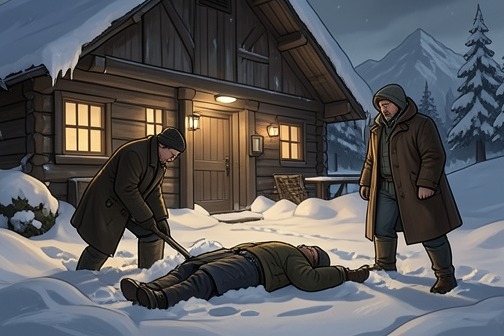
The avalanche at [Hävasshütte](entity:location-recall-location-h-vassh-tte-003de602b696) turns the sting into a sudden fight for survival, burying the lodge and dividing its occupants between rescue and loss. [Harry Hole](entity:character-recall-character-harry-hole-f71813160d7c) recognizes the sound in time to warn the others, but the building is struck before they can reach shelter; trapped beneath the snow, he digs his way to air, revives [Kaja Solness](entity:character-recall-character-kaja-solness-95df543c72a3), and discovers that [Jussi Kolkka](entity:character-recall-character-jussi-kolkka-b43e65d632ee) has died. The aftermath, observed by [Mikael Bellman](entity:character-recall-character-mikael-bellman-cebc376d993d), makes the scale of the destruction stark: the hut has vanished beneath a vast field of snow.
## Causes and Setting
The avalanche announces itself first as a sound rather than a visible threat. On a clear night, with the temperature seven degrees below zero, [Harry](entity:character-recall-character-harry-51d33e4b3663) hears a low, rolling rumble. It is not ordinary thunder: he knows how unlikely thunder would be in those conditions, and a second, bass-like roar confirms that the noise is moving air with enough force to be felt in the body. He has heard that sound only once before, but recognizes it immediately.
Harry has just insisted that the danger is close. When the rumble returns, he identifies it as an avalanche and runs toward the door facing the mountain, behind which Kolkka is. The sequence gives the warning only a brief lead over the impact. Harry calls out for everyone to hold on and reaches one hand toward [Kaja](entity:character-recall-character-kaja-ad2bcaf19333) and the other toward Kolkka. He feels Kolkka seize his hand; the snow wall hits before he can confirm that Kaja has taken the other.
The narrative establishes the avalanche as an immense physical event, not a threat the occupants can simply outrun. Harry knows the lodge has a foundation and a cellar, but judges that they cannot reach either in time. The bedroom window bursts, sending glass across the room as the mass of air pushed ahead of the avalanche rushes inside. The lodge seems to exhale and then inhale: air is drawn out, then the snow strikes. In that abrupt reversal, the building ceases to be shelter and becomes the place where its occupants are buried.
## Burial and Rescue
After the impact, Harry is trapped in the snow and at risk of suffocation. He finds the fireguard and digs around it, discovering that the structure has held back the snow enough to leave the chimney open. The air he reaches is stale and smells of ash, but it is air. He pulls himself into the oversized fireplace, coughs up ash, and gains a small, survivable pocket of space. His escape depends not on reaching the lodge's foundation or cellar, but on finding an opening through the chimney.
From there, survival becomes a search for the others. Harry probes the snow with a stick, trying to locate buried bodies and determine whether anyone is breathing. He chooses to dig toward a body he believes may still be alive. His fingers eventually find a white sweater: Kaja's. He pulls her head and upper body into the space by the fireplace and tries to detect a pulse, but his fingertips are too numb to feel one. He checks her mouth and begins resuscitation, breathing into her mouth again and again despite the ash in the air and his own need to breathe.
Only on the twelfth attempt does Harry feel a warm breath against his face. Kaja begins breathing and coughing, then recognizes him. The rescue is a narrow reversal: the woman he had been unable to find at the moment of impact is alive, but she has survived only because Harry locates her and continues when he cannot feel a pulse or see evidence that the effort is working. The scene makes the difference between life and death depend on a small, repeated act inside the wreckage.
Harry then digs for Kolkka. By the time he frees the Finn's head, it is too late. A struck match briefly illuminates Kolkka's empty eyes, confirming his death. Kaja asks whether Harry can try to revive him, but the discovery closes that possibility. The avalanche has spared Kaja and killed Kolkka; Harry's warning and rescue work do not translate into a general victory over the disaster.
## The Missing Lodge
Bellman sees the aftermath from a snow cave. A distant rumble wakes him, and by the time he has his binoculars ready, the sound has faded to an echo reflected from [Hallingskarvet](entity:location-recall-location-hallingskarvet-97c9d26efda7). Looking across the snow, he cannot find the lodge. Where the hut had seemed like a tiny pencil drawing against a blank sheet, there is now only smooth white. Its disappearance is so complete that the scene resembles an erasure rather than the wreckage of a recognizable building.
Bellman and the others put on their skis and reach the avalanche field in eight minutes and eighteen seconds. He records the time, a detail that places his police habits against the disorienting scale of the scene: even amid the apparent blankness, he measures their response. Someone estimates that the avalanche release covers at least a square kilometer. Their flashlight beams sweep across the snow, but the lodge itself is gone. The arrival establishes both the size of the search and the difficulty of finding survivors beneath an expanse that gives no immediate sign of where the building stood.
## Consequences and Narrative Significance
The event's immediate human outcome is uneven and irreversible. Harry survives by finding air through the fireplace and manages to bring Kaja back to consciousness, but Kolkka is dead when Harry reaches him. Bellman's view of the emptied landscape widens the consequence beyond the people in the lodge: the avalanche has removed their shelter so thoroughly that rescuers must search a snowfield rather than enter a damaged building.
The disaster occurs during the sting and interrupts an investigation already shadowed by concealed connections among murders. Earlier, the killer's voice presents a private theory that murder is an act of mercy and says the police have not yet recognized the link between the killings. The avalanche is not identified as an act of murder, and the evidence does not establish its cause; its force instead offers a stark contrast to that deliberate, rationalized violence. Here death arrives as a physical catastrophe, indifferent to anyone's theory of motive or control.
The Hävasshütte investigation continues beyond the immediate rescue. Later, when Harry hears that [Tony Leike](entity:character-recall-character-tony-leike-f78d2a737905) assaulted [Adele Vetlesen](entity:character-recall-character-adele-vetlesen-8694194e9d43) at the lodge, he suddenly sees the circumstances differently and understands that it was not a rape; that reversal supplies the motive. The later recognition does not explain the avalanche, but it shows that the disaster has not settled the questions surrounding the hut. Snow has erased the building from view; it has not erased the crimes and motives the investigation must still uncover.
Event 29
Harry and Olav Hole's Final Conversation
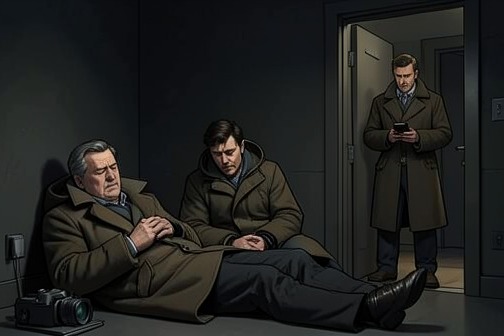
[Harry](entity:character-recall-character-harry-51d33e4b3663) and [Olav Hole](entity:character-recall-character-olav-hole-3c6eec46193f)’s final conversation is a bedside exchange shaped by darkness and by what can still be said before speech is lost. Olav tells Harry that he loves him, has always loved him, and has been proud of him; then he recalls a childhood fight that revealed the courage beneath Harry’s quarrelsome nature. The following morning, Harry learns that Olav has fallen into a coma and will not wake, making this conversation their last chance to speak while leaving some things unsettled.
## Recognition in the Dark
The scene opens with Olav blinking and staring into the dark. He asks whether the person with him is Harry; Harry answers yes. Olav checks whether it is night, and Harry confirms that it is. The exchange is spare, almost elemental: before father and son can reach their history, Olav must establish who is present and what surrounds him. Harry’s answer to the question of how he is doing—“I live.”—is equally bare. It gives no account of his feelings, but places his existence, rather than explanation or reassurance, at the center of his reply.
Olav offers to turn on the light, but the conversation that follows remains framed by the darkness. That setting matters less as a symbol imposed from outside than as the immediate condition of their meeting: Olav is trying to orient himself, while Harry is there to answer him. The questions and short replies give way to a sustained declaration, as Olav uses the remaining conversation to say things he worries he may only have thought.
## Love Without Conditions
Olav tells Harry that he loves him and has always loved him, whether Harry was drunk or sober. He acknowledges his son’s habitual conflicts—with other people and with himself—but insists that loving him was the easiest thing he had done. The statement does not erase Harry’s difficult behavior; it places that behavior beside a constancy that has survived it. Olav’s love is not presented as a reward for Harry having become easy to live with or easy to understand.
Harry begins to answer with “Papa ...” but does not complete the thought in the evidence of the scene. Olav moves on, saying there is no time to spend on unimportant things. He reflects that people can think about something so often and intensely that they assume they have already said it aloud. His concern turns the conversation into an act of correction: he will speak his love and his pride instead of trusting that Harry already knows them. He asks whether he has told Harry often enough that he was always proud of him.
## The Fight He Remembered
Olav’s recollection gives that pride a specific history. When Harry was in middle school, a teacher called to report that he had been in another fight, this time with two older boys. Harry had been badly hurt: he was taken to the ambulance to have his lip stitched and a tooth pulled. Olav had responded by cutting off his allowance. The memory begins, then, with the punishment Harry would have remembered most plainly, but Olav now supplies what he learned later from [Øystein](entity:character-recall-character-ystein-fe3bd9b9c751).
The fight had begun because the boys filled Holzschuh’s backpack with water from the schoolyard fountain. Olav admits that, as he remembered it, Harry had not even liked Holzschuh very much. What moved him was not an uncomplicated friendship or a sensible assessment of the odds: Harry had attacked the two larger boys and kept getting up after they knocked him down. He continued until he was so bloody that the older boys stopped on their own. By recalling both Harry’s injuries and the act that caused them, Olav recasts an episode of childhood violence as evidence of persistence and of a willingness to stand up for someone despite personal cost.
Olav had not told Harry this at the time. He feared praise might sound like encouragement to fight again, even though the incident had made him so proud that he had almost laughed. The memory therefore carries two versions of the same event: the father who imposed a consequence and kept his admiration private, and the father who, near the end of their time together, finally explains what he saw in his son. The conversation does not make the earlier punishment disappear; it reveals the pride that had remained unspoken beneath it.
## A Farewell Without Resolution
Olav calls Harry brave. He connects that judgment to the contradiction he sees in him: Harry was afraid of the dark, yet went into it anyway. His question about whether he had ever told Harry this is followed by Harry’s name, then by silence and Olav asking whether he is still there. The scene leaves the response unrecorded. Its emotional force rests not on a complete reconciliation or a polished farewell, but on a father finally giving words to an understanding he had carried for years.
The next morning, Harry tells [Mikael Bellman](entity:character-recall-character-mikael-bellman-cebc376d993d) that the hospital has called: Olav fell into a coma during the night, and his doctor, Abel, believes he will not wake. Harry says that whatever he and his father had not yet settled will remain unsettled. This news makes the earlier exchange final without turning it into a resolution of every conflict between them. Olav managed to tell Harry that he loved him and was proud of him; Harry is left knowing that their remaining questions can no longer be answered by his father.
Event 30
The Kavalier Serial Murders
[The Kavalier Serial Murders](entity:event-recall-event-34ca375df8f2) are a chain of killings engineered to make [Tony Leike](entity:character-recall-character-tony-leike-f78d2a737905) appear responsible, while concealing the Kavalier’s own role and the violence’s personal motive. The case’s central reversal is that an apparent serial-murder pattern does not have a single explanation: the Kavalier exploits the crimes and evidence surrounding Leike to hide his own attacks and steer the investigation toward a false culprit.
## Background and concealed pattern
The novel first frames the murders through a voice looking at newspaper photographs in a dark sewing room. The speaker has cut away the grieving families’ stories and the graphic accounts of the bodies, keeping only earlier photographs of victims smiling, apparently secure in lives that seemed to stretch ahead without obstruction. The carefully chosen images turn the victims’ former happiness into a stark counterpoint to their deaths, while the speaker’s own account casts killing as a universal human capacity and murder as a supposed act of mercy. That reasoning is presented as the speaker’s conviction, not as an established truth; its cold certainty makes the voice itself part of the mystery.
At this point, the police have not recognized a connection among the murders, though the speaker anticipates that they soon will. The gap between the killer’s confidence and the investigators’ incomplete understanding establishes the case’s governing tension: evidence can point toward a pattern without yet revealing who designed it, or why. The later investigation must therefore do more than connect victims. It must distinguish the real links among them from links deliberately planted to misdirect the police.
One important route into the pattern runs through the [Hävasshütte](entity:location-recall-location-h-vassh-tte-003de602b696). Missing-person inquiries establish that [Adele Vetlesen](entity:character-recall-character-adele-vetlesen-8694194e9d43) and [Borgny Stem-Myhre](entity:character-recall-character-borgny-stem-myhre-906c9cb74b58) each bought a train ticket to [Ustaoset](entity:location-recall-location-ustaoset-a909398bfbb4) for [November 7](entity:time-recall-time-11-7-2da5760d45ad). Records also show that [Iska Peller](entity:character-recall-character-iska-peller-b8c41f86c1f3) paid for pairs of beds at four mountain huts, each roughly a day’s walk from the next; the last was the Hävasshütte, only half a day’s walk from Ustaoset. These travel and lodging details place separate people within the same remote route and bring the hut’s occupants into the investigation, although the records alone do not explain what happened there.
The isolation of the mountain setting gives the connection its practical importance. A recollection from [Elias Skog](entity:character-recall-character-elias-skog-7802f68caa39) later supplies a disturbing account of the night: awakened by sounds outside, he saw a man and a woman beneath the outhouse’s roof. Unable to see the man’s face, Elias initially mistook the woman’s movements and the hand over her mouth for signs of a sexual encounter. After the murders became public, he reconsidered what he had witnessed and wondered whether the woman had been struggling to escape. That belated change in interpretation turns an overlooked glimpse into a possible account of violence—and makes the Hävasshütte not merely a point shared by travelers, but the scene around which the concealed motive begins to form.
## Motive and the false trail
The sight at the Hävasshütte first looked like a sexual assault, and [Harry](entity:character-recall-character-harry-51d33e4b3663) initially regarded Tony Leike as capable of violence. But the apparent assault did not explain the scene as he had first understood it. Harry suddenly saw the crucial reversal: it had not been a rape, and that difference supplied the motive. Adele Vetlesen had previously sent a friend an MMS while another man was having sex with her; according to her friends, she did not see the man from the hut again afterward. Harry interpreted the episode as a public betrayal that humiliated the man who witnessed it. Jealousy, rather than an unknowable impulse belonging to a mad serial killer, gave the crimes a personal cause.
That explanation could account for the killings of Adele and Tony Leike, but not by itself for the other victims. Harry proposed that they had been eliminated because they might have witnessed the Hävasshütte incident and told the police, supplying the missing motive. They also carried the knowledge of the Kavalier’s humiliation: for an unstable person, Harry argued, the prospect of others knowing about that public betrayal could itself be intolerable. The investigation’s apparent series thus encompassed both the original grievance and the removal of people who could expose it.
The Kavalier had also shaped the evidence to make Tony Leike look like the killer. [Juliana Verni](entity:character-recall-character-juliana-verni-9152949303f2) was paid to travel to the [Congo](entity:location-recall-location-abe123025556), where the weapon had been obtained; because Leike had an economic project in that region, a Congolese connection would draw suspicion toward him. The call to Elias Skog from Leike’s home telephone seemed to reinforce the accusation, until Harry checked the office records: around the same time, three calls had gone out from Leike’s direct line at the Aker Brygge office. The home-phone call therefore did not establish that Leike had made it; it fitted a deliberate attempt to use his home and name as part of the frame.
The torn page from the Hävasshütte guestbook served the same design. By removing the names of the people who had stayed there, the Kavalier could learn who might have been present, locate them and kill them before the police could intervene. The missing page also kept his own name out of the investigators’ view. The false trail was therefore not simply a collection of clues pointing at Leike: it was a way to control who knew the hut’s connection, who could be identified as a witness, and whose identity remained concealed.
## Escalation and deliberate visibility
The killings did not all serve the same immediate purpose, and the Kavalier changed how he handled the bodies as the investigation failed to follow his intended trail. Borgny Stem-Myhre was last known to have left the Mono after a fashion-magazine event, saying she wanted to go home to prepare for a jungle-and-punk-themed photo shoot. No taxi driver working nearby recognized her or recalled taking a fare to Sagene. Two Polish masons later found her fully dressed in the middle of a cellar after noticing its forced padlock. Her death had occurred between ten and eleven that night; [Ketanomin](entity:object-recall-object-4d7a15313682) was present in her blood, but she had drowned in blood from wounds in her mouth. The medical examiner counted twenty-four symmetrically arranged punctures, each exactly seven centimeters deep except those that had pierced her face. Investigators found no fingerprints, DNA, or shoe impressions; the concrete floor had been cleaned the day before. Two small gray-black stones that did not match the site’s gravel were recorded as potentially useful clues if similar stones turned up elsewhere.
In the following weeks, the Kavalier killed Borgny and Charlotte Lolles. Unlike in the killings of Adele Vetlesen and Juliana Verni, he no longer tried to hide the bodies. He instead left them where they could be found, expecting the deaths to make the police connect the women and search for the killer associated with the Leopoldsapfel. When the investigation still did not develop as he had planned, he widened the pressure: he killed [Mark Olsen](entity:character-recall-character-mark-olsen-b0b70340a08d), a member of parliament, and displayed her at the [Frognerbadet](entity:location-recall-location-frognerbadet-c97ffc17d233) swimming pool. The increasingly public placement of victims was an attempt to force the police to see a pattern, not a retreat from concealment of his own identity.
The Kavalier then took a more direct risk to create another link to Tony Leike. While Leike was away, he entered the house through the cellar and used Leike’s telephone to call Elias Skog. On leaving, he stole a bicycle to make the intrusion resemble an ordinary break-in. He was not deterred by having left fingerprints on the desk: he knew that the police did not pursue minor cellar burglaries. He then went to [Stavanger](entity:location-recall-location-stavanger-4aa33f470c02) and killed Elias by gluing him to the bottom of a bathtub and turning on the water. The call, the stolen bicycle, and the choice of a seemingly routine burglary all formed part of the effort to make the murder appear connected to Leike while exploiting investigative practices that the Kavalier expected would leave his own actions unexamined.
## Forensic residue and the limits of identification
A later addition to the medical examiner’s report recorded traces of iron and coltan on the inner surfaces of two of the victim’s molars. The finding adds a material trace to a case in which investigators could not identify the instrument responsible for the mouth wounds, but the report does not establish what object left the metals or who used it. Its significance therefore remains unresolved: the murders produce clues capable of inviting comparison, yet no single trace, by itself, closes the distance between a physical fact and the identity of the killer.
Event 31
Bomb-Triggered Avalanche at Håvasshütte
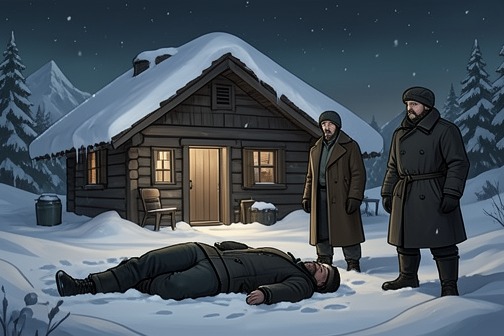
The [Bomb-Triggered Avalanche at Håvasshütte](entity:event-recall-event-8af754f1efe2) was a calculated attack by [Olav Hole](entity:character-recall-character-olav-hole-3c6eec46193f), who detonated dynamite above an isolated mountain hut and made the danger of the landscape serve as both weapon and disguise. [Jussi Kolkka](entity:character-recall-character-jussi-kolkka-b43e65d632ee) died, while [Kaja Solness](entity:character-recall-character-kaja-solness-95df543c72a3) was rescued after spending a long time beneath the snow and taken to intensive care. The event first appeared as a tragic accident and a possible attempt to kill a witness; [Harry Hole](entity:character-recall-character-harry-hole-f71813160d7c)’s later reconstruction connected it instead to Olav’s appetite for control and theatrical misdirection.
## Background and Stakes
The avalanche came amid an investigation whose clues were drawing several women toward the same remote mountain region. [Adele Vetlesen](entity:character-recall-character-adele-vetlesen-8694194e9d43), a missing woman from [Drammen](entity:location-recall-location-drammen-bb2fe05fd420), had bought a train ticket to [Ustaoset](entity:location-recall-location-ustaoset-a909398bfbb4) for [November 7](entity:time-recall-time-11-7-2da5760d45ad). [Borgny Stem-Myhre](entity:character-recall-character-borgny-stem-myhre-906c9cb74b58) had bought a ticket to the same destination for that date, and [Hävasshütte](entity:location-recall-location-h-vassh-tte-003de602b696) lay only half a day’s walk from Ustaoset. The records also showed bookings for two beds at four mountain huts, each roughly a day’s walk apart; the final hut was Hävasshütte, where the party was recorded on November 7. [Harry](entity:character-recall-character-harry-51d33e4b3663) assessed the material cautiously: it placed women and a missing person in proximity, but did not by itself establish what had happened. It nevertheless helped make the hut a crucial point in the investigation.
A second strand of evidence gave the hut’s past a more sinister aspect. [Elias Skog](entity:character-recall-character-elias-skog-7802f68caa39) had told a woman in [Stavanger](entity:location-recall-location-stavanger-4aa33f470c02) that, on a night at Hävasshütte, he woke to sounds outside his window and saw a man restraining a woman beneath the outhouse roof. He initially understood the scene as sexual activity and went back to sleep. After learning of the murders, he reconsidered whether the woman had been struggling to escape and whether the man had covered her mouth to stop her calling for help. Harry later questioned whether [Aslak Krongli](entity:character-recall-character-aslak-krongli-4692f08d77d1) had been there. The sighting therefore helped shape suspicion around the hut, but it was an ambiguous recollection rather than a settled account of the avalanche attack.
## The Attack and Its Immediate Aftermath
Dynamite had triggered the avalanche. By the time Harry visited the hospital, [Kaja](entity:character-recall-character-kaja-ad2bcaf19333) had been brought in by rescue helicopter and remained in intensive care because she had been under the snow for a long time. Her survival was uncertain enough that the doctor would not yet say whether she would recover. Harry found her pale and still in bed, her hand cold in his; beside her lay the [Aftenposten](entity:organization-recall-organization-aftenposten-053f726f6171), whose front-page report described the avalanche and quoted [Mikael Bellman](entity:character-recall-character-mikael-bellman-cebc376d993d) on the death of Jussi Kolkka. The report also presented the rescued witness as the Australian woman Kolkka had been protecting.
That public account conflated two women. Harry corrected the assumption: the Australian was in Bristol, protected by her own security staff and hotel service; Kaja, not the Australian, was the colleague who had been caught in the snow. The distinction matters because the avalanche’s apparent target and its actual victims were not straightforwardly established by the first reports. The event killed Kolkka, endangered Kaja, and left the investigation with a dramatic but potentially misleading public narrative about a rescued witness.
## Competing Explanations
Harry initially considered whether [Krongli](entity:character-recall-character-krongli-a64d3ee19c84) had set off the avalanche. The attacker, he reasoned, must have known the terrain and the hut’s connections. Elias’s account suggested Krongli might be a sexual predator, while the avalanche looked like an indirect way to attack a woman and the unarmed policeman with her. Harry also thought the assailant must have known the police were waiting and had chosen an attack that would allow time to escape. On this reading, the culprit was an insider: someone who understood the Hävasshütte theory and had reacted to the police naming a witness at a press conference. Krongli’s receipt of the Criminal Investigation Service’s urgent request for permission to land a police helicopter in the national park seemed to strengthen the suspicion that he had recognized the investigation’s purpose.
Kaja challenged a key premise. The police would not have exposed [Iska Peller](entity:character-recall-character-iska-peller-b8c41f86c1f3) to that danger by placing her in the hut, so Krongli might not have believed she was there. Harry accepted the correction and revised the interpretation: the avalanche did not need to be a direct attempt to kill Iska. In his view, it continued a pattern of playing with the investigators. This exchange separates the physical fact of the dynamite-triggered slide from the changing theories about its intended victim and the attacker’s knowledge. The investigators were forced to distinguish what the avalanche proved from what its circumstances merely suggested.
## Olav Hole’s Plan and the Staging
Harry’s later reconstruction assigned the attack to Olav Hole. Learning from the news that Iska was at Hävasshütte, Olav saw a chance to bring matters to an end, but also suspected that the situation might be a trap. He remembered a snow slab above the hut and the local warning that the site was avalanche-prone. Rather than approach openly, he took [Tony Leike](entity:character-recall-character-tony-leike-f78d2a737905) as a mountain guide, went to Hävasshütte, and used dynamite to release the avalanche.
The plan did not end with the detonation. Olav intended to drive the snowmobile back, throw Tony—dead or alive—into a ravine, and push the snowmobile after him. If the body were later found, the scene could be read as an accident: someone with burn injuries had supposedly been riding toward help before plunging into the ravine. This projected explanation made the avalanche part of a larger effort to control what investigators would see. The landscape would conceal an intentional act, while the abandoned vehicle and body would offer a ready-made alternative account.
## Narrative Significance
The avalanche’s meaning changes as information arrives. The newspaper makes it a tragedy and frames the rescued person as the protected Australian witness; Harry corrects that identification. His early theory treats the attack as an insider’s attempt to kill a witness and escape; Kaja’s objection forces him to revise the theory of what the attacker knew. The eventual reconstruction replaces Krongli with Olav Hole and gives the event a further purpose: it was not merely an attack but a performance designed to make others misread both the danger and the evidence.
That pattern echoes the novel’s wider investigation, in which clues can connect people and places without immediately revealing the motive that binds them. The white mountain setting, whose smoothed snow Kaja experiences as a vast sea beneath the looming [Hallingskarvet](entity:location-recall-location-hallingskarvet-97c9d26efda7), becomes more than a remote backdrop: it is terrain whose natural hazards can be deliberately activated and then used to obscure responsibility. The avalanche’s decisive consequence is therefore double. It leaves real casualties and a survivor in critical condition, while also exposing how easily a staged explanation can compete with the truth when violence is made to resemble misfortune.
Event 32
Night at Hävasshütte: Tony Leike and Adele Vetlesen's Rendezvous
[Night at Hävasshütte: Tony Leike and Adele Vetlesen's Rendezvous](entity:event-recall-event-17a7b75a8c6b) is the encounter that binds several strands of the murder investigation and overturns its apparent explanation. Seen from outside as a possible rape, it is reconstructed by [Harry Hole](entity:character-recall-character-harry-hole-f71813160d7c) as consensual sex; the distinction changes the meaning of the evidence and exposes the private humiliation that helps set the later violence in motion.
## The Journey to [Hävasshütte](entity:location-recall-location-h-vassh-tte-003de602b696)
On [November 7](entity:time-recall-time-11-7-2da5760d45ad), [Adele Vetlesen](entity:character-recall-character-adele-vetlesen-8694194e9d43) and [Borgny Stem-Myhre](entity:character-recall-character-borgny-stem-myhre-906c9cb74b58) had both booked train tickets to [Ustaoset](entity:location-recall-location-ustaoset-a909398bfbb4), though from different starting points: Adele from [Drammen](entity:location-recall-location-drammen-bb2fe05fd420) and Borgny from Kongsberg. Ustaoset was not a town so much as a mountain region, and the journey continued through a chain of hiking cabins. Records tied to [Iska Peller](entity:character-recall-character-iska-peller-b8c41f86c1f3)'s account showed charges for two beds at four cabins, roughly a day's walk apart; Hävasshütte, the last stop in the route, lay about half a day's walk from Ustaoset. The records give the night a specific geography: a remote mountain refuge reached along a shared route, rather than an encounter in an ordinary urban setting.
At Hävasshütte, Adele and her traveling companion were among a group that included [Marit Olsen](entity:character-recall-character-marit-olsen-4d132862f7af), [Elias Skog](entity:character-recall-character-elias-skog-7802f68caa39), Borgny Stem-Myhre, Charlotte Lolles, and Iska Peller. Iska was feverish and asleep alone in a separate room. After dinner, the fireplace was lit and wine was opened; some of the guests went to bed. Adele's companion was already in his room, waiting for her, while she stayed up. Tony arrived later. His arrival matters because it changed the night for the person who recognized his voice: to Adele's companion, the familiar sound carried the force of an earlier injury returning.
## What Elias Saw
Elias Skog was woken by noises outside his bedroom window. In the moonlight, he saw a woman beneath the overhang of the outhouse and a man standing behind her, his face hidden from view. The woman faced Elias and seemed, to him, to be dancing; the man held a hand over her mouth. When he pulled her into the outhouse, Elias assumed they were preparing to have sex and that the hand was meant to keep them from waking the other guests. Disappointed that the view had been cut short, he went back to sleep.
The next morning Tony was gone. Elias did not initially treat what he had seen as an emergency or report that he believed a crime had occurred. Only after reading about the murders in the newspaper did he revisit the scene and wonder whether the woman had been struggling to escape, and whether the hand over her mouth had been meant to silence a call for help. By then, the image had changed in his memory: the apparent dance could be read as resistance, and the same gesture could appear coercive rather than intimate. His account therefore preserves both the observation and the uncertainty created by seeing it from a darkened room at a distance.
## A Crime Scene Reinterpreted
The investigation seemed at first to support Elias's later suspicion. [Tony Leike](entity:character-recall-character-tony-leike-f78d2a737905)'s DNA profile was matched through hairs from his hairbrush, and the reported encounter was treated as a rape. Harry Hole initially found that conclusion plausible, given the account of a man holding Adele's mouth and pulling her into the outhouse. But the evidence did not settle the question simply by identifying Tony; it had to be interpreted alongside the circumstances of the night.
[Harry](entity:character-recall-character-harry-51d33e4b3663)'s reconstruction was that Tony and Adele had wanted one another. Tony arrived late, while Adele's companion had gone to bed angry. With the other guests nearby, Adele and Tony went outside to be alone. They kissed and touched one another, and Tony stood behind her. Harry inferred that fluid from Tony's arousal had reached Adele's ski pants before they had sex. Their cries woke Elias, who saw the scene but could not hear or know what had passed between them. Tony covered Adele's mouth to muffle the sounds, not because she was pleading for help. The gesture that had looked like proof of assault was also the detail most vulnerable to misreading when stripped of what the couple themselves were doing.
Adele's previous behavior helped Harry explain why she did not seem concerned that her companion might see or hear her. Her friends had described her as someone who changed partners spontaneously; on one occasion, she had sent a message to a boyfriend while another man was having sex with her. Harry also noted that she did not see the man from Hävasshütte again after the trip. Those details informed his reading of her choices without turning Elias's limited view into certainty: his window offered a glimpse, while the later reconstruction assembled motive and context from evidence and testimony.
## The Encounter's Consequences
The cabin night gathered together people whose paths would matter to the case: Adele, reported missing by her partner in November; Borgny, who disappeared after leaving the Mono; and Marit, Charlotte, and Elias, whose names also became connected to murders. Elias's observation offered the investigators a possible account of what had happened to Adele, but it also threatened to fasten the wrong explanation onto Tony. The DNA link placed him at the center of the encounter; it did not, by itself, distinguish rape from consensual sex.
For Adele's companion, the sight of Tony with her was not an isolated episode. Harry's later account describes him listening to Tony speak with Marit and then Adele, hearing the voices grow quieter, and watching the couple outside. He recognized Tony and experienced the scene as a repetition of an earlier humiliation, with other people again positioned as witnesses. In Harry's reconstruction, that repetition helped turn shame into a plan for revenge, directed at those present and especially at Tony. The rendezvous thus occupies two sharply opposed positions in the story: for Adele and Tony, an encounter they chose; for Elias, an apparent assault; and for the watcher who recognized Tony, a renewed injury. Its significance rests on how one night could be intimate in fact, incriminating in appearance, and catastrophic in the meaning someone else gave it.
Event 33
Tony Cuts Off Half of Ole's Tongue Outside the Disco
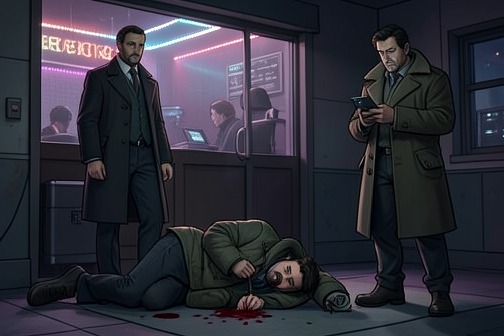
[Tony Cuts Off Half of Ole's Tongue Outside the Disco](entity:event-recall-event-5fe43bdf4b44) is the violent incident that scars Ole and helps explain the shame and isolation he carries into adulthood. Beginning with a confrontation over [Mia](entity:character-recall-character-mia-f4a5d7eefe52), Tony’s assault transforms a village-discico rivalry into a lasting bodily injury and social humiliation.
## The confrontation outside the disco
Years before [Harry Hole](entity:character-recall-character-harry-hole-f71813160d7c) recounts the episode to [Sigurd Altman](entity:character-recall-character-sigurd-altman-c4247796e460), [Tony Leike](entity:character-recall-character-tony-leike-f78d2a737905) is kissing Mia, the daughter of village policeman [Skai](entity:character-recall-character-skai-26675e19cf66), at the edge of the woods near a disco. Ole, who is in love with Mia and believes they may be a couple because he has been allowed to go to the disco with her and her friends, comes looking for her. Though he is not known as a fighter and does well at school, he attacks Tony in anger and frustration.
Tony responds with sudden, extreme violence. The charming young man whom people like gives way to what [Harry](entity:character-recall-character-harry-51d33e4b3663) later describes as a threatened predator: Tony knocks Ole down, draws a knife, and cuts off half his tongue before the people who arrive can restrain him. The violence stuns Mia and the witnesses. About half an hour later, Skai and others find Tony at his grandfather’s home and press for Ole’s severed tongue to be taken to surgery as quickly as possible. Tony says he has thrown it to the crows.
## Shame and the lasting aftermath
The injury did not end with the attack. Mia was never again the cheerful girl she had been, according to her father, Skai. She still wanted Tony, despite what he had done; Skai regarded that attachment as characteristic of a girl her age. The scene therefore leaves Mia caught in a painful contradiction: she has witnessed Tony’s brutality, yet her feelings for him do not simply disappear.
Ole’s response was to leave. Each time he opened his mouth, the missing half of his tongue recalled the violence to him and to those around him. What had begun as an impulsive confrontation over Mia became, for Ole, an enduring public humiliation: his unreturned love had been exposed, and the injury made the defeat audible. Skai describes the shame as falling on Ole even though he had been the one attacked. Ole’s departure turned that shame into separation from the place where everyone knew what had happened.
The episode also informs Skai’s judgment of Tony, but does not make that judgment uncomplicated. Asked whether he had suspected Tony of rape, Skai calls Tony a rapist while distinguishing that label from an expectation that Tony would sexually assault someone. Skai points to an earlier encounter in the woods behind the disco: Mia refused Tony’s advances, and Tony accepted her refusal. The contrast places the assault on Ole beside a different instance of Tony’s conduct, without erasing the violence or resolving what it means. In Harry Hole’s later account, the incident is a beginning: Tony’s sudden brutality creates the wound and humiliation Ole carries into the years that follow.
## The wound carried into adulthood
Harry Hole’s later reconstruction follows Ole beyond his departure from the village. In a new place, Ole establishes himself through work for which others respect his diligence, and he forms a small circle of friends. Their lack of knowledge about his past matters: away from the people who witnessed the attack, he can build a life without the incident being common knowledge. Yet the concealment does not mean its effects have passed. What he lacks, Harry says, is a lasting relationship with a woman.
Ole meets women through dating sites and personal advertisements, and sometimes in bars, but the encounters end quickly. Harry distinguishes this pattern from a simple consequence of Ole’s injury: the missing part of his tongue is not, in his account, what drives women away. Instead, Ole carries the old defeat into each new relationship, anticipating rejection with self-belittling expressions and distrusting women who appear genuinely interested in him. The public humiliation has become a private expectation, shaping the possibility of intimacy even where the people he meets know nothing of its origin.
A change begins when Ole meets [Adele Vetlesen](entity:character-recall-character-adele-vetlesen-8694194e9d43), who does not leave and has herself endured many cold winters. With her, Ole is able to act on his sexual fantasies, and they have sex in an abandoned factory. He then invites her on a ski tour in the mountains, a step Harry reads as evidence that Ole is serious about her; Adele agrees, though somewhat reluctantly. The episode’s consequences therefore extend beyond the mutilation itself: the injury remains a visible reminder of the old humiliation, while the deeper burden is the defeat Ole has learned to carry into his adult relationships.
## The event as a reconstructed origin
Years later, Harry Hole places the attack within a journey east toward [Lyseren Area](entity:location-recall-location-148cf9c19efd). He and [Björn Holm](entity:character-recall-character-bj-rn-holm-0f5270abeba6) have passed an exit before Harry tells Sigurd Altman that the story began there, outside a disco many years earlier. The explanation is tied to an earlier clue: the finger Harry had shown Altman in photographs that morning belonged to Tony Leike. In this present-day conversation, the old assault becomes more than village history; it supplies the beginning of the chain Harry is tracing.
Harry’s retelling sharpens the contrast between Tony’s public charm and the violence Ole encounters. At first Tony appears as the smiling, popular young man kissing Mia at the forest’s edge; under Ole’s attack, Harry says, he becomes a threatened predator. The abrupt transformation makes the knife assault the decisive turn in the remembered scene, while the severed tongue carries its consequence forward: Ole’s humiliation persists long after the witnesses and the disco are left behind. By calling the place where it happened the story’s beginning, Harry connects a moment of provincial violence to the adult lives it continues to shape.
Event 34
The Kadok Factory Arson
[The Kadok Factory Arson](entity:event-recall-event-2f686cf0aa68) is the moment [Harry Hole](entity:character-recall-character-harry-hole-f71813160d7c) finds the hidden archive connecting several murders—and nearly dies before he can secure its evidence. In a windowless room, photographs of victims and a page from the [Hävasshütte](entity:location-recall-location-h-vassh-tte-003de602b696) guestbook point toward the investigation’s concealed pattern. Then a fire erupts, the extinguisher brought to fight it proves to contain a combustible liquid, and the attempt to preserve the clues becomes a desperate escape. The blaze destroys the room’s contents and spreads into the factory, leaving the discovery both decisive and costly.
## The Factory Room and the Evidence
[Harry](entity:character-recall-character-harry-51d33e4b3663) enters a dark, windowless room that he estimates at three metres by three. Its sparse contents appear orderly: a black folding chair, a desk with a Dell computer and lamp, and cleanly finished edges. Paper strips in the wastebasket and a copy of Dagbladet with part of its front page cut away suggest that someone has been collecting and altering printed material. The excised headline reads that a person had died in an avalanche. To Harry, the missing piece and the hidden room together signal that he has reached the place he was looking for.
The wall supplies the discovery’s larger significance. Photographs or printed images show [Mark Olsen](entity:character-recall-character-mark-olsen-b0b70340a08d), Charlotte Lolles, [Borgny Stem-Myhre](entity:character-recall-character-borgny-stem-myhre-906c9cb74b58), [Adele Vetlesen](entity:character-recall-character-adele-vetlesen-8694194e9d43), [Elias Skog](entity:character-recall-character-elias-skog-7802f68caa39), [Jussi Kolkka](entity:character-recall-character-jussi-kolkka-b43e65d632ee), and [Tony Leike](entity:character-recall-character-tony-leike-f78d2a737905). [Juliana Verni](entity:character-recall-character-juliana-verni-9152949303f2), a prostitute from [Leipzig](entity:location-recall-location-8d916753a217), is not among them. Most of the images appear to have been cut from newspapers or printed from online newspaper pages. Adele’s image is different: a grainy enlargement of her in profile on a car’s passenger seat, with a long knife bearing a bright yellow handle protruding from her neck. The photograph makes her apparent disappearance look like concealment of a killing, not a journey that ended beyond the police’s reach.
Letters are pinned beneath the images. Harry reads their opening lines, then notices that one text continues beyond what he can examine. The room also contains a rough-edged sheet divided into columns, with handwritten entries in several different hands. He recognizes it as a page from the Hävasshütte guestbook and reaches for it. Its importance is sharpened by the investigation’s earlier trail: Adele Vetlesen and Borgny Stem-Myhre had tickets to [Ustaoset](entity:location-recall-location-ustaoset-a909398bfbb4) on the same date, while [Iska Peller](entity:character-recall-character-iska-peller-b8c41f86c1f3)’s account had been charged for pairs of beds at four mountain huts on a four-day route, including Hävasshütte. Elias Skog had later described seeing a woman and a man outside the hut’s outhouse; in retrospect, the scene he had taken for a sexual encounter might have been an assault. The page could preserve a record bearing on that night, but the fire interrupts Harry before he can secure it.
## The Fire Takes Hold
The danger is first legible as a set of details Harry has not yet assembled. The room smells of ammonia. He notices the desk lamp and a blue ceiling, then sees the ragged, handwritten sheet and understands that the alarm in his mind is not about the paper. A later fire-brigade account explains the ignition: a spark from electrical wiring entered a box containing ammonia gas, which ignited the [PSG](entity:organization-recall-organization-psg-cc9fd1a297f5) coating on the ceiling and part of the wall. What follows is described as an explosive fire rather than an explosion in the strict sense.
Harry is struck by the heat as the flames consume the room’s oxygen. He drops to his knees, checks whether his hair is burning, then forces himself upright and reaches toward the guestbook page. An officer appears in the doorway with a fire extinguisher under one arm and a hose in his hand. The extinguisher does not deliver the expected foam or powder. Its stream is brownish yellow and liquid; Harry recognizes the smell of gasoline, and the burning liquid carries the flames toward the officer. The equipment that should have offered rescue becomes part of the hazard. Its conspicuous placement in the break room, and its apparent sabotage, make the attempt to fight the fire look like a prepared trap rather than a simple accident.
## Escape and Destruction
Harry charges the officer at waist height and knocks him backward into the break room. They scatter chairs and get beneath the tables as the burning extinguisher rolls after them, its hose dripping rubber. Harry hauls the dazed officer toward the door and onto the gallery, then pulls him down with him. The fire captain’s later term for what happens next is a fire explosion: the windows are forced out and the break room becomes a mass of flames. Harry’s intervention changes the immediate outcome from entrapment to escape, but it cannot save the room or its contents.
Afterward, darkness has fallen over the factory grounds. Harry stands beside [Björn Holm](entity:character-recall-character-bj-rn-holm-0f5270abeba6) with a wool blanket over his shoulders and a large paper cup in his hand while firefighters remove the last buckets of PSG that will ever leave the factory. When Holm asks about the victim images, Harry confirms that they were all there except for Juliana Verni. The investigators ask whether the sheet was definitely the Hävasshütte guestbook page, but the fire has deprived them of the clearest chance to examine the material in place.
The fireman’s report on the blaze does not restore the destroyed evidence. When asked for the result rather than the cause, he says that the room has burned out completely: the papers, furniture, and computer are all gone. The secret archive has yielded a powerful visual connection among victims and a possible link to the mountain-hut investigation, yet its records cannot now be recovered from the room. The scene therefore delivers a reversal: Harry reaches the evidence, but a mechanism that turns the room itself into a weapon destroys the archive almost as soon as he finds it.
## Significance to the Investigation
The wall makes the factory room more than a hidden workplace. By placing the images of Mark Olsen, Charlotte Lolles, Borgny Stem-Myhre, Adele Vetlesen, Elias Skog, Jussi Kolkka, and Tony Leike together, it presents the scattered cases as part of a single field of attention. The omission of Juliana Verni is also concrete: the display is extensive, but not a complete inventory of everyone connected with the murders. Adele’s photograph is especially consequential because it challenges the false travel trail. A woman had flown from [Oslo](entity:location-recall-location-oslo-aa85218d6b1a) using a passport in Adele Vetlesen’s name, while the passport control in [Kigali](entity:location-recall-location-kigali-8524b29cabf8) recorded no arrival under that name; the image at the factory instead indicates that Adele had been killed.
The guestbook page ties the room’s archive back to Hävasshütte, where the route, the shared date, and Elias Skog’s belatedly reinterpreted sighting converge. Yet the event does not supply a complete explanation of who caused the blaze or how every item on the wall was assembled. What it establishes is the cost of reaching the evidence: the archive’s contents become visible at the very moment the fire makes them inaccessible. Harry and the officer get out, but the papers, computer, and furniture are lost, and the factory is left to the firefighters. The Arson thus marks both an investigative breakthrough and the destruction of the material record that might have carried it further.
Event 35
Kavalier's Arrest
Kavalier’s arrest brings [Harry Hole](entity:character-recall-character-harry-hole-f71813160d7c)’s investigation to a public, physical reckoning with [Sigurd Altman](entity:character-recall-character-sigurd-altman-c4247796e460). [Harry](entity:character-recall-character-harry-51d33e4b3663) first challenges Altman to judge whether the work has become the masterpiece he imagined, then exposes the evidence hidden inside their conversation: the photographs Altman handled bear fingerprints matching those found in [Tony Leike](entity:character-recall-character-tony-leike-f78d2a737905)’s house. Altman’s composure gives way to laughter and resignation as an officer approaches to take him into custody for a series of murders.
## The confrontation
Harry’s accusation begins as a question about the result Altman had envisioned. He addresses him as Sigurd, then asks whether he may call him Ole Sigurd, making the name itself part of the confrontation. Altman gives little answer. When he later dismisses Harry’s account as merely a story without a single solid piece of evidence, he forces Harry to reveal how the encounter has been arranged.
The exchange turns on photographs Harry had shown Altman earlier that day. Harry had asked him to look at them; Altman had noticed that they were still wet. Harry now explains that handling the pictures left fingerprints, and that those prints match fingerprints found in Tony Leike’s house. What seemed like an incidental request was therefore a way to obtain a direct comparison. The evidence does not arrive through a dramatic search or confession, but through Altman’s own touch.
## The evidence and Altman’s response
As the significance of the prints becomes clear, Altman asks whether Harry showed him the pictures only to make him handle them. Harry confirms that he did. Altman stares at him, covers his face with his hands, and begins to laugh. His eyes are wet, but Harry reads his expression as resignation rather than defeat: in Harry’s experience, being caught can bring the relief of finally being able to tell the story.
Altman acknowledges that he had not thought he would need an alibi. His response makes the trap’s success more pointed: he had not prepared for the possibility that Harry would suspect him, while Harry had built a test around an ordinary interaction. The arrest therefore turns not on a contest of elaborate explanations, but on the material trace left by a seemingly minor act.
## From private discovery to official arrest
Harry makes clear that the case will not officially be credited to him. He says that the man waiting in the car will be recorded as the person who figured it out, and that this man will arrest Altman. Harry then nods to [Björn Holm](entity:character-recall-character-bj-rn-holm-0f5270abeba6), who signals with the Cherokee’s headlights. An officer gets out and approaches the vehicle, where Björn has lowered the driver’s window.
The approaching officer is [Skai](entity:character-recall-character-skai-26675e19cf66), whom Harry presents as an old acquaintance of Altman’s and notes that Altman knows Skai’s daughter. Skai addresses Altman as Ole and announces that he is under arrest for the murders of a number of people. He does not read out their names then, saying that this can be done later. Instead, he gives immediate instructions: Altman must put both hands on the dashboard, where they can be seen, while Skai comes around to open the door and handcuff him.
## The arrest’s aftermath and investigative context
Skai describes the next steps in deliberately domestic terms: Altman will accompany him to a freshly cleaned cell, while Skai’s wife has made meatballs with mashed rutabaga, a meal Skai knows Altman likes. The contrast makes the arrest both procedural and personal. Skai gives unmistakable commands, but speaks as someone who knows the man he is taking into custody; the familiar meal does not soften the fact that Altman is being arrested for multiple murders.
After the arrest is set in motion, Altman asks how Harry discovered that someone had been using the locked tourist cabin. Harry explains that he and a colleague had taken shelter there by chance and suspected that someone had recently been inside. A burned substance stuck to the stove first seemed to him to be meat. Only later did he connect the crumbs to an arm protruding from beneath a snowmobile, which looked like a burned sausage. The village police officer scraped the substance from the stove and sent it for DNA analysis; the result was still expected in a few days.
Harry also says that Tony Leike had stored personal belongings in the cabin, including an old family photograph showing Tony as a boy. He tells Altman that the cabin had not been cleared out thoroughly enough. These details explain another strand of the investigation, but the immediate arrest rests on the fingerprints from the photographs. Harry admits that he lied when he claimed he needed Altman to identify [Ketanomin](entity:object-recall-object-4d7a15313682), while maintaining that Altman would indeed be present when a piece of Norwegian criminal history was made. The scene thus closes on a double disclosure: Harry’s stated pretext was false, but the evidence he arranged was real.