Lavery pub bombing with advance evacuation
TrespassesThe Lavery pub bombing with advance evacuation turns a public house into a ruin while sparing everyone inside. The blast’s force is visible in the torn gable and scattered furnishings; its most consequential detail, however, is what precedes it: an anonymous warning gives the police time to evacuate the bar. The resulting absence of deaths is treated not as proof of safety but as a reprieve whose source the Laverys cannot establish.
Warning and Circumstances
An incendiary device explodes at a public house in County Down, causing extensive damage, and no one claims responsibility. The device is concealed in an empty beer keg on the left side of the building. The police receive an anonymous phone call fifteen minutes before it detonates, allowing the bar to be evacuated. The warning is precise enough to prevent a fatal gathering, but it does not identify who placed the device or who made the call.
Eamonn Lavery watches the explosion from a tunnel between two Royal Ulster Constabulary officers. One remarks that somebody must be looking after him, since nobody usually gets that much notice. The observation gives the warning an ambiguous quality: it may be a deliberate act of leniency, but the scene offers no confirmation of who granted it or why. The Laverys are already unsettled by the absence of Fidel, who has not been seen for more than a week, and they are inclined to think he is behind the warning. Their suspicion remains a family inference, not a solved question; in their circumstances, the fact that nobody dies is itself a gift.
The Pub After the Blast
When Cushla Lavery returns, the damage is sharply uneven. Eamonn’s Capri has absorbed much of the impact and is headed for a breaker’s yard. To the right of the entrance, apart from shattered windows, the building appears almost untouched. To the left, part of the gable wall has disappeared, and the upstairs lounge is exposed like a squalid doll’s house. The division makes the bomb’s violence legible across the building: one side retains the appearance of a functioning pub, while the other has been opened and ruined.
Inside, the destruction has unsettled the objects that made the place familiar. The carpet squelches underfoot; high stools lie tossed aside, plasterboard hangs from the ceiling, and jade-green upholstery has been discoloured by the fire hoses. Coloured glass litters the tables, while bottles ooze beer, ginger ale, and stout across the lino beneath collapsed shelves. Cushla searches the debris by hand and foot. On the small plinth where the whiskey dogs stood, the Scottish border terrier remains intact; only a pair of chalky paws survive of the Westie. A bottle of green chartreuse and the Babycham fawn, its face marked by smoke, are among the other recognisable remnants. These objects do not undo the damage, but their partial survival gives the wreckage particular measure: the pub is not an abstraction called property, but a place whose small, accumulated furnishings have been broken, displaced, or left oddly intact.
Evacuation and Aftermath
Eamonn comes in from the back carrying a refuse sack and asks whether anything has been saved. Cushla can point only to a few pieces. She raises her chin to look at him and apologises. The exchange places personal grief beside practical loss: the building must be cleared and assessed, even as the family confronts how much of the place has been destroyed. Cushla also recognises the danger the warning averted. People could have been killed; they were not. That distinction is relief, but it does not make the ruined pub whole.
Eamonn has already formed a plan. He intends to put the pub on the market and move away, perhaps south. Cushla tells him they will miss him, and he answers that she is coming too, so he can keep an eye on her. His decision makes the bombing a point of departure as well as an episode of destruction: the family’s survival does not restore their sense of security or keep them in place. Instead, the threat helps turn leaving into a concrete possibility, with Eamonn proposing both a sale and a move.
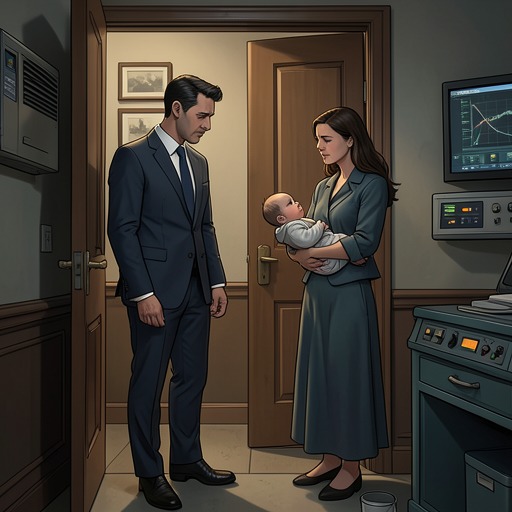
As Cushla crouches again among the debris, a new arrival surveys the damage. Eamonn assumes the figure is an insurance assessor and advises Cushla to exaggerate if questioned. The visitor is Victor, wearing a war-reporter’s many-pocketed jacket, which seems more fitting at a bomb site than it had in Penny’s kitchen. Victor remarks on how much damage such a small quantity of explosives has caused. The scene ends with Cushla standing to face him while Eamonn steps outside, shifting the aftermath from family reckoning toward an encounter with an observer of the violence.
Significance
The episode holds catastrophe and reprieve together without resolving their uneasy relation. The warning saves the people in the bar, yet its anonymity leaves the Laverys to interpret their survival through rumour and suspicion. The comment made to Eamonn by the officers suggests unusual foreknowledge or favour, while the family’s belief about Fidel supplies a possible explanation but no certainty. The bombing therefore produces no clear account of responsibility, only a damaged building and competing intimations about who may have intervened.
The pub’s physical remains give that uncertainty a concrete form. The surviving dog figurine, the Westie reduced to paws, and the smoke-marked Babycham fawn register different degrees of loss without turning the wreckage into a simple emblem. The blast’s uneven effects are also a practical fact: Eamonn’s car is lost, one side of the building is devastated, and the surviving objects are too few to suggest restoration. Because the bar has been evacuated, survival is the event’s decisive outcome; because the damage makes Eamonn plan to sell and leave, that survival does not amount to security. The warning prevents a death toll, but the bombing still displaces the Laverys from the life and place they had occupied.