Trial of Tommy McGeown
TrespassesThe Trial of Tommy McGeown is the legal reckoning for the murder of Belfast barrister Michael Agnew, ending with an eighteen-year-old defendant sentenced to life imprisonment. The novel presents the proceedings through a newspaper report read by Cushla Lavery: a public account of conviction and sentence set against her private effort to understand how Tommy came to kill a man who had once invited him into his home.
The Public Report and Its Context
The trial appears in a prominent newspaper feature. A brief front-page notice directs readers to a two-page spread that combines an opinion column on the dangers of judicial work, reporting on the young age of many people appearing in court on terror charges, and an account of Tommy’s case. The column notes that judges had been shot the previous year. The reporting condemns those who recruit teenagers rather than act themselves, placing Tommy’s prosecution within a wider pattern of political violence and the use of young participants.
Cushla encounters the coverage after collecting a roll of photographs and driving out of town to read the paper alone. The trial report’s mugshot is almost pixelated, but she recognizes the lean, bold look Tommy had when she last saw him and reads fear in his eyes. The image recalls photographs in Michael’s folder, bringing the public record of the case into contact with the private evidence of surveillance that Cushla had encountered before.
The Encounter Behind the Case
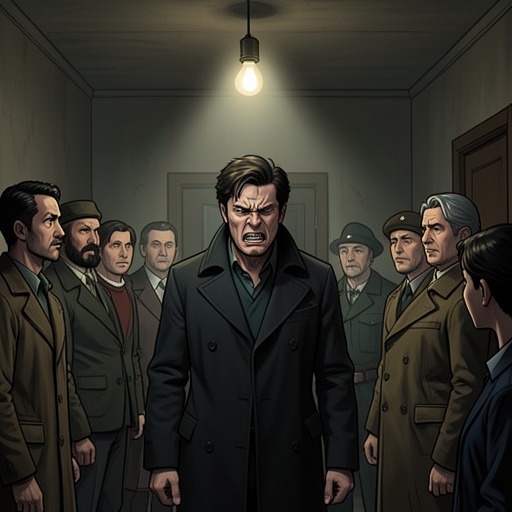
The report says Tommy had been repairing a path at a house opposite Michael’s. When rain began and Michael knew the family was out, he invited the boy inside for tea. Cushla imagines Michael moving between the kettle and the sink, finding cups and looking for biscuits, and trying to put an awkward young visitor at ease. Her reconstruction is tentative: she wonders whether Tommy warmed to Michael, answered his questions, or laughed at his jokes, rather than presenting those exchanges as established testimony.
She also considers how Tommy might have noticed a photograph of Michael in wig and gown on the dresser and mistaken him for a judge. The newspaper does not settle whether Tommy saw the photograph during the visit or learned about Michael later. Cushla’s account of this possible chain of recognition remains conjectural, but it gives the murder a disturbing proximity: the reported opportunity arose from an ordinary invitation into a home, while the boy’s possible interpretation of what he saw is left unresolved.
Trial, Conviction, and Sentence
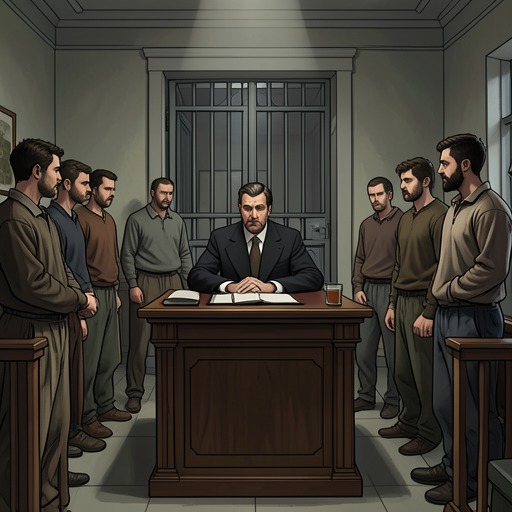
According to the report, Tommy refused to recognize the court, offered no defence, and answered no questions. He was convicted on evidence characterized as forensic, circumstantial, and damning. The article identifies him as Thomas Ronald McGeown of Hollyburn Estate and reports that the eighteen-year-old was sentenced to life imprisonment for Michael’s murder. It adds that he showed no reaction as he was led away from the dock.
The terse account supplies a formal outcome where Cushla’s imagined reconstruction can offer no certainty about Tommy’s thoughts or choices. Her reading does not turn the possible circumstances of the invitation into proof of what he intended; the report’s stated basis for conviction remains the evidence presented at trial. The contrast between the newspaper’s compressed legal language and Cushla’s unanswered questions keeps the circumstances legible without pretending that every link in them is known.
Investigation and Aftermath
Before the trial report, Cushla is questioned at a police station. In the room, a Manila folder and an ashtray sit beside a tape machine that the officer does not switch on. He tells her she has not been arrested, later says that she can be held for up to seven days, and ultimately tells her she is free to leave at any time. The episode does not explain the trial evidence, but it shows Cushla’s own contact with the investigative process surrounding Michael’s murder as uncertain and subject to police authority.
The newspaper’s account closes the gap between the murder and Tommy’s punishment without resolving Cushla’s doubts about how the connection formed. Her reading links the case to Michael’s earlier hospitality, the photograph in his home, and a wider public concern about young people recruited into violence. At the same time, the difference between reported facts and her imagined reconstruction remains essential: Tommy’s conviction and life sentence are stated outcomes; the exact moment or reasoning that led him toward the killing is not.