Murder of Michael Agnew
TrespassesThe murder of Michael Agnew, a prominent Belfast barrister, turns a private death into a crisis that reaches across family, community, and the justice system. Tommy McGeown is charged and eventually sentenced to life imprisonment, but the case does not settle every question for Cushla Lavery. As she encounters the trial’s public account and revisits what she knows of Michael and Tommy, the killing remains at once a criminal act, a personal loss, and a painful uncertainty about how violence takes shape.
The killing and its political context
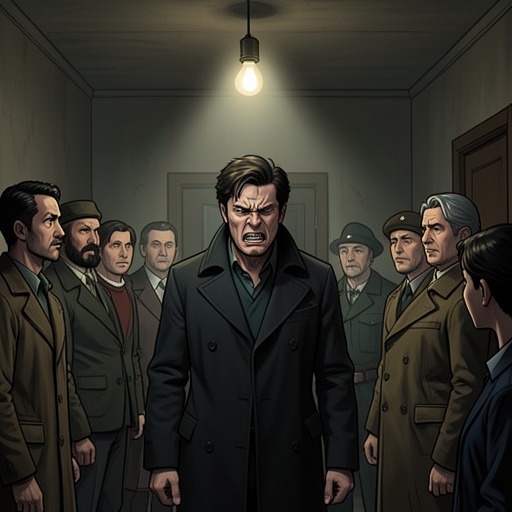
Michael is shot dead in his family home. The news, delivered over breakfast, describes him as a prominent Belfast barrister and says an eighteen-year-old has been charged with his murder. At the table, Betty McGeown begins to weep; Gina puts a hand on her shoulder. Cushla meets Davy McGeown’s eyes briefly, then turns back to the sink. The announcement makes the death public, but its weight is carried in small, strained reactions among people bound together by the case.
The circumstances are framed by Michael’s work and his convictions about the courts. At dinner, he argues that Diplock courts, which sit without juries, are unfair and would not be accepted elsewhere in the United Kingdom. He also contends that the political situation draws young people into trouble. Those views do not establish why Michael was killed, and the novel does not present them as a simple explanation. They do, however, place his death within a society where prosecutions, political allegiances, and violence are closely entangled.
Before the murder, Cushla finds papers Michael has kept about police treatment of young suspects. The documents include accounts of arrests and custody, alongside photographs and statements. Their presence gives her an intimate, unsettling view of the kind of evidence and testimony that official proceedings may not readily make visible. It also complicates the legal setting around the killing: Michael is both a barrister working within the system and someone who has gathered material bearing on its use of force.
Tommy McGeown and the reported case
The account Cushla later reads in the newspaper supplies a crucial connection between Michael and Tommy. Tommy had been repairing a path at a house opposite Michael’s. When rain began and Michael knew the family was out, he invited the boy in for tea. This ordinary act of hospitality becomes, in retrospect, the last known encounter between the two before Michael’s death.
The newspaper reports that Tommy refused to recognise the court, offered no defence, and answered no questions. It says he was convicted on evidence described as forensic, circumstantial, and damning. Cushla sees a pixelated mugshot and recognises the bold, lean appearance she remembers, while reading fear in his eyes. The contrast between the public image and the frightened expression matters: the report fixes Tommy in the role of defendant, but it cannot make his silence transparent or resolve what he was thinking.
Cushla imagines the tea visit in detail, but the imagined scene remains speculation, not testimony. She wonders whether Michael asked Tommy about school, mentioned having a son his age, or tried to put an awkward boy at ease. She also considers whether Tommy noticed a photograph of Michael in wig and gown and mistook him for a judge, or whether the opportunity to kill him occurred to Tommy only later. The narrative offers these as Cushla’s unanswered possibilities. It does not confirm what Tommy thought, when he decided to act, or what prompted the murder.
Investigation, grief, and uncertainty
The police question Cushla about her connection to Michael and about her connection to Tommy. An officer tells her that her car was seen outside Michael’s house on the night of May 25. She explains that she had driven there because she was upset she could not see Michael and wanted to check whether he had gone home. The questioning shifts toward whether she discussed her relationship with Michael with Tommy. Cushla denies doing so and explains that she gave Tommy her telephone number so he could call if the family needed shopping. The officer produces Tommy’s small black notebook and asks whether she wants him to read what Tommy wrote. The notebook turns a practical kindness into material for police scrutiny, without itself settling what Tommy knew about Cushla and Michael.
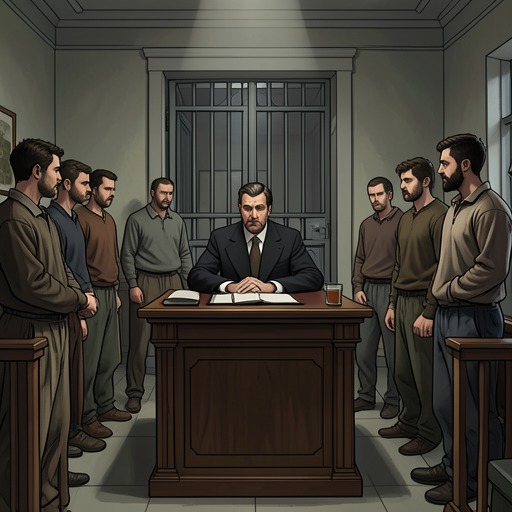
In the weeks after the killing, Cushla repeatedly imagines the trial. She pictures Tommy in the dock and, on difficult days, herself beside him or taking the stand. In that mental courtroom she places Michael’s family and friends, including Joanna Agnew, Dermot Agnew, Jim, Penny, Jane, and Victor, as well as Betty, alone. Michael is absent from the imagined proceedings except as photographs, ballistic analysis, autopsy reports, and sealed evidence. The contrast between a crowded courtroom and this impersonal record of the dead marks how legal procedure can account for a killing while leaving the bereaved to live with what it cannot restore.
When Tommy’s trial is reported, Cushla tries to understand the encounter that preceded the murder, but finally confronts the possibility that there was no personal connection between the two beyond Michael’s invitation. Sitting by the road, she thinks that it may have been bad luck, the kind of thing that happens repeatedly there. This conclusion is not a finding about Tommy’s motive; it is Cushla’s exhausted recognition that the available account cannot turn catastrophe into a comprehensible chain of causes.
Verdict and continuing presence
A later news report states that Thomas Ronald McGeown, of Hollyburn Estate, has been sentenced to life imprisonment for Michael’s murder. He shows no reaction as he is led away from the dock. The sentence establishes the judicial outcome, but it does not end the consequences of the killing for those left behind. The McGeown family has been displaced, Cushla remains under the pressure of police attention and grief, and Michael’s absence persists in the objects and records associated with him.
Years later, Davy points to a sculpture and identifies its subject as the man his brother Tommy killed. Cushla answers that she knows. The exchange brings the murder into a later encounter without making it a closed piece of history: the sculpture gives Michael a lasting public presence, while Davy’s words bind that image to the family’s own past. The event’s significance lies not only in the conviction and sentence, but in the way its consequences continue to organize memory, relationships, and the possibility of living with an explanation that never becomes complete.