Michael Agnew assassination
TrespassesMichael Agnew’s assassination is an offstage killing whose consequences unfold through news reports, family reactions, and the legal process that follows. Shot dead in his bed in front of his wife, he becomes both a bereaved family’s loss and a politically contested figure: the Provisional Irish Republican Army claims responsibility and presents him as part of a corrupt judicial system, while his own arguments had centered on the unfairness of that system.
Political and Legal Context
Before his death, Agnew had argued that Diplock courts, which proceeded without juries, treated Republican prisoners unfairly. At a dinner, he defended the claim that the system would not be tolerated elsewhere in the United Kingdom or in a civilised country. He also argued that political conditions helped draw young people into trouble. These positions establish the political and professional context of the killing, but they do not by themselves establish its motive.
His case files give that debate a concrete dimension. Cushla Lavery finds records relating to Kelly, McAleavey, and Coyle, including statements they had refused to sign and material documenting allegations of police abuse in custody. The files show the kind of evidence Agnew had assembled in his legal work. After his death, the Provisional Irish Republican Army claims responsibility and alleges that he was a willing agent of a corrupt judicial system. The claim is a statement by the organization, not an independently established account of why he was killed.
The Killing and Its Announcement
The novel does not stage the shooting itself. Its first direct confirmation reaches Cushla in a brief announcement that Agnew has been shot dead that morning. Her response is physical and disordered: she continues washing and stacking tankards at the bar, then leaves, unable at first to make her legs carry her. The routine of work persists even as her understanding of the day has broken apart.
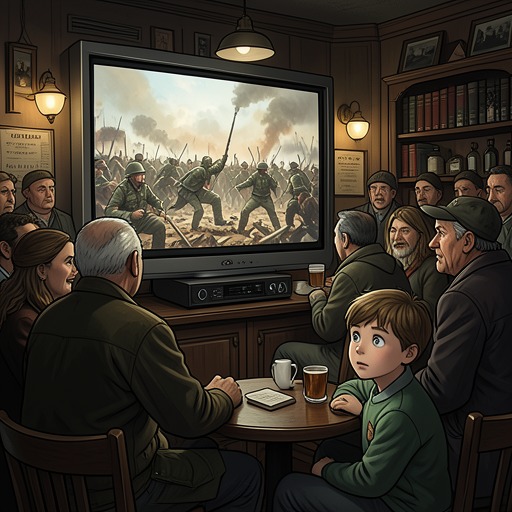
A later news report identifies Agnew as a senior counsel and says he was shot in bed shortly before eight that morning, in front of his wife. Television footage of his body being carried from the house makes the public report newly intimate for Cushla. She fixates on the handling of his shoulder, a small concern that registers how grief can attach itself to a detail when the larger fact cannot be changed. At the same time, reports and images of other political events continue around the announcement, placing his death within the daily stream of violence rather than setting it apart from it.
Investigation and Trial
The aftermath includes a visible police presence at Agnew’s house: RUC officers are stationed outside and on the driveway, with a plain-clothes man nearby. During Cushla’s later questioning, an investigator produces Tommy McGeown’s black notebook and asks whether she gave Tommy her number so he could contact her about shopping for his family. The exchange records a line of inquiry connecting Cushla, Tommy, and the McGeown family; it does not, by itself, establish what Tommy knew about the killing or what role Cushla had in it.
Newspaper coverage later places Tommy’s trial in the public aftermath of Agnew’s murder. The report notes his refusal to recognize the court, his decision to offer no defence or answer questions, and his conviction on evidence described as forensic and circumstantial. It also situates the case amid concern about young people appearing in court on terrorism charges and the danger of recruiting teenagers. The account supplies a legal outcome, while Cushla’s recollection of Agnew’s files has already made visible the broader dispute over whose evidence and whose version of justice the courts accept.
Grief, Community, and Political Claim
The funeral is announced on the radio during a drive with Cushla and her family. Gina expresses shame at entering a funeral after someone from their side had committed the killing. Her reaction brings communal allegiance into collision with mourning: the political language of sides cannot prevent Agnew’s death from being understood as a personal loss, nor can family sympathy erase the implication of responsibility.
The Provisional Irish Republican Army’s claim gives the assassination an explicit political framing, but the novel keeps that public assertion beside private responses and the subsequent trial. Cushla’s grief appears not as a settled explanation but as interruption, withdrawal, and attention to fragments: a news report, a familiar body, a question about a notebook. In this structure, the killing is at once a confirmed death, a contested political act, and the beginning of consequences that reach into the lives of those around Agnew.