Canaan
UnforgivenCanaan is the village where Cam and Lilith fall in love and plan to marry, and where Cam’s concealed identity turns that promise into a rupture. Set around 1000 BCE, its harvest-bound communal life and music frame their courtship; its temple and river expose the religious and personal barriers between them. Much later, a remembered river brings the lost engagement back to Lilith, making Canaan both the beginning of their love and the place Cam identifies as his greatest mistake.
Setting and Village Life
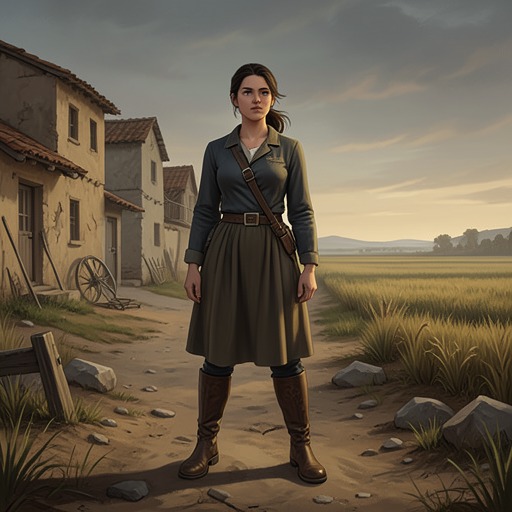
The Canaan episode takes place around 1000 BCE in a village whose young people gather beneath a desert sky bright with stars. The community’s rhythms are tied to the coming harvest: Cam and Lilith expect to marry when it arrives, while Lilith’s family and the surrounding villagers give their courtship a public setting. Her sisters help weave a canopy of branches decorated with iris blossoms, joining the landscape and the work of the community to the couple’s celebration.
The village is also defined by shared places and ordinary sounds. When Lilith later considers leaving to find Cam, she imagines losing the rustle of the grain harvest, the tinkle of water at the well, and her sisters’ laughter. These details make departure from Canaan more than a journey away from a lover: it would mean surrendering the daily world of family and belonging. The village’s appeal helps establish the scale of the choice she eventually makes.
Courtship, Celebration, and Music
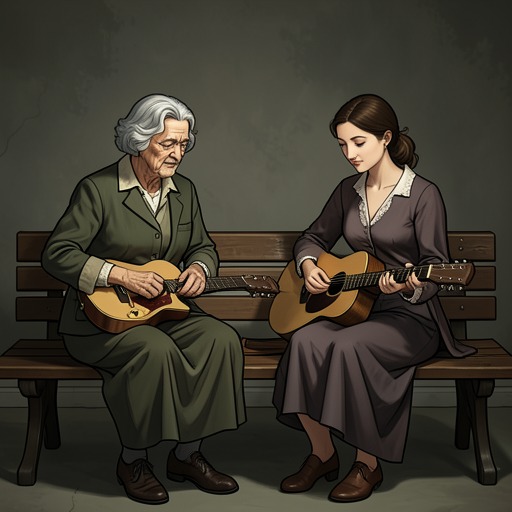
Music accompanies the couple’s swift, passionate courtship. Cam proposes a party, and Lilith makes the concert its emotional center: she performs as an expression of her love for him and her anticipation of their marriage. Roland plays his flute first, drawing the gathered youths into a sweet, sad melody and setting a romantic mood. Lilith takes up her lyre; Cam raises a bronze goblet beside her, while the village’s other couples listen together.
The gathering shows their relationship not as a private attachment alone but as a future their companions can readily imagine. Dani is with Liat, and Arriane rests her head on Tess’s shoulder; around them, the music gives the celebration a sense of shared intimacy. Later, Dani presents Cam and Lilith with a parchment marriage document, written in elegant Aramaic and bordered with paintings of the couple embracing. The scroll makes their intention tangible, but it cannot settle where the marriage can take place.
The Temple and the Separation
The conflict emerges when Lilith discovers that the marriage document places the ceremony by the river. She wants to marry in the temple, both because she respects its tradition and because she belongs to the community whose marriage customs it represents. Cam insists that he would never have agreed to a temple wedding, but cannot tell her why: as a fallen angel, he cannot enter consecrated ground.
His silence makes the difference between them appear to be a disagreement over the wedding rather than a consequence of his identity. Lilith asks what secret he is keeping; Cam says he is not of her community, but does not explain the truth. He fears that if she learns what he is, she will think less of him, and he believes her community would never honor their union if it knew. His fear of losing her esteem therefore prevents the disclosure that might let her understand the obstacle. The river wedding he proposes cannot answer Lilith’s wish to marry within her tradition, while the temple she chooses is a place he cannot enter.
After Lilith says that his refusal means he does not love her, Cam leaves without revealing the reason. He avoids remembering her tears and her touch on the mighty carob tree, a gesture that seems to mark her farewell. At sunset, his white wings emerge and send a gust across the grass as he departs. The separation turns Canaan’s landscape into a record of what he cannot bring himself to say: the temple embodies the barrier, while the river is attached to the love and marriage they had imagined.
A Place Recovered in Memory
Canaan returns much later not as a present-day destination but as a vision. During a song, Lilith senses that she and Cam have sung together before; she sees them beside a broad, clear river from long ago, rather than the diminished creek of her current life. In the vision, she remembers having written a song for Cam, his response to it, their kiss, and the absence of resentment or fear between them. The scene reveals that they had once been engaged and had been preparing for a wedding.
The recovered image gives the river a second role. It had been the setting of the young couple’s love and the proposed alternative to a temple ceremony; in Lilith’s later vision, it becomes evidence of a shared past she had not known she possessed. Canaan’s significance therefore lies in the way its beginning is preserved beneath the later separation. Cam eventually names leaving Lilith there as his greatest mistake, even greater than joining Lucifer’s ranks. The place holds both the promise he abandoned and the memory through which that loss becomes legible again.