Lilith’s Hell
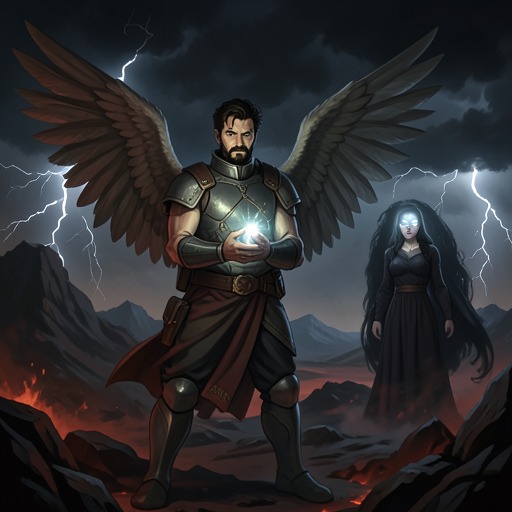
UnforgivenLilith’s Hell is Lucifer’s cycle of custom-made torment, built around Lilith’s heartbreak over Cam’s betrayal. Its defining structure joins repeated suffering to repeated remembrance: when Lilith dies in one Hell, she returns to a central place where the betrayal is brought back to her, before Lucifer sends her into another individually fashioned ordeal. The current version, Crossroads, disguises that supernatural enclosure as a bleak, familiar high-school town. Its everyday routines, perpetual fires, and circular roads make the realm feel both ordinary to Lilith and inescapable to Cam.
Design and Recurring Cycle
Lucifer displays the different Hells through snow globes gathered in the food court at Aevum. Cam recognizes that the globes represent the places Lucifer has trapped Lilith, and their variety is rendered in music: as Cam winds them, they play instruments including sitars, harps, violas, lap steel guitars, balalaikas, and mandolins. Each becomes an ode to Lilith’s broken heart. One globe contains a miniature cello, a distinct image within the collection. The globes turn the Hells into visible, miniature objects, but their neat boundaries conceal repeated, lived suffering.
Lucifer explains the mechanism that binds these places together. Each time Lilith dies in one of them, she returns to the food court and is reminded anew of Cam’s betrayal. Lucifer then banishes her to a new Hell made especially for her. The torment is therefore not a single punishment with a fixed setting: it is a cycle that alternates between customized ordeals and the return of the same emotional wound. Lucifer takes pride in this design, and says that Lilith’s anger and hatred keep her going. Her emotional response is not incidental to the arrangement; it is what gives the recurring punishment its continuity.
Crossroads as the Current Hell
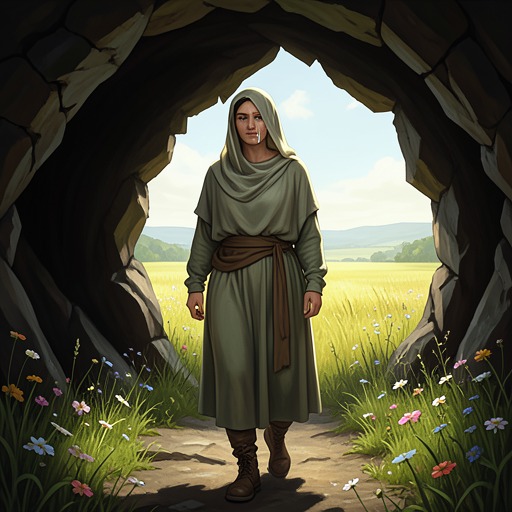
The current Hell is Crossroads, where Lilith lives as a teenager enduring what appears to her to be a typically gloomy high-school experience. Lucifer identifies its particular twist: there are no weekends, and school continues every day of the year. The punishment works through the familiar rhythms of school made relentless, not through an openly fantastic landscape Lilith can immediately recognize as a prison. Her surroundings look ordinary from within her own experience, even as Lucifer describes them as one of his bespoke Hells.
The town’s surrounding fires expose a harsher reality to Cam. As he crosses the campus toward the cafeteria, smoke makes him cough, while burning hillsides encircle Crossroads. A fire truck heads toward the blaze, but the firefighters’ blank expressions suggest that they have repeatedly faced fires that never diminish. Cam sees the inhabitants as Lucifer’s pawns and concludes that nothing in Crossroads will change until Lucifer allows it. The flames are thus both a persistent feature of the setting and evidence of the town’s unnatural stasis: emergency response continues, but the underlying disaster does not end.
Enclosure and Geography
Cam discovers that Crossroads has a literal boundary when he flies above the burning hills. Higher in the smoky sky, it curves into a translucent barrier that recalls the glass enclosing the snow globes Lucifer showed him at Aevum. The comparison connects the miniature representations to the place itself: the glass is not merely an image of confinement but a clue to the limits of Lilith’s world. Cam recognizes that he has reached the upper edge of her Hell.
From that height, the town’s roads reveal a geometry of futility. The main roads, including the highway beside the school, form loops, sending cars around in endless circles. Beyond the widest ring lies another ring, the burning hills. The arrangement gives Crossroads the shape of a world with no outward route: movement continues, but its paths return to themselves, while the fires mark the perimeter. Cam’s claustrophobia and twitching wings register the discovery as a physical limit as well as a strategic problem. He resolves that he must break Lilith free.
Stakes and Narrative Significance
Cam’s recognition of the place’s enclosure changes his task from attempting to reach Lilith within an apparently ordinary town to confronting the conditions imposed on her entire world. He asks Lucifer what it would take to release her and offers to do anything. Lucifer says that the current Hell is set to expire in fifteen days, then proposes a wager: if Cam can rid Lilith of her hatred and make her truly fall in love with him again before the time runs out, Lucifer will stop creating bespoke Hells for her. The deadline attaches a precise limit to Cam’s effort, while the wager makes Lilith’s feelings the test of whether the cycle will end.
Lilith’s Hell is consequently both a place and a punitive system. Crossroads supplies the recognizable surface—school, roads, a cafeteria, and a town responding to fires—while the invisible rules convert those details into captivity. The roads loop; the fires persist; school has no weekends; death returns Lilith to the memory of betrayal rather than ending her suffering. The snow-globe image gathers these features into a single spatial idea: a world that can be inspected from outside but whose inhabitants cannot simply cross its boundary. Cam’s discovery of that boundary makes visible what the setting’s ordinary routines conceal: Crossroads is not merely where Lilith suffers, but a contained environment Lucifer controls.