Lilith recovers her past-life memories
UnforgivenLilith’s recovered memories turn an unfamiliar song into the key to her buried history: as the Four Horsemen play “Vows,” she recognizes a past love with Cam, recalls repeated lives of poverty and torment, and learns that her own suicide lies behind the rumor circulating at Trumbull. The revelation transforms a moment of music onstage in Crossroads into an encounter with the life and deaths she had not been able to remember.
The Song That Opens the Past
Lilith is sharing the moment with Cam, glad to be there with him, when Ike catches her eye and dedicates a song to her. He calls it “Vows.” The title unsettles her because she has never written a song by that name; she wonders whether Ike has made a mistake, but the band begins before she can respond. What follows is not recognition through authorship: the song is beautiful, yet it is not hers.
As she listens, however, the music begins to arrive ahead of the performance. Chords seem to jump out at her just before the band plays them, and she finds herself singing along, as if she knows where the song is going. She understands that it is meant to be a duet. The discrepancy between what she knows in the present and what her body seems to know gives the song its force: “Vows” is new to her conscious memory, but not wholly unfamiliar.
A Shared Life Remembered
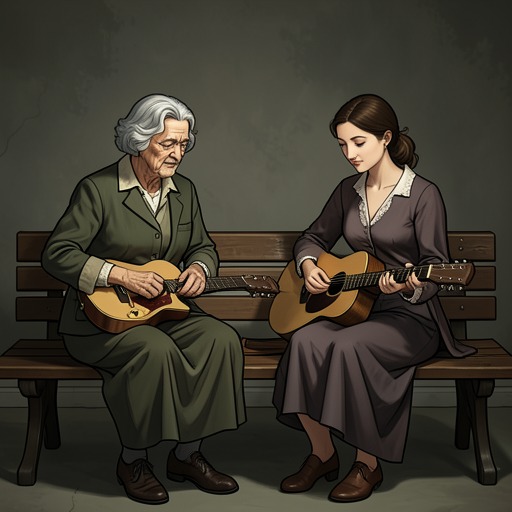
Lilith’s sense of having sung the song before opens into a vision of herself and Cam seated beside a great river. The water is emphatically unlike the dwindling trickle of Rattlesnake Creek: it is a swelling, crystal river, located somewhere far away and long ago. In that remembered scene, she has just written the song for Cam and hopes he will like it. His response is visible in his eyes and felt in his kiss.
The vision also restores the emotional circumstances surrounding the song. There is no resentment, fear, or strain between them; Lilith remembers loving Cam deeply. They have been practicing for a wedding, and the wedding is theirs. The recollection therefore changes the meaning of their present closeness: the performance does not merely suggest an earlier intimacy, but brings back a history in which they were engaged. When Lilith opens her eyes, the Four Horsemen are finishing the song, with Ike singing its final line a cappella. The remembered past has surfaced within the ongoing performance, then abruptly gives way to the stage again.
Repeated Lives of Music and Misery
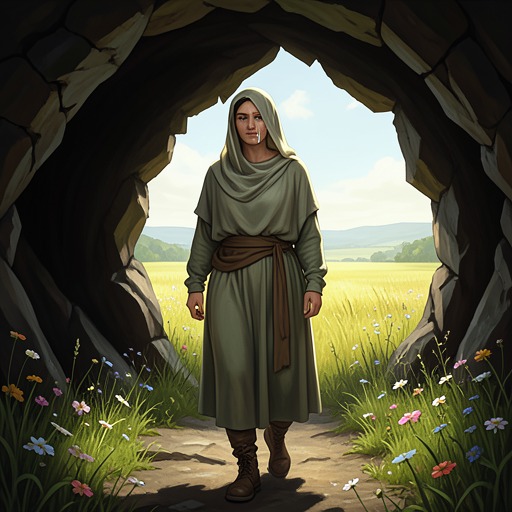
The return to the performance does not end the visions. Lilith closes her eyes and remembers a succession of lives, each organized around music and deprivation. In one, she is a gypsy riding a horse over a frozen road through hilly country, feverish, starving, and dressed in rags; she is expected to sing love songs for crumbs. Other recollections give her the names Opera Lilith, sleeping in an alley behind a theater; Orchestra Lilith, tormented by a cruel conductor; and Troubadour Lilith, starving in a medieval city.
These are distinct settings and forms of musical labor, but the pattern Lilith recognizes is persistent: in every existence she is a struggling musician, miserable and doomed. Poverty, loneliness, and abuse mark these lives, yet the memories also reveal a repeated inward response. Rage darkens her heart; she loathes the world she inhabits and wants revenge. The recollections thus recover more than a sequence of past circumstances. They expose how suffering has recurred alongside her musical identity, and how resentment has become part of the repeated pattern.
The Deal and the Present-Day Revelation
The memories bring Lilith back to her plea for Cam to return and his refusal. She voices the question she had been too hopeless to ask in her other lives: “Why!” The answer arrives with a deafening hiss: “Because”—“we made a deal.” Asked what deal, Lilith opens her eyes to find herself again onstage in Crossroads. The audience is motionless and terrified, as though time has stopped. The Four Horsemen are gone; Luc stands in the middle of the stage. Cam rushes toward Lilith, but Luc holds him back and beckons her forward.
In this suspended scene, Lilith connects the newly recovered past to the rumor at Trumbull about the girl Cam had driven to suicide. She recognizes that the rumor is true and identifies herself as that girl. The recognition makes the memories personal in the most immediate way: the repeatedly tormented musician and the reported suicide are not separate stories, but lives Lilith now understands as her own. She tells Cam that she took her life because she loved him, beginning to bring the facts of her past back into speech. The recovered memories therefore reveal both a concealed history between the two of them and the deal associated with Lilith’s suffering, while leaving the details of that bargain to be confronted beyond the first revelation.