Ziekenhuiswinkel
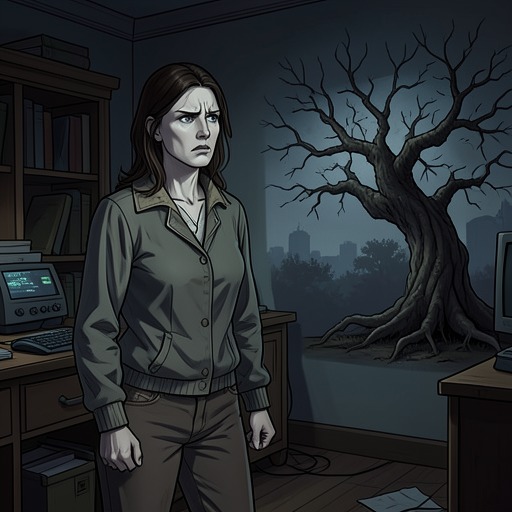
UpZiekenhuiswinkel is a shop inside Het ziekenhuis that becomes significant at two sharply contrasting moments in Emma’s experience. First, she finds Sergei there, reading a newspaper, and responds to his apparent loneliness with an embrace. Later, during a disoriented episode, she returns to the same shelves and tries to make them yield a clue, only to lose confidence in what she hears and in why she came. The shop is both an ordinary point of contact and a place where Emma’s grip on ordinary meaning falters.
Setting and role
The shop’s everyday arrangement is specific: newspapers, sweets, a counter, a cashier, shoppers, and an entrance through which people move back into the hall. Its small, enclosed interior stands between the ward and the wider circulation of Het ziekenhuis. Patients are present among other customers, but the space is not described as a ward room; people shop, pay, speak, and leave. That ordinary public activity matters because Emma must navigate it while trying to appear composed and to find her way onward.
The same details acquire different meanings in the two scenes. Newspapers first identify the place where Sergei can be found. On Emma’s later return, a newspaper becomes a supposed clue in a private investigation that the people around her cannot see. The shop itself has not changed; what changes is Emma’s ability to trust the connections she makes between objects, memory, and events.
Finding Sergei
In an earlier visit, Emma goes looking for Sergei during visiting time. She first stops at the entrance to the hospital restaurant and sees that he is not there. Then she notices him reading a newspaper in Ziekenhuiswinkel, a dark figure who seems lonely and lost among the other people browsing the shelves. The sight brings an unexpectedly strong emotional response: Emma feels as if her heart is breaking, wipes away a tear, and enters the shop.
She greets him with an affectionate insult and embraces him. Sergei puts down the newspaper and kisses her; before the conversation can develop, Emma hurries him toward the restaurant. She is conscious that visiting time will end in an hour and that she must get back inside before it does. The moment therefore combines tenderness with urgency: finding Sergei briefly closes the distance between them, while the hospital schedule sets a limit on their time together.
A familiar place made strange
On a later visit, Emma pauses inside the shop and tries to reconstruct an earlier encounter with Sergei. She stands where she remembers him standing and notices that he had held something before putting it back when he saw her. She identifies the missing detail as a newspaper, picks up two, returns one, and searches the first pages for an explanation. A man on the opposite side of the rack takes a newspaper and smiles briefly. The remembered shop has become a setting for Emma’s attempt to recover a thread of meaning from incomplete impressions.
As she waits at the counter, the surrounding conversation becomes incomprehensible to her. The cashier, the man ahead of her, people near the sweets, and older customers by the entrance all seem to speak in dragging Slavic sounds. Alarmed, Emma worries about having to answer if the cashier speaks to her. When the cashier addresses her while holding a teddy bear that apparently belongs to her, Emma manages only a smile. She pays, accepts the plastic bag, and follows the flow of patients through the entrance, interpreting their movement as a way to get outside.
Once in the hall, she throws the bag into the nearest rubbish bin and tries to remember both why she came to the shop and where she meant to go next. The action is small but revealing: she can complete the purchase and leave, yet the sequence has lost its purpose. The shop offers no clear explanation for what she experienced; its routine transactions continue while Emma’s sense of language, intention, and direction comes apart.
Narrative significance
The recurrence of Ziekenhuiswinkel gives the reader a concrete point of comparison. In the first scene, Emma recognizes Sergei, acts on her affection, and knows that the visit must fit within a closing hour. In the later scene, she searches for Sergei through an unstable recollection, treats a newspaper as a key, cannot understand the people around her, and exits without remembering her destination. The shift is carried not by a change in the shop’s furnishings but by Emma’s changing relation to them.
The shop also marks a threshold between the ward and the outside-facing life of Het ziekenhuis. Emma’s passage through its entrance can feel like a practical route outward, but it does not restore her bearings. As a result, the location holds two kinds of exposure at once: the vulnerability of needing Sergei’s company, and the fear of being visibly confused among strangers. Its modest objects and transactions make those experiences legible without turning the shop into an explanation for them.