Spoedeisende Hulp
UpSpoedeisende Hulp is the hospital emergency department Emma reaches after a severe physical reaction to Tegretol. The visit brings her from the psychiatric ward into a busy general-hospital waiting room, where the effort of getting there and the long wait become part of the ordeal. The doctor’s assessment provides a practical answer about the medication, but the department is also a place where Emma experiences herself as exhausted, unattended, and temporarily defined by waiting.
Setting and Access
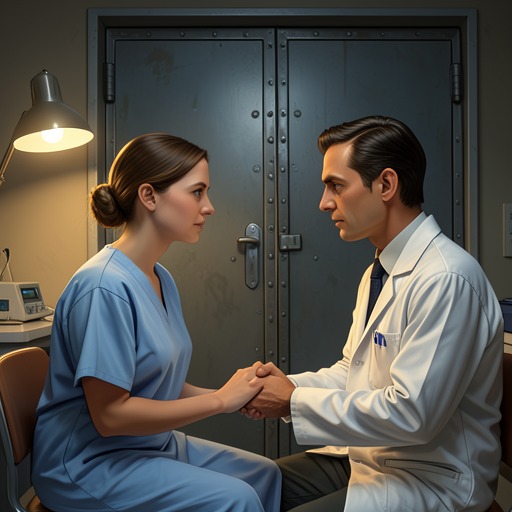
Emma makes the journey from the PAAZ to Spoedeisende Hulp after a physical examination and a consultation with Rajid Panjani. She is so depleted that, after the examination, she leans against the door to the locked ward, too tired even to press the call bell for staff. Iefke and Linda find her there and ask what happened; Emma assures them she has already called for help and sends them away, intent on being alone.
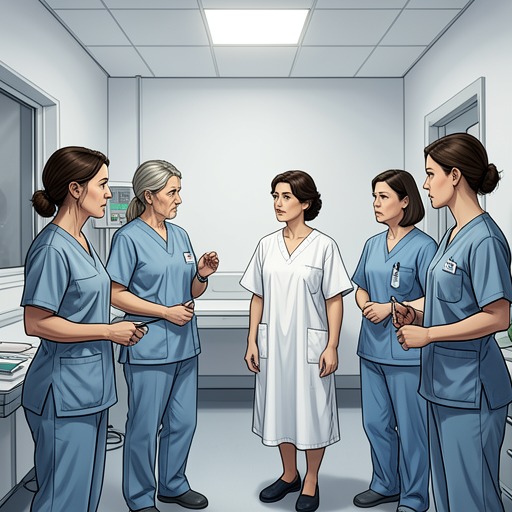
The department is crowded, and Emma reaches it without a referral note or an escort. Staff wonder why a psychiatric patient is in their waiting room under those circumstances. The question makes visible a practical divide between the psychiatric ward and emergency care: Emma has crossed into another part of the hospital, but her exhaustion does not bring immediate attention or a companion to help her navigate it.
Assessment and Medication
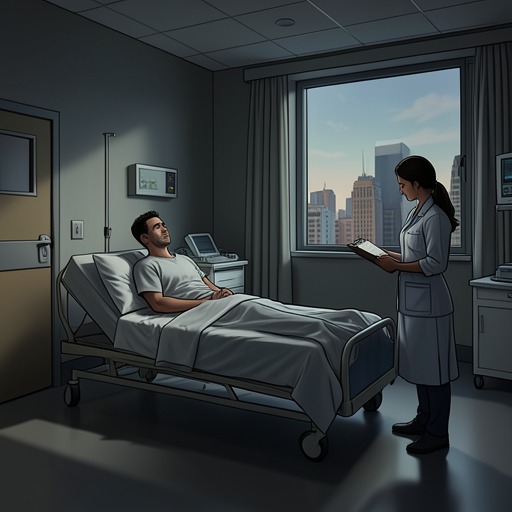
At Spoedeisende Hulp, the doctor considers whether the symptoms began with the pills. Emma says they did, and he sees no reason to keep her there. His conclusion is to stop the medication. The encounter is brief in its clinical resolution: a physical reaction leads to an emergency assessment, and the suspected cause prompts a straightforward instruction.
The department’s assessment belongs to a wider treatment context. Rajid had noted Emma’s severe physical reaction to Tegretol and elevated heart rate, which could have contributed to feeling agitated. The emergency visit therefore sits between medication management and psychiatric care, addressing bodily effects that also complicate how her mental state is understood.
Waiting and Return
The journey to the department is itself punishing. Emma sweats heavily and finds the route harder than the stairs: she has to move along walls, railings, and doorframes, using whatever can keep her upright. In the waiting room, she watches people come and go for two hours while exhaustion drains what little energy remains. Her mind feels empty, and she describes herself as no more than a function: a person waiting.
When she returns to the ward, Bas explains that it is unsettled and that someone has been placed in seclusion, asking whether their meeting can wait an hour. Emma nevertheless tells him the meal cart has arrived. Despite her weakness, she has made sure the ward’s dinner is on time; the small task gives her a moment of satisfaction before she sets off again toward the stairs.
Narrative Significance
Spoedeisende Hulp marks the point where a bodily crisis receives a concrete medical response, but it does not transform Emma’s experience into a simple story of rescue. She is assessed and told to stop the pills, yet the two-hour wait, the unaccompanied journey, and her profound fatigue remain central to the scene. The emergency department is both a place of clinical decision and a setting in which Emma feels reduced to waiting, even as she continues to notice and act on the needs of others.