Concord jail
WaldenConcord jail is the setting in which Henry David Thoreau’s refusal to pay the poll tax becomes a concrete encounter with state power. He spends one night inside after withholding the tax for six years, and the confinement sharpens his argument that a person must not become an agent of injustice. The jail is at once a local building, a barrier between the prisoner and his townspeople, and the stage on which principled noncooperation is made visible.
The jail and the tax refusal
Thoreau’s account begins from a long refusal: he has paid no poll tax for six years. The jail sentence is not presented as a response to violence or evasion for personal gain, but as the consequence of his decision not to lend his support to a government implicated in injustice. In the broader argument, he distinguishes an injustice that might be endured as friction within a political machine from one that requires a person to act unjustly toward another. In the latter case, he insists, the law should be broken and one’s life made a counter-friction to the machine.
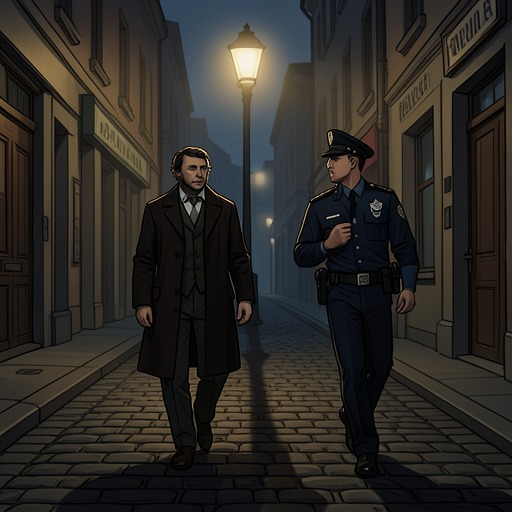
That principle gives the jail its particular force. Thoreau describes meeting the American government, or its representative, the state government, directly and face to face once a year in the person of the tax-gatherer. The encounter is spare and personal: an abstract political structure arrives at the door as a demand for money. Imprisonment makes the cost of refusing that demand equally concrete, while also exposing the narrowness of the government’s immediate power over him.
The physical experience of confinement
The walls impress themselves on Thoreau as material facts: solid stone two or three feet thick, a wooden and iron door a foot thick, and an iron grating that strains the light. Their weight makes the jail seem designed to separate him from the town, but he reflects that an even harder wall stands between his townspeople and the possibility of reaching him. The building therefore figures not only physical custody but a failure of civic connection: the barrier is tangible, yet the separation beyond it is more difficult to cross.
The night is unfamiliar, but not simply desolate. When Thoreau enters, prisoners in their shirt-sleeves are chatting and enjoying the evening air in the doorway. The ordinary ease of that scene sits beside the jail’s thick masonry and ironwork. Confinement alters his location and company, but it does not erase conversation or the presence of other people; the prison is both an instrument of punishment and a small social world.
Thoreau later describes lying there as travelling into a far country he had never expected to behold. The night makes familiar measures of time newly audible: he feels as though he had never before heard the town clock strike, or the evening sounds around it. His estrangement is temporary, yet it changes the scale of attention. A single night behind the grating turns the ordinary town into something viewed from outside.
Release and return to town
The confinement ends because someone intervenes and pays the tax. Thoreau comes out the next morning, not because the government has accepted his position, but because the disputed amount has been paid on his behalf. The release thus resolves the immediate custody without resolving the principle behind his refusal; his argument remains that he should not personally supply support to injustice.
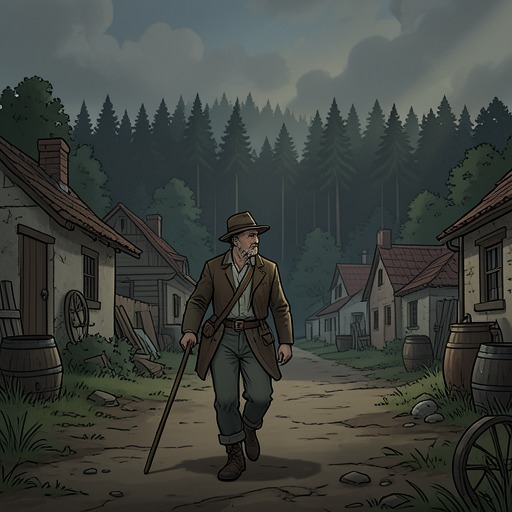
Outside, he sees no great changes on the common. The town has continued in its ordinary course, even though his passage through the jail has made that ordinary life appear strange. Neighbors look at him and then at one another as if he has returned from a long journey. He had been jailed while on his way to the shoemaker to retrieve a mended shoe; released the next morning, he resumes the errand. The contrast between the heavy machinery of imprisonment and the unfinished practical business of a repaired shoe gives the episode its dry, local scale.
Political and narrative significance
Thoreau’s jail experience gives physical form to his claim that a just person’s proper place may be prison under a government that imprisons people unjustly. The statement is not a celebration of confinement for its own sake: it follows an argument about refusing to become an instrument of harm. The jail makes the consequence of that refusal visible, while the one-night sentence and the payment by another person reveal how limited the state’s victory is. The body is detained; the moral disagreement remains.
As a narrative setting, Concord jail briefly reverses the usual relation between citizen and government. Thoreau enters as a tax resister, but his descriptions turn the institution itself into the object of scrutiny: its walls, door, grating, inmates, and routines are observed, while its judgment about the best use of him appears foolish to him. The episode therefore joins political argument to a small sequence of ordinary details. A tax demand leads to a cell; a night in an unfamiliar place ends with release; and a walk to collect a shoe resumes, carrying the unresolved question of whether obedience can be innocent when it makes a person complicit in injustice.