Rattan chair
WomenThe rattan chair is Tammie’s heavy piece of furniture, one of the belongings Henry collects while moving her possessions. When he chooses it over a stand-up hair dryer for his last trip, it proves too large for his Volkswagen. Lodged through the windshield and impossible to remove intact, the chair turns a routine act of transport into an escalating practical crisis. Henry eventually breaks it apart in a parking lot, leaving it neatly stacked on a nearby lawn. The episode makes the chair more than cargo: its stubborn physical presence takes control of the scene and exposes the limits of Henry’s strength, patience, and affection for his car.
From Tammie’s belongings to Henry’s final load
Henry goes to Tammie’s place with cardboard cartons to collect items she had mentioned. He also gathers dresses and blouses, shoes, an iron, a hair dryer, Dancy’s clothing, dishes and flatware, and a photo album. The heavy rattan chair belongs to Tammie; it is among the many objects he carries down to his own place, where eight or ten cartons accumulate against the front-room wall.
The collection is not finished with that first haul. Henry makes repeated trips between the homes, and each time he returns, the previous load has disappeared. On the final run, he finds only the chair and the stand-up hair dryer remaining. His Volkswagen cannot carry both, so he chooses the chair. The decision is simple in the moment, but it sets the terms for what follows: the chair is no longer one item among many but the load that will not fit.
The car becomes part of the problem
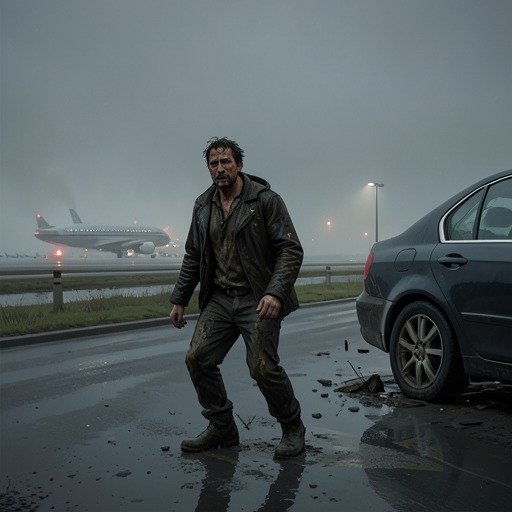
At four in the morning, Henry is double-parked outside his place with the warning lights on. After finishing a vodka and water, he carries the heavy chair down the walk and tries to put it into the car through the door on the passenger side. It sticks out too far for the door to close. When Henry pushes it farther in, one leg breaks through the windshield and points upward; the chair remains tightly jammed, neither removable nor safely contained.
The attempt turns the Volkswagen itself into part of the entanglement. Henry cannot close the door, and the windshield is smashed. With no street parking available, he drives to a pizza-parlor lot, the open door swinging as the ceiling light stays on. He leaves the car there, its broken windshield and protruding chair leg visible, and returns home to call Tammie for help. He explains the predicament, but she tells him he will think of something and hangs up. The chair has converted a favor into a problem Henry must face alone.
Dismantling the chair
A call from Valerie confirms that the car is still in the pizza-parlor lot with its door open. Henry tells her about the chair stuck through the windshield; she had not noticed it. He falls asleep worrying that the car will be towed and that he will be booked. At 6:20 in the morning, he gets dressed and walks back to the lot. The Volkswagen is still there as the sun comes up.
Henry tries again to pull the chair free. It will not budge, and his anger rises with the apparent impossibility of the task. Then a piece of wood breaks off in his hands. Rather than continuing to treat the chair as a single object to be extracted, he tears it apart. He connects this sudden effort to the strength developed during his factory work, unloading boxcars, lifting cases of frozen fish, and carrying cattle. Once the chair begins to break, he dismantles it completely, smashes it into pieces in the parking lot, and stacks those pieces neatly on somebody’s front lawn.
What remains of the episode
With the chair gone, Henry can drive the Volkswagen to an empty space near his court. The windshield still needs replacing, and he plans to find a junkyard on Santa Fe Avenue to buy a new one, but that repair can wait. He goes home, drinks two glasses of ice water, and returns to bed. The immediate crisis is over, though the smashed windshield remains a consequence of choosing the chair for the final load.
The chair’s changing status gives the episode its shape: it begins as Tammie’s furniture among a crowded collection of belongings, becomes a load that the car cannot contain, and ends as broken pieces arranged on a stranger’s lawn. The sequence also reverses Henry’s confidence in his ability to carry and manage objects. His strength eventually solves the problem, but only by destroying what he had tried to transport intact. The chair’s material resistance—not any change of plan—determines the outcome, while the Volkswagen he calls beautiful bears the cost.