Event 1
Henry and Lydia meet at a poetry reading

[Henry and Lydia meet at a poetry reading](entity:event-recall-event-95759eaf9de5), an encounter that places a new possibility for intimacy beside Henry’s self-imposed isolation and uncertain emergence as a writer. Their first exchange falters, but a later visit to his home turns that missed connection into a tentative kiss and gives their acquaintance a beginning shaped by performance, embarrassment, and hesitation.
## Background and Setting
At the time of their first meeting, Henry is fifty and has not been with a woman for four years. He has no women friends and regards even a nonsexual relationship as beyond his imagination. His history includes a marriage that ended in divorce, a six-year-old daughter who lives with her mother, and the death of the one woman he recalls having loved. The recollection establishes how firmly he has come to expect solitude, making his response to Lydia a departure from his ordinary stance rather than the continuation of an active courtship.
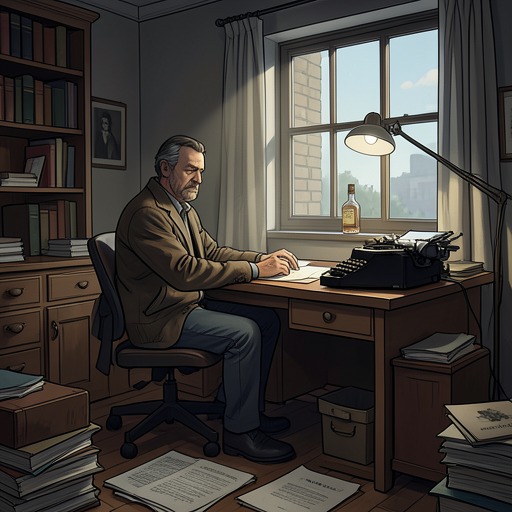
Several years earlier, Henry had left a twelve-year job as a postal clerk and was trying to establish himself as a writer. During the period in which he first saw Lydia, he was working on his first novel and drinking heavily as he wrote through the night. His writing routine retained the clock of his former employment: he began at 6:18 p.m., the time he had once punched in at the [Terminal Annex Post Office](entity:organization-recall-organization-terminal-annex-p-ce8a75686846). The reading and the later visit therefore take place within a life newly redirected toward writing but still governed by old habits of time and sustained drinking.
## The First Meeting
Henry thinks he met Lydia at his first poetry reading, held at The Drawbridge, a bookstore on Kenmore Avenue. The event unsettles him: he describes himself as terrified even while feeling superior, and finds the store packed, with standing room only. When he enters, the audience applauds. The store’s proprietor, Peter, is counting money and jokes that a crowd like this would pay for another trip to India. Henry reads for thirty minutes, calls a break, and remains sober while people watch from the darkened room.
During the break, Lydia approaches the table where Henry is drinking beer. She leans toward him with both hands on its edge. He notices her long brown hair, prominent nose, and mismatched eyes, but also registers her vitality and the charged, partly confused feeling between them. Her suede cowgirl jacket has fringe around the neck. Henry responds with a sexual overture, telling her, "I'd like to rip that fringe off your jacket--we could begin there!" Lydia walks away. The line does not produce the connection he wants, and Henry watches her leave before finishing the second half of the reading.
After the performance, he turns his attention elsewhere: he takes his money, signs napkins and pieces of paper, then drives home. He says he forgets Lydia as he forgets the women he passes on the sidewalk. The contrast between the intense physical impression she makes and his quick return to indifference marks the encounter as a failed beginning, not an immediate romance.
## A Second Encounter at Home
The connection resumes when Peter and Lydia arrive at Henry’s home at six in the evening. Peter presents what he has brought, and Lydia jumps onto the coffee table, her jeans fitting tightly, and recites her own poetry. Peter objects to the rhyming verse, but Henry tells him to let her continue. Henry is drawn to her movement and presence even as he judges the poems to be poor. His reaction separates the quality of the writing from the force of its performance: the poetry does not impress him, but Lydia’s body and unruly energy do.
Once Peter has left, Lydia sits on the couch near the door and Henry sits about a foot away. He looks at her, feels afraid, touches her long hair, and asks whether it is really hers. After she confirms that it is, he awkwardly turns her face toward him and kisses her lightly. The movement from the failed remark at the reading to this hesitant contact is the event’s central reversal: attraction has not become ease, but Henry acts on a possibility he had previously considered unimaginable.
The moment remains limited. Lydia says she must leave because she is paying a babysitter. Henry asks her to stay and offers to pay, but she says she cannot. At the door, he reaches for her once more; she lifts her face and gives him a very small kiss before pulling away. She places typed papers in his hand, closes the door, and drives off. The poems are a tangible remainder of the visit, but the exchange ends with separation rather than a settled commitment.
## Poems, Writing, and the Event’s Significance
The papers Lydia leaves are mimeographed, stapled poems collected under the title HERRRR and written by Lydia and her three sisters. Henry reads some of them and finds humor and sexuality in them, though he considers the writing bad. He throws the pages away and opens his whiskey. This ending returns him to his familiar routine even after the evening has interrupted his isolation: the encounter has produced a kiss and an exchange of work, but not an immediate transformation of his habits.
The event joins two forms of performance. At the bookstore, Henry reads before a crowded audience and struggles with the exposed, public situation; at home, Lydia takes over the coffee table to perform her own poetry for him and Peter. In both settings, writing is inseparable from the body and from the risk of being seen. Yet the first meeting shows the limits of Henry’s practiced bluntness: his overture sends Lydia away, while the later contact becomes possible only after she returns in a different setting and he approaches her awkwardly rather than through another show of bravado. Their meeting thus begins not with a polished declaration but with a failed line, a second invitation created by circumstance, and a brief kiss that leaves the relationship unresolved.
Event 2
Henry and Lydia’s first sexual encounter after the collating party
[Henry and Lydia’s first sexual encounter after the collating party](entity:event-recall-event-fc4da76f2238) is a turning point in their connection, but not a straightforward romantic beginning. The scene joins Henry’s prolonged isolation and desire for intimacy to Lydia’s independent social interests and stated sexual boundary; when he disregards that boundary, her anger and retreat establish a conflict that complicates his declaration of love.
## The gathering and the effort to be alone
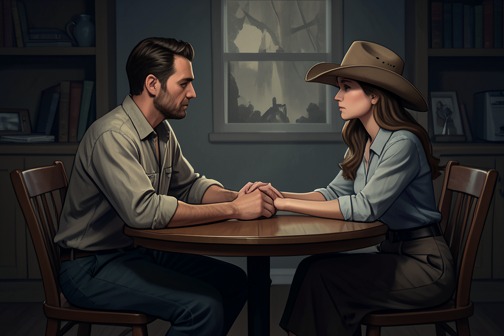
Lydia arrives late at the bookstore gathering in a large cowboy hat with a lavender feather. Rather than immediately speaking with Henry, she sits beside Randy Evans, a young bookstore clerk, and becomes absorbed in conversation. Henry, already drinking, finds that his usual conversational confidence and humor fade. Her attention to Randy, including their feet touching beneath the table, heightens his awareness of her interest in other people while he continues drinking.
As the men leave, the gathering narrows to Henry, Lydia, and Sammy. Lydia asks Sammy not to go, and Henry tells him to leave, making plain that he wants Lydia to himself. After Sammy departs, Lydia objects that Henry has driven away someone she enjoys talking to and says that she likes meeting people. The disagreement begins before they are alone: Henry’s pursuit of private intimacy competes with Lydia’s wish to remain engaged with the gathering.
## Confidences and the dream
Once alone, Henry pulls Lydia toward the couch and kisses her. She tells him that her father’s death left money to his four daughters, giving them independence and enabling her to divorce her husband. She also discloses that she has experienced a breakdown and spent time in a psychiatric institution. These details place her history and vulnerability within the encounter, rather than making her only an object of Henry’s desire.
In the bedroom, Lydia asks how long it has been since Henry had been with a woman; he answers that it has been four years. She then recounts a dream in which she opens his chest like a cabinet and finds soft, cuddly things inside. In a second dream, another writer gives her pages whose writing has cancer. Lydia says she trusts her dreams and tells Henry that he deserves love. The dreams distinguish him, in her account, from the other writer while imagining tenderness beneath his guarded presentation.
## A stated boundary and its breach
Before sex, Lydia gives Henry an explicit instruction to withdraw before ejaculation. He acknowledges that he understands. The account then makes the gap between the instruction and his behavior unmistakable: he has sex with her and ejaculates inside her. Henry describes the encounter as good and real, and emphasizes both the length of his abstinence and Lydia’s youth and beauty. Those are his perceptions of the moment; they do not erase the instruction he has just accepted or the fact that he ignores it.
Lydia immediately gets up and angrily confronts him for disregarding what she said. Henry answers that he had been abstinent for a long time, that it felt good, and that he could not help himself. His explanation centers his own sensation and loss of control rather than the boundary she had set. The scene therefore presents a decisive asymmetry: he treats the encounter as a return to a kind of intimacy he had long lacked, while her response identifies his action as a violation of their explicit agreement.
## Withdrawal and the relationship’s early pattern
Lydia goes to the bathroom and runs water into the tub. Henry follows and tells her that he loves her; she tells him to get away. She pushes him out and closes the door, leaving him in the hall as the bathwater runs. The separation gives the encounter its immediate consequence: Henry’s declaration does not repair the breach, and Lydia takes physical space from him.
The episode places several dynamics that recur in the larger relationship in miniature. Henry wants to narrow a social space into a private one, drinks as he does so, and interprets sexual contact through his own need and sense of renewed vitality. Lydia moves between openness—sharing personal history and offering an image of tenderness—and firm opposition when her stated condition is ignored. The encounter is thus significant not as uncomplicated fulfillment, but as an early collision between desire, intimacy, and consent that leaves the pair divided even as their relationship begins.
Event 3
Lydia moves near Henry, then leaves
The event titled “[Lydia moves near Henry, then leaves](entity:event-recall-event-32f65aea7006)” begins as a practical answer to a housing crisis and ends in a personal rupture. After the house Lydia rented is sold, Henry helps her find a place for herself, two children, and a dog; an unexpected vacancy in his apartment court gives her a home nearby. Their proximity proves temporary. When Lydia warns Henry that he will find her gone if he goes to the racetrack, he leaves anyway, and returns to learn that she has moved out. Her departure turns an ordinary errand into a decisive break, marked by the household goods she takes and a note she leaves with his air-conditioner.
## Housing Crisis and the New Apartment
The immediate cause is the sale of Lydia’s house by its former owner, an ex-Japanese wrestler who had gone into real estate. With Lydia were Tonto, Lisa, and Bugbutt, the dog. Finding a rental was difficult: landlords commonly advertised “ADULTS ONLY,” making a household with two children and a dog unwelcome. The episode makes the family’s housing insecurity concrete through the repeated failure to find a landlord willing to take them.
Henry drove Lydia and the others around town looking for a place. The search did not succeed, even when he stayed out of sight in the car. Lydia’s frustration became public when she shouted through the window, “Isn't there anybody in this town who will rent to a woman with two kids and a dog?” Her question expresses the practical bind plainly: she needs a home for the whole household, but the children and dog narrow the available choices.
An unexpected vacancy then opens in Henry’s own apartment court. He sees the tenants moving out and approaches Mrs. O'Keefe, asking her to rent to his girlfriend and emphasizing that the children and dog are well-behaved. Mrs. O'Keefe recognizes Lydia and objects that her eyes make her seem crazy. Her husband Mr. O'Keefe dismisses Henry as “pussy-whipped,” framing his intervention as submission to a girlfriend. Mrs. O'Keefe nevertheless agrees to the rental, and the obstacle that had defeated the search is resolved through Henry’s personal appeal to his landlords.
Lydia rents a U-Haul, and Henry helps move her in. The belongings he identifies are mostly clothes, all the heads she had sculpted, and a large washing machine. The sculpted heads and the heavy appliance make the move more than a change of address: this is a household being transferred into Henry’s immediate surroundings. Lydia tells him she dislikes Mrs. O'Keefe, though she thinks her husband seems all right. Henry answers that Mrs. O'Keefe is a good Catholic and that Lydia needs somewhere to live, placing the urgency of shelter ahead of Lydia’s misgivings about the landlady.
## Proximity and a Fractured Routine
The move places Lydia in Henry’s court, but the passage does not present proximity as domestic harmony. Henry tells her that he pays only $85 a month in rent and that the O'Keefes treat him like a son, so he has to have a beer with them now and then. Lydia objects to that description, pointing out that he is almost as old as they are. Even in the exchange about rent and the landlords, their shared surroundings produce disagreement rather than an easy sense of belonging.
About three weeks after Lydia moves in, Henry’s routines and preferences remain markedly separate from the household next door. On a late Saturday morning, he has not slept at Lydia’s the night before. He bathes, has a beer, gets dressed, eats a hard-boiled egg, and has another beer before heading out. He dislikes weekends because people are everywhere—playing Ping-Pong, mowing lawns, polishing cars, shopping, or going to the beach or park—and prefers Monday, when people are back at work and out of sight. His decision to go to the racetrack is partly a way to get through a crowded Saturday.
As Henry locks his door, Lydia is outside playing with Bugbutt. He tells her he is going to the track. She reminds him that he was drunk the night before, behaved horribly, frightened Lisa, and had to be run out of Lydia’s home. Henry answers that he is going to the racetrack, repeating the plan rather than addressing the effect his behavior had on Lydia and Lisa. Their conversation shifts the excursion from a solitary leisure choice into a confrontation about his conduct and its consequences for the people nearby.
## The Ultimatum and Departure
Lydia gives Henry a direct condition: “All right, you go ahead and go to the racetrack. But if you do I won't be here when you get back.” The warning makes the stakes explicit. Henry has been told that leaving for the track will cost him Lydia’s presence, yet he starts his car, waves goodbye, and pulls into the street. He drives to [Hollywood Park](entity:location-recall-location-hollywood-park-84c5c5b5c999), where his confidence in his new betting system persists; he imagines each new system bringing him closer to wealth and treats success as a matter of time.
The result contradicts that expectation. Henry loses $40 and drives home. As he walks toward his door, Mr. O'Keefe comes up the driveway and tells him, “She's gone!” Henry asks what he means, and Mr. O'Keefe clarifies that Lydia has moved out. The reversal is both domestic and material: Henry has spent the day pursuing an imagined future fortune, while the relationship and nearby home he could have preserved have disappeared during his absence.
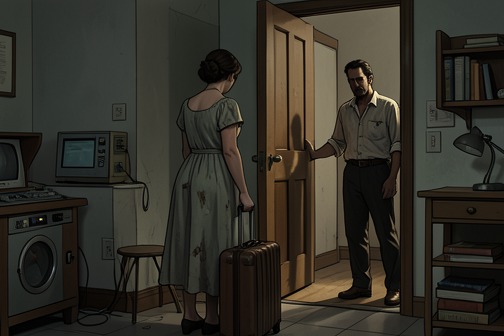
Mr. O'Keefe recounts how Lydia left. She rented a U-Haul and loaded her belongings. The large washing machine was so heavy that he could not lift it; Lydia would not let the boy help, and lifted it into the truck herself. She then took the children and Bugbutt and drove away. She had a week’s rent remaining. The details establish that this was not a threatened departure deferred for later: Lydia completed the move, took the household with her, and left the apartment court behind.
## The Note and the Ending
Inside his apartment, Henry finds the air-conditioner he had lent Lydia sitting in a chair outside the closet. On it are a note and a pair of blue panties. The note, in a wild scrawl, declares: “Bastard, here is your air-conditioner. I am gone. I am gone for good, you son-of-a-bitch! When you get lonely you can use these panties to jack-off into. Lydia.” Its message turns the returned appliance into evidence of the separation: Lydia gives back something borrowed and makes her claimed finality impossible to mistake.
Henry gets a beer from the refrigerator, drinks it, picks up the panties, and wonders whether they would work. He then says, “Shit!” and throws them on the floor. The gesture leaves him with neither a reunion nor a practical use for the object Lydia has left; the note’s insult and his brief consideration give way to rejection. He then goes to the phone and calls [Dee Dee Bronson](entity:character-recall-character-dee-dee-bronson-9cd0912546e2). The account closes with that call, shifting Henry’s attention toward another woman immediately after Lydia’s departure rather than showing him pursue Lydia or undo the separation.
## Narrative Significance
The sequence is structured around an irony of choice and consequence. Henry first acts to secure Lydia a place to live, persuading Mrs. O'Keefe to accept a household that other landlords would not. Yet, only weeks later, when Lydia explicitly links his trip to the racetrack with her departure, he chooses the track. The event does not erase his earlier practical help; it places that help beside his later refusal to alter his plans when the relationship is at stake.
The move’s concrete objects carry the change in status. The U-Haul and washing machine first signify the effort of establishing a home; on the day Lydia leaves, the same kind of rented truck removes that home again. The air-conditioner comes back to Henry, while the note and blue panties make the empty space personal and accusatory. Henry’s $40 loss provides a blunt counterpoint to his faith in a betting system that is supposed to make him wealthy: the promised gain fails to materialize, and Lydia is gone when he returns. The episode’s ending is not reconciliation but substitution, as Henry turns from the abandoned apartment to a call to Dee Dee Bronson.
Event 4
Dee Dee’s sleeping-pill overdose
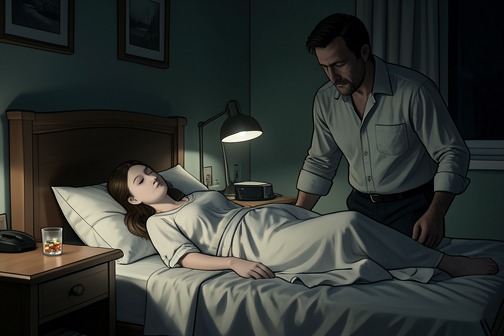
[Dee Dee’s sleeping-pill overdose](entity:event-recall-event-63d8ac535c0a) is a crisis precipitated by [Henry Chinaski](entity:character-recall-character-henry-chinaski-ca7c18f371d1)’s renewed intimacy with [Lydia Vance](entity:character-recall-character-lydia-vance-06ee5a22c41c): after Dee Dee learns that Henry expects to return to Lydia, she takes the sleeping pills in her room. Henry finds her unresponsive and intervenes until she revives, turning a private romantic conflict into an immediate emergency. The episode also marks the limit of his reassurance: he will stay with Dee Dee that night, but he does not deny that he will leave her eventually.
## Background and Trigger
After a week on [Catalina Island](entity:location-recall-location-catalina-island-bfe933bc263f), Henry and Dee Dee are back at his place in [Los Angeles](entity:location-recall-location-los-angeles-11eff639bdf5), lying naked on his bed late one evening when the telephone rings. Lydia is calling. The interruption brings Henry’s divided attachments into the room: he speaks with Lydia while Dee Dee remains beside him.
During the call, Lydia tells Henry that she had an affair after learning about Dee Dee, and that the experience was awful. She then says she wants to return to Los Angeles. Henry tells her he has missed her, and they express their love for each other. The conversation makes his renewed connection to Lydia explicit while Dee Dee is present, setting the immediate emotional context for the overdose.
## Discovery and Response
When Henry returns to the bedroom, Dee Dee appears to be asleep. He lifts one of her arms and finds it limp, then notices that the bottle of sleeping pills, which had been full, is empty. He recognizes the pills’ powerful effect from his own experience taking them: even one had left him asleep as if knocked out.
Dee Dee tells him, haltingly, that she does not care that he is going back to Lydia. Henry does not treat this statement as proof that she is safe. He fetches a dishpan, positions her over it, and repeatedly induces vomiting, pausing to let her breathe before continuing. During the process, her dentures come out; she briefly revives enough to put them back in, then asks to be taken home.
## Aftermath and Significance
Henry tells Dee Dee he will stay with her and will not leave her alone that night. When she asks whether he will leave her eventually, he does not offer a contrary promise; instead, he tells her to get dressed. The scene therefore ends with immediate care, but not with reconciliation or a settled future. Her request to go home and his assurance of overnight companionship are the concrete aftermath shown.
The episode reveals the cost of Henry’s unresolved relationship with Lydia for the woman sharing his bed. Dee Dee’s overdose follows directly after she hears Henry and Lydia affirm their love and discuss Lydia’s return. Henry responds to the danger with sustained practical intervention, yet the final exchange keeps care and abandonment side by side: he will not leave her alone that night, while the possibility of his eventual departure remains acknowledged. The event’s significance lies in that unresolved tension, rather than in any evidence that the overdose repairs their relationship.
Event 5
Henry and Dee Dee’s final breakup
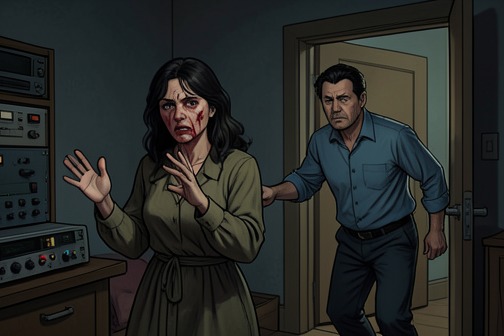
[Henry and Dee Dee’s final breakup](entity:event-recall-event-879aed54d960) turns a visit intended as an explanation into a scene of pleading, physical violence, and departure. Dee Dee asks Henry to stay with her rather than return to Lydia; he cannot do so, and her blows mark the encounter’s end. Its significance lies in the contrast between Henry’s wish that people talk things through and his inability to offer Dee Dee the future she asks for: he leaves her bedroom and goes back to Lydia, carrying the conflict into another unstable relationship.
## Background and the Return
After Lydia returns and finds an apartment in Burbank, she seems more attached to Henry than before their separation. In bed together, she contrasts her former husband’s physical attributes with what she describes as an electric connection with Henry. The renewed intimacy does not settle the relationship. Henry soon tells Lydia that he has to see Dee Dee, presenting the visit as necessary rather than playful or incidental.
The decision places the breakup within a pattern of divided attachments. Henry goes to see a former partner while living again with Lydia, and his stated purpose is to talk and explain. At Dee Dee’s home, Bianca warns that Dee Dee is seriously ill and says Henry should not be allowed to see her after the way he treated her. Henry insists that he only wants a conversation; Bianca relents and directs him to the bedroom. The warning frames the visit as a confrontation with prior hurt, not a neutral reunion.
## Dee Dee’s Plea
In the bedroom, Henry picks up an empty pint but sadly puts it down. He tells Dee Dee that there is too much coldness in the world and that people would be better off talking things out. Dee Dee answers with a direct appeal for him to stay with her and not return to Lydia. She says she has lived long enough to know how to be a good woman and promises that she would be good to him and for him.
Henry does not accept the offer. He tells her that Lydia has a grip on him, then tries to soften the explanation by describing Lydia as flirtatious and impulsive and predicting that she will leave. The exchange reveals the unequal force of the two appeals: Dee Dee asks for a shared future, while Henry describes himself as held by another relationship, without claiming that he can explain or overcome that attachment. His language about mutual conversation cannot resolve the choice he has already made.
## The Visit Turns Violent
Dee Dee asks Henry to kiss her. He initially refuses, then stretches out beside her and embraces her. They kiss; he notices the smell of vomit on her mouth and breaks away as gently as he can. Dee Dee continues trying to persuade him to stay, pointing to her legs and ankles as if offering him reasons to choose her. Henry remains at the edge of the bed and says he cannot stay.
Dee Dee responds by sitting up and punching him repeatedly. The blows land above and in his eye, across his forehead and cheeks, and once in his throat. She calls him a bastard and says she hates him. Henry grabs her wrists and tells her that is enough; she falls back onto the bed as he gets up and walks down the hall and out of the house. The physical attack abruptly ends the intimate negotiation. It does not produce agreement or reconciliation: Henry’s departure is the decisive action of the scene.
## Return to Lydia and the Fidelity Test
When Henry gets back, Lydia is waiting in an armchair. She says he has been gone a long time and accuses him of having sex with Dee Dee. Henry denies it. Lydia points to the scratch on his face as evidence that something happened, reading the visible mark as a sign of intimacy even though he says he did not sleep with Dee Dee. The scene makes the breakup consequential beyond Dee Dee’s room: Henry’s visit immediately becomes another test inside his relationship with Lydia.
Henry says that he passed the test, but afterward questions the fairness of a man testing a woman’s fidelity. That reflection complicates the apparent victory. Rather than treating the encounter as proof that Lydia can trust him, he recognizes a double standard in the test itself. Yet recognition does not bring the relationships into balance; the narrative moves on to Henry secretly visiting [Nicole](entity:character-recall-character-nicole-39b4920f47d0) after exchanging letters with her. The sequence places the breakup within recurring concealment, jealousy, and divided romantic attention, rather than presenting it as a clean end to Henry’s entanglements.
Event 6
Lydia discovers Henry’s affair at Nicole’s home
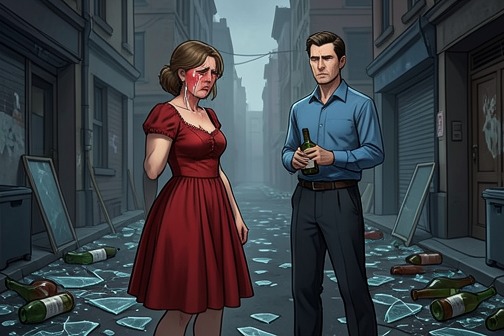
[Lydia discovers Henry’s affair at Nicole’s home](entity:event-recall-event-5fcb4831414c) when she catches him arriving with alcohol after a fight and intending to spend the night with [Nicole](entity:character-recall-character-nicole-39b4920f47d0). What begins as a concealed arrangement becomes a public confrontation on Santa Monica Boulevard: Lydia destroys the liquor, strikes Nicole, drives toward Henry, and breaks Nicole’s window with a beer bottle. Nicole tells Henry to leave with Lydia; he does, and they drive off without speaking. The episode makes private deception materially visible through smashed bottles, street debris, and a damaged window, while its abrupt silent ending leaves the relationship’s immediate reconciliation unresolved.
## Background and Concealment
Henry’s visits to Nicole have become a regular part of his afternoons. He sees her two or three times a week; they drink wine, talk, and sometimes have sex. He describes his interest in her as limited, presenting the visits as something to do rather than as a serious attachment. Meanwhile, he and Lydia have made up after a fight, and Lydia asks where he has been. Henry answers that he went to the supermarket, a technically true account that conceals the rest of his route.
The secrecy is not complete. After drinking, Henry has told Lydia that he knows Nicole and where she lives, while minimizing the relationship as insignificant. That admission gives the affair a strained half-disclosure: Lydia has some information, but Henry has not openly described his continuing visits or his intention to stay at Nicole’s. The confrontation follows another quarrel between Henry and Lydia, making his plan to spend the night elsewhere part of an already unsettled cycle rather than an isolated meeting.
## The Confrontation on Santa Monica Boulevard
One afternoon Henry is walking from the liquor store toward Nicole’s with two six-packs of bottled beer and a pint of whiskey. He is already somewhat intoxicated. He has decided to stay the night with Nicole after his latest fight with Lydia. Lydia runs up behind him, takes the bag, and smashes the beer bottles on the pavement one by one. As afternoon traffic begins to build on Santa Monica Boulevard, she raises the whiskey and accuses him of intending to drink and then have sex with Nicole before smashing the pint as well.
Nicole’s door is open, and Lydia runs upstairs to confront her. Nicole is standing at the top of the stairs. Lydia hits her with a large purse, swinging it at her while insisting that Henry is her man and demanding that Nicole stay away. Lydia then runs past Henry and out into the street. Nicole asks who the woman is; Henry identifies Lydia and asks for a broom and a large paper bag. He begins sweeping up the broken glass outside Nicole’s door.
The cleanup briefly gives Henry an ordinary task after the outburst. He thinks Lydia has gone too far and considers buying more liquor and staying at Nicole’s for one or two nights. But the damaged bottles and public scene do not mark the end of the confrontation. While Henry is bent over collecting glass, Lydia returns in the Volkswagen Thing, drives along the sidewalk toward him at about thirty miles an hour, and misses him by roughly an inch. She continues to the end of the block, drops off the curb, drives up the street, and turns at the next corner.
## The Broken Window and Departure
Henry goes back to sweeping after Lydia’s car has passed. When he finds an undamaged beer bottle in the paper bag, he is about to open it when Lydia appears again and snatches it from his hand. She throws it through the glass of Nicole’s window. The bottle makes a round hole rather than shattering the entire pane. The sequence escalates from destroyed alcohol to an attack on Nicole and then to danger for Henry and damage to Nicole’s home; each return by Lydia interrupts Henry’s attempt to resume his original plan.
Nicole is still standing in the stairway. She tells Henry to leave with Lydia before Lydia kills everybody. Henry turns away from Nicole, walks downstairs, and finds Lydia waiting at the curb in her car with the engine running. He gets in. Lydia drives off, and neither of them says a word. The ending records a departure, not an explanation or an explicit settlement: Henry abandons his plan to stay with Nicole, but the account does not establish what the couple says or does after leaving.
## Significance and Pattern
The event converts Henry’s evasive account of his afternoons into a confrontation that cannot be kept private. A routine of visits, wine, conversation, and sex is exposed through the concrete things he carries and Lydia destroys: beer bottles, whiskey, a remaining bottle used against Nicole’s window. His attempt to sweep away the broken glass underscores the contrast between the immediate material aftermath and his casual thought of buying more alcohol and continuing his stay with Nicole.
The episode also presents a sharp asymmetry between Henry’s deception and Lydia’s response. Henry conceals the extent of his visits and plans to spend the night with Nicole; Lydia responds with repeated property destruction and conduct that puts both Henry and Nicole at risk. The narration’s brisk, matter-of-fact handling of the escalation sits beside the seriousness of the actions, while Nicole’s warning supplies an unmistakable assessment of the danger. Their wordless drive away closes the scene on physical reunion without resolving the conflict that produced it.
Event 7
Henry returns to Lydia after her fight with Mindy
[Henry returns to Lydia after her fight with Mindy](entity:event-recall-event-087d76b7caf1) is a turning point in his unstable relationships: after the women physically confront one another in his home, he chooses Lydia when police ask which one he wants, and the following day tells [Mindy](entity:character-recall-character-mindy-47de68821701) that he is going back. The choice restores the relationship in the immediate aftermath, but the scene offers no evidence that the jealousy and volatility behind the fight have been resolved.
## Background and Immediate Stakes
Mindy has stayed with Henry for about a week. He has introduced her to his friends and taken her places, but the relationship remains unsettled; he says he cannot climax, while Mindy does not seem bothered by it. The episode begins with Henry drunk and lying on his bed as Mindy drinks and reads in the front room. Their domestic arrangement is already complicated by Lydia, whose arrival makes the unresolved triangle suddenly present in the same home.
Lydia comes to the door, and Henry hears her voice before he sees her. She tells Mindy that she has come to check out her competition. Henry initially imagines the visit becoming a convivial encounter in which he could bring the women drinks and let them talk. That expectation collapses when Lydia makes a pointed remark to Mindy and the two women begin fighting.
## The Fight and Henry’s Response
Henry hears screams and the sound of a struggle from the bedroom. He gets up intending to separate the women, but stumbles over a shoe on the rug and falls. By the time he reaches the front room, the fight is already underway. Mindy runs out the door with Lydia close behind, and both continue down the walk toward the street. Henry remains inside; after several minutes, he gets up and closes the door.
Lydia returns alone and sits in a chair near the door. She apologizes for having wet herself, and Henry sees that her clothing is stained. The detail marks the aftermath as humiliating as well as violent, but it does not soften the confrontation into a reconciliation. The immediate outcome is simply that Mindy has left and Lydia is back in the house with Henry.
## The Choice
Police arrive and ask Henry which of the two women he wants. He points to Lydia, who is sitting in the chair, and confirms that he is sure. The officers leave, and Henry is again alone with her. This exchange makes his decision unusually explicit: instead of treating the fight as a reason to withdraw from both relationships, he chooses Lydia in the presence of the authorities.
The choice is not presented as a considered solution to the conflict. Henry’s earlier assumption that the women might drink together has given way to an abrupt selection after their fight, and the scene does not explain his decision beyond the answer he gives. Its force lies in the contrast between the casualness of the question-and-answer exchange and the upheaval that precedes it.
## The Next Morning and Aftermath
The next morning, Lydia has gone back to her own place. Bobby, a young man who lives on the next block and works in a pornographic bookstore, calls Henry to say that Mindy is there and wants to speak with him. Henry walks over carrying three bottles of beer. Mindy asks whether he is going back to Lydia, and he replies that he is: he is back with her. The direct answer confirms that the choice made after the fight has carried into the next day.
Mindy tells him that what happened was rotten and says she thought he and Lydia were finished. Henry responds that he had thought so too, describing the situation as strange. When he says he has to leave, Mindy says she will come down later for her clothes. She follows him outside and asks him to hold her; he does. As she cries, she tells him that he will never forget her. Henry then walks back to his place, thinking about whether Bobby has slept with Mindy and reflecting on what he sees as Bobby and [Valerie](entity:character-recall-character-valerie-879cd9992233)’s lack of emotional feeling. The scene closes on separation rather than a settled farewell: Mindy is left behind, while Henry returns to Lydia.
## Significance
The sequence converts a tangled romantic situation into a visible choice, but it does not establish that choosing Lydia repairs the relationship. Mindy’s week in Henry’s home had brought no resolution, and Lydia’s arrival turns that unresolved arrangement into open conflict. Henry’s stated wish that the women understand one another is exposed as an impractical fantasy when their encounter becomes a fight.
The episode also shows how little deliberation accompanies Henry’s return. He answers the police, repeats his decision to Mindy the next morning, and leaves as she cries; the practical acts are clear even when the emotional meaning remains unsettled. Mindy’s claim that he will never forget her supplies a final note of attachment, while Henry’s attention shifts back to his own suspicions and judgments. The result is a reunion in the narrow sense of renewed alignment with Lydia, not a demonstrated end to jealousy, conflict, or the pattern of shifting relationships.
Event 8
Henry gets lost in the Utah wilderness and Lydia finds him
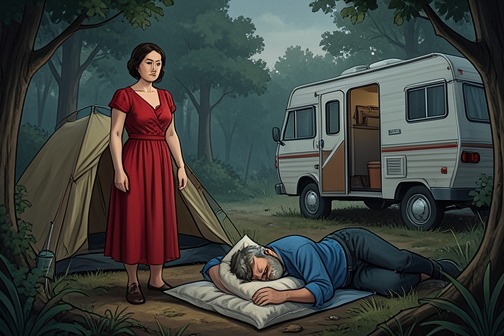
[Henry gets lost in the Utah wilderness and Lydia finds him](entity:event-recall-event-4f39c149ba6e) during a camping trip that begins as an uneasy effort to appease her. After he wanders away from the camp and loses his bearings on [Vance Pastures](entity:location-recall-location-vance-pastures-aeb857d8fc0b), the prospect of being stranded strips his independence down to fear and practical need. Lydia tracks him using his discarded red notebook, finds him near a trailer, and brings him back—though the reunion ends not in tenderness but in another demonstration of their combative, familiar bond.
## Background and Departure
Henry agrees to accompany Lydia to [Muleshead](entity:location-recall-location-muleshead-27de1ca91fdc), [Utah](entity:location-recall-location-utah-99abad7dbd3c), where her sisters are camping on land inherited from their father. [Glendoline](entity:character-recall-character-glendoline-9b2cdbced543) is already there in a tent, working on a novel, and Henry and Lydia arrive first with a pup tent of their own. Their first night is uncomfortable, with mosquitoes crowding into the cramped shelter. The trip takes Henry out of [Los Angeles](entity:location-recall-location-los-angeles-11eff639bdf5) and away from the urban routines he understands, but he is not simply a willing convert to the wilderness: he later says he went along to pacify Lydia.
The next morning, Glendoline and Lydia prepare breakfast over a campfire. Henry has brought $40 worth of groceries, including several six-packs of beer, which he cools in a mountain spring. After the meal he helps with the dishes, then listens as Glendoline reads from her novel. Henry judges the work unpolished and objects to the assumption that listeners will automatically be fascinated by the writer’s life. The camp’s literary conversation and its anti-beer atmosphere leave him feeling out of place; he takes beer from the spring and later walks off alone with his red notebook.
## The Shortcut and the Loss of Bearings
At Vance Pastures, Henry writes in the red notebook and approaches a lake. He enters the cold water, then follows the lake’s edge and goes through the woods toward the sound of a waterfall. After watching the water, he decides to return by a different route, a shortcut toward camp. He writes another poem along the way, but the expected landmarks do not appear. He cannot find either the camp or the lake, and realizes that he is lost among mountains, trees, and brush, with no clear point of reference.
The change from wandering to danger is also a change in Henry’s sense of himself. He imagines that he may die in the woods and be remembered in a newspaper as a minor poet whose last work was found in a small red notebook. He throws the notebook away, picturing it as a remnant that might be discovered with his remains. The episode turns an object associated with his writing into something he abandons while trying to survive; his fear is no longer literary or performative but attached to the possibility of not getting back.
## Searching for a Way Out
Henry continues through a bog, where his legs sometimes sink to the knee, and reaches a barbed-wire fence. Knowing he should not climb it, he does so anyway, then cups his hands around his mouth and calls for Lydia. There is no answer. His calls do not restore the familiar connection of the camp; he remains alone and must keep moving.
Later, he finds running water spilling from several cement pipes into a reservoir. He sits by the water, removes his shoes and stockings, rolls up his pants, cools his legs, and drinks cautiously. A metal box locked to a pier suggests the possibility of a telephone. Henry breaks the padlock with a rock, injuring his hand in the attempt, but discovers switches and heavy cables rather than a phone. He operates the switches, releasing large flows of water from the dam, then returns them to their normal positions and closes the box. Even while imagining that a flood might bring rescuers, he stops short of leaving the dam open. The search for help is improvised and risky, yet he reverses the one action that could have made his predicament worse.
He leaves the reservoir and follows another road. Exhausted and barely able to see, he meets a frightened young girl in a blue dress and white shoes. He tells her he is lost and asks her to take him to her parents; she points him toward a trailer and a parked car. Henry calls out that he is lost and relieved to see someone. The route out of the woods comes not through his imagined literary models or a telephone, but through a child who can direct him to a nearby household.
## Lydia’s Rescue and the Return
Lydia steps around the trailer wearing red curlers and tells Henry to follow her. He asks her to kiss him, but she refuses and keeps walking. She moves quickly and vaults over a barbed-wire fence; Henry cannot follow at the same pace and becomes tangled in the wire. The difference between them is physical and practical: Lydia knows the way and crosses the obstacle, while Henry is caught and has to call her back.
Lydia returns and helps free him. She explains that she tracked him and found the red notebook, then accuses him of getting lost deliberately because he was angry. Henry denies doing it on purpose and describes himself as an incomplete, stunted city person with little to offer. Lydia answers that she already knows his shortcomings. Once she frees him from the last barb, he follows her and is back with her again. The rescue closes the immediate danger, but it does not settle the dispute about why he wandered off or transform their relationship into a peaceful one.
## Significance
The episode reverses the usual direction of Henry and Lydia’s dependence. He leaves camp alone, convinced that a shortcut will bring him back, but becomes dependent on a sequence of strangers, roads, water, and finally Lydia’s knowledge of the landscape. The red notebook first records his poems, then becomes the clue Lydia uses to locate him; discarded in fear, it remains the trace that connects his disappearance to his return.
The return also makes the scene more complicated than a simple rescue. Henry’s self-description acknowledges his vulnerability and lack of competence in the wilderness, while Lydia’s blunt response suggests that this weakness is not new to her. She finds him, frees him from the fence, and leads him home, but their exchange retains accusation and resistance. The camp, which had felt to Henry like an alien world of anti-beer talk and literary pretensions, becomes the place to which he must be restored—and Lydia, despite their conflict, is the person who brings him back.
Event 9
Lydia drives into oncoming traffic and separates from Henry
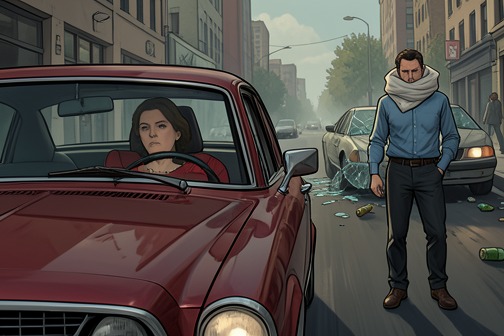
[Lydia drives into oncoming traffic and separates from Henry](entity:event-recall-event-ee4162782864) in a scene where a disagreement about sex, sharpened by Henry’s injured leg, becomes an immediate physical danger and a breakup. Lydia swerves across the double yellow line as cars scatter, then drives Henry home and announces plans to move to Phoenix. Their departure is not a clean emotional resolution: Henry leaves with his suitcase, Lydia cries without speaking, and he soon phones [Katherine](entity:character-recall-character-katherine-66e439ad0b50) in [Austin](entity:location-recall-location-austin-208e01a2a58e) to invite her to [Los Angeles](entity:location-recall-location-los-angeles-11eff639bdf5).
## Background and Immediate Conflict
Lydia meets Henry at the airport, and during the drive back to his home she makes clear that she wants sex. Henry says that his leg is still in terrible shape and that he does not know if he can manage it. When she asks what good he is, he offers to fry eggs and do magic tricks. The exchange establishes the disparity between Lydia’s sexual urgency and Henry’s physical limitation, but it does not resolve it; his attempt to turn the problem into a joke gives way to her continued frustration.
Henry tells Lydia that sex is not everything and urges her to give it a rest. She answers by asking how she is supposed to manage until his leg heals. He offers to play Scrabble with her instead. The suggestion treats the disagreement as something that can be diverted into a game, but Lydia’s response makes clear that she does not accept the diversion. Her scream and threat to kill him mark the instant when a quarrel over intimacy escalates into an immediate risk to both of them.
## The Dangerous Drive
Lydia drives across the double yellow line at high speed and into the opposing flow of traffic. Horns sound; approaching cars veer left and right to avoid them. After continuing against traffic, she swerves abruptly back into the lane they had left. The sequence gives the breakup its defining action: the conflict is no longer confined to words or mismatched expectations but is carried out through an act of dangerous driving, with other motorists forced to react.
Henry wonders where the police are and thinks that they seem to disappear whenever Lydia does something. This remains his perception within the scene, rather than an account of police intervention. The car’s sudden movement, and the absence of any intervention described, leave the couple to carry the crisis through to its immediate decision: Lydia says she will take Henry home, that she has had enough, and that she plans to sell her house and move to Phoenix, where [Glendoline](entity:character-recall-character-glendoline-9b2cdbced543) now lives. She adds that her sisters had warned her about living with an old man like him.
## Separation at Home
They drive the rest of the way without speaking. At Henry’s place, he takes out his suitcase, looks at Lydia, and says goodbye. Lydia is crying silently, her face wet; she then drives off toward Western Avenue. Henry walks into the court. The scene ends the shared drive and establishes a separation, but not a composed or mutually explained one: Lydia’s departure follows her announcement that she intends to sell her house and move, while Henry’s goodbye is brief and the hurt is visible in her tears.
## Henry Turns to Katherine
After checking his mail, Henry phones Katherine, who lives in Austin, Texas. He is glad to hear her voice and invites her to visit, offering to pay for both legs of the trip and proposing outings to the racetrack and Malibu, as well as whatever else she wants. Katherine asks whether he has a girlfriend. Henry says he has none and describes himself as a recluse, despite her observation that he is always writing about women in his poems.
Katherine also raises the risk of Lydia, asking whether Henry would let her attack her. Henry reassures her that it cannot happen because Lydia has moved to Phoenix. He calls Katherine the exceptional woman he has been looking for and asks her to trust him; she says she will need to arrange care for her cat. Henry insists that everything is clear. The call thus follows the separation almost immediately and exposes the gap between his confident account to Katherine and the emotionally unsettled parting just witnessed: he presents Lydia’s move as settled while using the moment to invite a new woman into his life.
## Significance
The episode joins a concrete physical constraint, Henry’s injured leg, to the instability of his relationship with Lydia. His joke about eggs, magic tricks, and Scrabble cannot contain the disagreement; the shift from banter to dangerous driving gives the conflict an abrupt, consequential turn. The separation is marked less by a final conversation than by silence, a suitcase, a goodbye, and Lydia driving away in tears.
The immediate call to Katherine makes the ending a further reversal rather than a pause for reflection. Henry moves from saying goodbye to Lydia to inviting Katherine to visit and describing himself as unattached. The scene therefore presents separation not as closure but as another opening in the cycle of Henry’s relationships, while leaving Lydia’s announced plans and the future of either connection unresolved.
Event 10
Henry meets Laura Stanley after the Houston reading

Henry meets Laura Stanley after the [Houston](entity:location-recall-location-houston-bb963be7f802) poetry reading, in an episode that brings together his dependence on alcohol, his public identity as a poet, and his surprise at attracting a woman he regards as exceptional. Laura, whom he insists on calling [Katherine](entity:character-recall-character-katherine-66e439ad0b50), accepts his invitation to share a bed after the event. The encounter is intimate but provisional: Henry later reaches out to her in [Austin](entity:location-recall-location-austin-208e01a2a58e), yet the evidence presents no settled relationship or lasting resolution.
## Background and Houston Reading
By the time of the Houston appearance, Henry had been trying to establish himself as a writer after leaving a twelve-year job as a postal clerk. He describes that transition as frightening. While working on his first novel, he drank heavily each night, smoked inexpensive cigars, typed until dawn, and set himself a target of ten pages. He often discovered only the following morning how much he had produced; the raw pages then had to be revised or discarded. The novel took twenty-one nights to write. This earlier account makes the Houston reading part of a larger pattern: literary work and alcohol are closely entangled in his life, rather than being separate public and private activities.
In Houston, Henry arrives with a heavily bandaged leg and is taking antibiotics for an infection. His doctor has warned that drinking would undermine the medication. Henry initially goes on stage sober, and after he reads several poems, an audience member asks why he is not drunk. He answers that [Henry Chinaski](entity:character-recall-character-henry-chinaski-ca7c18f371d1) could not make it and that he is his brother Efram. The joke turns his familiar drinking persona into part of the performance, while also momentarily presenting a version of the poet who can appear without alcohol.
That brief abstention does not last. Henry explains the antibiotics and the museum's no-drinking rule; someone brings him a beer, and another follows. As the drinks arrive, he continues reading, and he says the poems improve. The reading therefore shifts from an attempt at sobriety to a performance in which the audience helps restore the drinking routine that the medical warning was meant to interrupt. The episode supplies a concrete contrast between the demands of his treatment and the social identity he has built around drinking and poetry.
## Meeting Laura, Called Katherine
At the dinner and party after the reading, Henry notices a young woman seated almost directly across from him. He calls her the most beautiful girl he has ever seen and compares her appearance to a young Katharine Hepburn. She is about twenty-two and has come with a female friend. Henry keeps making jokes by calling her Katherine, and she seems to enjoy them. He does not expect the attention to lead anywhere; as the gathering ends, he tells Nana, the museum director whose home is hosting him, that he will miss the young woman and that she seemed too good to be real. Nana replies that the woman is coming home with them, a turn Henry says he had not believed possible.
Later, Laura is in the bedroom at Nana's home. She sits on the edge of the bed in a sheer nightgown, combing her very long hair and smiling. When Henry asks her name, she says Laura; he tells her he will call her Katherine, and she agrees. He describes her as small and well proportioned, with reddish-brown hair and a face he finds especially beautiful. The nickname begins as Henry's playful response to the resemblance that caught his attention, but her acceptance allows the private encounter to continue on terms he has initiated.
Laura tells him that she does not drink and dislikes alcohol when he offers her a drink. Her refusal sets her apart from the drinking-centered social world Henry has just enacted at the reading. It also underscores the imbalance between their habits and expectations: she does not share his stated routine, yet she has accompanied him to the bedroom and remains there with him.
## Intimacy and Henry's Response
Henry says that Laura frightens him because he cannot understand why she is with him and does not think she seems like a groupie. His response is not confidence but disbelief at his own good fortune. He wonders what his books of poems could have brought about and what right he has to this attention, then decides not to reject it. After he returns from the bathroom and turns out the light, Laura gets into bed beside him; they kiss and embrace. The scene marks a change from Henry's initial uncertainty to participation in an intimacy he had not expected.
The episode is narrated through Henry's astonishment at being chosen. He frames Laura's presence as almost inexplicable, connecting her interest to his poems while doubting that the poems could account for it. That emphasis makes the encounter significant less as the beginning of a clearly established romance than as a moment when his self-image as an isolated, unlikely object of desire is briefly contradicted. The account does not establish that Laura shares his interpretation or that the encounter creates a durable commitment.
## Return to Lydia and Later Contact
The Houston encounter sits within Henry's unsettled relationship with [Lydia Vance](entity:character-recall-character-lydia-vance-06ee5a22c41c). On the return from another reading, Lydia meets him at the airport and immediately expresses sexual desire. They later argue, and Lydia tells him she is finished, plans to sell her house, and will move to Phoenix, where [Glendoline](entity:character-recall-character-glendoline-9b2cdbced543) lives. At his home Henry takes out his suitcase and says goodbye; Lydia drives away crying. The separation supplies the immediate context for his later claim to Katherine that he has no girlfriend, but it does not erase the instability that has characterized his connection with Lydia.
After checking the mail, Henry phones Katherine, who lives in Austin, Texas. She sounds genuinely pleased to hear from him, and he says he is glad to hear her Texas accent and laughter. He invites her to visit and offers to pay for her air travel both ways, proposing the racetrack and Malibu as possible outings, as well as whatever else she wants. Katherine asks whether he does not have a girlfriend. Henry says there is none and describes himself as a recluse; she points out that he is always writing about women in his poems. When she worries that Lydia might attack her, Henry assures her that Lydia has moved to Phoenix and calls Katherine the exceptional woman he has been looking for. Katherine says she will need to arrange care for her cat. Henry answers that everything is clear on his end.
This later call shows that the Houston meeting continues to matter to Henry, but it also exposes the gap between his declarations and the unsettled circumstances around them. He presents himself as unattached and ready to welcome Katherine, while the story has just shown a painful departure from Lydia and a history of volatile relations. Katherine's request for reassurance and the practical condition about her cat make the proposed visit a real possibility, not a completed outcome. The evidence ends with arrangements still to be made, leaving the connection open rather than confirming a renewed relationship or a shared future.
Event 11
Katherine visits Henry in Los Angeles
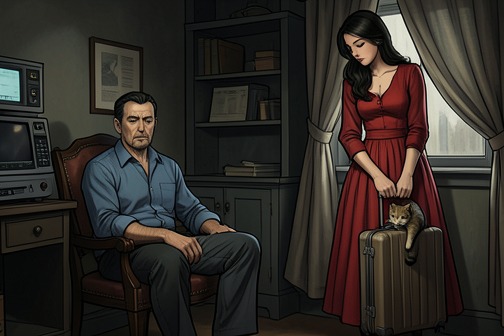
[Katherine visits Henry in Los Angeles](entity:event-recall-event-a2a83e6d6cd4) after he invites her to come, turning a tentative romantic possibility into a brief, consequential encounter. Her arrival brings Henry into close companionship with a woman he regards as exceptional, and makes him imagine marriage and domestic life. Yet the visit also exposes the distance between that imagined future and his established habits. After several days together, [Katherine](entity:character-recall-character-katherine-66e439ad0b50) departs; Henry is left with the belongings she forgot and resumes drinking.
## Invitation and Arrival
The visit follows Henry’s earlier effort to reassure Katherine that she is different from women he has known. When she raises the possibility that another woman might attack her, Henry says that this cannot happen because that woman has moved to Phoenix, then asks Katherine to trust him. Katherine agrees to make arrangements, including finding someone to care for her cat. The exchange places reassurance and risk side by side: Henry is trying to secure her confidence, while her practical preparations make the proposed visit real.
The next day Katherine tells Henry that she has obtained tickets and will land at [Los Angeles International Airport](entity:location-recall-location-los-angeles-internat-0759db9db572) on Friday at 2:30 p.m. Henry then admits there is something he must tell her. He later reads and waits by the telephone after the difficult conversation, convinced she will not call again and interpreting the loss as his own fault. When the telephone rings, however, Katherine laughs and tells him to forget [Joanna Dover](entity:character-recall-character-joanna-dover-9c9b11bc1485). Her return to the conversation changes the visit from a plan in danger of collapse into an imminent meeting.
At the airport, Henry sees Katherine walk down the ramp in a blue dress and a wide-brimmed white hat. He focuses on her composed appearance and contrasts it with his own self-deprecating account of his heavy build, disheveled hair, and confusion. The reunion is not presented as an even exchange of self-images: he idealizes her poise while making himself the comic, ungainly counterpart. He greets her, asks about her baggage, and suggests stopping at a bar, bringing his familiar drinking into the first moments of her visit.
## Making a Home Together
Henry asks Katherine to go out for dinner, but she first has to finish washing the floor. He waits in a chair until she comes out, bends to kiss him, and laughs that he is a dirty old man. The ordinary household task and her teasing give their reunion a domestic texture distinct from the airport encounter. Henry’s response is immediate: he says inwardly that he is in love again and in trouble.
After dinner, they talk. Katherine eats carefully, avoiding meat other than chicken and fish, and Henry notices that her habits differ from his. On another evening, she tells him there are about six days when sex is safe before they will need to think of another arrangement. The detail places practical considerations within their intimacy, rather than leaving their time together as pure romantic fantasy.
Henry describes their first night together as a moment when desire overwhelms his restraint. The encounter is narrated through his perspective, which casts his behavior in possessive and violent terms; that framing complicates the tenderness he later associates with the relationship. Afterward, he holds Katherine while she sleeps and thinks, for the first time, about marriage, a house, a dog and a cat, and shopping at supermarkets. The domestic future appears in a sudden list of ordinary possibilities. He also recognizes that the beginning of a relationship is the easiest stage and that the other person’s flaws will emerge over time, even as he lets himself imagine a life with her.
The next morning, Katherine brushes her hair and tells Henry, laughing, that their relationship is just sex. He rests his head against her leg, still uncertain about what their closeness means. Her joking remark does not settle the question; instead, it sets her lighter appraisal beside his sudden thoughts of marriage. Their relationship thus holds two meanings at once, without either one becoming a settled agreement.
## The Life Henry Brings to the Visit
Henry takes Katherine to the boxing matches at the [Olympic Auditorium](entity:location-recall-location-olympic-auditorium-bcdedfff7b03), where they sit at ringside before the first bout. He drinks beer and smokes while they wait. Katherine has never seen a live fight, and when Henry remarks on the crowd waiting for two men to punch each other, she agrees that it seems awful. The outing introduces her to a world Henry treats as familiar entertainment, while her response registers distance from it.
After the match, they return to the parking lot beneath the freeway and discover that Henry’s blue Volkswagen has been stolen. The car is an immediate practical loss as well as a disruption to the evening. Its recovery later allows their time together to continue, but the incident also anchors the visit in Henry’s precarious, unsettled circumstances rather than in the smooth sequence of a conventional courtship.
The sharper divide emerges in Henry’s reflection on Katherine’s response to his surroundings. After she drinks red wine and becomes quiet, he thinks she is connecting him with the people at the racetrack and the boxing crowd. He describes himself as drawn to drinking and laziness, without religion, politics, or ideals, and settled into a kind of nothingness. He wants a soft, hazy space in which to be left alone, yet acknowledges that when drunk he can become loud and uncontrolled. He recognizes that these modes of behavior do not fit together, but says that he does not care to reconcile them.
Henry calls that night the one in which he lost Katherine, although the relationship does not end with an explicit declaration between them. His certainty grows from the contrast he sees between her and the life he leads. The narration places the claim beside their continued physical intimacy, sharpening the distinction between being together for the moment and sharing a durable future. Henry can imagine a household with her, but he also sees that his habits and indifference remain intact.
## Departure and Aftermath
Katherine stays four or five more days. As the period when sex is risky approaches, she obtains contraceptive foam because Henry says he cannot stand condoms. Meanwhile, police recover the Volkswagen. It is intact apart from a dead battery; Henry has it taken to a [Hollywood](entity:location-recall-location-hollywood-3ce8b1af5069) garage and repaired. The restored car becomes their transport to the airport, tying the visit’s practical disruptions to its final journey.
At the airport, they sit together without saying much until Katherine’s flight is called. They kiss, and Henry jokes that everyone has seen a young girl kissing an old man. Katherine says she does not care, kisses him again, and invites him to visit her at the nice house where she lives alone. Henry promises to come and to write. The exchange preserves the possibility of seeing each other again, but the visit itself ends when Katherine walks into the boarding tunnel and disappears from view.
Henry walks back to the parking lot and thinks that at least he still has the Volkswagen and has not lost everything. The thought reduces the emotional aftermath to a remaining possession: the repaired car is tangible, while Katherine has gone. That evening he starts drinking, expecting life without her to be difficult, and finds earrings and a bracelet she left behind. The forgotten jewelry makes her absence concrete, but does not lead him to act on the invitation or change the habits he has identified as a barrier between them.
## Narrative Significance
The visit is structured as a short ascent into imagined domesticity followed by a return to Henry’s solitary routine. Katherine’s arrival, household gestures, shared outings, and invitation to visit her home give the prospect of partnership practical form. At the same time, Henry’s attention to boxing, the racetrack, alcohol, and his wish to be left alone keeps exposing the incompatibility he senses but does not address. The gap between his fantasy of marriage and his conduct is the visit’s central tension.
Henry’s first-person recollection makes that gap especially visible. He reports moments of tenderness and practical care, but also frames Katherine through idealizing comparisons and interprets the relationship’s likely failure from within his own habits and assumptions. His belief that he has lost her precedes her departure, while her invitation at the airport leaves the future technically open. The final movement toward drinking and the discovery of her jewelry, rather than a new commitment, determine the visit’s immediate outcome: intimacy has interrupted Henry’s isolation, but has not displaced it.
Event 12
Vancouver poetry reading
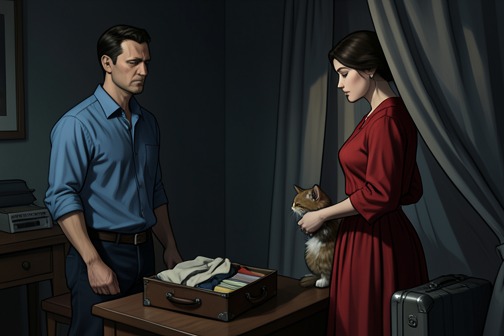
The [Vancouver poetry reading](entity:event-recall-event-7aa8c8ef9c69) is a paid performance that briefly makes [Henry Chinaski](entity:character-recall-character-henry-chinaski-ca7c18f371d1) a traveling poet without making him feel at home in that role. Its journey from a [Seattle](entity:location-recall-location-7af5814b411d) airport pickup to a rowdy reading and a party afterward sets his contempt for conventional literary institutions beside his ease among a drunken crowd, while the payment and [Iris Duarte](entity:character-recall-character-iris-duarte-74a87670cdd8)’s attention turn the engagement into a mix of work, performance, and personal encounter.
## Arrangement and Reluctant Departure
The reading is arranged privately by Bart Mcintosh, who offers Chinaski $500 plus airfare and lodging. Mcintosh is nervous about crossing the border, so the plan is for Chinaski to fly to Seattle, meet him there, and drive together into [Vancouver](entity:location-recall-location-05399ccbb6cd); afterward, Chinaski will fly back to [Los Angeles](entity:location-recall-location-los-angeles-11eff639bdf5). Chinaski does not fully understand the logistics, but agrees to go.
On the plane, he drinks a double vodka-7 and sees himself among salesmen and businessmen. His small suitcase holds extra shirts, underwear, stockings, three or four poetry books, typescripts of ten or twelve new poems, and basic toiletries. The carefully assembled working kit makes the trip concrete, but it does not dispel his sense of its absurdity: after years of low-paid labor, he is suddenly traveling for money to read poetry, a role he finds difficult to take seriously.
At Seattle, Mcintosh meets him and drives across the border. Chinaski appreciates the quiet of the car ride, in contrast to the amount of talking he associates with Gary Benson’s [New York City](entity:location-recall-location-new-york-city-65df0a129d4c) drive. He also prefers that the Vancouver engagement is privately sponsored. In his view, universities are uneasy about low-life poets even as they remain curious enough to invite them; the private arrangement avoids that particular institutional contradiction.
## The Reading and Its Audience
The organizers bring Chinaski to the venue an hour early. A young singer is performing, but the audience talks over the act. Bottles clank and laughter rises: the crowd is already noisy, social, and drunk, rather than quiet or ceremonious. Chinaski recognizes these people as his kind of audience, and the disorder that might undermine a formal literary event instead gives the night a setting in which he can operate comfortably.
Backstage, Chinaski drinks with Mcintosh, Silvers, and several others. Silvers tells him he is the first male poet they have had in a long time and describes the previous run of performers in an insulting, derogatory way. Chinaski answers with a brief expression of thanks. The exchange identifies the venue’s expectations without establishing that Chinaski shares Silvers’s judgment; his reply registers the welcome, not an endorsement of the insult.
Chinaski says that he really reads to the crowd. By the end, he and the audience are drunk, and the exchange between performer and listeners includes some bickering and snarling, though he judges the evening mostly successful. The check had been given to him before the reading, and he acknowledges that having it already helped his delivery. The payment thus shapes the performance before the poems are heard: a job he regards as ridiculous nevertheless supplies a practical assurance that eases his work.
## From Performance to Party
A party follows at a large house. After an hour or two, Chinaski finds himself between two women. One is a blonde who is with her boyfriend; she tells Chinaski that she is going with him. He stops to point out that she is already with her boyfriend. The encounter briefly places him at the center of an intimate choice, but the evidence does not establish that he leaves with her or what happens to that relationship afterward.
Chinaski finds Mcintosh and asks him to drive them back to the hotel. The request moves the night away from the party, but not toward quiet or solitude: there is more beer, and the other woman introduces herself as Iris Duarte. She says she is half Indian and works as a belly dancer, then stands and demonstrates her dancing. When she says a costume is needed to see the full effect, Chinaski declines the suggestion. The exchange establishes flirtation and Iris’s occupation, but not a further outcome for the encounter.
## Significance of the Episode
The trip holds together two versions of Chinaski’s public identity. He distrusts the idea of becoming a traveling poet and experiences the journey as a strange reward after years of work he considers meaningless; yet he packs new poems, accepts the fee, travels to perform, and finds that a check in advance helps him read. His reluctance and competence coexist rather than cancel each other out.
The event also distinguishes this privately sponsored reading from the literary settings he distrusts. The audience does not offer attentive silence or institutional decorum: it talks through a singer, drinks, and answers Chinaski’s reading with noisy participation. That informality suits his preferences, but it does not turn the event into an uncomplicated triumph. The night’s success is practical and provisional: he is paid, performs effectively enough by his own account, and moves from the stage into a party where the social attention continues in a different form.