Yellowstone
WoodwalkersYellowstone is more than a place-name in the story: its wildlife, seasonal food sources, and predator-prey relationships provide concrete terms for understanding the animals who attend Clearwater High. The park enters the narrative through both classroom instruction and comparisons among its large mammals, connecting the characters’ transformed bodies to the demands of a living habitat.
Wildlife and Seasonal Food
A Biology lesson makes Yellowstone’s seasonal rhythms specific. Amelia Parker asks Berta what a grizzly must eat to accumulate the fat needed for hibernation in the park, then directs her to record that trout are available in rivers around Yellowstone Lake from early May through July. In September, grizzlies can hunt termites among the mountains, digging them out from beneath rocks and potentially eating tens of thousands in a day. The lesson treats feeding not as an abstract characteristic but as knowledge tied to season, place, and survival.
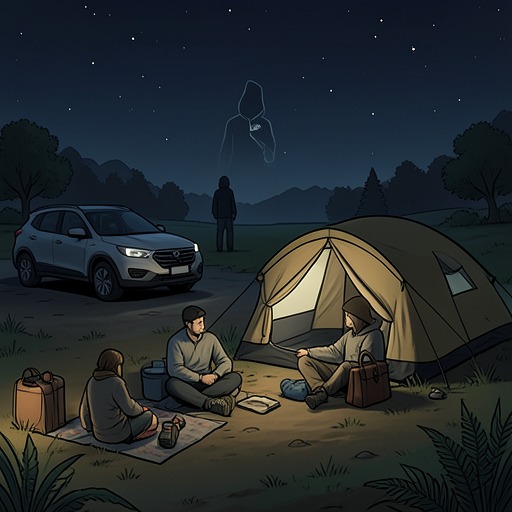
Carag’s first night hunt also evokes the park’s wildlife. In puma form, he hears wapiti calling and finds three grazing in a clearing: two females and a male. They are close to a campground, a proximity that makes the encounter feel like a meeting between wild habitat and human presence. Carag approaches as a predator, carefully placing one paw ahead of the other, but his playful thought that campers might receive a share of the meat reveals how inexperienced he still is.
Predators, Prey, and Strength
Yellowstone supplies a scale for judging animal power. Carag thinks of Brandon as a Bison and among the strongest animals in the territory, indeed across the United States. He reasons that only a very large pack of Wolves could bring down a Bison, and then only at winter’s end, when prolonged fasting has weakened the hoofed animals. This comparison makes Brandon’s failure to defend himself against Jeffrey’s pack more striking: his physical capacity is not the same as his willingness or ability to use it.
The park’s predators also carry danger beyond classroom examples. Carag learns that the puma hunting season lasts from October through March and that a license is enough to kill one. The detail sharpens the contrast between an animal’s strength in its own habitat and its vulnerability to human hunting; it is presented as a general hunting-season fact, not as a description of a specific hunt in Yellowstone.
A Landscape of Lessons and Risk
The references to Yellowstone accumulate through different kinds of knowledge: Berta’s dietary needs, the strength of a Bison, and the hunting season for pumas. Together, they make the park legible as an ecosystem structured by seasonal scarcity, feeding, and predation. Those facts also matter within Clearwater High, where students are taught to understand animal life as practical knowledge rather than mere classroom theory.
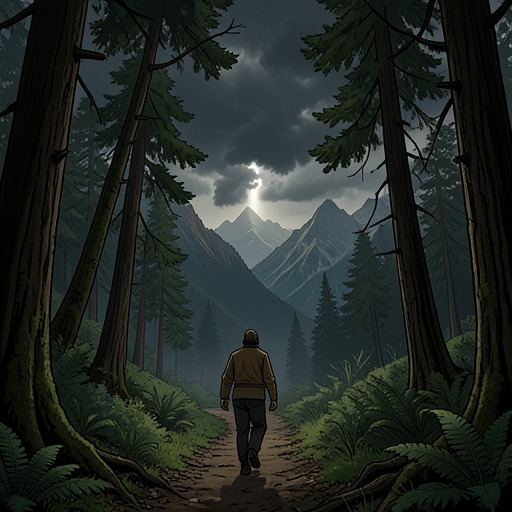
Yellowstone is kept distinct from Grand Teton National Park in the account of Carag’s later danger. When he hears hunting dogs and realizes he may have wandered beyond the school’s safe territory, he thinks he may even have left Grand Teton National Park; the scene does not identify his location as Yellowstone. The distinction underscores the limits of what the narrative establishes about the park’s boundaries while leaving Yellowstone’s importance clear: it is a reference point for the scale, habits, and vulnerabilities of the animals who inhabit the story.