Bertrand Zobrist
Bertrand Zobrist is the posthumous antagonist of Dan Brown's Inferno, a world-renowned geneticist whose fanatical belief in the necessity of population control drives him to create a devastating biological weapon. A genius in germ-line manipulation and a devout follower of Transhumanism, Zobrist's actions—from his suicide to the elaborate puzzle he leaves behind—form the central mystery of the novel, forcing Robert Langdon and the World Health Organization into a desperate race against time. His legacy is a terrifying airborne virus, Inferno, designed to cull the human race not through death, but through sterility.
Identity and Background
Bertrand Zobrist is a Swiss billionaire and a celebrated biochemist who made a vast fortune from biological patents at a young age. He is described as exceptionally tall, with piercing green eyes, and is a fanatical devotee of Dante Alighieri's Inferno, a work that profoundly shapes his worldview. Zobrist is a leading figure in the Transhumanist movement, a philosophy that advocates using technology to transcend human limitations. He bears an "H+" tattoo on his shoulder, the symbol of this movement, and believes that genetic engineering is mankind's only hope for long-term survival. His public persona was that of a controversial doomsayer; he wrote a provocative essay titled "Who Needs Agathusia?"—a pun on the World Health Organization (WHO)—in which he argued that the WHO's director, Elizabeth Sinskey, should kill herself for failing to take population control seriously. He was also quoted as saying that "the best thing that ever happened to Europe was the Black Death," a statement that reveals his chilling admiration for historical culling events.
Ideology and the Creation of Inferno
Zobrist's core belief is that the human race is on the brink of extinction due to exponential population growth, a concept he illustrates with the "Population Apocalypse Equation." He argues that without a drastic, catastrophic event to decrease the population, humanity will not survive another century. He sees the Black Death as a positive catalyst that cleared the way for the Renaissance and believes a similar culling is necessary to save the species. To this end, he creates a highly contagious, airborne viral vector he names "Inferno." Unlike a traditional plague, Inferno is not designed to kill. Instead, it is a sterility plague that randomly renders one-third of the human population infertile, a ratio he calculated to be the precise amount needed to reverse population growth. He considers this a humane and elegant solution, a "Transhumanist Black Death" that will allow humanity to survive by curbing its own fecundity. He describes his creation as a "masterpiece" and a "gift" to the world, believing he will be remembered as a savior, not a monster.
The Final Act and the Puzzle
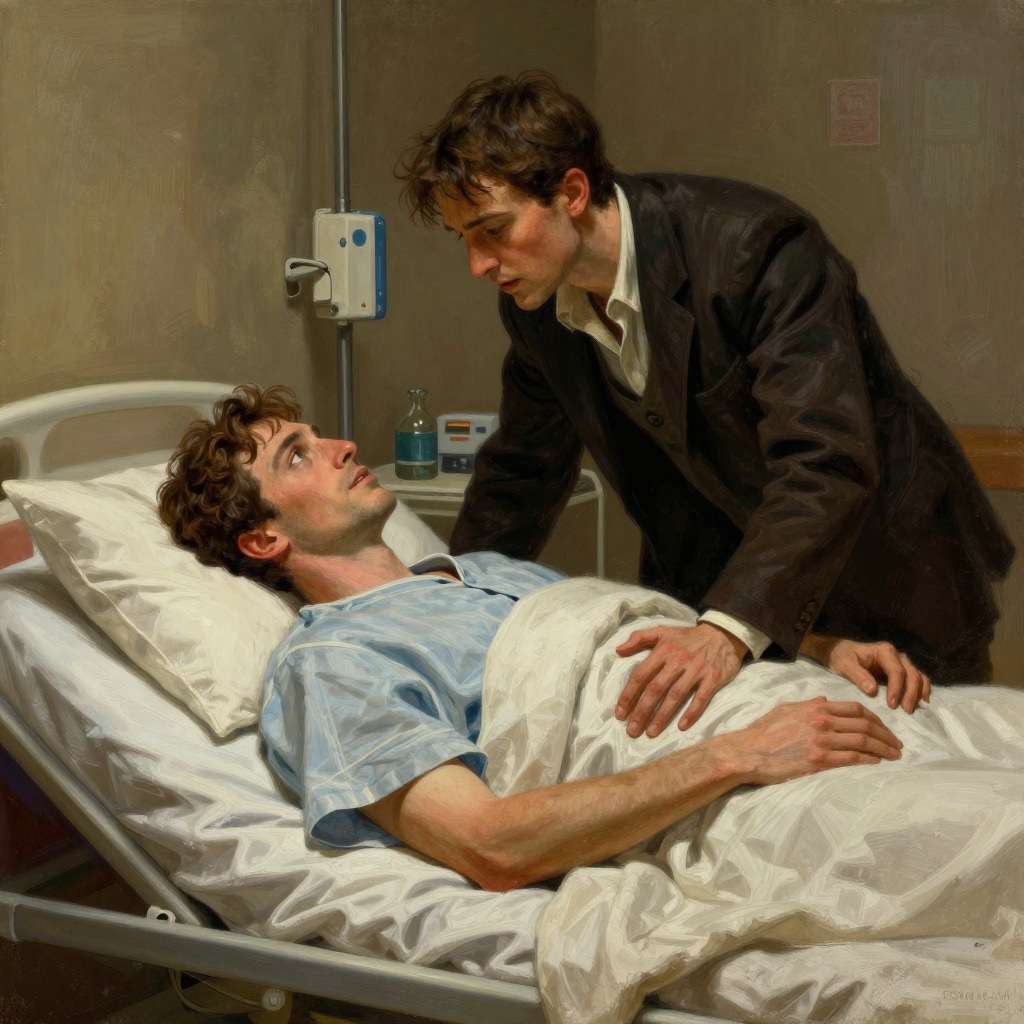
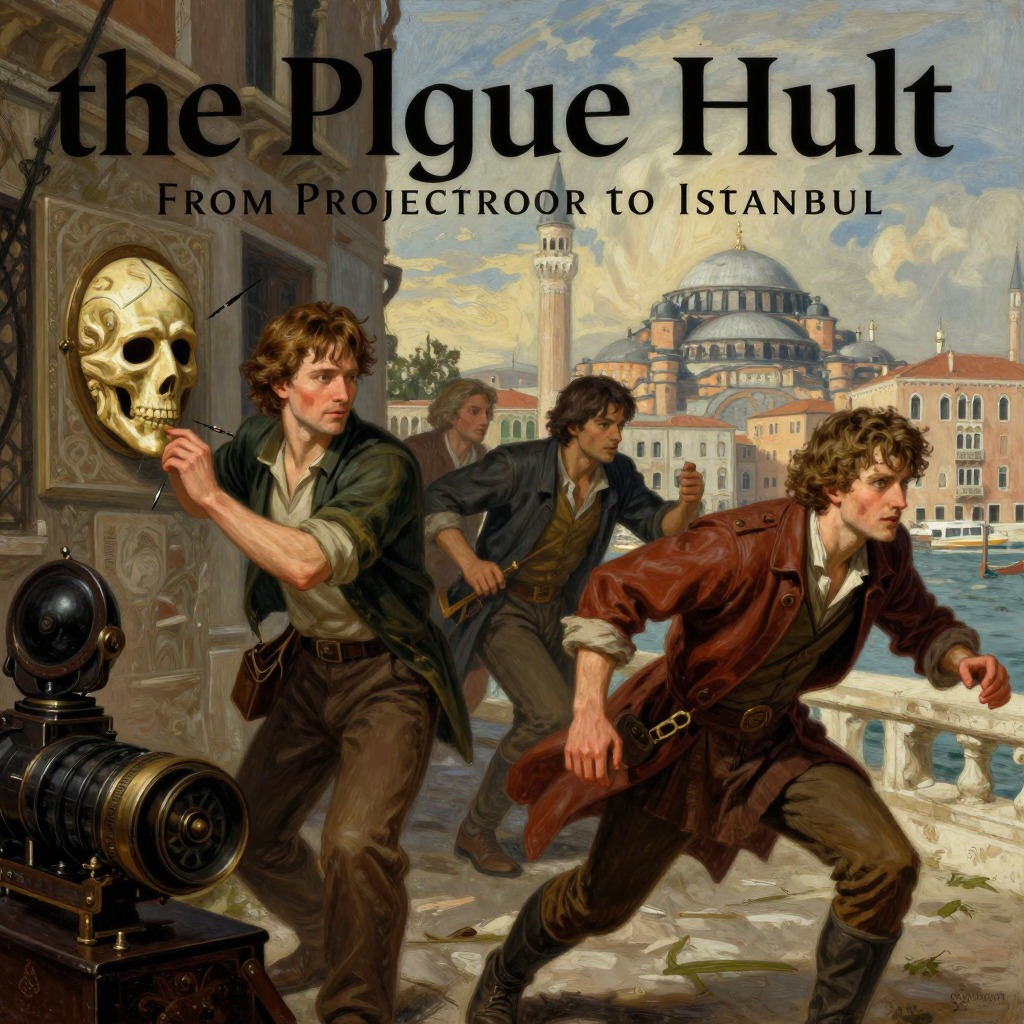
Zobrist's plan is executed from beyond the grave. After being hunted by the WHO, he commits suicide by jumping from the Badia tower in Florence. Before his death, he hires the Consortium, a shadowy organization, to carry out his final wishes. He leaves behind a video message, to be released to the media on a specific date, in which he appears as the "Shade," a plague doctor, and proclaims his role as humanity's salvation. He also creates an elaborate puzzle, beginning with a modified image of Botticelli's Map of Hell stored in a bone-sheathed projector. This puzzle, which leads to the words "cerca trova" (seek and find), is designed to guide the finder to the Dante death mask, on which he has inscribed a cryptic poem. The poem ultimately points to the Yerebatan Sarayi (the Sunken Palace) in Istanbul, where he has hidden the Solublon bag containing the Inferno virus. The date inscribed on a plaque at the site is not the release date, but the mathematical projection of when the virus will have saturated the global population.
Relationships and Conflict
Zobrist's primary antagonist is Dr. Elizabeth Sinskey, the director of the WHO, whom he derides as "the silver-haired devil." He confronts her in a private meeting at the Council on Foreign Relations, attempting to persuade her to work with him, but she rejects his ideas as criminal and places him on a bioterrorism watch list. This confrontation drives him further underground. His most significant personal relationship is with Sienna Brooks, a fellow child prodigy and Transhumanist who becomes his lover and disciple. He meets her after a lecture in Chicago, and she becomes his confidante. However, when he goes into hiding to create Inferno, he cuts off all contact with her, sending a farewell letter explaining he is ill and does not want her to see him deteriorate. This letter, which Sienna later burns, contains the full details of his plan. The Consortium, led by the Provost, serves as his unwitting facilitator, providing him with a safe haven and resources, believing they are protecting a paranoid scientist rather than a bioterrorist.
Thematic Significance
Bertrand Zobrist embodies the novel's central ethical dilemma: the conflict between the desire to save humanity and the monstrous means employed to do so. He is a tragic figure whose brilliant mind is consumed by a single, terrifying idea. His character serves as a vehicle to explore the dangers of unchecked technological power, the moral complexities of Transhumanism, and the human tendency toward denial in the face of existential threats. Zobrist's actions force the other characters—and the reader—to confront the uncomfortable question posed by Sienna Brooks: "If you could throw a switch and randomly kill half the population on earth, would you do it?" if it meant saving the species from extinction. His legacy is not just a biological weapon, but a profound and unsettling challenge to the very definition of salvation and the lengths to which one might go to achieve it.