Sienna Brooks
Sienna Brooks is the most complex and morally ambiguous figure in Dan Brown's Inferno — a child prodigy turned physician, a consummate actress, and the secret disciple of the novel's antagonist, Bertrand Zobrist. Her journey from Langdon's rescuer to his deceiver and finally to a reluctant collaborator with the World Health Organization traces the novel's central conflict between intellect and conscience, denial and action.
Identity and Background
Sienna Brooks was born Felicity Sienna Brooks in Blackheath, London, to a wealthy couple. A child theater prodigy, she played Puck in Shakespeare's A Midsummer Night's Dream at the London Globe Theatre at age five, memorizing every character's lines in a single night and often cueing her fellow cast members. Her IQ was measured at 208, and by age four she had beaten a chess grand master and was reading in three languages. PET scans of her cerebellum revealed it was physically different from others — larger and more streamlined, capable of manipulating visual-spatial content in ways most humans cannot fathom. A doctor equated this advantage to an unusually accelerated cellular growth in her brain, like a cancer that grows beneficial tissue rather than dangerous cells. Despite her brilliance, Sienna was teased and ostracized by other students. At age eight, she ran away from home and lived undiscovered for ten days in an upscale London hotel, where she pretended to be a guest's daughter, stole a key, and ordered room service on someone else's account while reading all 1,600 pages of Gray's Anatomy to figure out what was wrong with her brain. The isolation of being so profoundly different left her with a lifelong sense of loneliness and a conviction that she was "damaged."
Life and Plot Trajectory
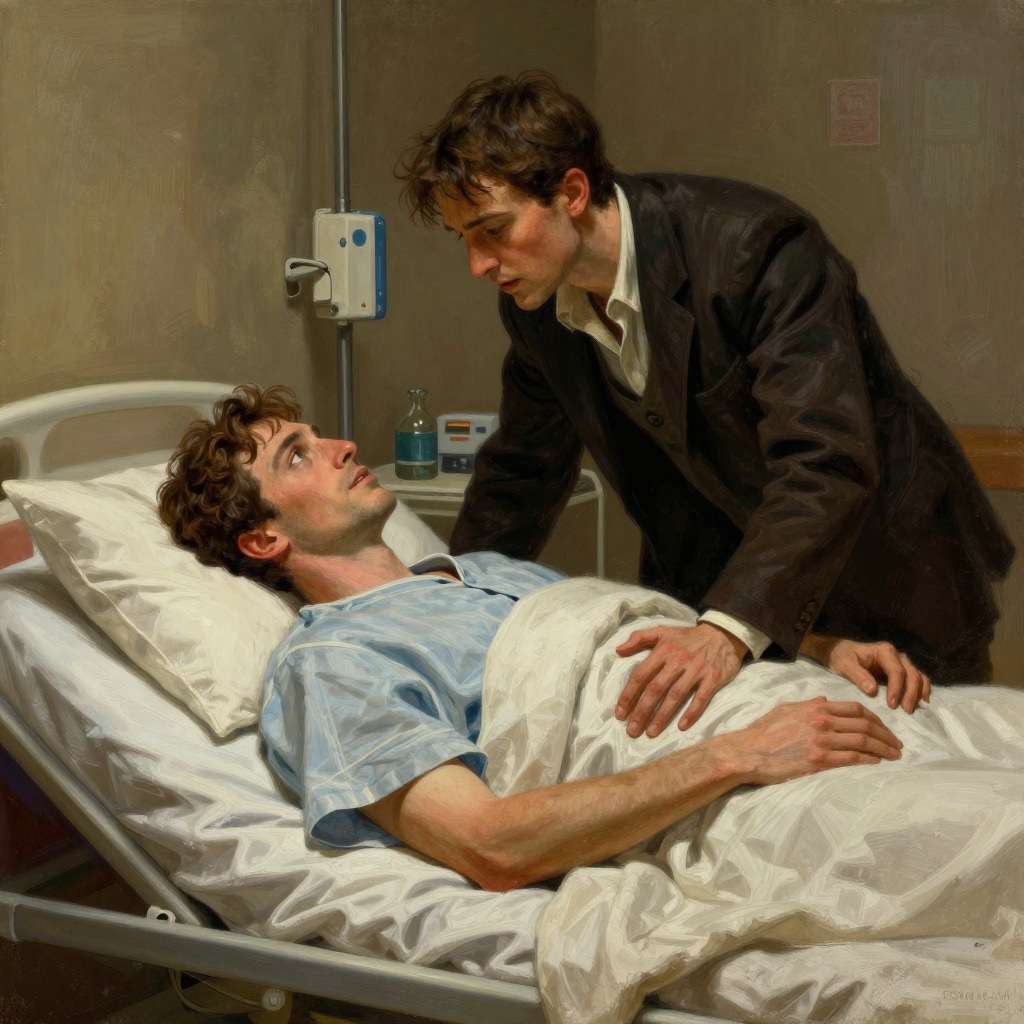
Sienna's life took a decisive turn when she attended a lecture by Bertrand Zobrist in Chicago during a blizzard. The hall was nearly empty, but Zobrist's charisma and ideas captivated her. They became lovers, and Zobrist became her mentor, introducing her to Transhumanist philosophy and a circle of like-minded individuals. She later worked for the Consortium, the organization that hid Zobrist, under the code name FS-2080 — a Transhumanist naming convention combining her initials with the year of her one-hundredth birthday. When Zobrist went into hiding to create his "masterpiece," he cut off all contact, sending her a farewell letter claiming he was ill and would be dead within a year. Sienna tried to find him, but the Consortium refused to breach his confidentiality. She was present in Florence when Zobrist jumped from the Badia tower, and his death was traumatic for her. When Langdon wakes in the hospital, Sienna is working there under a false identity, having infiltrated the hospital to track the WHO's movements. She saves Langdon from the staged attack by Vayentha, then guides him through Florence, Venice, and finally Istanbul, all while maintaining the illusion that she is a random doctor helping a confused patient.
Key Actions and Objectives
Sienna's primary objective throughout the novel is to prevent the World Health Organization from obtaining Zobrist's creation — a vector virus that renders one-third of the human population sterile. She believes this technology is too dangerous for any government agency to possess, as it could be weaponized for ethnic cleansing. To this end, she manipulates Langdon into deciphering the clues Zobrist left behind, using her acting skills to maintain his trust. She performs a dim mak pressure-point technique on the Pitti Palace guard to gain access to the Vasari Corridor, and later attacks Jonathan Ferris — who is actually the actor who played Dr. Marconi — to prevent him from revealing her location. In the Yerebatan Sarayi cistern in Istanbul, she wades into the water to find and destroy the Solublon bag containing the virus, but discovers it has already dissolved. She then triggers a stampede by shouting in Turkish, creating chaos that allows her to escape. Only after stealing a boat and fleeing does she turn back, overcome by guilt and the realization that she has nowhere left to run.
Relationships and Conflict
Sienna's relationship with Bertrand Zobrist is the emotional core of her character. She describes him as her "first love" and "mentor," and his ideas about overpopulation and the need for drastic action shaped her worldview. She believed he was a genius who saw the future clearly, and she was willing to follow him anywhere. However, when she learned what he had actually created — a sterility plague — she was horrified and tried to stop him. Her relationship with Langdon is built on deception, but genuine affection develops between them. She saves his life multiple times, and he becomes the first person she trusts enough to reveal the truth. Her conflict with Elizabeth Sinskey, the WHO director, is ideological: Sinskey represents the institutional response that Zobrist believed was inadequate, while Sienna represents the radical fringe that believes only extreme measures can save humanity. Ultimately, Sienna agrees to cooperate with Sinskey, providing the contents of Zobrist's letter from memory.
Change and Ending
Sienna's arc moves from isolation and deception toward reluctant cooperation and hope. After confessing everything to Langdon in a park overlooking the Golden Horn, she agrees to meet with Sinskey and share what she knows. She tells Sinskey that Zobrist's virus is a vector virus that modifies human DNA to cause sterility in one-third of the population, and that it has already been released for a week. Sinskey invites her to Geneva to participate in the WHO's emergency meetings, recognizing that Sienna's unique perspective — as a Transhumanist and Zobrist's confidante — is essential for developing a moral framework to respond to the crisis. Sienna accepts, feeling for the first time that she has a purpose. She and Langdon share a farewell kiss, and she tells him she will miss him. The novel ends with her boarding the C-130 for Geneva, praying that Dante was right about the beginning of forever.
Narrative Role and Evaluation
Sienna Brooks functions as both a deuteragonist and a foil to Langdon. Her brilliance and resourcefulness make her an indispensable ally, while her hidden agenda creates the novel's central dramatic irony — the reader, like Langdon, is deceived until the revelation on the train. Her backstory as a child prodigy who suffered trauma and isolation explains her deep-seated distrust of institutions and her attraction to Zobrist's radical solutions. Her baldness, caused by stress-related alopecia after a sexual assault in the Philippines, is a physical manifestation of her psychological damage. The novel ultimately redeems her through her willingness to face the consequences of her actions and to contribute her knowledge to the global response. She embodies the novel's theme that even those who have been deceived or who have deceived others can choose to act for the common good.