Pont au Change
The Pont au Change was one of the finest business addresses in Paris, a bridge so densely built up with four-storey structures that crossing it felt like walking on solid ground along an elegant street. Here stood the shop and residence of the perfumer and glover Giuseppe Baldini, whose establishment was a landmark of commerce and scent. The bridge's western side, where Baldini's house was situated, faced the river, and from his study window he could watch the water flow away from him—a sight that filled him with a sense of his own life and wealth ebbing away. The bridge itself was a thoroughfare connecting the right bank with the Île de la Cité, and its collapse would mark the end of Baldini's empire.
Baldini's Perfume Shop and Its Wares
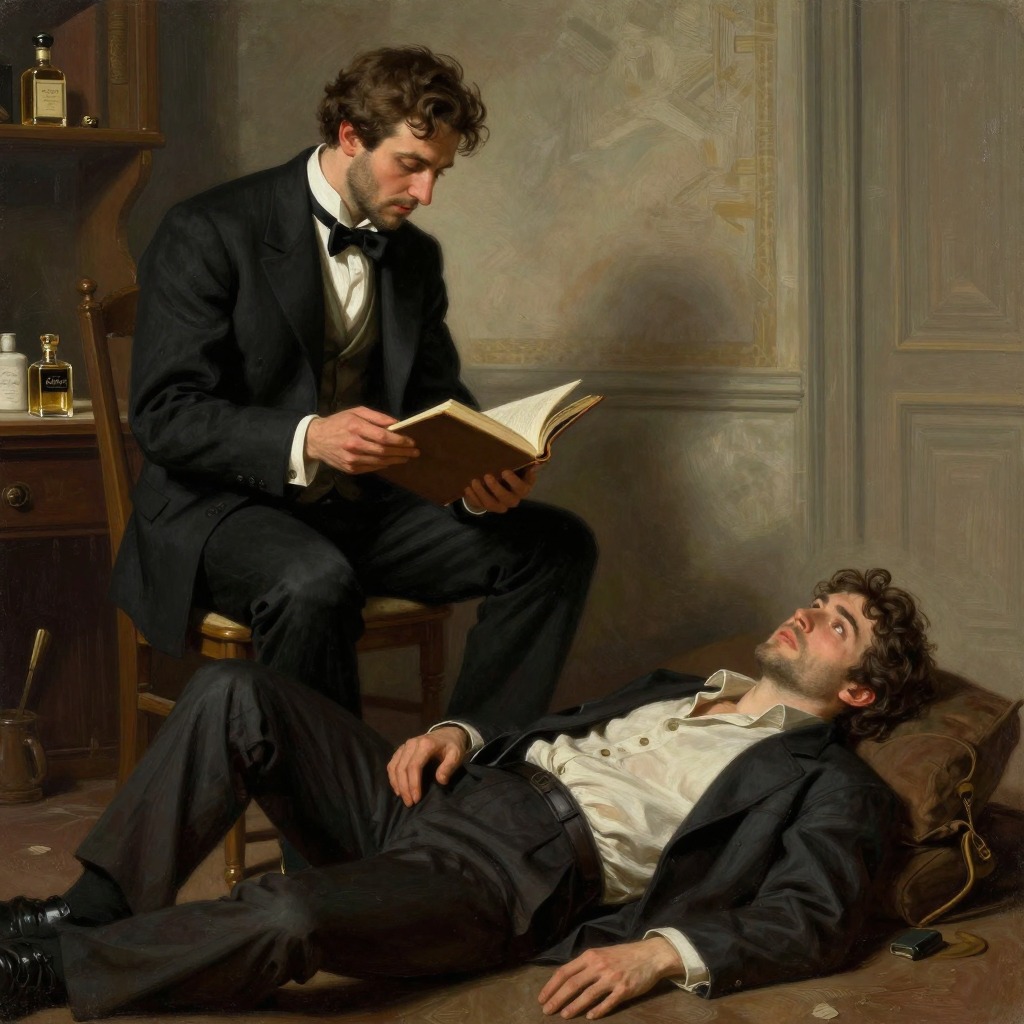
Baldini's shop was a marvel of olfactory commerce. Above the display window hung a sumptuous green-lacquered baldachin and a golden coat of arms featuring a golden flacon from which grew a bouquet of golden flowers. A red carpet embroidered with the same coat of arms lay before the door. When the door opened, Persian chimes rang, and two silver herons spewed violet-scented toilet water from their beaks into a gold-plated vessel shaped like the flacon in the coat of arms. Behind a counter of light boxwood stood Baldini himself, stiff as a pillar, in a silver-powdered wig and a blue coat adorned with gold frogs, enveloped in a cloud of frangipani. His stock was vast, ranging from essences absolues, floral oils, tinctures, extracts, balms, and resins to pomades, pastes, powders, soaps, creams, sachets, bandolines, brilliantines, moustache waxes, wart removers, beauty spots, bath oils, lotions, smelling salts, toilet vinegars, and countless genuine perfumes. He also sold incense pastilles, incense candles, incense cords, spices from anise seeds to cinnamon bark, syrups, cordials, fruit brandies, wines from Cyprus, Malaga, and Corinth, honeys, coffees, teas, candied and dried fruits, figs, bonbons, chocolates, chestnuts, pickled capers, cucumbers, onions, marinated tuna, perfumed sealing waxes, stationery, lover's ink scented with attar of roses, writing kits of Spanish leather, penholders of white sandalwood, caskets and chests of cedar-wood, pot-pourris, bowls of flower petals, brass incense holders, crystal flacons with stoppers of cut amber, scented gloves, handkerchiefs, sewing cushions filled with mace, and musk-sprinkled wallpaper. The chaos of odours from this immense inventory was almost unbearable, hitting first-time customers like a punch in the face.
Grenouille's Arrival and Apprenticeship
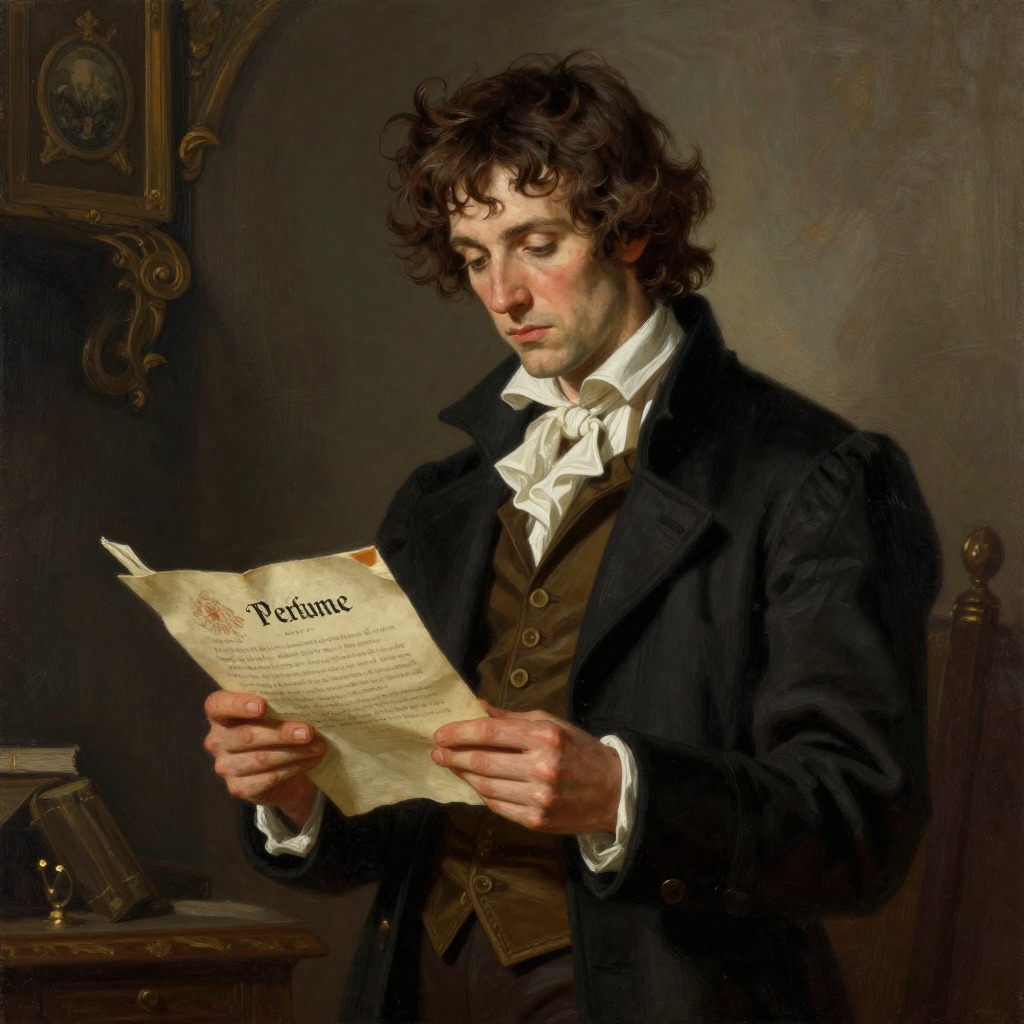
It was at the Pont au Change that Grenouille first entered Baldini's world, delivering goatskins for Spanish leather. The shop's seriousness and craftsmany sobriety immediately convinced him that he belonged there. Baldini, initially dismissive, was forced to recognize Grenouille's genius when the apprentice reproduced Pélissier's perfume "Amor and Psyche" from memory and then improved upon it, creating "Nuit Napolitaine." Grenouille was housed in a bunk in a back corner of the laboratory, and from that base, he began producing a stream of revolutionary scents that transformed Baldini's business. The Persian chimes never stopped ringing, and the herons never stopped spewing as customers flocked to the shop. Baldini, claiming the scents as his own, built a factory in the Faubourg Saint-Antoine, secured a royal patent, and became Europe's greatest perfumer and one of the richest citizens of Paris.
The Collapse of the House of Baldini
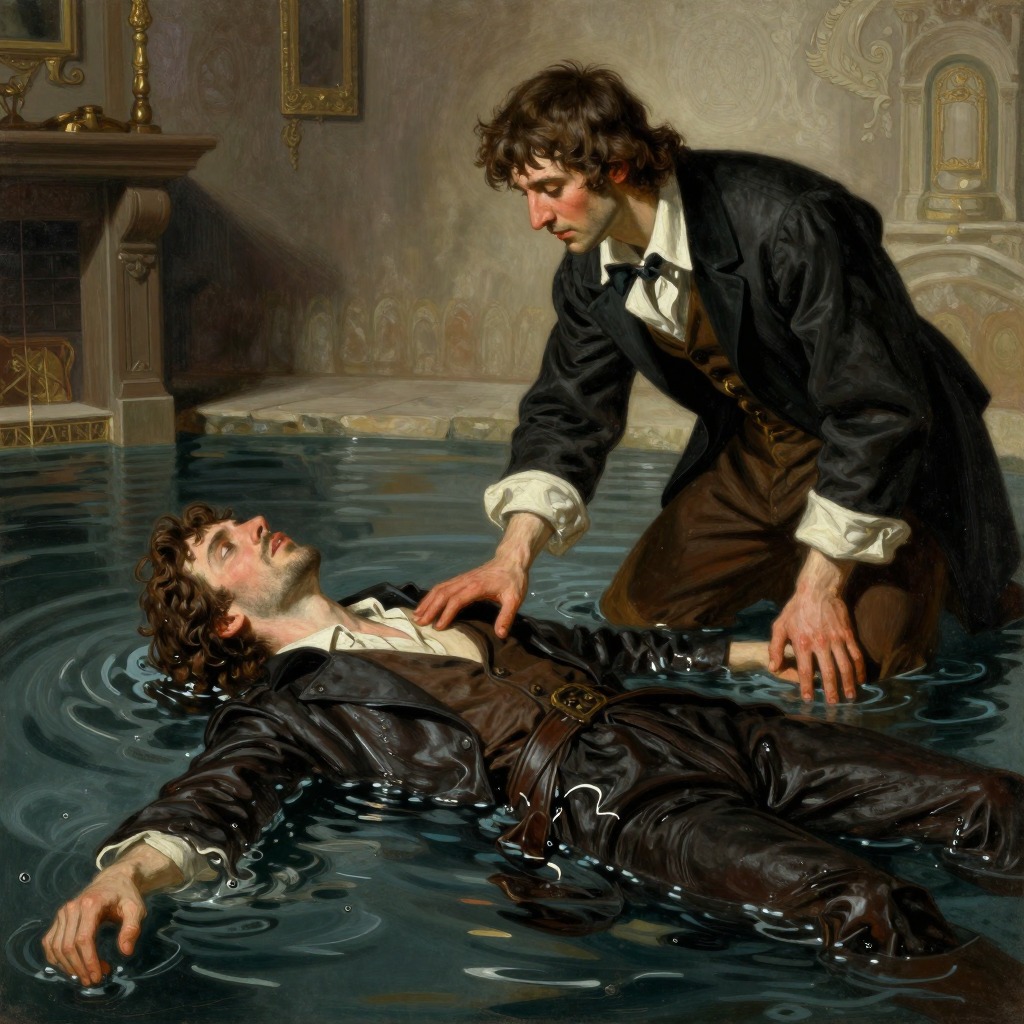
After Grenouille left in 1756, Baldini's good fortune seemed secure. He carried a little book of six hundred formulas next to his heart. But on the same day Grenouille departed, a rumour of war with England surfaced, and that night, the west side of the Pont au Change collapsed between the third and fourth piers. Two buildings were hurled into the river so suddenly that no one could be rescued. The only victims were Giuseppe Baldini and his wife, Teresa. Nothing was found—not the bodies, not the safe, not the little book of formulas. All that remained of Europe's greatest perfumer was a motley odour of musk, cinnamon, vinegar, lavender, and a thousand other things that floated above the Seine from Paris to Le Havre for several weeks. The bridge's collapse was so complete that it led to a royal decree requiring the gradual demolition of all buildings on all the bridges of Paris.