Pont-Royal
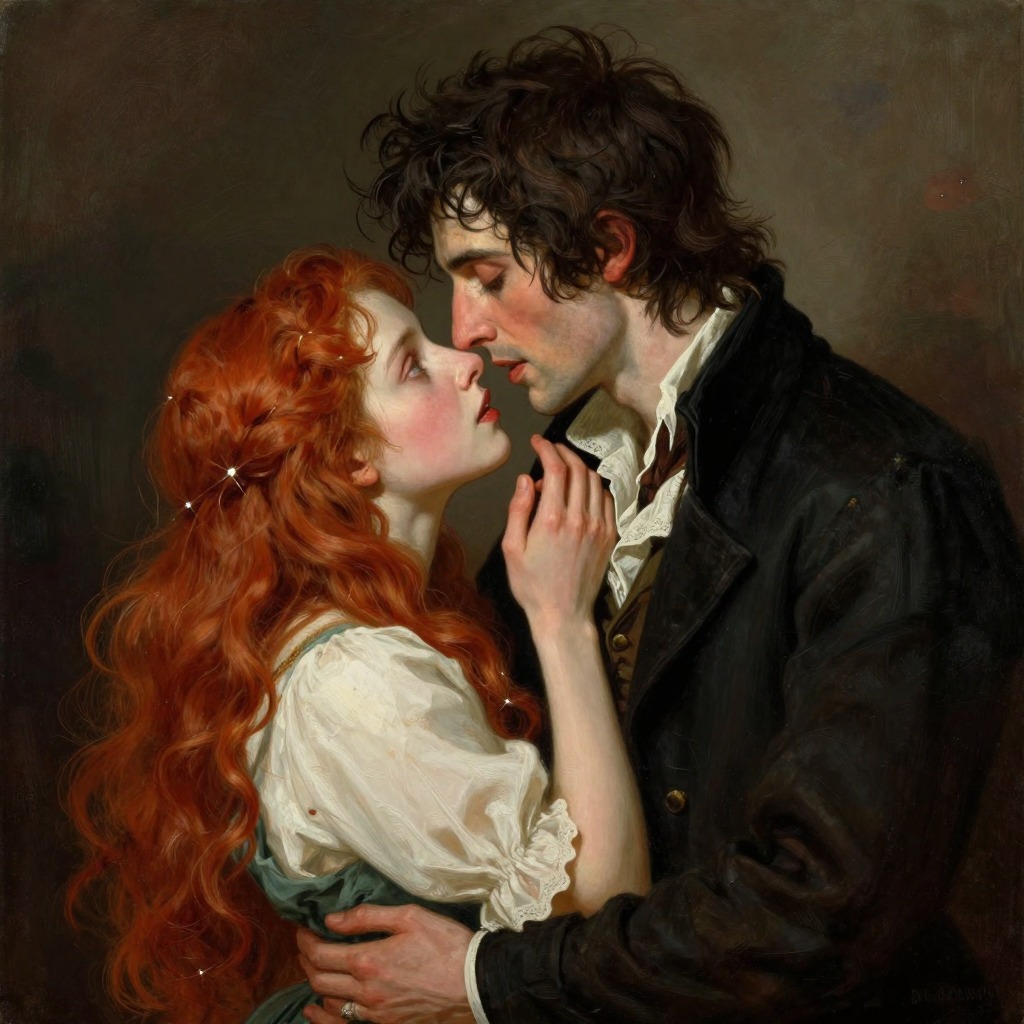
The Pont-Royal, a bridge crossing the Seine in central Paris, serves as the stage for the single most decisive olfactory encounter in Jean-Baptiste Grenouille's life. On 1 September 1753, the anniversary of the King's coronation, the city set off fireworks at the Pont-Royal. Grenouille stood silent in the shadow of the Pavillon de Flore, across from the bridge on the right bank, not looking up at the ascending rockets but hoping for a new scent. The fireworks left behind only a monotonous mixture of sulphur, oil and saltpetre. Just as he was about to leave, the wind brought him a tiny, hardly noticeable atom of scent—more a premonition than the scent itself—something he had never smelled before. He backed against the wall, closed his eyes and flared his nostrils. The scent was so exceptionally delicate and fine that he could not hold on to it; it was masked by the powder-smoke of the petards, blocked by the exudations of the crowd, fragmented by thousands of other city odours. Then, suddenly, it was there again, a mere shred, the whiff of a magnificent premonition for only a second, and it vanished. Grenouille suffered agonies. For the first time, his very heart ached. He had the prescience of something extraordinary—this scent was the key for ordering all odours, and his whole life would be bungled if he did not succeed in possessing it. He was almost sick with excitement, overcome by the horrible anxiety that he had lost it for ever. He was finally rescued by a desperate conviction that the scent was coming from the other bank of the river, from somewhere to the south-east. He moved away from the wall, dived into the crowd, and made his way across the bridge, stopping every few strides to stand on tiptoe and sniff above people's heads. He lost the scent in the acrid smoke of the powder, panicked, shoved and jostled his way through, and after countless minutes reached the far bank, the Hôtel de Mailly, the quai Malaquest, the entrance to the rue de Seine. There he stopped, gathered his forces, and smelled. He had hold of it tight. The odour came rolling down the rue de Seine like a ribbon, unmistakably clear, and yet as before very delicate and very fine. Grenouille felt his heart pounding, and he knew that it was not the exertion of running that had set it pounding, but rather his excited helplessness in the presence of this scent. He tried to recall something comparable, but had to discard all comparisons. This scent had a freshness, but not the freshness of limes or pomegranates, nor the freshness of myrrh or cinnamon bark or curly mint or birch or camphor or pine needles, nor that of a May rain or a frosty wind or of well water; and at the same time it had warmth, but not as bergamot, cypress or musk has, or jasmine or narcissi, not as rosewood has or iris. This scent was a blend of both, of evanescence and substance, not a blend but a unity, although slight and frail as well, and yet solid and sustaining, like a piece of thin, shimmering silk—and yet again not like silk, but like pastry soaked in honey-sweet milk. This scent was inconceivable, indescribable, could not be categorized in any way—it really ought not to exist at all. And yet there it was as plain and splendid as day. Grenouille followed it, his fearful heart pounding, for he suspected that it was not he who followed the scent, but the scent that had captured him and was drawing him irresistibly to it. He walked up the rue de Seine, turned off to the right up the rue des Marais, a narrow alley hardly a span wide and darker still. The scent pulled him strongly to the right, straight through what seemed to be a wall. A low entryway opened up, leading into a back courtyard. Grenouille moved like a somnambulist, entered a second, smaller courtyard, and there finally was light—a space of only a few square feet. A wooden roof hung out from the wall. Beneath it, a table, a candle stuck atop it. A girl was sitting at the table cleaning yellow plums. She might have been thirteen, fourteen years old. Grenouille stood still. He recognized at once the source of the scent that he had followed from half a mile away on the other bank of the river: not this squalid courtyard, not the plums. The source was the girl. For a moment he was so confused that he actually thought he had never in all his life seen anything so beautiful as this girl—although he only caught her from behind in silhouette against the candlelight. He meant, of course, he had never smelled anything so beautiful. But since he knew the smell of humans, knew it a thousandfold, men, women, children, he could not conceive of how such an exquisite scent could be emitted by a human being. Normally human odour was nothing special, or it was ghastly. Children smelled insipid, men urinous, all sour sweat and cheese, women smelled of rancid fat and rotting fish. Totally uninteresting, repulsive—that was how humans smelled. And so it happened that for the first time in his life, Grenouille did not trust his nose and had to call on his eyes for assistance if he was to believe what he smelled. This confusion of senses did not last long at all. He required only a moment to convince himself optically—then to abandon himself all the more ruthlessly to olfactory perception. And now he smelled that this was a human being, smelled the sweat of her armpits, the oil in her hair, the fishy odour of her genitals, and smelled it all with the greatest pleasure. Her sweat smelled as fresh as the sea breeze, the tallow of her hair as sweet as nut oil, her genitals were as fragrant as the bouquet of water lilies, her skin as apricot blossoms. The harmony of all these components yielded a perfume so rich, so balanced, so magical, that every perfume that Grenouille had smelled until now, every edifice of odours that he had so playfully created within himself, seemed at once to be utterly meaningless. A hundred thousand odours seemed worthless in the presence of this scent. This one scent was the higher principle, the pattern by which the others must be ordered. It was pure beauty. Grenouille knew for certain that unless he possessed this scent, his life would have no meaning. He slowly approached the girl, stepped under the overhanging roof, and halted one step behind her. She did not hear him. She had red hair and wore a grey, sleeveless dress. Her arms were very white and her hands yellow with the juice of the halved plums. Grenouille stood bent over her and sucked in the undiluted fragrance of her as it rose from her nape, her hair, from the neckline of her dress. He let it flow into him like a gentle breeze. He had never felt so wonderful. But the girl felt the air turn cool. She did not see Grenouille. But she was uneasy, sensed a strange chill, the kind one feels when suddenly overcome with some long discarded fear. She felt as if a cold draught had risen up behind her, as if someone had opened a door leading into a vast, cold cellar. And she laid the paring knife aside, pulled her arms to her chest, and turned around. She was so frozen with terror at the sight of him that he had plenty of time to put his hands to her throat. She did not attempt to cry out, did not budge, did not make the least motion to defend herself. He, in turn, did not look at her, did not see her delicate, freckled face, her red lips, her large sparkling green eyes, keeping his eyes closed tight as he strangled her, for he had only one concern—not to lose the least trace of her scent. When she was dead he laid her on the ground among the plum pits, tore off her dress, and the stream of scent became a flood that inundated him with its fragrance. He thrust his face to her skin and swept his flared nostrils across her, from belly to breast, to neck, over her face and hair, and back to her belly, down to her genitals, to her thighs and white legs. He smelled her over from head to toe, he gathered up the last fragments of her scent under her chin, in her navel, and in the wrinkles inside her elbow. And after he had smelled the last faded scent of her, he crouched beside her for a while, collecting himself, for he was brimful with her. He did not want to spill a drop of her scent. First he must seal up his innermost compartments. Then he stood up and blew out the candle. Meanwhile people were starting home, singing and hurrahing their way up the rue de Seine. Grenouille smelled his way down the dark alley and out on to the rue des Petits Augustins, which lay parallel to the rue de Seine and led to the river. A little while later, the dead girl was discovered. A hue and cry arose. Torches were lit. The watch arrived. Grenouille had long since gained the other bank. That night, his closet seemed to him a palace, and his plank-bed a four-poster. Never before in his life had he known what happiness was. He knew at most some very rare states of numbed contentment. But now he was quivering with happiness and could not sleep for pure bliss. It was as if he had been born a second time; no, not a second time, the first time, for until now he had merely existed like an animal with a most nebulous self-awareness. But after today, he felt as if he finally knew who he really was: nothing less than a genius. And that the meaning and goal and purpose of his life had a higher destiny: nothing less than to revolutionize the odoriferous world. And that he alone in all the world possessed the means to carry it off: namely, his exquisite nose, his phenomenal memory and, most important, the master scent taken from that girl in the rue des Marais. Contained within it was the magic formula for everything that could make a scent, a perfume, great: delicacy, power, stability, variety and terrifying, irresistible beauty. He had found the compass for his future life. And like all gifted abominations, for whom some external event makes straight the way down into the chaotic vortex of their souls, Grenouille never again departed from what he believed was the direction fate had pointed him. It was clear to him now why he had clung to life so tenaciously, so savagely. He must become a creator of scents. And not just an average one. But, rather, the greatest perfumer of all time. And during that same night, at first awake and then in his dreams, he inspected the vast rubble of his memory. He examined the millions and millions of building blocks of odour and arranged them systematically: good with good, bad with bad, fine with fine, coarse with coarse, fetid with fetid, ambrosial with ambrosial. In the course of the next week, this system grew ever more refined, the catalogue of odours ever more comprehensive and differentiated, the hierarchy ever clearer. And soon he could begin to erect the first carefully planned structures of odour: houses, walls, stairways, towers, cellars, rooms, secret chambers—an inner fortress built of the most magnificent odours, that each day grew larger, that each day grew more beautiful and more perfectly framed. A murder had been the start of this splendour—if he was at all aware of the fact, it was a matter of total indifference to him. Already he could no longer recall how the girl from the rue des Marais had looked, not her face, not her body. He had preserved the best part of her and made it his own: the principle of her scent. The Pont-Royal thus stands as the threshold between Grenouille's animal-like existence and his self-conscious genius, the place where he first perceived the scent that would become the template for his entire life's work and the justification for his murders. Later, in his inner fortress of odours, he would recall the scent from the end of his first night spent roaming about Paris without Grimal's permission, the fresh odour of the approaching day, of the first daybreak that he had ever known in freedom. That odour had been the pledge of freedom. It had been the pledge of a different life. The odour of that morning was for Grenouille the odour of hope. He guarded it carefully. And he drank of it daily. The Pont-Royal is also the site where Baldini, years earlier, had once stood and gazed up the river, just for once to see everything flowing towards him, and for a few moments basked in the notion that his life had been turned around, that his business was prospering, that women threw themselves at him, that his own life, instead of dwindling away, was growing and growing. But then, if he lifted his gaze the least bit, he could see his own house, tall and spindly and fragile, several hundred yards away on the Pont au Change, and he saw the window of his study on the second floor and saw himself standing there at the window, saw himself looking out at the river and watching the water flow away. And then the beautiful dream would vanish, and Baldini would turn away from where he had stood on the Pont-Neuf, more despondent than before. The Pont-Royal, in contrast, is the bridge where Grenouille's dream of power begins, not with a view of flowing water but with a scent that flows toward him from the other bank, drawing him into a new life of murderous creation.