Cimetière des Innocents
The Cimetière des Innocents was the most concentrated source of stench in a city that itself reeked beyond modern imagination. Located between the rue aux Fers and the rue de la Ferronnerie, it had received the dead from the Hôtel-Dieu and surrounding parishes for eight hundred years, day after day, with corpses carted in by the dozens and tossed into long ditches, bone stacked upon bone in tombs and charnel houses. The graveyard's putrefying vapour, a blend of rotting melon and fetid burnt animal horn, was so overpowering that it drove the swollen graveyard's neighbours to insurrection, forcing its closure on the eve of the Revolution. Millions of bones and skulls were eventually shovelled into the catacombs of Montmartre, and a food market was erected in its place.
The Site of Grenouille's Birth
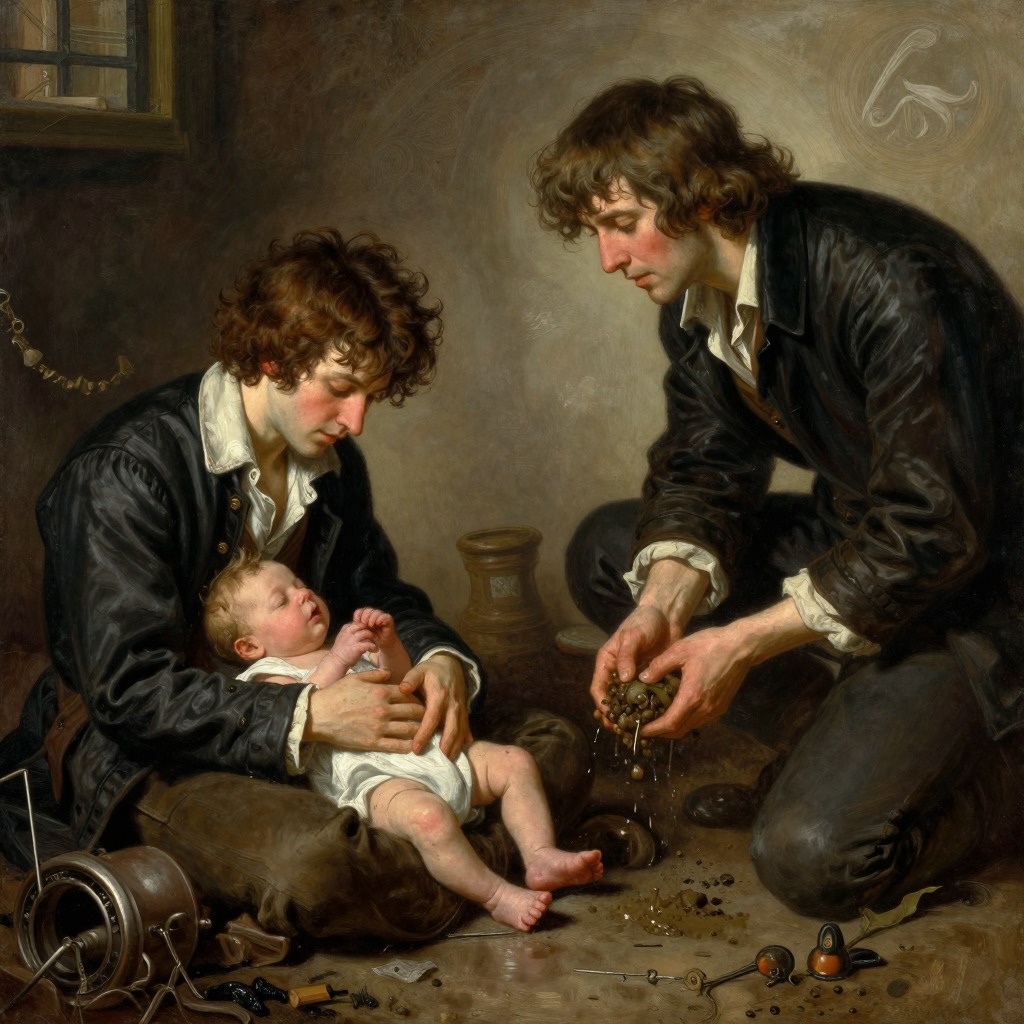
It was here, on the most putrid spot in the whole kingdom, that Jean-Baptiste Grenouille was born on 17 July 1738, one of the hottest days of the year. The heat lay leaden upon the graveyard, squeezing its stench out into the nearby alleys. Grenouille's mother, standing at a fish stall in the rue aux Fers, gave birth under the gutting table, cut the umbilical cord with her gutting knife, and fainted. The infant was discovered beneath a swarm of flies amid offal and fish heads. The Cimetière des Innocents thus marked the beginning of Grenouille's life as it would mark its end: a place of death, decomposition, and the raw, overwhelming power of scent.
The Odour of the Graveyard in the City's Olfactory Landscape
The stench of the Cimetière des Innocents was not an isolated phenomenon but the foulest node in a citywide web of odours. The streets stank of manure, the courtyards of urine, the stairwells of mouldering wood and rat droppings, the kitchens of spoiled cabbage and mutton fat. The stench of sulphur rose from chimneys, caustic lyes from tanneries, congealed blood from slaughterhouses. People stank of sweat, unwashed clothes, rotting teeth, onions, rancid cheese, sour milk, and tumorous disease. The rivers stank, the marketplaces stank, the churches stank. The peasant stank as did the priest, the apprentice as did his master's wife, the whole of the aristocracy stank, even the King himself stank like a rank lion, and the Queen like an old goat, summer and winter. In this universe of stench, the Cimetière des Innocents was the epicentre, the place where the city's decomposition was most densely concentrated.
The Graveyard's Role in Grenouille's Inner World
Grenouille's olfactory memory was forged in this graveyard's atmosphere. When he later retreated into his inner empire of scents, he conjured up the carrion stench of the Cimetière des Innocents as one of the earliest and most remote odours, wallowing in disgust and loathing, his hair standing on end at the delicious horror. The graveyard's odour was part of the repulsive aperitif that preceded his orgiastic fantasies of power. It was the smell of his origin, the smell of the world that had rejected him and that he in turn despised.
The Graveyard as Grenouille's Final Destination
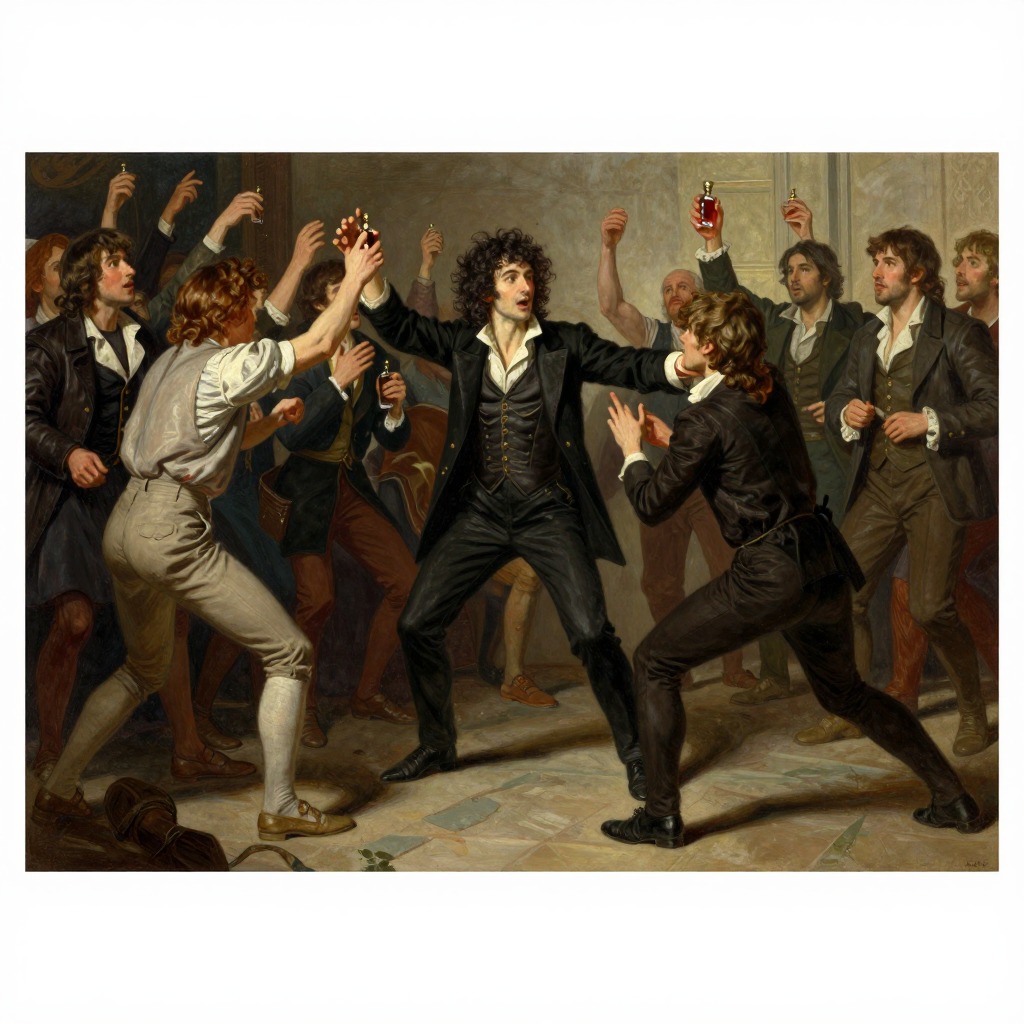
On 25 June 1766, the hottest day of the year, Grenouille returned to Paris and walked directly to the Cimetière des Innocents. He sat down in the arcades of the charnel house bordering the rue aux Fers. Before him lay the cemetery grounds like a cratered battlefield, burrowed and ditched and trenched with graves, sown with skulls and bones, not a tree, bush or blade of grass — a garbage dump of death. The stench of corpses was so heavy that even the grave-diggers had retreated. After midnight, when the grave-diggers had left, the place came alive with thieves, murderers, cut-throats, whores, deserters, and young desperadoes. Grenouille mixed in with them, unstoppered his bottle of the ultimate perfume, and sprinkled himself. The crowd, overcome by the scent, tore him apart and devoured him. The Cimetière des Innocents, the site of his birth, became the site of his annihilation, the place where the man who had no odour of his own was finally consumed by the very world of stench and decay that had spawned him.