November 11 Armistice Day
1919November 11 Armistice Day is a temporal hinge in the book rather than a promise that conflict is over. The day finds Theodore Roosevelt gravely ill; within weeks, Randolph Bourne is dead; and beyond the fighting, the structures built or strengthened by war continue to govern money, trade, and work. The armistice closes one phase of violence, but the narrative’s juxtaposed lives and systems make the boundary between war and peace look unstable.
The Day and Its Human Measure
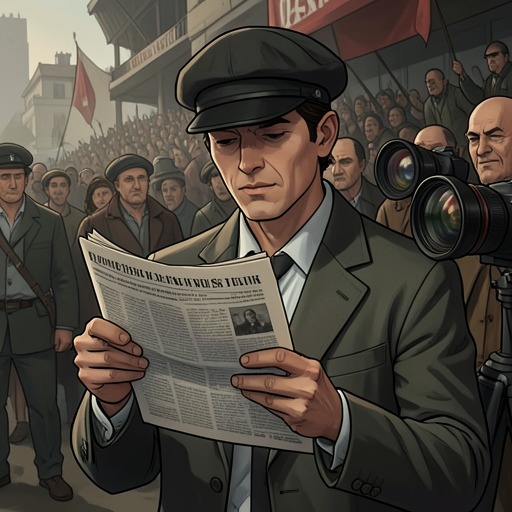
The book places Theodore Roosevelt’s illness directly on armistice day. The former president, unable to lead a division in the war, is taken to Roosevelt Hospital gravely ill with inflammatory rheumatism. The catalogue of his former identities—naturalist, explorer, writer, politician, orator, and “happy amateur warrior”—makes the sight of him incapacitated a pointed reversal. The old confidence that things were “bully” has given way to a world in which even Roosevelt’s famous grit cannot restore the earlier order.
Randolph Bourne’s fate extends the day’s significance beyond its immediate scene. He does not live to see the Peace of Versailles: six weeks after the armistice, he dies while planning an essay on the foundations of future radicalism in America. His death follows a period of surveillance and harassment, including arrest while walking with two friends and the theft of a trunk of manuscripts and letters. The interval between armistice and death is brief, but it carries the book’s insistence that the end of combat does not instantly release dissenters from pressure or make their unfinished political work obsolete.
Peace and the Persistence of War’s Powers
The book sets the armistice against the continuing reach of finance. By 1917 the Allies had borrowed $1.9 billion through the House of Morgan; by the end of the Peace Conference, the phrase “J. P. Morgan suggests” had acquired influence over a power of $74 billion. A further portrait of the Morgan interests enumerates control across banks, trust companies, life insurance, railroads, street railways, express transport, and the International Mercantile Marine. The scale and interlocking reach of these holdings make peace appear not as a reset, but as a settlement made within an already concentrated economic order.
That order also shapes the postwar argument over resources and political influence. After an opera, J. Ward Moorehouse, Eveline Hutchins, Eleanor Stoddard, and an engineer from Standard Oil discuss Baku, Mosul, oil competition, and the proposed mandates. The engineer fears that British interests will secure advantages before the Conference can act, while Moorehouse argues that American public opinion might still be mobilized. Their conversation reveals how the language of reconstruction and mandate can carry a contest over oil and national primacy. The armistice has stopped one kind of fighting; it has not removed competition over who will control the resources and decisions that follow.
Work After the Armistice
The maritime world supplies another measure of continuity. Joe Williams’s seafaring life runs through hard, regulated labor: on the Argyle he spends twenty-five days handling hides, chipping rust, painting steel in the sun, and enduring foul food and cramped, verminous quarters. Later, while working aboard a United Fruit Company vessel, he and another quartermaster encounter the company’s power at Roseau, where delayed limes and port restrictions keep the ship waiting. An old man on the island calls the company a monopoly that can let limes rot when growers refuse its prices. The scene connects the movement of cargo across the sea to the unequal terms imposed on the people producing it.
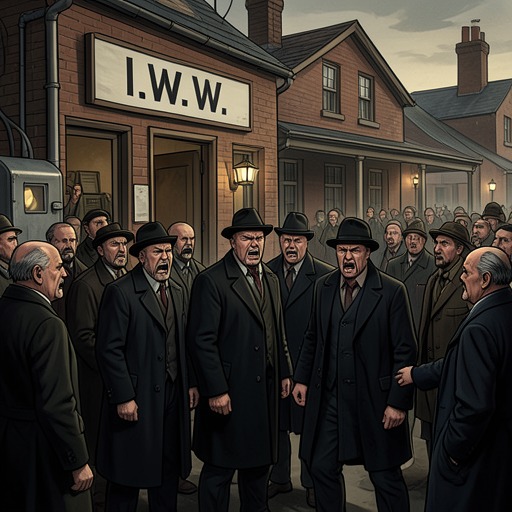
The postwar labor landscape repeats that imbalance on land. During a construction-camp strike, Ben Compton refuses his employer’s order to work after learning that the men are striking over stolen hours. His employer fires and threatens him; armed supervisors tell the workers that the company will not tolerate a stoppage. Elsewhere, the book imagines lumber workers as the exploited laborers of a timber empire. The Industrial Workers of the World’s demands include real wages instead of company scrip, decent drying space, clean bunkhouses, wholesome food, and an eight-hour day. The contrast between patriotic claims of having won the war and the workers’ continuing demands makes the armistice a threshold, not a conclusion.
A Temporal Boundary, Not a Resolution
The narrative links individual demobilization to these larger continuities without making every postwar episode an event of November 11 itself. Joe, for example, changes into a secondhand suit and drops his uniform, wrapped around a cobblestone, into the basin; he retrieves his cigarbox of personal keepsakes and watches ships pass. The gesture gives the end of military service a material form, but the box preserves fragments of his earlier life while the working fleet remains in motion. Elsewhere, wartime conscription rules still shape encounters with authority: Joe is detained after a policeman demands his registration card, despite his claim that his work as a merchant seaman exempts him.
Taken together, these episodes give November 11 Armistice Day its particular force. It is a named date and a visible change in the public status of war, yet the book measures its meaning against illness, death, surveillance, debt, shipping, and strikes. Armistice ends the fighting on the Western Front; in the lives and institutions the narrative follows, it does not end the struggle over power, work, or the terms on which peace will be lived.