Paris general strike of 1919
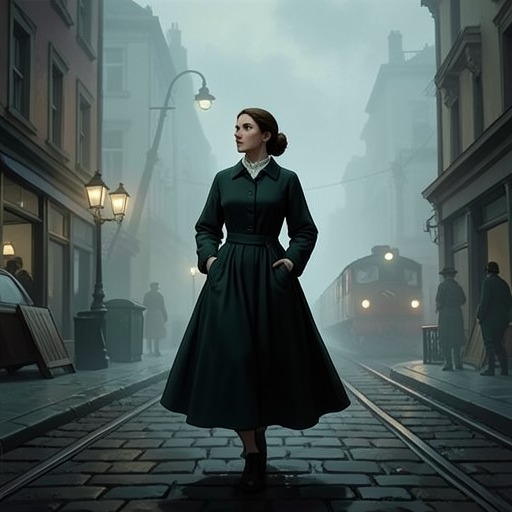
1919The Paris general strike of 1919 first appears to be an anticipated upheaval that has not yet fully materialized: much of the city carries on, while police and troops gather and scattered protests begin to turn into street conflict. As Eveline Hutchins and her companions move through Paris, and a separate first-person account follows the unrest across the city, the strike becomes a test of who can occupy public space and what happens when labor’s demands meet armed authority.
Background and Signs of Tension
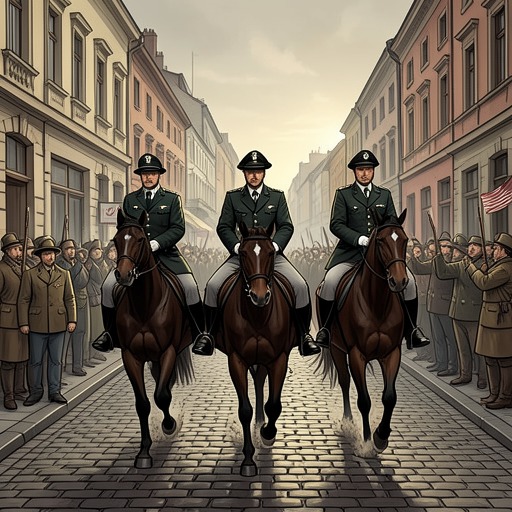
The morning initially seems almost like a Sunday. Some shops are open only on side streets, their shutters half lowered, and people stroll in their best clothes along the Boulevard St. Germain. The atmosphere changes when the French Republican Guard rides past in polished helmets and plumes. Across the Seine River, small groups of gendarmes stand among the growing crowds, making the city’s strain visible before any major confrontation begins.
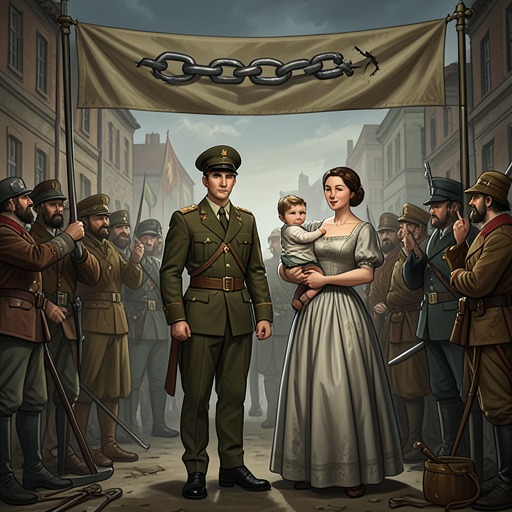
At a crossroads, Eveline Hutchins sees old workingmen carrying a red flag and a placard declaring that workers’ union would bring peace to the world. The guards ride toward them with sabres drawn; the men scatter or flatten themselves into doorways. On the Grands Boulevards, soldiers in helmets stand around stacked rifles as passersby cheer them. The scene holds two incompatible pictures at once: a festive crowd and the presence of organized force. The strike is in the air, but its early public manifestations are brief and vulnerable.
A Strike Expected, but Not Yet Fully Underway
Passing the Bourse, Eveline Hutchins and Paul Johnson encounter Don Stevens, tired after a long day that began before dawn. He complains that any riot is happening too late for the telegraph cables and reports that Anatole France has been dispersed at the Place d’Alma. He also says that censorship is obstructing the reporting, while events in Germany seem more serious still. The strike is therefore not only a street event: it is also a struggle over what can be observed, communicated, and turned into news.
Don Stevens has heard reports of trouble near the avenue Magenta and barricades at the Place de la Bastille, but he is uncertain how much to believe and refuses to go looking for himself before eating. His uncertainty contrasts with the expectations attached to a general strike. In a crowded restaurant, two older men tell him that the young have done little: a few stones have been thrown and a café window broken, but, in their view, the more sweeping defense of liberty and labor’s dignity has not occurred. Their criticism gives the day a generational argument as well as a political one: the old men measure the present against an earlier, more forceful image of street protest.
From Demonstration to Street Clashes
A separate first-person account records a more extensive disruption. Buses and taxicabs have stopped, and the Metro gates are closed. At the Place de Iéna, the observer sees red flags, a memorial placard for war casualties, and security agents moving among the crowd. At the Place de la Concorde, Republican Guards ride through the gathering and strike at Parisians with the flat of their swords. Along the Grands Boulevards, soldiers stand at rest with their arms grounded, while fragments of The Internationale pass through the tense streets.
The account then follows a sharper escalation around the Gare de l’Est and the avenue Magenta. Protesters sing The Internationale as the National Gendarmerie advances through stones, whistles, and pieces of iron. Calls to build barricades accompany attempts to force open the shutters of an arms shop. Revolver shots are heard, and an elderly woman at a window is hit. The observer and others run into a side street and seek shelter in a café as cavalry moves through the area. Inside, older workingmen grumble about the police, and unconfirmed reports circulate that revolution has triumphed in Marseille and Lille. The contrast with the restaurant conversation earlier is stark: what had seemed to some like a disappointing, almost inactive strike has become a dangerous confrontation in other parts of the city.
Personal Encounters and the Event’s Significance
For Eveline Hutchins, the political crisis unfolds alongside a more private reassessment of her companions. In the restaurant, her leg touches Paul Johnson’s; he moves his chair, and she finds herself wondering whether he might marry her and what a family with him might be like. She also thinks that she prefers him to Don Stevens. The day’s political uncertainty does not suspend intimate life; it changes the setting in which choices and loyalties are considered. When American military police enter the restaurant, Paul, who is out of uniform, fears being taken away. Eveline urges him to return and change, bringing the dangers of public disorder into the immediate sphere of personal safety.
The strike’s narrative shape resists a single, settled account. Eveline and her companions encounter a city where the day can seem quiet, ineffectual, or even convivial; the first-person observer records halted transport, street fighting, gunfire, and flight. After the café shelter, the observer later sees an almost empty street marked by a broken umbrella, an old cap, and a torn handbill. These traces do not establish that the conflict is over. They leave the strike suspended between collective hopes and the force used to contain them, while the contrasting viewpoints make clear how unevenly the unrest is experienced across Paris.