Memorial Day
1919Memorial Day is a charged point in the novel’s account of the aftermath of war: on that day in 1918, violence against the Industrial Workers of the World hall in Centralia, Washington, exposes the conflict between patriotic commemoration and the suppression of labor organizing. The date’s force comes from this collision. A returned soldier, a union hall, and the institutions claiming to defend American life occupy the same commemorative landscape, but they do not share the same version of what sacrifice means.
The date and the Centralia attack
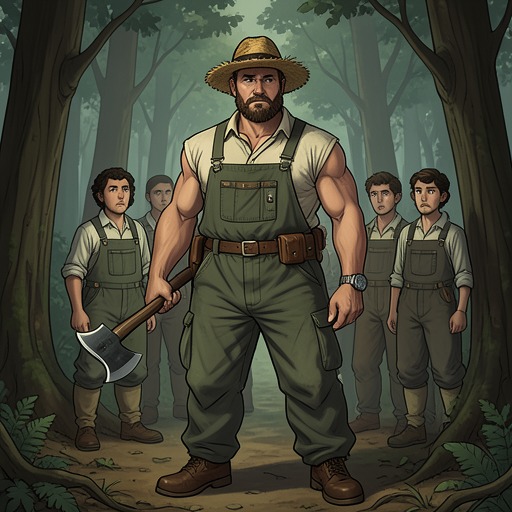
The attack is presented against the history of the Pacific Northwest’s forests and the concentration of their ownership. Wesley Everest, recently returned from overseas and discharged from the army, goes back to logging. His family comes from a long line of woodsmen and hunters who followed the route west into the region’s forests; in the army he served as a sharpshooter and received a marksmanship medal. His military service places him within the world of national duty, while his return to logging brings him into a local labor conflict over who may organize and speak.
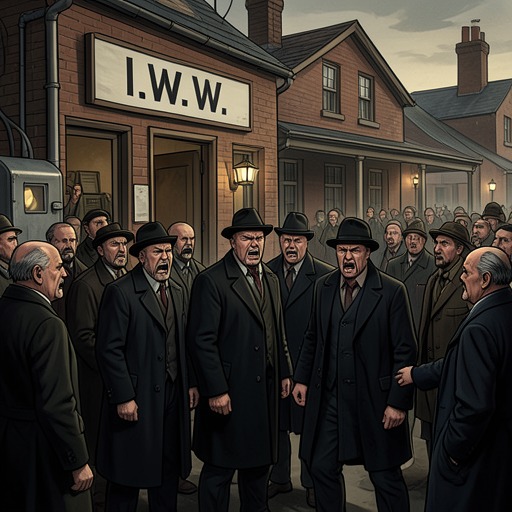
On Memorial Day in 1918, members of the American Legion in Centralia, led by a group from the Chamber of Commerce, wreck the Industrial Workers of the World hall. They beat the people they find there, jail some, and load others into a truck to be dumped beyond the county line. They burn the hall’s papers and pamphlets, then auction its furnishings for the Red Cross. The sequence joins physical assault to the destruction of organizing materials and the appropriation of the hall’s contents for a patriotic charity. The union’s desk, however, remains standing in the Chamber of Commerce, a material remnant that keeps the confrontation visible inside the very institution associated with the attack.
Repression and the persistence of organizing
The Memorial Day assault does not end the union’s activity. The loggers hire a new hall, and the union continues to grow. That survival is central to the episode’s meaning: the hall can be wrecked, its literature burned, and its members displaced, but the organization is not erased. The narrative’s closing image of Paul Bunyan as unafraid gives this persistence a folkloric scale, setting the lumber workers’ endurance against the organized power of employers and civic authorities.
Elsewhere, the novel shows comparable pressure on labor gatherings. In a New Jersey mill town, where the mills effectively control the town and workers cannot hire a hall, police bar a crowd from a meeting in a neighboring town despite the organizers’ permit. Ben Compton begins speaking outside; police drag him away, and the crowd is pushed back under mounted police. Webb Cruthers then climbs onto a hydrant to protest the exclusion. On a later dawn picket, police break up the line, and a young woman is kicked in the face; the companion who tries to intervene is struck and carried into a police wagon. These episodes are not part of the Centralia observance, but they make its attack legible as one instance of a recurring struggle over assembly, speech, and workers’ physical safety.
That pattern continues in the account of an Industrial Workers of the World delegation arriving by boat at Everett, Washington. Deputies armed with rifles and revolvers arrest members as they step ashore and beat those who resist. In another episode, federal agents monitor a Bronx meeting called to send greetings to Russia’s workers; police and soldiers break it up, Ben Compton is arrested, and he is released on bail after refusing to promise that he will stop opposing the war. Across these scenes, state and local power repeatedly restricts labor’s access to halls, streets, and public speech. The Centralia attack belongs to this wider pattern, though its Memorial Day setting gives it a particular symbolic charge.
From a returned soldier to a murdered logger
The later fate of Wesley Everest darkens the relationship between military service and local commemoration. Before Armistice Day in 1919, rumors spread that the replacement union hall would be raided. During the ensuing violence, Everest is taken to jail. That night, with the city lights turned off, a mob breaks into the jail and removes him. He tells the men in the other cells that he did his best. The mob takes him by limousine to the Chehalis River bridge, mutilates and tortures him, and hangs him in the glare of the headlights. The sequence makes the returned sharpshooter’s end a brutal counter-image to the honors bestowed on servicemen: military skill and service do not protect him from organized political violence at home.
The juxtaposition does not make Everest’s lynching the same event as Memorial Day’s attack on the hall. Rather, the two episodes show how the conflict begun around the union’s meeting place persists into the period of postwar commemoration. The hall is rebuilt and the union grows, but the violence against its members escalates. Everest’s killing makes the cost of that conflict personal and bodily, where the Memorial Day attack had also targeted the collective means of organizing: the meeting room, its papers, and its furnishings.
National remembrance and the unknown dead
The novel later turns to a different kind of public memorial: the return and burial of an American war dead whose identity has not been established. A congressional resolution authorizes the transport of the body from France for burial at Arlington National Cemetery. The narrative locates the selection among pine boxes in a morgue at Châlons-sur-Marne, where the dead are described through the remains and military objects that can be identified, not through a recoverable personal name. At the national ceremony, silence, tears, songs, prayer, muffled drums, and soft music replace applause. President Harding calls the tribute impersonal, while the body is adorned with military decorations from several countries, flowers, and other offerings; Woodrow Wilson brings poppies.
The ceremony is not identified as the Memorial Day attack in Centralia, and the two should not be conflated. Their placement in the novel nevertheless sharpens a contrast between official commemoration and the lives or deaths that resist it. The nameless body is elevated into a national symbol, while the narrative imagines John Doe’s birth and recalls the ordinary work of a life, including jobs as a secretary, express agent, truck driver, Ford mechanic, and bookseller. Beside that state-organized tribute, Everest’s death and the workers’ battered hall remain difficult to absorb into a consoling account of national unity. Memorial Day’s importance lies in that tension: remembrance can honor the dead, but the novel also asks whose suffering receives public recognition and whose is suppressed in the name of order.