Tengo—Komatsu
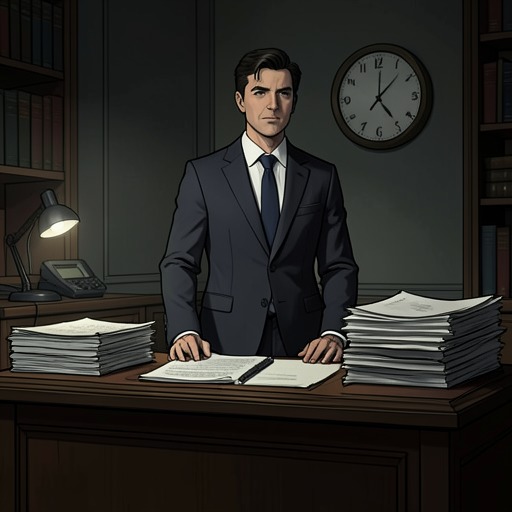
1Q84Tengo—Komatsu is an editorial partnership built on sustained mentorship, practical cooperation, and Komatsu’s ability to recognize and direct Tengo’s literary skills. It becomes the engine of the La Chrysalide de l’air rewrite: Komatsu devises the project and manages its publication, while Tengo reshapes the prose. The partnership also exposes a tension between the labor that makes a work publishable and the public identity under which that work will appear.
Origins and Editorial Mentorship
Tengo had known Komatsu for about five years when their relationship began to take shape. Tengo had entered a new-writer competition sponsored by the literary magazine Komatsu edited and reached the final selection. Komatsu told him plainly that he did not expect Tengo to win, but that he had personally liked the writing and wanted to see Tengo’s next work before anyone else. Tengo later learned that Komatsu’s praise was unusually sincere, not routine encouragement.
The relationship became an ongoing editorial practice. Whenever Tengo finished a novel, he submitted it to Komatsu, who read the manuscript, offered advice, and read it again after Tengo revised it. Komatsu’s approach resembled a coach gradually raising the bar: he urged Tengo not to hurry, to write every day, and to preserve everything he wrote rather than discard it. The guidance rested less on promises of immediate success than on patient work and accumulated material.
Komatsu also gave the partnership a practical foundation. He found Tengo freelance writing for a women’s magazine owned by his company. The assignments ranged from rewriting copy and preparing brief introductions to films and books to composing horoscopes. The work brought in welcome extra income and let Tengo see his words in print; Komatsu’s support thus extended beyond criticism into the conditions that allowed Tengo to keep writing.
A Shared Literary Workplace
Komatsu later brought Tengo into the preliminary reading for the same new-writer prize for which Tengo continued to submit his own fiction. Tengo read roughly a hundred manuscripts for each round, selected ten that held his attention, and sent them to Komatsu with notes. Five works ultimately reached the jury. Tengo treated the task impartially, even though his dual position as a writer and reader was unusual; other readers and editors also took part in the process.
The arrangement did not make Tengo’s own candidacies a conflict of interest in practice: other readers, Komatsu, and another editor had selected his manuscripts for the final stage. His work had reached the final selection three times, without winning. Tengo accepted those outcomes without resentment, guided by Komatsu’s insistence that he take his time and by his own uncertainty about whether he wanted to become a full-time novelist immediately.
That professional history helps explain why Komatsu’s later proposal carries such force. He has watched Tengo revise over years, seen him judge the work of others, and helped place his writing in print. When Komatsu says that Tengo alone can undertake the rewrite, he is speaking from a relationship formed through repeated readings and revisions, not from a single encounter.
The Rewrite and Its Division of Labor
The partnership changes scale when Komatsu tells Tengo that he will rewrite La Chrysalide de l’air. Komatsu frames the plan as a division of creative labor: Fukaéri supplies the story in draft form, Tengo gives it a more developed style, and Komatsu oversees the production. In his account, the two writers’ contributions can be combined into one new authorial presence. He predicts they can secure the new-writer prize and even aim for the Akutagawa Prize, relying on his experience of the publishing world.
Tengo initially recognizes how extensive the work will be: it is not a matter of correcting a few passages but of rebuilding the text from beginning to end. He nevertheless agrees to proceed under an explicit understanding about attribution. He tells Fukaéri that the story should remain hers, that she alone should be presented as the author and receive any prize, and that the three-person team—Fukaéri, Tengo, and Komatsu—will remain behind the scenes. The agreement gives Fukaéri the public authorship while concealing the scale of Tengo’s rewriting and Komatsu’s role in organizing it.
Komatsu makes the work materially possible as well as editorially defined. Calling Tengo before dawn on a Friday, he asks whether Tengo has a word processor and tells him to buy one that day. The cheapest machines cost 250,000 yen, but Komatsu says he will reimburse the purchase and treats it as an investment. Because the original submission was printed from a word processor, he wants the revision prepared in the same form and to resemble the original as closely as possible. The requested equipment, format, and deadline turn Komatsu’s plan into an immediate assignment.
Tengo’s start is conditional on a meeting Fukaéri has requested for Sunday. He warns Komatsu that if that conversation fails to secure authorization, the purchase and labor may be wasted. Komatsu dismisses the delay as a small detail, insists that time is short, and says his intuition tells him the plan will work. Tengo later reflects that, despite being cautious and neither a gambler nor an adventurer, he could not refuse this project because the manuscript had captivated him. His decision rests on the work’s attraction even as he remains unsure about the larger undertaking.
Authority, Trust, and Risk
Komatsu’s confidence is a defining force in the partnership, but it does not erase the imbalance between them. Tengo believes Komatsu has a distinctive editorial instinct: he judges quickly, decides, and acts without waiting for the approval of those around him. Tengo can accept Komatsu’s assurance that he is the only person for the task even without fully understanding why. At the same time, he knows Komatsu might abandon him without looking back if the situation required it. Trust here is real, but it coexists with Tengo’s awareness that Komatsu’s judgment can be unsentimental.
When Tengo meets the Master, he describes himself narrowly as a technician whose part is to alter the style, leaving Komatsu responsible for the project as a whole. Yet Tengo also admits that the manuscript’s literary interest—not merely Komatsu’s instruction—has kept him involved. The Master’s consent confirms the importance of another relationship in the project: he grants Tengo permission to rewrite and asks to read the revised version, noting that Fukaéri trusts Tengo. Komatsu may have originated and organized the scheme, but the work cannot proceed on editorial initiative alone.
The partnership’s methods also create an ethical and practical danger. After the revised manuscript has already gone to the printer and proofs are being prepared for the editor in chief, the publications director, and the four jury members, Tengo raises the possibility of stopping the process and restoring the original. Komatsu says this cannot simply be undone: the text has entered circulation within the prize process. He takes charge of what follows and plans to keep Fukaéri’s public appearances to a minimum if she wins, presenting the elusive young author as a deliberate publicity strategy and acting as her spokesperson.
Authorship and the Work Left Behind
The project’s public arrangement and its private creative process do not fully align. Komatsu describes the result as the product of joining Fukaéri’s story to Tengo’s style, while the submission and prospective book carry Fukaéri’s name alone. That concealment is part of the team’s plan, not an incidental detail: the work’s route from story to publication includes Fukaéri’s telling, Azami’s transcription and submission, Tengo’s extensive rewriting, and Komatsu’s editorial and promotional decisions.
Fukaéri later makes clear that the transformation has a cost for her. She says she does not want to become a novelist or write another book, and explains that once her story is written down it is no longer her story in the same way. She acknowledges Tengo’s skill in changing the text, yet separates that successful rewriting from her own sense of authorship and chooses, in her words, to keep walking far from the wide roads. Her response gives the partnership’s achievement a limit: editorial craft can make the manuscript more finished, but it cannot guarantee that the teller will recognize the published form as belonging to her.
Tengo and Komatsu’s relationship therefore combines mentorship with orchestration. Komatsu has spent years supporting Tengo’s writing, finding him work, and sharpening his manuscripts; in the rewrite, he turns that accumulated trust into a demanding assignment with a deadline, a purchased machine, and a carefully managed public story. Tengo’s willingness makes the collaboration possible, but his fascination with the text does not settle the questions of attribution, consent, or consequence. Those unresolved questions remain bound to the partnership’s central achievement: making a transformed manuscript ready for publication while keeping much of the labor that shaped it out of view.