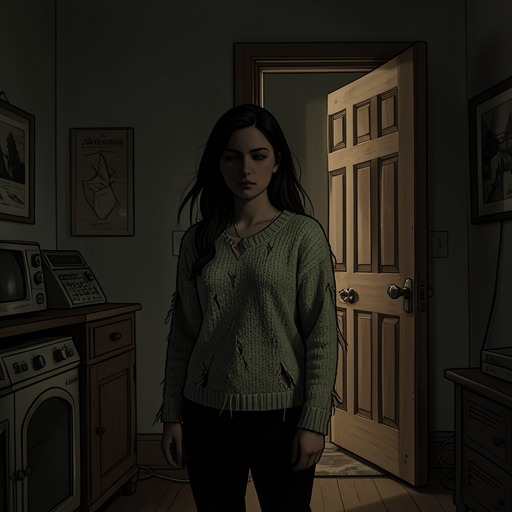
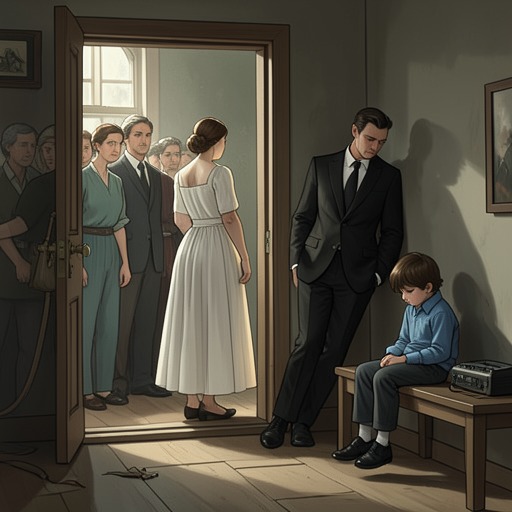
Page exposes and confronts her family about the sexual abuse
AccidentPage’s confrontation with her family turns a conversation about her troubled marriage into a demand that her mother acknowledge childhood abuse she had spent years denying. The disclosure brings into the open both the abuse and the family’s complicity in keeping it unspoken.
The immediate trigger
Page first tells her mother that she and Brad are not doing well and that Brad is involved with someone else. Her mother responds by reassuring her that the family will soon return to normal, then insists Brad would never jeopardize his marriage. Page presses the point rather than accepting that reassurance. When her mother invokes her own difficult moments with Page’s father, Page asks her to remember what the family went through. Her mother claims not to understand and turns away, making the disagreement about Brad’s affair the immediate route into a deeper conflict: whether her mother will recognize the past Page says they shared.
The family confrontation
Page’s response to Maribelle Addison’s denial was to make the accusation explicit. She reminded her mother that she had been thirteen when the abuse began and said it continued until she was sixteen, when she threatened to call the police. She described Maribelle as having known what was happening and having helped keep it hidden. The confrontation therefore challenged not only the father’s conduct but also the family’s long-standing account of itself: Page would no longer accept a version of the past that treated the harm as imaginary or inconsequential.
Brad entered the kitchen during the argument and quietly suggested that Page and her mother discuss the matter another time. Page rejected his attempt to interrupt, linking her anger over his involvement with someone else to her refusal to accommodate Maribelle’s denial. She turned back to her mother and insisted that Maribelle had allowed the abuse and had helped make it possible. Brad knew about Page’s childhood, but the confrontation made him hear her describe it directly; he felt sick and did not approach her while she was speaking.
When Alexis appeared frightened and tried to withdraw from the exchange, Page drew her into the family history rather than letting the denial stand unchallenged. She recalled that Alexis had also been abused by their father and said that Alexis had once pushed her into the situation so that it would stop happening to Alexis. Page’s account places the sisters within the same pattern of harm, while also exposing how that pattern had turned them against one another. Alexis’s response was fear, not confirmation, and Maribelle continued to deny the accusation.
Page also challenged the protection afforded by her father’s public identity as a doctor. She explained that his profession had once made her think differently about what had happened, but had not protected her. The abuse left her afraid of medical examinations: it took years before she could see a doctor, and during her pregnancies she sometimes avoided care because she feared what might happen. Her account connected the family’s defense of a respected physician to a lasting consequence in her own life, making clear that the harm had continued well beyond childhood.
Telling Trygve and the long aftermath
After the confrontation, Page explains the history to Trygve Thorensen, who listens and holds her as she cries. She tells him that her father abused her from age thirteen until she was sixteen, and that her mother knew and helped make it possible. Her mother, Page says, had been afraid of her husband, who beat her, and treated keeping him satisfied as a way to prevent further harm. Page also describes how the abuse had begun with Alexis years earlier, revealing to Trygve that the sisters’ shared history was shaped by both their father’s actions and their mother’s failure to protect them.
Page connects that childhood to the choices she made as a teenager. She left home at seventeen, worked as a waitress, and paid for an apartment of her own. Her mother called the departure a betrayal and said Page had broken her father’s heart; after he died, Page even wondered for a time whether leaving had caused his death. The accusation shows how the family’s denial extended beyond the abuse itself: Page had also been made to feel responsible for separating herself from the people who had failed to protect her.
Meeting Brad Clarke in New York, marrying him, and moving to California marked a different stage in Page’s life. With help from a therapist, she eventually made peace with what had happened. That work did not make her mother’s continued denial easier to bear. Her mother’s description of Page’s father as a saint reopened the conflict, exposing the distance between the account Page had worked to live with and the idealized image her family continued to defend.
Page tells Trygve that she had tried to limit contact with her mother, but Allyson’s accident made it difficult to keep her away. She had hoped she could manage the familiar pattern of interaction; instead, the attempt to discuss her troubled marriage brought the old wound back into the present. Trygve’s willingness to listen gives Page a setting in which she can speak plainly about the past, while the confrontation with her mother shows that telling the truth does not itself compel the family to acknowledge it.
The bottle and the demand to remember
Page’s tossed Evian bottle made the confrontation briefly hinge on an ordinary household object. Alexis had appeared frightened and seemed ready to retreat; Page put the bottle in her hands and then turned her attention to the family’s disputed past, asking her to remember what their father had done and how the sisters had been drawn into the same pattern. The gesture did not secure agreement: Alexis remained terrified, and Maribelle continued to deny Page’s account. Instead, it sharpened the scene’s central divide between the family’s effort to evade the past and Page’s insistence that it be named.