Tom Chapman vows to defend Phillip’s reputation
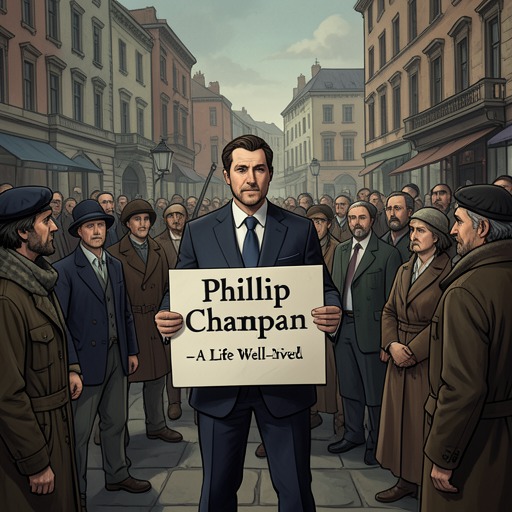
AccidentTom Chapman vows to defend Phillip’s reputation after learning that his son’s blood test found a small amount of alcohol while Laura Hutchinson, the other driver in the Golden Gate Bridge collision, had not been tested. With responsibility still undetermined, the unequal scrutiny becomes, for Tom, both a personal wound and a public injustice. His promise to clear Phillip’s name grows out of grief, anger at the assumptions surrounding the crash, and a fear that his son’s memory will be used to shield a politically prominent family.
The unresolved question of blame
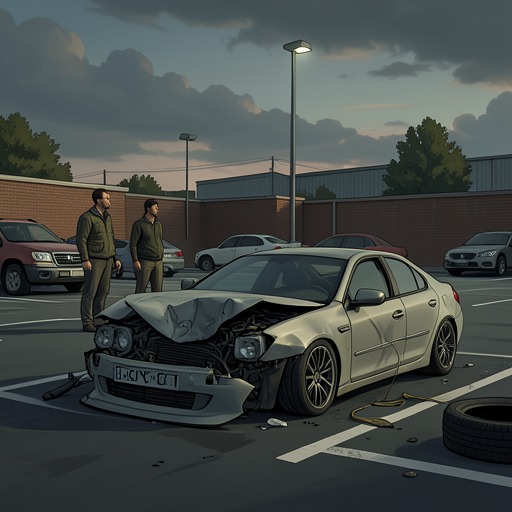
The vow emerges from an accident whose cause remains uncertain. Earlier, Page Clarke asks who had been driving and learns that the dead boy was Phillip Chapman, seventeen. After the collision, highway patrol investigators cannot determine from the damaged cars which vehicle crossed the line or why. The available evidence does not establish who struck whom, leaving the families to confront severe consequences without a clear account of fault.
At the hospital, a doctor tells Phillip’s parents that there was a small amount of alcohol in his blood, below the legal threshold for intoxication, but possibly enough to affect a boy of his age. The doctor does not say Phillip caused the accident; responsibility remains unclear. Yet the information carries an implication that his parents hear at once. The disparity sharpens it: Laura Hutchinson, identified as the senator’s wife, was not tested because patrolmen at the scene had assumed she was sober.
Anger at unequal scrutiny
Tom, a well-known attorney, reacts with visible outrage. He challenges the suggestion that a trace amount of alcohol should make his seventeen-year-old son presumptively responsible while an adult driver was spared testing on the basis of an assumption. His anger is directed not only at the possibility of Phillip being blamed, but at what appears to be a different standard applied to Laura because of her social and political connections.
He insists that Phillip was nowhere near legally drunk and says that his son drank rarely and little, especially when driving. The account does not resolve whether Phillip had consumed alcohol on the night of the crash or establish the collision’s cause. Tom’s defense is therefore not a finding about the evidence so much as a refusal to let the limited test result be turned into a verdict. In his distress, he also wants someone to blame and wishes the family had not gone to Carmel and left Phillip alone. That self-reproach exposes the helplessness beneath his anger: no accusation can undo what has happened.
Grief, intrusion, and the vow
As Tom’s first surge of rage fades, he and Mary Chapman are overcome by grief. They have learned that Phillip was their only child, and seeing him at the hospital makes his death immediate in a way the earlier explanation could not. Their attention shifts from the dispute over responsibility to the loss of the son they loved. The movement does not make Tom’s concern about blame disappear; it shows how the wish to defend Phillip coexists with a grief that no argument can contain.
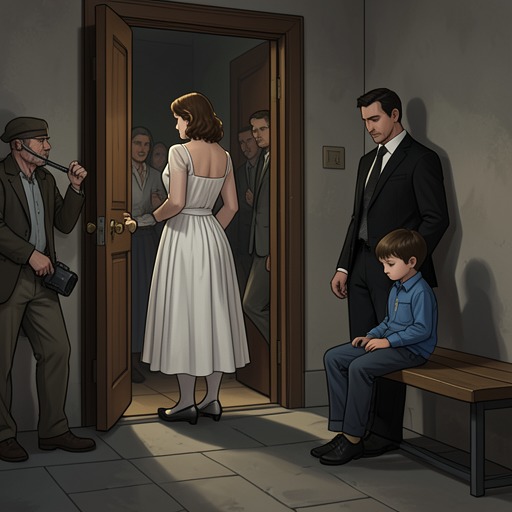
The press turns that private loss into a public spectacle. A photographer takes the Chapmans’ picture in the emergency room, and another approaches them as they leave. Tom is outraged by the intrusion and nearly reacts physically, but does not. He recognizes that the crash is becoming a news story because the other driver is connected to a senator, and that the family’s suffering may be packaged as a contest over whether Laura was at fault or Phillip was. The prospect of political advantage gives his fear a sharper edge: he does not want his son’s memory sullied by insinuation or used to protect Laura or the senator’s seat.
As they drive away, Tom tells Mary that he will see to it that Phillip is not blamed and that he will clear his son’s name if necessary. Mary, absorbed in remembering Phillip, seems unable to take in the promise. Its force lies in the contrast between them: Tom turns toward a future dispute over reputation, while Mary remains with the irretrievable fact of their loss.
Public narratives and later doubt
The uncertainty persists in the accounts that follow. A newspaper article gives prominence to Laura’s devastation and presents her as a respectable mother, while indirectly encouraging the impression that the young people had been drinking and that Phillip may have caused the collision. Trygve Thorensen observes that the article avoids a direct accusation while steering readers toward one. He argues that political messaging and a reporter’s preconceptions can shape which parts of an incomplete story receive emphasis.
Trygve also tells Page that the highway patrol still considers the evidence inconclusive and that the cars appear almost equally implicated. Jamie Applegate has said Phillip had half a glass of wine, two cups of black coffee, and later a cappuccino; Jamie also maintains that the group was not drunk and that Phillip was paying attention. These reports do not prove who caused the crash. They instead show how quickly limited facts can become a story in which the younger driver is presumed reckless and the older, more prominent driver is presumed respectable. Page, meanwhile, recognizes that assigning blame cannot restore Allyson Clarke or repair Chloe Thorensen’s injuries, even as the possibility of lawsuits and public judgment presses on the families.
Months later, news reports that Laura has been arrested for drunk driving after a fatal collision in La Jolla changes how Page interprets the earlier crash. She concludes that Laura must have been drunk then, and the news seems to vindicate Phillip. It does not retrospectively establish the precise cause of the Golden Gate Bridge collision, which had remained unresolved. Instead, it lends force to the suspicion that the first investigation and the public narrative may have treated Phillip unfairly. Tom’s vow thus anticipates the book’s continuing distinction between evidence, assumption, and the desire to assign blame: protecting Phillip’s reputation matters, even where certainty remains out of reach.