Police Do Not Test Laura Hutchinson for Alcohol
AccidentPolice Do Not Test Laura Hutchinson for Alcohol is a consequential investigative decision in the aftermath of the Golden Gate Bridge collision. Although the crash’s cause remains uncertain, officers do not test Laura Hutchinson for alcohol; instead, one accepts her account that she has not been drinking and pours her brandy. The decision leaves an important evidentiary question unanswered and exposes how assumptions about respectability and political status shape the investigation. Later revelations make the omission more troubling without proving that Laura was intoxicated during the earlier crash.
At the Scene
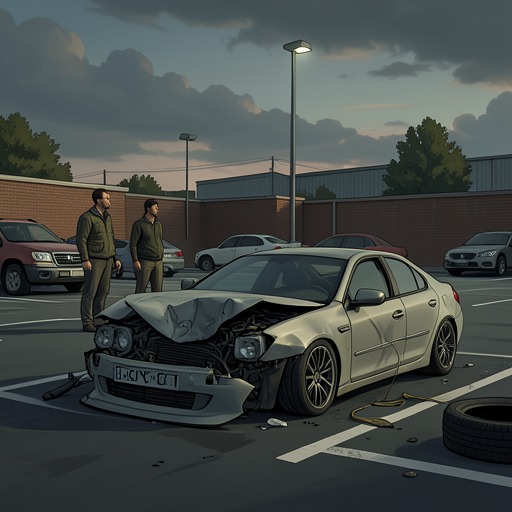
The collision has left Phillip Chapman dead and the other young passengers gravely affected. Laura is sitting by the roadside, shaken but with no apparent injuries. Her clothing appears remarkably undisturbed compared with the condition of the Mercedes and its passengers. When a fireman asks whether she will be taken to hospital, a highway patrolman says she seems physically unharmed and that officers intend to take her home. Laura thanks the responders and asks them to tell her how the injured young people are doing.
Responsibility for the collision is not established at the scene. One account relayed by a fireman says both cars may have crossed the center line, and that the force of the impact makes it difficult to determine which driver moved over first. Although one patrolman observes that Laura’s car ended up farther across the line, she denies doing so, and he sees no reason to disbelieve her. Her identity is then recognized: she is the wife of Senator John Hutchinson. That recognition accompanies the discussion of her apparent innocence, though it does not resolve the physical evidence.
The Decision Not to Test
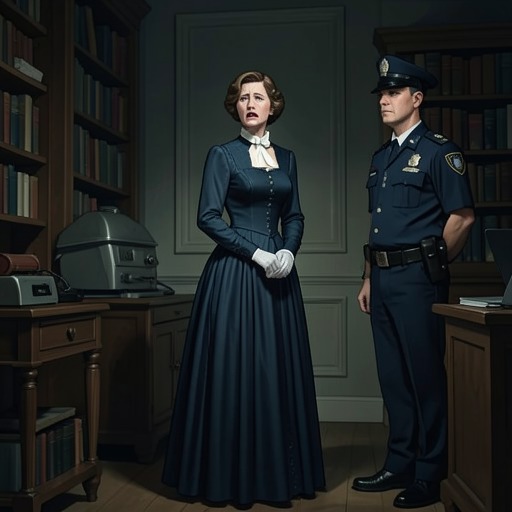
At home, a patrolman suggests that Laura take a tranquilizer or have a strong drink to settle her nerves. She says she has not had a drink that night and explains that she does not drink when she goes out without her husband. The officer encourages her to have a drink, then pours her a strong brandy himself. Laura drinks it, makes an unpleasant face, and thanks him for the officers’ kindness. The encounter thus moves from accepting her unsupported assurance to serving her alcohol before the investigation has ruled out drinking as a factor.
Outside, the patrolman’s partner asks whether he took Laura to hospital for an alcohol check, so that investigators could rule out alcohol. The officer refuses to treat the omission as a concern: he emphasizes that Laura is a senator’s wife, is distressed by the crash, saw a young person die, and told him she had not been drinking. He adds that he has just poured her brandy, making a return to ask for a test seem too late. His partner accepts the explanation. Their reasoning substitutes her demeanor, her account, and her social identity for an examination; the novel does not present a test result or other direct evidence establishing whether she had consumed alcohol before driving.
Unequal Scrutiny and Uncertain Blame
When the Chapman family learns that Phillip’s blood contained a small amount of alcohol, they also learn that Laura was not checked because officers at the scene assumed she was sober. Tom Chapman, a well-known attorney, protests the disparity: his seventeen-year-old son’s test result is being treated as suggestive, while an adult driver received no test at all. His anger reflects both grief and the fear that Phillip will be blamed without a fair comparison of evidence. As that first burst of anger gives way to grief, the question of blame briefly loses its force for the family, but the unequal investigative treatment remains part of the account.
The uncertainty also shapes Page Clarke and Trygve Thorensen’s understanding of the crash. Trygve says the collision’s force makes it nearly impossible to determine fault from the cars’ positions. Phillip’s test indicates alcohol, but not enough to establish legal drunkenness; Laura, by contrast, appeared sober, and no test was taken. The young passengers’ account that Phillip had been responsible and attentive, alongside Jamie Applegate’s report that Phillip had consumed half a glass of wine and coffee, complicates any easy conclusion. None of those details proves which driver crossed the line or why.
Publicity further tilts the story before the evidence is settled. A newspaper article presents Laura as a distressed mother and respectable citizen, while its wording leaves readers with the impression that the young people had been drinking and that Phillip may have caused the crash. Trygve suspects that the report and the Senator’s aides’ statements are designed to protect Laura’s image. He does not claim certainty about her responsibility; rather, he objects that Phillip can come to seem guilty because he was young and had a trace of alcohol in his blood, while Laura’s apparent respectability stands in for a test. The missing examination therefore matters not only as an investigative omission but as a gap that public narratives can fill selectively.
Later Revelations and Significance
That gap takes on new significance after a later fatal collision in La Jolla. News reports say Laura has been arrested for felony vehicular manslaughter and that tests show she was driving intoxicated. Page reacts by recognizing how the earlier refusal to test Laura had left a central suspicion unresolved. Trygve later learns from an investigative reporter that Laura had made four stays at a well-known Los Angeles alcohol-treatment clinic in the previous three years, under another name, and that her driving record included at least half a dozen minor accidents and a larger one in Martha’s Vineyard. Some records had been sealed or suppressed, and the reporter raises the possibility of political influence in keeping them out of view.
These later facts recast the earlier decision but do not retroactively establish that Laura was drinking on the night Phillip died, or that alcohol caused the Golden Gate Bridge collision. The crash remains officially uncertain in the evidence presented here. What changes is the reader’s view of how confidently the officers accepted her account and how little scrutiny her status invited. The episode links an individual act of discretion—the choice to take her home, offer brandy, and forgo a test—to the larger struggle over whose conduct is investigated, whose reputation is protected, and how blame hardens when evidence is uneven.