Laura Hutchinson causes a fatal drunk-driving crash in La Jolla
AccidentLaura Hutchinson’s fatal drunk-driving crash in La Jolla becomes a decisive revelation in the aftermath of the Golden Gate Bridge collision. When reports identify her as intoxicated and say she was arrested after a new head-on crash, the possibility that she had also been responsible for the earlier collision—and for Phillip Chapman’s death and the injuries to Allyson Clarke and Chloe Thorensen—no longer seems merely speculative to their families.
Discovery and Immediate Facts
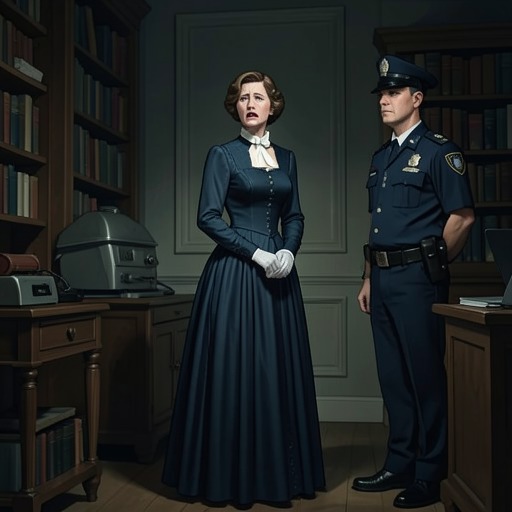
The news reaches Page Clarke and Trygve Thorensen at home after a gathering, when Chloe Thorensen hurries in on crutches and asks them to come see the television. The first report says that Laura Hutchinson, the wife of Senator John Hutchinson, was involved in a head-on collision in La Jolla. It identifies her twelve-year-old daughter as seriously injured but stable, reports that Hutchinson was arrested at the scene for felony vehicular manslaughter, and says tests showed she had been driving while intoxicated.
The report also connects the La Jolla crash to the collision on the Golden Gate Bridge eleven weeks earlier, in which seventeen-year-old Phillip Chapman died and Allyson Clarke and Chloe Thorensen were severely injured. Although no blame had been assigned in that earlier accident, the new report makes the connection immediate for Page and Chloe. Page breaks down, saying that Hutchinson must have been drunk then as well; Trygve turns off the television and sits with them as they cry.
A second broadcast gives a fuller, more devastating account. It reports that the La Jolla collision killed a twenty-eight-year-old woman, her thirty-two-year-old husband, and their two young children; the woman was eight months pregnant, and the baby died despite efforts to save it. The report says Hutchinson’s daughter had a broken arm, a cut requiring fifteen stitches, and a mild concussion, while several other cars were also involved in lesser ways. The changing death toll—from the first report’s account of four family members to the later report’s account of five, including the unborn baby—makes the scale of the crash newly clear.
Reconsidering the Golden Gate Bridge Collision
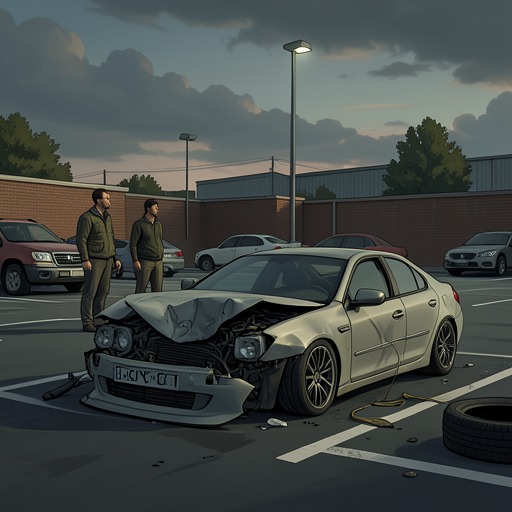
Before the La Jolla reports, the cause of the Golden Gate Bridge collision remained unresolved. The highway patrol told Trygve Thorensen that the impact had been so forceful that investigators might never establish which car crossed the center line, or why. The positions of the wrecked cars did not settle the question. Phillip Chapman’s blood test showed alcohol, but not at a level that would classify him as drunk; Laura Hutchinson had appeared sober, and the police had not tested her. With the evidence incomplete, blame remained an inference rather than a finding.
That uncertainty did not prevent the story from acquiring a public verdict. A newspaper article centered on Hutchinson’s grief and presented her, through comments from a Senator’s aide, as an upstanding mother, while implying that the young people had been drinking and that Phillip was responsible. Trygve objected to the way the article’s insinuations could establish an impression without making a direct accusation. He suspected that Hutchinson’s aides were shaping the account to protect her, though he acknowledged that she might not have caused the collision. The available evidence, he said, could support blame of either driver—or neither conclusively.
The uneven scrutiny also troubled him. Jamie Applegate had told him that Phillip drank half a glass of wine and then had two cups of black coffee; Trygve noted that he himself had driven after more than that, while recognizing that he perhaps should not have. Jamie maintained that the teenagers were not drunk and that Phillip had been paying attention. Trygve had initially wanted someone to blame, including Jamie for helping Chloe Thorensen deceive her parents, but Jamie’s distress and the lack of reliable proof complicated that impulse. The La Jolla news would later alter how the family understood the earlier crash, but at this point neither grief nor suspicion could resolve what the investigation had left uncertain.
The Record Behind the Public Image
Trygve Thorensen called an investigative reporter, whose findings replaced suspicion with a broader record of concealed risk. Laura Hutchinson had reportedly spent four periods in a prominent Los Angeles treatment clinic for alcohol dependence during the previous three years, all under another name and none successful; a clinic source confirmed the stays. Department of Motor Vehicles records also showed at least six minor accidents and a more serious crash on Martha’s Vineyard, where Hutchinson spent summers. Those incidents had caused minor injuries, and in one Hutchinson herself sustained a concussion, but the records had been hushed up or sealed wherever possible. Trygve’s source suggested that bribes or political favors might have helped suppress them, while the account establishes that the Senator’s lawyers and public-relations staff had worked effectively to keep her driving history out of view.
The newly disclosed history recast the La Jolla crash as part of a pattern rather than an isolated catastrophe. In the same year, Laura Hutchinson had injured her own daughter, killed six people across the two collisions, nearly crippled Chloe Thorensen, and left Allyson Clarke in a coma. The La Jolla evidence did not retroactively settle every forensic question about the Golden Gate Bridge collision, but it vindicated Phillip Chapman in the eyes of those who had watched the earlier coverage shift suspicion toward him. The revelation also sharpened the moral and political question: what had been hidden, and who had been protected from scrutiny?
Public attention widened quickly. Mothers Against Drunk Driving made public statements, and the Chapmans spoke about Phillip’s life and the damage done to his reputation. The Senator’s representatives continued to suggest that defective brakes and a failed steering column had caused the La Jolla crash, while Laura Hutchinson remained unavailable for comment. By the following week, television programs were interviewing families bereaved by similar accidents, and Hutchinson was shown arriving at court in dark glasses to be arraigned for felony vehicular manslaughter. She faced a possible maximum sentence of forty years; Page Clarke thought that penalty did not begin to answer the harm the families had suffered. The account specifies four counts, since the law could not charge Hutchinson over the death of the unborn child.
The story’s public afterlife also intruded on the family’s private crisis. Reporters and a cameraman confronted Page, Trygve, and Chloe outside their home, seeking photographs and reactions. When a reporter tried to provoke Page into expressing anger, she answered with sympathy for everyone who had lost loved ones or suffered in the La Jolla crash, then went into the intensive-care unit with Trygve. The nurses closed its doors and drew the shades to prevent photographs of Page or Allyson. Yet the press continued to appear there, hounding the families and seeking permission to show Allyson in her coma on television. Laura Hutchinson’s newly exposed history thus brought public accountability into view while making the injured family’s privacy another contested ground.
A Changed Measure of Responsibility
The revelation altered the family’s sense of the Golden Gate Bridge collision without changing what the crash had already taken from them. That night, Page Clarke cried in Trygve Thorensen’s arms: they now believed they knew who had killed Phillip Chapman and nearly killed their daughters. Page counted Phillip among the dead and feared Allyson Clarke might yet die as well. The new knowledge made the earlier collision feel more real, but it could not restore Phillip, undo the injuries, or resolve Allyson’s condition.
The next day, Senator Hutchinson told reporters that the family would pay for the funerals and that there would be a full investigation and disclosure. He raised questions about defects in his wife’s car, while Laura Hutchinson remained out of public view. For Page, seeing the Senator with his injured daughter alongside the renewed suggestion of mechanical failure only intensified the gap between public statements and what she believed had happened. The La Jolla crash therefore brings the story’s unresolved questions of evidence, influence, and responsibility to a sharp turn: the earlier investigation had produced no assigned blame, but the newly revealed history changed how Page and Trygve understood that uncertainty.