Founding of Rome
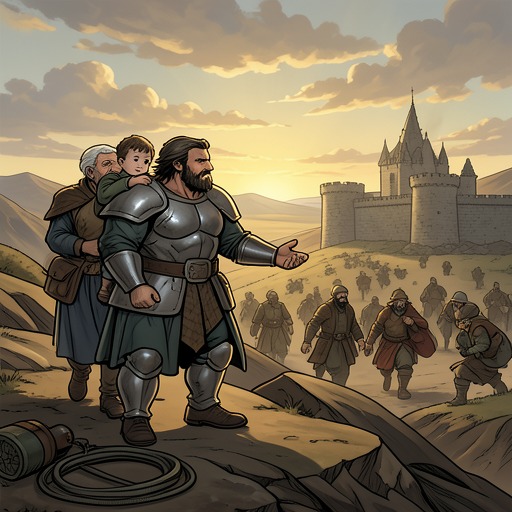
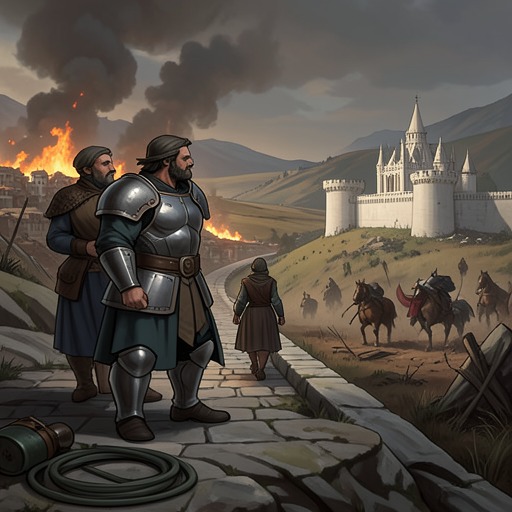
AeneidThe Founding of Rome is the poem’s central historical horizon: the future city that gives meaning to the sufferings, departures, alliances, and wars of Aeneas. Rome appears not as an accidental settlement but as the endpoint of a divinely disclosed lineage, joining Dardanian blood to Italian land and turning the remnants of Troy into an imperial people.
A Future Already Held in the Trojan Line
The Roman future is first made visible through Anchises’ vision of Aeneas’s descendants. Silvius, described as Aeneas’s last-born son, is presented as an Alban ruler whose blood combines Dardanian ancestry with the future peoples of Italy. The genealogy therefore does more than list successors: it establishes Rome as both heir to Troy and native to the Italian world. The city’s legitimacy rests on a double inheritance, neither wholly foreign nor wholly local.
The line then advances toward Romulus, who is shown as a great prince born to restore the crown once worn by his injured grandfather. His origin links political authority to ancestral wrong and restoration. Romulus is not merely a founder who raises walls; he is the instrument through whom a displaced succession is repaired. The founding of Rome thus carries within it a drama of loss, inheritance, and recovered sovereignty.
Prophecy, Fate, and the Shape of Empire
Anchises identifies the future Italian names as those whom fate will join together. This language makes political union a feature of the Roman future rather than a temporary arrangement. The descendants who pass before Aeneas belong to an ordered historical procession, and their obscure beginnings are contrasted with the towns of mighty fame they will eventually establish.
The same prophetic vision expands from local settlement to imperial conquest. Aeneas’s race is destined to spread the conquests of imperial Rome, while Rome’s rising towers are imagined as reaching toward heaven. The city’s future is consequently measured not only by its buildings or territory but by the extent of its power. Its foundation myth naturalizes expansion as the fulfillment of fate, presenting empire as the mature form of a promise first carried by Trojan survivors.
Anchises also directs Aeneas’s attention to the Roman and Julian line. The future political order is therefore joined to a distinguished dynastic succession, extending the significance of Rome beyond Romulus into later rulers and the imperial lineage. Rome is imagined as a city whose ancestry continues to generate authority, with its future leaders occupying a place already prepared within the divine and historical design.
Signs on Italian Land
The prophecy is supported by concrete signs in the landscape. The white sow lying beneath an oak with thirty white young foretells a settlement associated with the passage of thirty years. Its visual clarity turns an abstract prediction into an image that can be recognized in the world: animal, tree, color, number, and time converge as a sign of the future foundation.
The river Tiber then speaks of its own destined place. It declares that its waves will one day wash the walls of mighty Rome, making the river a permanent geographical witness to the city’s emergence. Rome is not imagined apart from its environment; its identity is secured through the conjunction of water, walls, and the land of Italy. When Aeneas responds by greeting the earth and his household gods as the destined place of their abodes, prophecy becomes recognition. The wandering Trojans can finally understand that exile is moving toward settlement.
From Trojan Memory to Italian Community
The Roman origin story preserves earlier heroic and cultural inheritances rather than erasing them. The old heroic race of Teucer is remembered as belonging to better times and happier years, while Assaracus and Ilus remain part of the ancestral world from which the future line proceeds. Such figures make Rome the delayed continuation of Trojan history: the city’s future greatness grows from memories that survived catastrophe.
The poem also places Roman destiny beside the cultural inheritance of Greece. In the temple at Cumae, the story of Daedalus and his escape from the Cretan shore recalls an earlier feat of ingenuity and flight. Elsewhere, sacred groves are associated with the first inhabitants of Grecian blood, who vowed the forest to Silvanus, guardian of flocks and fields. These memories give the Italian landscape a layered history populated by Greek, Trojan, and local traditions. Rome’s foundation therefore gathers several heroic and sacred pasts into one political future.
The founding process is also tested by conflict. Aeneas’s companions include Ripheus, renowned for valor, and Iphitas, respected for age, while the Trojan defenders continue to fight amid clashing arms and the clamour of battle. In the later Italian struggle, suppliants from Laurentum approach with olive branches and request a truce. Aeneas grants their just petition and condemns the severity of causeless quarrels, insisting that war should not be renewed without necessity. These scenes show that the future Roman order emerges through both martial endurance and the regulation of violence.
Peace as the Political Completion of War
The movement toward Rome requires more than victory over enemies. Aeneas sends word to the Latin king to end the rage of arms and ratify peace, and the agreement is subsequently bound in public by solemn vows. Both sides perform the rites required by sacred custom. Peace therefore becomes a formal, witnessed, religious act rather than a private change of feeling.
This treaty provides the immediate political model for the future union between Trojan and Latin communities. The city that will arise from Aeneas’s mission depends on the conversion of rivalry into a shared order. The conflict has revealed the cost of competing claims, but the ritualized peace gives those claims a framework in which settlement and succession can continue. Rome’s origin is consequently represented as a synthesis of Trojan continuity, Latin incorporation, and divinely sanctioned historical development.
The final suspense of Aeneas, who prepares to strike a yielded Turnus and then represses his hand, concentrates the problem of foundation into a single moral gesture. A city born from war must decide what victory means once the opponent is defeated. The hesitation shows that the transition from battlefield force to political order is neither automatic nor emotionally simple. Rome’s future depends on the victor’s capacity to distinguish conquest from needless cruelty, even when the poem leaves that decision under immense pressure.
Historical Meaning and Imperial Tension
The Founding of Rome functions as the poem’s master narrative of transformation. Trojan exile becomes Italian settlement; ancestral memory becomes dynastic succession; prophecy becomes geography; and warfare becomes the precondition for a sworn political peace. The future city is repeatedly described through descendants, walls, rivers, towns, and imperial conquests, so that Rome appears simultaneously as family, place, polity, and world power.
Yet the same structure creates a tension at the heart of the foundation myth. Fate promises order and greatness, while that order is reached through displacement, armed struggle, and the subordination of rival claims. The poem presents Roman expansion as destined, but it also keeps visible the violence required to establish it. Rome’s grandeur is therefore inseparable from the long cost of making a future out of the ruins of Troy.