Furor
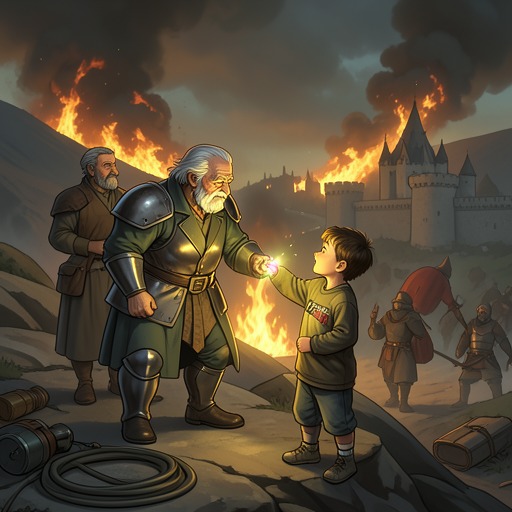
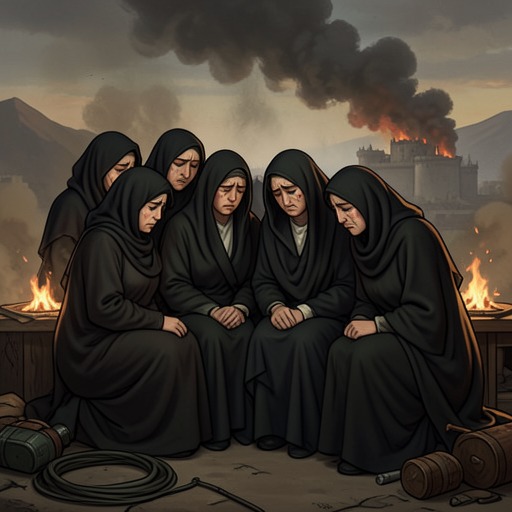
AeneidFuror is the poem’s governing image of passion released from moral and political restraint. It is not merely anger, nor only the violence of war: it is an eruptive force that converts desire into self-deception, grievance into rebellion, and conflict into a widening chain of death. Its decisive significance lies in the way it opposes the disciplined order associated with Aeneas and the destined settlement of Italy. Again and again, Furor makes private feeling claim the authority of public action, until the resulting disorder becomes indistinguishable from catastrophe.
Definition and First Consequences
The clearest early manifestation of Furor arises from the union of Aeneas and Dido. The encounter is witnessed by the powers of the underworld, Juno, and the nymphs, and the narrative marks that ominous moment as the origin of “Debate and death, and all succeeding woes.” The language gives the passion a historical consequence: what appears at first to be a private love becomes the beginning of political dispute, broken loyalties, and mortality. Furor therefore operates through transformation. It makes an inward attachment assume outward consequences, and it allows a temporary emotional crisis to propagate through the larger world of the poem.
Dido’s refusal to acknowledge the limits imposed by honour intensifies this process. She no longer conceals her love for Aeneas but names it marriage, using a socially legitimate term to cover a bond whose consequences remain unsettled. Furor is visible here not simply as excess feeling but as a distortion of judgment. The desire is real, yet the naming of it attempts to make desire law. By treating passion as an accomplished marriage, Dido converts emotional certainty into a claim upon the future, while Aeneas remains bound to the destiny that requires his departure from Carthage.
Furor in Amata and the Latin Conflict
The same force reappears in Amata, whose agitation is tied to the threatened displacement of Turnus and to the prospect of new nuptials involving the Trojan guest. Her unrest is described physically: she lies restless, her breast swelling and burning with disdain. The body becomes the visible chamber of Furor before the emotion becomes political action. Her anger does not remain a private complaint about marriage. It presses against the household threshold and seeks to enter the queen’s apartment, where domestic feeling can become a command affecting the entire Latin community.
When argument fails to move the person she is addressing, Amata abandons reason and flies into rage. The narrative presents this change as a seizure: a serpent takes possession of her, and deliberation gives way to an alienating intensity. Her opposition to the Trojan marriage is thus no longer a stable policy or a reasoned defense of Turnus. It becomes compulsion. Furor narrows perception until one desired outcome appears to justify every escalation, and the private defense of a preferred marriage becomes part of the machinery driving Latium toward war.
Furor as Martial Desperation
In Turnus, Furor takes the form of wounded martial honour. When he sees the Latins leaving the field, their armies broken and their courage defeated, he also recognizes that he himself has become the object of public resentment. This moment combines external defeat with inward humiliation. Turnus is not merely losing a battle; he is being made to bear the blame for collective failure. The pressure of public disgrace therefore pushes him toward the most extreme response available to a warrior: personal combat with Aeneas.
The movement from battlefield collapse to single combat shows how Furor simplifies political conflict into a contest of bodies. Turnus’s challenge offers the appearance of resolution, but it also concentrates the whole war in the passions of its two principal champions. The desire to recover honour through a decisive act can no longer be separated from the violence that threatens to destroy him. Furor is consequently both a reaction to defeat and an engine of further defeat: it promises restoration through combat while placing the desperate combatant at the mercy of chance, divine intervention, and the opponent’s greater purpose.
The Final Confrontation and Its Limit
The closing encounter places Furor under the judgment of Aeneas. Turnus, already reduced to fear and evasion, is confronted by Aeneas, who challenges the possibility of any further subterfuge. The question is not an invitation to debate but an accusation that the old evasions have been exhausted. Turnus’s earlier martial confidence has collapsed into desperate avoidance, while Aeneas assumes the grave authority of one who has reached the end of the appointed conflict.
The final scene does not erase Furor from the poem; it gives the force a terminal object. Aeneas’s anger is sharpened by the sight of the belt of Pallas, which Turnus has taken as a trophy after killing Pallas. The memory of that act transforms the duel from an abstract contest into a reckoning charged with grief, violated alliance, and the demand for retribution. Aeneas kills Turnus, and the poem ends at the instant when the violent energy accumulated through love, jealousy, political resistance, and war is finally discharged in a single death.
Narrative and Thematic Significance
Furor is the poem’s counterforce to pietas and Fatum. Where pietas asks a character to subordinate immediate desire to obligations toward gods, family, allies, and the future, Furor insists that the present wound or passion is the only reality that matters. Where Fatum organizes suffering toward the foundation of a new order, Furor repeatedly interrupts that movement by making characters resist what they cannot accept. Its victims are not always devoid of legitimate reasons; Dido has been abandoned, Amata fears the loss of her chosen marriage, and Turnus faces disgrace and defeat. The destructive element lies in the way each grievance expands beyond proportion until it governs action.
The recurrence of Furor also binds erotic tragedy to military violence. Dido’s attempt to call passion marriage and Turnus’s attempt to recover honour through combat belong to different narrative situations, yet both reveal the same structural error: a private intensity is mistaken for a sufficient authority over the world. The result is a sequence in which emotional insistence produces public death. Furor thus names not one character’s temper but a recurring condition of the poem’s history, a force that threatens to prevent the transition from wandering and revenge to settlement and rule.