
All Quiet on the Western Front
Book Introduction
"All Quiet on the Western Front" (German: "Im Westen nichts Neues") is a war novel by German author Erich Maria Remarque, first published in book form on January 29, 1929, after serialization in the Berlin newspaper Vossische Zeitung from November to December 1928. The novel is widely regarded as the most influential anti-war novel of the 20th century, selling over 3 million copies worldwide by 1975 and being translated into 55 languages.
Plot Summary
The story follows Paul Bäumer, a 19-year-old German student who, along with his classmates, is persuaded by their teacher Kantorek to enlist in the Imperial German Army. After ten weeks of brutal training under the sadistic Corporal Himmelstoss, they are sent to the Western Front in France. Through Paul's eyes, the reader experiences the relentless horror of trench warfare: constant shelling, gas attacks, rats, lice, and the slow erosion of humanity. One by one, Paul's friends die: Kemmerich from leg amputation, Müller from a stomach wound, and Katczinsky, the resourceful older soldier, is killed by a stray bullet while Paul is carrying him to safety. During a brief leave, Paul feels alienated from his family and former life. In October 1918, on a quiet day, Paul is shot dead while reaching for a butterfly. The army report that day states simply: "All quiet on the Western Front."
Themes and Analysis
The novel's central theme is the dehumanizing nature of modern warfare. Remarque strips away any romantic notions of glory, showing soldiers as mere survivors focused on food, shelter, and avoiding death. The work also explores the concept of the "lost generation"—young men whose youth was destroyed by war and who can never reintegrate into civilian society. The author criticizes the nationalist rhetoric that manipulated young people into fighting, embodied by the teacher Kantorek. The simple, unadorned language underscores the emotional numbness of the soldiers, while the recurring motif of loneliness highlights their isolation from both the past and the future.
Background and Influence
Remarque drew heavily on his own experience as a conscript in World War I, where he was wounded in 1917. Writing the novel as a catharsis, he completed it in just six weeks. The book was an immediate sensation but also provoked fierce controversy, especially among German nationalists. In 1933, the Nazis publicly burned copies of the novel and stripped Remarque of his German citizenship. Despite this, the novel's legacy endures: it was adapted into an Oscar-winning film in 1930 and again in 2022, winning the Academy Award for Best International Feature. It remains a staple of high school curricula worldwide and a powerful testament to the futility of war.
The novel's English title, though not a literal translation of the German Im Westen nichts Neues, has become a canonical phrase in the English-speaking world, thanks to Arthur Wesley Wheen's 1929 translation. Wheen's rendering, which captures the bleak irony of the original, was praised for its linguistic precision and emotional resonance, and it remains the standard English edition. The German title itself derives from a military communiqué formula used during World War I to report that no significant events had occurred on a particular sector of the front, a phrase that Remarque subverts to expose the absurdity of war. The novel's publication history was marked by immediate international success, but also by controversy: in 1930, Nazi sympathizers in Germany disrupted screenings of the film adaptation, and the book was later banned and burned by the Nazi regime for its anti-war stance. Despite these attempts at suppression, the novel has never been out of print and has been translated into over 50 languages, solidifying its status as a seminal anti-war text.
About the Author
Author Biography
Erich Maria Remarque was born Erich Paul Remark on June 22, 1898, in Osnabrück, Germany, into a working-class Catholic family. His father was a bookbinder. Remarque attended Catholic schools and later a teacher training college, but his studies were interrupted when he was drafted into the German army in November 1916 during World War I.
War Experience
He served on the Western Front in Flanders, Belgium, and was wounded by shrapnel in July 1917. After a lengthy recovery, he was recalled to active service in October 1918, but the war ended shortly after. The experience left him with profound physical and psychological scars, which he later channeled into his writing.
Literary Career
After the war, Remarque completed his teacher training and worked briefly as a primary school teacher, then held various jobs including stonecutter, organist, and journalist. In 1925, he became an editor for the magazine Sport im Bild. His breakthrough came in 1929 with the publication of "All Quiet on the Western Front," which he wrote in just six weeks based on his wartime experiences. The novel was an international bestseller but also attracted fierce criticism from nationalists. In 1931, he published a sequel, "The Road Back." With the rise of the Nazis, his books were banned and burned in 1933, and he was stripped of his German citizenship in 1938. Remarque had already fled to Switzerland in 1932 and later moved to the United States, becoming a naturalized citizen in 1947. He continued to write, producing novels such as "Arc de Triomphe" (1945), "The Black Obelisk" (1956), and "Night in Lisbon" (1962), though none matched the impact of his first work.
Later Life and Legacy
In 1958, he married actress Paulette Goddard and settled in Locarno, Switzerland. He died there on September 25, 1970, at age 72. Remarque's work is remembered for its unflinching portrayal of war's horrors and its compassionate depiction of exiles. "All Quiet on the Western Front" remains a cornerstone of anti-war literature, studied in schools worldwide and adapted into multiple acclaimed films. His legacy endures as a voice for the voiceless victims of conflict.
StoryFlow
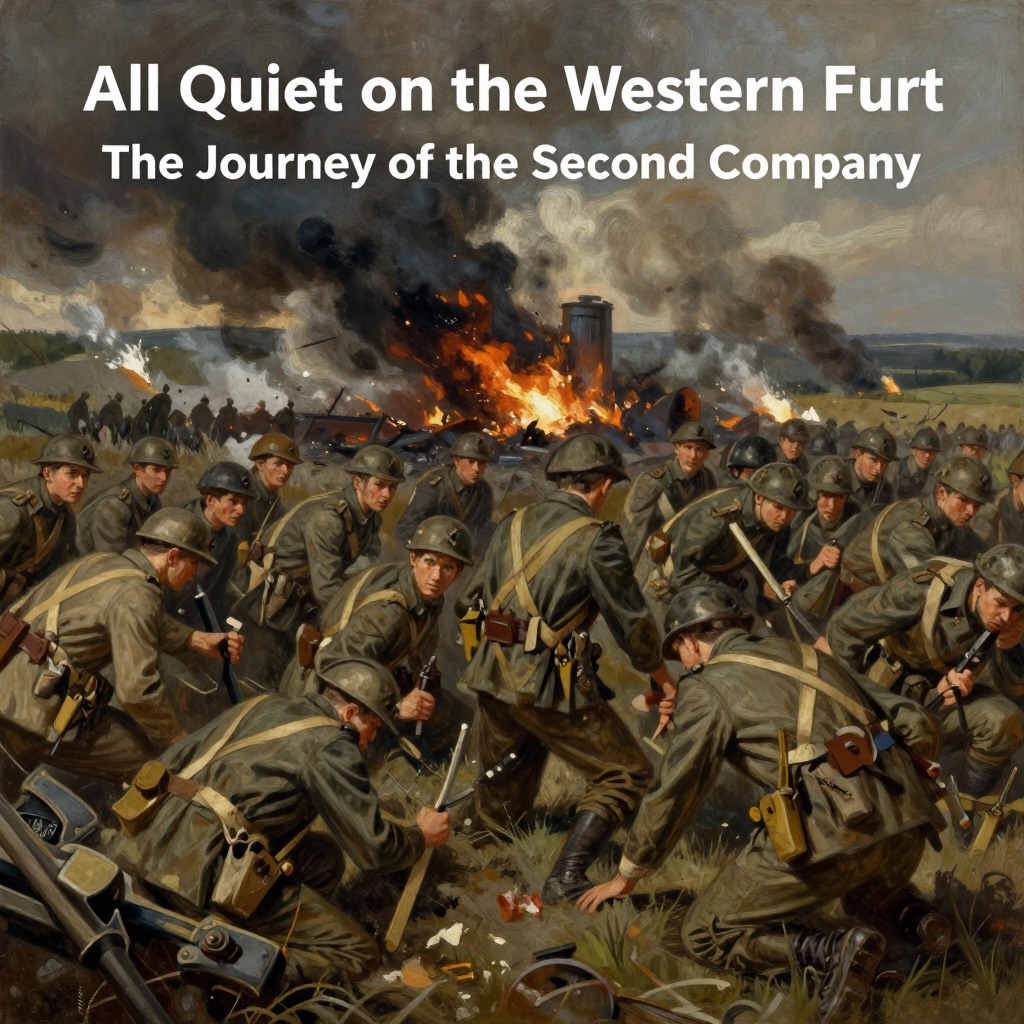
The Journey of the Second Company
Traces the Second Company from its initial strength of 150 men through constant attrition, culminating in a remnant of 32 after a major bombardment.
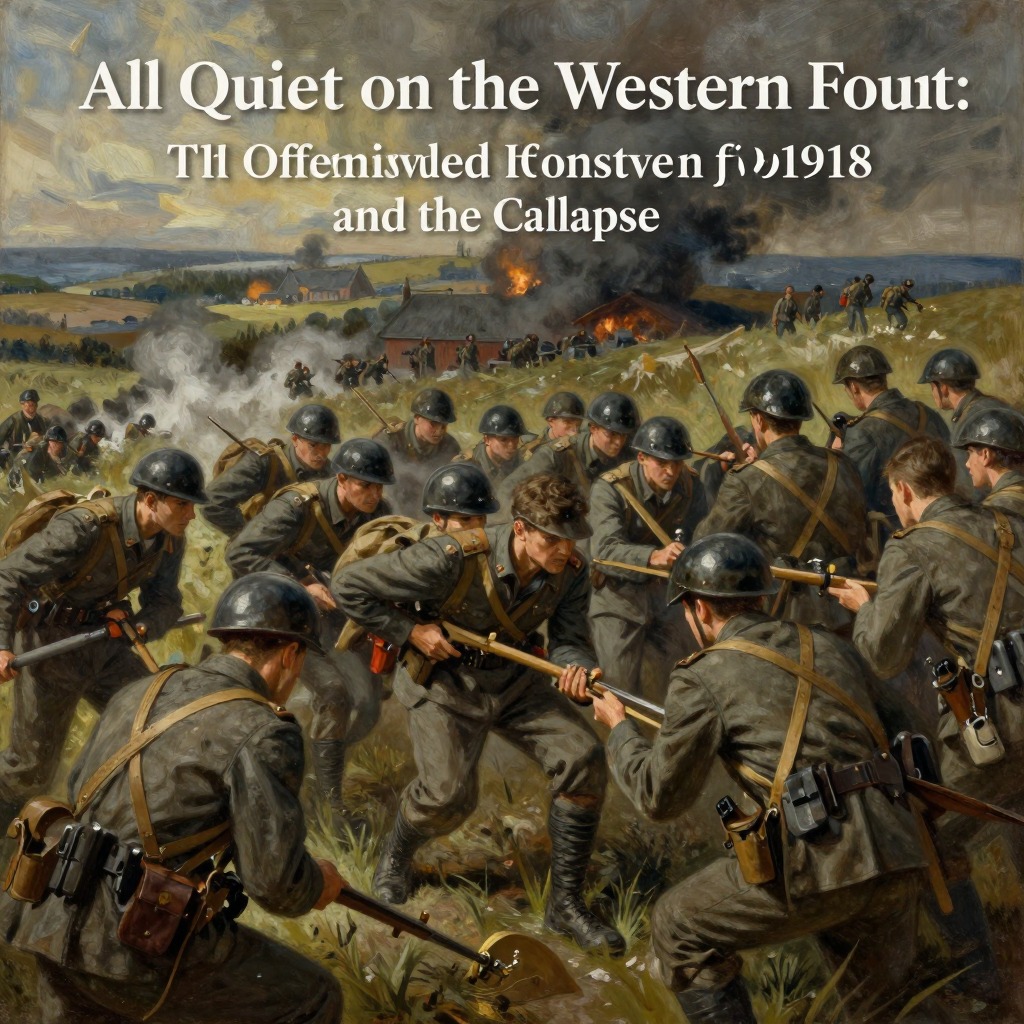
The Offensive of 1918 and the Collapse
Follows the German army's last major offensive and the subsequent retreat, highlighting the disintegration of morale and the overwhelming force of the Allies.
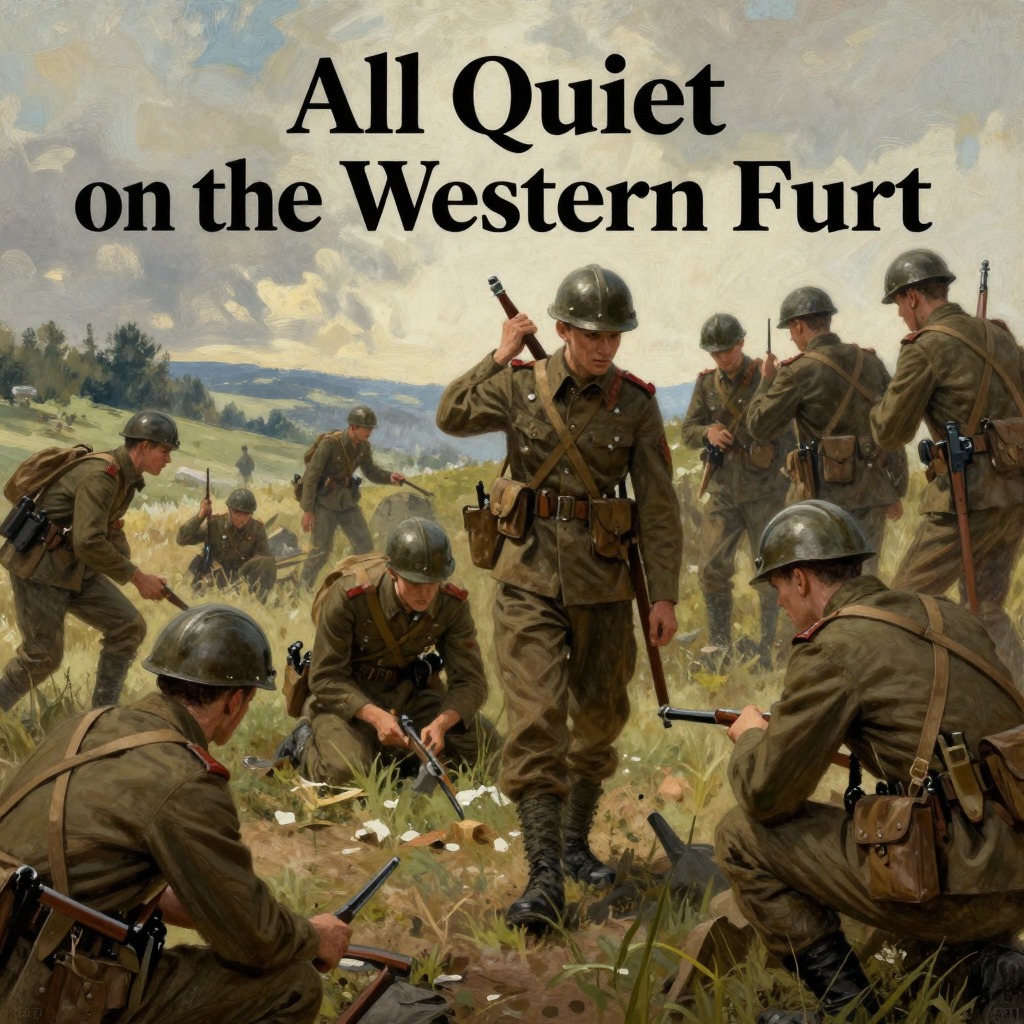
The Cycle of Front and Rest
Examines the alternating rhythm of combat and respite that defines the soldiers' existence, from the front line to the rear and back again.
