La transformación de lo cotidiano en arte
AmadeusLa transformación de lo cotidiano en arte names a central artistic dispute in the play: whether opera should ennoble audiences by turning toward timeless, elevated subjects, or engage with ordinary people and real circumstances. Wolfgang Amadeus Mozart argues that the commonplace is not an obstacle to artistic greatness. Through operatic form, it can become a complex, emotionally affecting vision of human life—and, in Antonio Salieri’s account, something that seems almost divine.
The Dispute Over Opera’s Subject
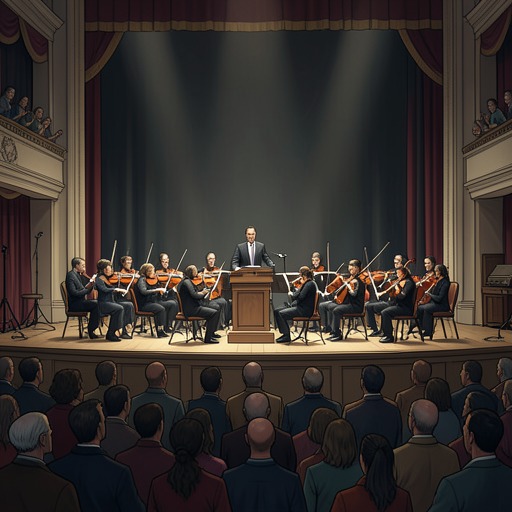
The argument takes shape around a commission from Joseph II. Johann von Strack announces that Mozart is to write a comic opera in German because the Emperor wants to establish a national opera and hear works in pure German. Count Orsini-Rosemberg objects that Italian is the only possible language for opera, while Gottfried van Swieten questions why music should be comic at all: in his view, its purpose is not to make people laugh. The commission thus places questions of language, genre, and artistic purpose in the same institutional debate.
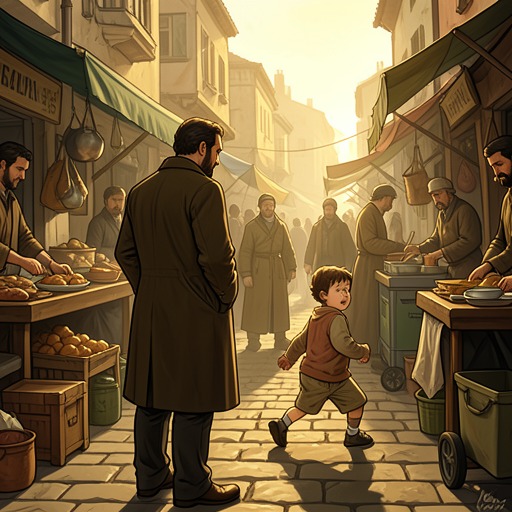
When Van Swieten condemns The Marriage of Figaro as a vulgar farce, Mozart answers with the life it depicts. He wants to write about real people in a real place, and imagines the boudoir not as an abstract setting but as a room marked by intimate, physical traces: clothes on the floor, sheets still warm from a woman’s body, even a full chamber pot under the bed. His examples deliberately oppose the polished distance of conventional heroic subjects. Their force comes from the insistence that lived, bodily circumstances belong on the operatic stage.
Van Swieten offers the counterprinciple. Gods and heroes, he argues, endure because they represent what is eternal in human beings; opera should ennoble its audience by celebrating that permanence and ignoring the transient. His contrast between the goddess in every woman and the washerwoman makes the disagreement particularly clear. Mozart rejects the hierarchy that elevates the ideal over the ordinary: people are more at ease with their hairdressers than with Hercules or Horace, and the familiar world is not artistically inferior merely because it is familiar.
Ordinary Life and Operatic Form
Mozart’s case is not simply that everyday subjects deserve attention. He argues that opera can represent ordinary life with a particular formal power. During the debate, he imagines the four people facing one another as a vocal quartet. Each has a different thought: the chamberlain considers reporting Mozart to the Emperor, the prefect condemns his vulgarity, Salieri questions what a German composer can know of music, and Mozart wonders why everyone rejects him. A dramatist would have to present those thoughts one after another; music, Mozart explains, can express them together while allowing the audience to hear each distinctly.
From that example he imagines a finale expanding from a quartet into a quintet and then a sextet, with the sounds multiplying and rising together until they form a new whole. He connects this accumulation to an image of how God might hear the world: millions of sounds ascending at once and blending into an unimaginable, eternal music. The composer’s task, as Mozart describes it, is to combine the inner thoughts of different people—including chambermaids and court composers—and transform the audience into something like a divine listener. The ordinary becomes artistically powerful not by being replaced with heroic abstraction, but by being heard in relation to other lives.
This idea also gives the argument its theatrical immediacy. Mozart proposes that the quartet should capture the people present at that exact moment, not figures from a distant legend. The scene itself becomes an instance of his method: separate minds coexist within one musical structure. His sudden comic gestures and self-mockery do not erase the seriousness of the proposal; they sit beside it, as another aspect of the imperfect, immediate human life he wants opera to represent.
The Marriage of Figaro Put to the Test
The production’s interrupted dance makes the dispute concrete. The ballet music in The Marriage of Figaro has been suppressed, and the dancers perform without accompaniment when Joseph II arrives. The Emperor asks whether what he sees is modern; Mozart says it is not. After hearing that the music has been removed, Joseph orders Count Orsini-Rosemberg to restore it and insists that he wants to hear Mozart’s music complete. The episode shows that the question of artistic representation is also subject to practical court authority: a musical passage can be cut, performed in silence, and then reinstated by the sovereign.
Salieri’s account of the restored work gives the idea a different kind of evidence. He recalls the second act, the reinstated third, and the astonishing fourth, then describes the garden scene: a summer night, stars above the arbors, and characters moving behind artificial hedges. A wife dressed in her maid’s clothes hears her husband speak tenderly to her because he mistakes her for someone else. For Salieri, this is a real human problem made compelling through the elaborate contrivance of opera. Disguise does not make the emotion less real; it is the device through which the characters’ ordinary desires and misunderstandings become visible.
The scene’s reception preserves the tension between artistic achievement and courtly response. Salieri says the reconciliation moves him to tears, while Joseph yawns; the audience offers only sparse applause, and the Emperor calls the work ingenious but says that its repetitions make the scenes too long. The play therefore does not present the transformation of everyday life into art as a guarantee of universal recognition. A work may render a human problem with extraordinary precision and still meet fatigue or qualified approval from those in power.
Salieri’s Recognition of the Transformation
The concept reaches beyond Figaro when Salieri compares Mozart’s work with his own. He describes Mozart as making art out of ordinary life, while he himself makes vulgarities out of legends. His contrast is not between an educated composer and an untrained one: he calls both men ordinary. The decisive difference lies in what each can do with ordinary material. Mozart can make familiar people and circumstances seem legendary; Salieri cannot make his inherited elevated subjects feel alive.
Salieri’s examples sharpen the claim. He hears the spirit singing in Mozart’s music where his own remains conventionally composed and superficial. In Così fan tutte, he sees two ordinary women, Aloysia and Constanze, made immortal and almost divine through song. This is the same movement articulated in the debate over Figaro: ordinary figures are not discarded in favor of the eternal but are transformed into figures capable of seeming eternal. For Salieri, that artistic gift is inseparable from his sense of exclusion, because the music makes audible a power he believes God has given Mozart rather than himself.
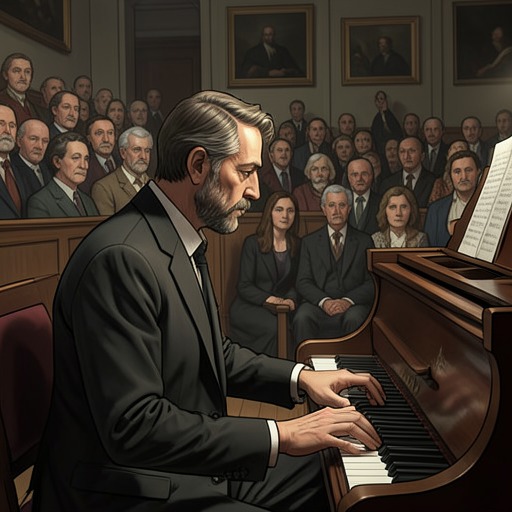
La transformación de lo cotidiano en arte thus binds together a formal proposition and a personal wound. Mozart’s model makes the opera a way to gather the simultaneous thoughts, physical realities, and emotional confusions of everyday people into a larger composition. Salieri recognizes the result as a transformation from the commonplace into legend, but experiences that recognition through envy and religious anguish. The concept’s significance lies in both movements: life becomes art, and the observer who cannot perform that transformation confronts the distance between ordinary competence and genius.