Mozart’s Psychological Distress
AmadeusMozart’s Psychological Distress is the escalating fear, disorientation, and emotional collapse that overtake Wolfgang Amadeus Mozart as a faceless gray figure from his nightmares becomes an apparently real visitor demanding a Requiem. The distress is not simply an inward mystery: Antonio Salieri has deliberately staged the figure’s appearances, turning Mozart’s dream into an instrument of persecution. Its culmination comes when Salieri reveals himself, destroys Mozart’s unfinished music, and leaves him calling for his father in a childlike voice.
Recurring Figure and Growing Fear
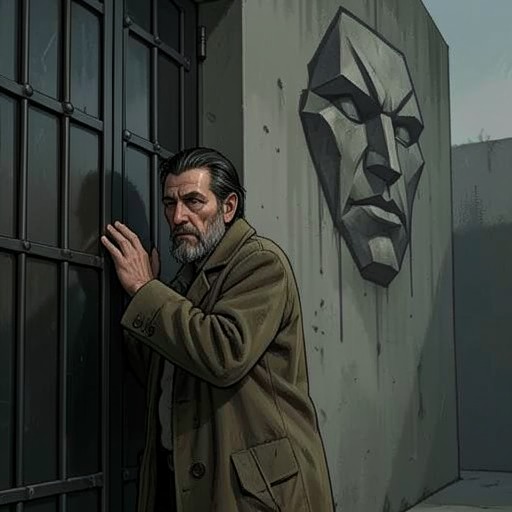
The distress first emerges alongside bodily pain and troubled sleep. Mozart says that he continues to suffer pain and also sleeps badly, plagued by nightmares. When Constanze Mozart warns him not to disclose too much, he describes the dream he repeatedly sees: a figure covered in a gray cloak approaches and beckons slowly. It has no face, only a gray, masklike surface. Mozart laughs nervously as he asks what the dream might mean; when Salieri questions whether he believes in dreams, Mozart dismisses the idea. His denial sits uneasily beside the detail with which he recounts the vision.
The figure’s most frightening quality is initially its obscurity. It has no recognizable face or stated identity, and Mozart can describe it only through its gray covering, mask, and gesture. The scene makes the unseen threat vivid by repeating the slow beckoning rather than explaining it. Later, Mozart says that the figure’s face remains masked and invisible even as it becomes increasingly real to him. That contrast—still hidden, yet harder to dismiss—marks the movement from a recurring nightmare toward an experience that feels present and immediate.
Mozart’s fear also presses into his relationship with Constanze. During a moment of frantic pleading and affectionate gestures, he tells her he is afraid and that something terrible is happening to him. He then imitates the figure’s more urgent summons, beckoning faster and insisting on its growing reality. Constanze says that she cannot bear the behavior any longer, tells him that it frightens her, and threatens to leave if it continues. Mozart’s distress therefore becomes visible not only in his account of the dream but in the strain it places on the person closest to him.
The Apparition and the Requiem
The threat intensifies when Mozart tells Salieri that he has seen the figure again, this time while awake. He says it stood before his desk, gray-clad and still masked, and ordered him to write a Requiem. When Mozart asked who had died, it gave no answer; instead, it required the work to be finished by their next meeting and then left. The unexplained commission joins the figure’s earlier menace to Mozart’s work: the dream no longer merely frightens him but seems to impose a task with a deadline.
Mozart’s response is conflicted. He acknowledges that Constanze has reason to leave and blames himself, saying she thinks he is mad. Asked directly whether he is, he answers that perhaps he is and that he thinks he may be. This is an expression of uncertainty, not a settled diagnosis. His account presents him as frightened by what he experiences and unsure how to interpret it; the play later supplies an external cause for at least the figure’s appearances without erasing the reality of his fear.
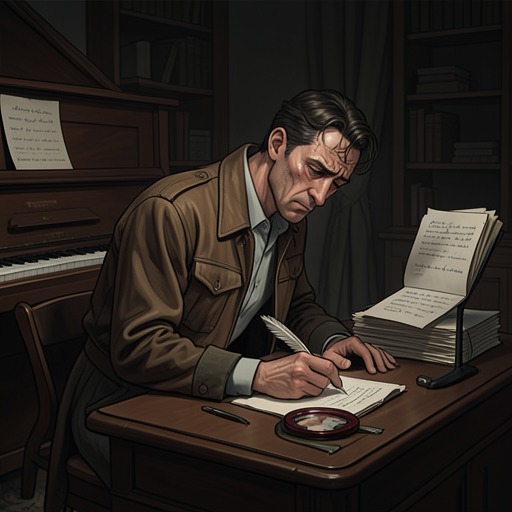
The Requiem becomes entangled with Mozart’s exhaustion and sense of failure. When Salieri reaches him, Mozart begs for more time, explaining that the work is unfinished and asking whether God could want it left incomplete. He points to the completed Kyrie, describing its two themes as a double fugue, and offers the pages as evidence that the work deserves to continue. His plea makes the score both a musical achievement in progress and something he hopes might protect him from the figure’s demand. He also confesses that, despite having boasted of writing hundreds of perfect pieces, he has written nothing definitively good.
Salieri’s Deception Revealed
The audience learns that Salieri knows the figure’s identity because he created it. In a direct confession, he says that in November 1791 he walked Vienna’s deserted streets for seven consecutive freezing nights. At one o’clock, he stopped beneath Mozart’s window and became, in his words, Mozart’s most terrible clock. Night by night, he showed one fewer finger, making the approaching end visible as a count. On the final night he stopped counting and beckoned, reproducing the gesture of Mozart’s dreams.
Salieri’s account links Mozart’s terror to a calculated performance, but it also shows how the deception takes on a life within the scene. When Mozart answers from the window by inviting the statue from Don Giovanni to supper, Salieri finds himself nodding and crossing the street as though following the opera’s action. The staging lets Mozart’s art answer the threat, while Salieri’s movement makes him seem to enter the dream he has manufactured. He arrives at Mozart’s room to find him pleading for time and asking that the completed Kyrie be carried to God. The apparent supernatural messenger is thus exposed as Salieri, but the revelation does not undo the distress produced by the repeated visits.
Salieri takes the pages, declares the music good, and then deliberately tears the score. He also tears off a corner, places it on his tongue in a communion-like gesture, and swallows it, describing Mozart and himself as poisoned by one another. As Mozart removes Salieri’s mask and hat, the disguise gives way to the identity behind it. Salieri says that ten years of his hatred have mortally poisoned Mozart. The destruction of the manuscript turns the revelation into an immediate act of further harm: Mozart’s plea for protection and additional time is answered by the destruction of the very work he had offered as proof of his worth.
Collapse and Significance
After the score is torn, Mozart crawls under the table, compared in the stage directions to an animal seeking a burrow or a child seeking a hiding place. Salieri kneels nearby and repeatedly begs him to die and leave him in peace. Mozart then cries out for his father. When he emerges, he smiles at Salieri and calls him Papa, raising his arms as if asking to be lifted and recalling a childhood game. He sings a childish-sounding refrain, and Salieri describes the man’s degradation and the reduction of the world’s deepest voice to a child’s tune.
This ending gives Mozart’s distress a visible and disturbing form without naming it as a medical condition. His shift from pleading over the Requiem to calling for his father and singing in a small, childlike voice marks a rupture in his behavior. The stage image also reverses the power of the earlier scenes: the adult composer who tried to answer the gray figure with music is now exposed as vulnerable before Salieri, who has revealed both his identity and his cruelty.
Salieri leaves while Mozart continues singing. Constanze, returning from Baden with her hat in her hand, finds her husband on the table, still singing; he notices her and addresses her uncertainly. Her arrival does not resolve the episode or explain its full aftermath. Instead, the scene closes with the distress still present in Mozart’s altered manner, while the audience knows that the masked figure was no supernatural messenger but Salieri’s deliberate creation. The recurring mask, beckoning hand, nightly countdown, and broken score bind Mozart’s private fear to the conflict between the two composers.