Tundra Two
AniaraTundra Two is a Martian setting remembered as both a place of prolonged hospital confinement and a landscape where Mimarobe and Nobia hoped to spend time outdoors. The text sets its dreary barracks-hospital wards against a vision of a contamination-free spring, making the location a point of tension between enforced enclosure and a possible return to the open terrain of Mars.
Setting and Physical Features
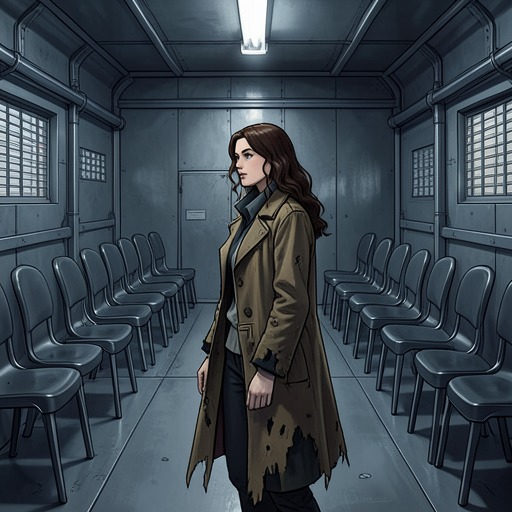
Tundra Two is identified with Mars through references to its wards and to the hoped-for Martian spring. The few concrete details give the place two distinct aspects. One is institutional: barracks-hospitals, with wards where a woman spends a year or more. The other is environmental: plexi-housing stands at the site, and black frigitulips grow in the surrounding terrain, adapted to the planet’s freeze. The text does not provide a map, describe the settlement’s layout, or explain how its medical and residential facilities operate. What it does offer is a compressed picture of a human presence on Mars, where life is organized around both shelter and a harsh planetary environment.
The plexi-housing belongs to Mimarobe’s recollection of a possible outing with Nobia. They had hoped to go browsing in the Martian spring without contamination. That detail makes the season more than a change in weather: access to the outdoors is qualified by a condition of safety. The passage does not specify the source or mechanics of contamination, so the image remains focused on the desire for an uncontaminated excursion rather than on a technical account of environmental protection. Against the frozen conditions suggested by the black frigitulips, the anticipated spring holds out a limited possibility of movement and ordinary shared activity.
Hospital Wards and a Return to Earth
Tundra Two also figures in an account of extended illness and recovery. After being pulled back from a state described as fluttering away, a woman spends a year or more in dreary wards of barracks-hospitals there. The passage associates the stay with a difficult period, but does not describe the treatment or give further medical details. Its emphasis falls on duration and setting: recovery is not a single turning point but a long interval within institutional wards.
After that period, she takes a bargain-fare goldonder from Mars to Earth. The journey marks a change of location and a return from the hospital setting, but it does not end her connection to people in need on Mars. She resumes assisting refugees and organizing regular collections for people requiring help on Mars and Venus. Tundra Two therefore sits within a larger movement between residence on Mars, a prolonged stay in its wards, and a return to Earth followed by continued practical support for others. The evidence does not establish that the woman’s later work is based at Tundra Two; rather, it makes the place one part of the history preceding her return and renewed assistance.
Mimarobe and Nobia’s Remembered Spring
A later recollection gives Tundra Two a more intimate significance. Mimarobe remembers the plexi-housing and the plan to browse with Nobia in spring, free from contamination. The outing is expressed as a hope, not as an event that the text confirms took place. That distinction matters: the passage preserves a shared intention while leaving its fulfillment unresolved. The location becomes a repository for a possible experience, one that can be recalled even when the narrative does not present it as achieved.
The surrounding landscape is described through stark, plain forms, while the black frigitulips are tempered to the planetary freeze. Nobia is portrayed as bound to this terrain with all her soul. The passage thus gives her attachment a material setting: not an abstract Mars, but a severe landscape with distinctive growth and an anticipated spring. The contrast between the cold-adapted flowers and the hope of contamination-free browsing does not erase the harshness of the place. Instead, it lets the prospect of moving through that environment with another person stand out against the conditions that make such an outing uncertain.
Narrative Significance
Tundra Two’s significance rests on the difference between what is endured there and what is imagined there. Its hospital wards are associated with a long, dreary stay; its plexi-housing and spring landscape belong to the memory of a shared plan. These are not interchangeable versions of the place. Together, they make Tundra Two a setting where confinement and a hoped-for encounter with the Martian outdoors occupy the same geography.
The recollection also links place to duration. A year or more in the wards gives the location weight as a site of extended recovery, while Mimarobe’s return to the hoped-for spring makes it part of a continuing emotional memory. The text offers no account of Nobia and Mimarobe actually browsing there, and no fuller description of the settlement’s everyday life. Its force comes instead from the contrast it does establish: institutional enclosure against stark open terrain, planetary freeze against spring, and an unfulfilled hope of safe movement against the years of hardship associated with Mars.