1976 school year
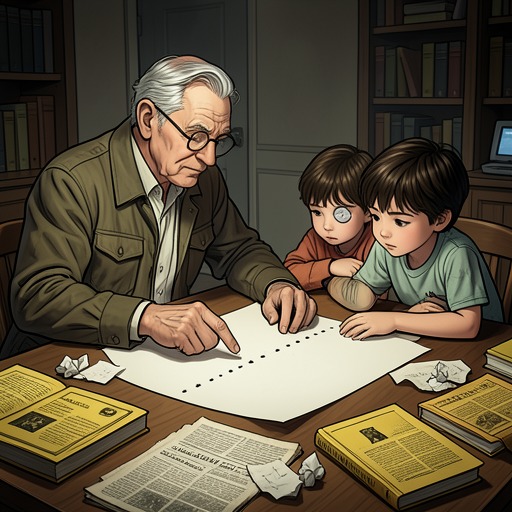
AnotherThe 1976 school year marks Tatsuji Chibiki’s direct encounter with the disaster surrounding third-year Class 3. After an off year in 1975 seemed to offer hope that the pattern had ended, he took charge of the class again and found himself inside an on year: fourteen people died, the classroom was changed without stopping the disasters, and the identity of the extra person disappeared from the survivors’ memories. His experience becomes one of the principal historical foundations for understanding the Yomiyama phenomenon and the class’s later attempts to manage it.
Background and Status
Tatsuji Chibiki had already heard that the same phenomenon had afflicted the preceding third-year Class 3 and caused many deaths. In 1976, he was assigned to take charge of the class once more, this time as a member of a class people had begun calling cursed. The preceding year, 1975, had been an off year, and that apparent reprieve encouraged the hope that the disasters might have ceased. Instead, 1976 proved to be an on year, turning that hope into a decisive historical reversal.
Chibiki’s position also gives his account unusual authority. Because he had no direct link to the contemporary third-year Class 3, he regarded himself as safe from the phenomenon’s effects and could interact normally with students while providing information in the Secondary Library. His distance from the current class allowed him to explain what he had experienced without being treated as one of the class’s directly implicated members.
The Fourteen Deaths
The 1976 school year produced fourteen deaths in a single year: five students from third-year Class 3 and nine of their immediate family members. The deaths did not follow one uniform pattern. Accident was followed by illness, then suicide and murder, demonstrating the varied forms through which the disaster could manifest and making the total impossible to reduce to one identifiable mechanism.
Chibiki initially suspected that the classroom itself was cursed. After summer break, he appealed to the school and tried moving the class to a different classroom. The change failed to stop the months of disasters. The catastrophe therefore appeared to exceed any ordinary architectural explanation: relocation altered the setting but not the course of events.
The Extra Person and Memory Failure
After the graduation ceremony in March, the extra person who could not possibly have been present vanished. Yet Chibiki, despite having served as the class’s head teacher, could not remember who that person had been. He later gathered information and found the name of someone who seemed a likely candidate, but the name was not attached to an actual memory of having experienced that person’s presence.
This gap became part of the phenomenon’s deeper terror. Chibiki had not yet fully understood that the memories of those involved could be altered, but the 1976 school year supplied a concrete example of the problem: the end of the disaster did not restore reliable knowledge of its cause. When asked whether records and memories were tampered with while the casualty remained hidden in the class, Chibiki confirmed that this did happen, without hesitation. Details that should have appeared impossible could consequently seem normal, while the true identity of the casualty remained concealed.
Historical Consequences
Chibiki’s experience becomes a precedent for later countermeasures. The contemporary class’s attempt to increase the number of students treated as not there to two is eventually abandoned as ineffective, and the change in everyone’s behavior toward Mei Misaki and Koichi Sakakibara is marked by Mr. Kubodera’s death. The 1976 example helps explain why the class treats social recognition, records, and memory as matters of survival rather than ordinary school administration.
The year also foreshadows the violence that later surrounds the class. Mr. Kubodera’s right hand emerging from a bag with a sharp-bladed knife, Naoya Teshigawara’s belief that Tomohiko Kazami’s forgotten childhood indicated something was wrong, and the fire at Sakitani Memorial Hall all belong to the broader pattern of disasters whose causes and meanings are obscured until after the fact. In the memorial hall massacre, the deaths were ultimately shown not to have been caused by the fire: Kensaku Numata was stabbed with metal cooking skewers, four students died from multiple stab and cutting wounds, and Izumi Akazawa died after her spine snapped in a fall from a second-floor balcony. The later discovery that Mieko Numata had killed six people and then set the fire demonstrates how the class’s history repeatedly combines inexplicable catastrophe with concealed human action.
Narrative Significance
The 1976 school year functions as both historical evidence and a warning. It establishes that an off year offers no permanent safety, that an on year can extend beyond the classroom into students’ families, and that changing physical surroundings cannot necessarily interrupt the disaster. Chibiki’s recollection also introduces the paradox at the center of the phenomenon: the people who survive may lose precisely the memories needed to understand what happened.
The year is therefore not merely an old incident in the class’s history. It is the moment when the phenomenon becomes legible as a recurring structure of deaths, concealment, and retrospective uncertainty. Its fourteen victims define the scale of the danger, while the disappearance of the extra person from Chibiki’s memory shows that the disaster can continue to act on knowledge even after its visible casualties have stopped.