1996 school year
AnotherThe 1996 school year functions as the clearest documented case of the Yomiyama phenomenon before the events surrounding the current third-year Class 3. It was an “off year” in the later terminology, yet the class still suffered a disastrous reversal: Mami Asakura, a student who had died in 1993, returned as the hidden “casualty,” while altered records and memories made her presence appear entirely ordinary. The year therefore demonstrates both the reach of the phenomenon and the terrible cost of mistaking an impossible presence for a normal classmate.
Status as an Off Year
The surviving class records identify 1996 as the year before the current investigation and explicitly describe it as an “off year.” That classification initially suggests a period in which the disasters should have been absent, but the year’s history complicates any simple division between dangerous and safe years. The class did succeed in applying its protective measure during the first half of the year, and no one died during that period. The apparent success did not eliminate the underlying threat; it depended on maintaining a collective decision that one student would be treated as if absent.
The class’s strategy created an exceptional social order in which ordinary recognition was suspended. A person directly connected to third-year Class 3 could be placed outside the group’s everyday acknowledgments, while someone who had already died could be inserted into the class without anyone recognizing the contradiction. Mr. Chibiki explained that people without a direct link to the class were comparatively safe from the phenomenon, which also clarified why Mei Misaki had been able to visit the Secondary Library and obtain information from him. The 1996 record thus belongs not only to the history of a school year but to the system of exclusions and altered recognitions that governs the class.
The Casualty Mami Asakura
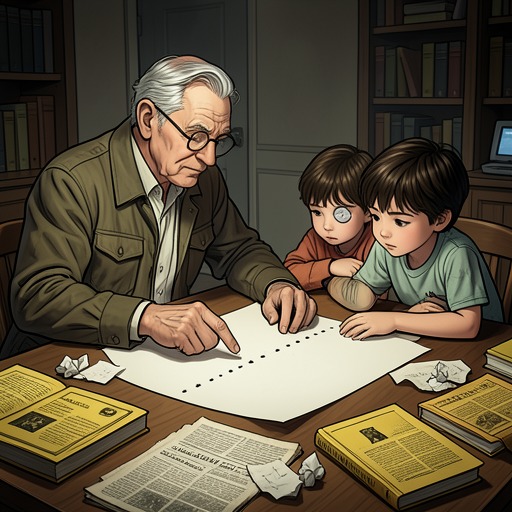
The class-list binder records four red X marks beside students’ names for 1996, together with notes identifying deaths among family members. Three related family deaths bring the total number of people connected to the class who died that year to seven. At the bottom of the second page, however, another name appears in blue ink: Mami Asakura. Mr. Chibiki identifies her as that year’s casualty, even though her name does not belong on the 1996 class list.
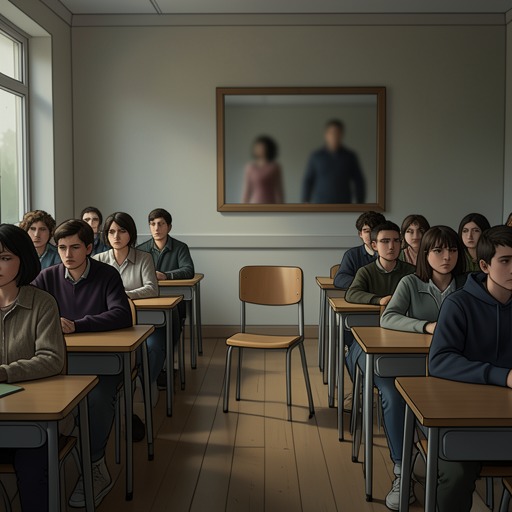
Mami Asakura had originally been a student in third-year Class 3 in 1993. The 1993 list places a red X beside her name and records her death on October 9 from illness. In reality, she died at fourteen. Three years later, the phenomenon inserted her into the 1996 class from the beginning of April through the graduation ceremony the following March. Everyone accepted the false premise that she was beginning her third year, and no one recognized that she was a student who could not possibly have been there.
The contradiction is especially severe because Mami did not appear as an imitation or an uncertain substitute. The returning casualty was the actual person who had died, brought back without awareness that she had already occupied the role of casualty. Her continued identity made the deception more complete: she was not a fake person whose behavior might expose an inconsistency, but the dead person herself, restored to the world without knowledge of the impossibility.
Altered Records and Memories
The 1996 school year establishes that the phenomenon changes more than paperwork. Records and memories are tampered with throughout the class’s social world, so details that would ordinarily be impossible are made to seem coherent. Mr. Chibiki confirms that this alteration can conceal the casualty’s identity from everyone involved. The class list therefore becomes both evidence and an object of distortion: names, dates, and relationships can be made to support a reality that never existed.
The effect extended to Mami’s family, friends, teachers, and classmates. Even Mr. Chibiki, despite serving as an observer of the class, had no suspicion that Mami was present when she should have been dead. The false reality included the belief that she remained fourteen while apparently entering her third year, a discrepancy that no one could perceive as strange because memories of the past and every surrounding detail had been adjusted to fit her presence.
The restoration of reality occurred only after the graduation ceremony, when the casualty vanished. At that point the records and memories returned to their proper state. People close to Mami lost the memories that she had appeared as the casualty, including the memory that she had been present in the class at all. The 1996 school year consequently survives in two incompatible forms: as the year lived by the participants under the altered reality, and as the corrected record left after the phenomenon withdrew.
Collapse of the Protective Strategy
The class’s “not there” strategy initially worked. One student accepted the burden of being ignored, and the first half of the year passed without a death. The arrangement failed after the second semester began, when the student assigned to the role could no longer endure the pressure and alienation. The student broke the class’s decision and demanded recognition, insisting that being treated as absent could not erase actual existence.
Once the strategy was compromised, seven people linked to the class lost their lives. The contrast between the quiet first half and the lethal aftermath shows that the method did not remove the phenomenon; it held the danger in suspension only while its social rules remained intact. The student’s inability to continue was therefore not merely a personal lapse. It exposed the cruelty of making one member bear the entire psychological cost of protecting everyone else.
The consequences also demonstrate how quickly collective behavior can change when the class believes its strategy has failed. In the later year, an attempt to increase the number of students treated as “not there” to two proves ineffective, and after Mr. Kubodera’s death the class gradually stops ignoring Mei Misaki and Koichi Sakakibara. The 1996 precedent gives that change its historical meaning: the students are not simply abandoning a custom, but responding to evidence that enforced absence may no longer control the disasters.
Influence on the Later Investigation
The 1996 case becomes a model for interpreting the current year. Mr. Chibiki’s account supplies the factual basis for believing that an extra person can be concealed by changes in both documentation and memory. It also explains why the class’s members cannot rely on ordinary recollection to identify the casualty. A missing childhood memory, an inconsistent record, or a person’s apparently impossible age may be significant to an investigator, but the phenomenon itself is capable of rewriting the context that would make those clues meaningful.
That danger appears in Naoya Teshigawara’s suspicion of Tomohiko Kazami. Teshigawara tests Kazami by asking about a childhood hideout and a failed bicycle trip toward the ocean; when Kazami cannot remember either episode, Teshigawara concludes that the real Kazami may have died long ago and that the present Kazami may be the extra person. The 1996 case shows why this reasoning is unreliable. The casualty is not a counterfeit person, and ordinary lapses in memory do not establish that someone has returned from death. The example also reveals how fear encourages an observer to turn ambiguous evidence into a decisive accusation.
By the time Koichi considers whether Reiko Mikami is the current extra person, the 1996 school year has made the moral stakes unmistakable. The evidence for that judgment rests overtly on Mei’s doll’s eye and its perception of the color of death, while the rest is circumstantial. The earlier year warns that the class’s memories can feel completely authentic and still be false, and that returning the casualty to death is not an abstract correction to a list but an act directed against a person who experiences the restored life as real.
Historical and Thematic Significance
The 1996 school year is the book’s essential case study in the instability of identity under the Yomiyama phenomenon. Mami Asakura is simultaneously a dead student in the corrected historical record and a living classmate in the reality inhabited by the 1996 class. Her case turns the class list into a site where death, memory, and institutional recognition contradict one another, while the eventual disappearance of her presence exposes how thoroughly the false world had been constructed.
Its history also clarifies the difference between survival and justice. The “not there” strategy can postpone deaths, but it does so by isolating one student and demanding that the group deny visible reality. When that denial breaks, the deaths return with devastating force. The 1996 example therefore explains why later students treat the phenomenon through rigid rules, secrecy, and desperate collective tactics, even though every tactic risks reproducing the violence it is meant to prevent. The year remains a warning that the class can preserve itself only through an unstable exception—and that the price of restoring the world may be the destruction of someone whom the altered world has taught everyone to recognize as alive.