Matsunaga’s Killing of the Extra Person
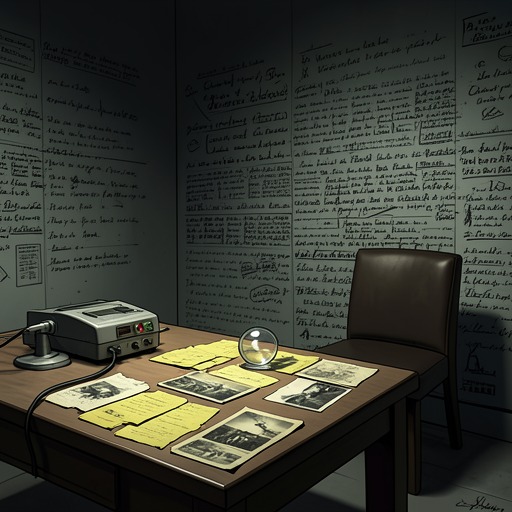
AnotherMatsunaga’s Killing of the Extra Person is the decisive precedent behind the instruction to “return ‘the casualty’ to Death.” Recounted through Katsumi Matsunaga’s old cassette recording, the incident shows how the extra person can be killed by an ordinary class member, how the resulting disappearance repairs the surrounding records and memories, and how the end of the disasters can transform a killing into a horrifying form of “salvation.”
Background and Hidden Identity
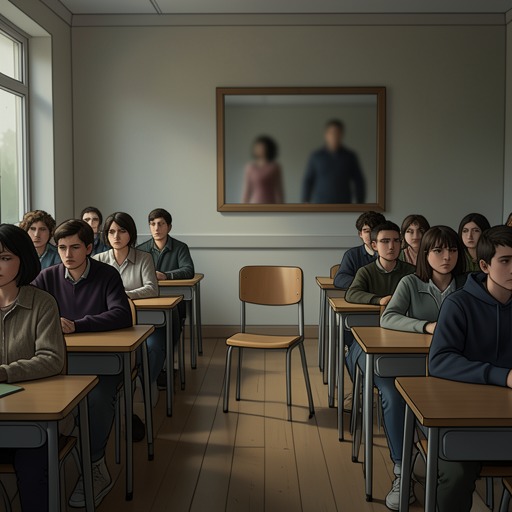
The event belongs to the earlier cycle of the phenomenon, fifteen years before the present crisis. Matsunaga’s account is presented as both a confession of a crime and a warning to the students now confronting the same danger. Its significance depends on the class’s exceptional condition: according to Mr. Chibiki, people with no direct link to Yomiyama North Middle School Third-Year Class 3 are comparatively safe, whereas records and memories connected to the class may be altered when the extra person is hidden among its members.
The older incident therefore supplies a concrete explanation for a condition that initially appears impossible. The class had not merely forgotten an obscure former student. The boy’s existence had been removed from the ordinary social record. Matsunaga eventually learned that the camping trip had included nineteen students, not twenty, and concluded that the boy he had killed must have been the extra person hiding in the class that year.
The Fight in the Woods
Matsunaga recalled that the students descended the mountain and returned to the lodge to call for help. In the confusion, a flare-up began. He could not remember what had provoked it and described himself as badly shaken, like everyone else. The confrontation became a physical struggle with the unidentified boy. Matsunaga believed that he had shoved him as hard as he could, although the precise movement remained unclear to him.
When Matsunaga regained his senses, the boy was no longer moving. He had fallen beside a huge tree in the woods. Matsunaga shouted, received no answer, and approached him to find a branch driven deep into the back of his head, with blood pouring from the wound. Matsunaga inferred that the boy had struck a branch jutting from the tree when the shove sent him backward. The recording never supplies the victim’s name: whenever Matsunaga tried to say it, severe static covered the sound, leaving the name permanently unknowable.
The uncertainty surrounding the mechanics of the death does not remove Matsunaga’s responsibility. He repeatedly acknowledged that he had caused the boy’s death and had killed him, even while admitting that he could no longer reconstruct every detail. The event thus joins accidental circumstance to moral accountability rather than allowing the former to erase the latter.
Erasure and “Salvation”
Matsunaga’s discovery came when he checked the number of students who had participated in the trip. The adults told him that only nineteen students had gone and effectively denied that anyone bearing the missing boy’s identity had ever existed. The disappearance extended beyond official information. Teachers, students, the boy’s parents, and other people connected with the class no longer remembered that he had belonged to it since April.
According to Matsunaga, the erasure began the day after the killing. He described the result as memories being “repaired.” The phenomenon did not simply conceal the casualty from the students; it retroactively made the surrounding world consistent with the casualty’s absence. The missing person became a blank space that the class’s records and recollections treated as natural.
The consequences also seemed to confirm the killing’s supernatural function. Matsunaga said that the disasters for that year ended after the extra person died, although only ten days had passed when he made the recording. He called the act “salvation” for everyone in the class, stressing that the saving effect had occurred by chance rather than through a plan he had understood beforehand. This language creates the event’s central contradiction: Matsunaga’s confession preserves the fact of murder even as the phenomenon removes the victim from everyone else’s memory.
The Instruction to the Later Class
Matsunaga did not record the incident merely to relieve his conscience. He intended the confession as practical advice for the students who would follow fifteen years later. His conclusion was categorical: the casualty had to be returned to Death, and the extra person had to be killed after the disasters had begun because that was the only way to stop them.
The recording consequently becomes an inherited rule, not just a historical testimony. Mr. Chibiki confirms that the class’s records and memories can be tampered with, while the attempt to treat both Mei Misaki and Koichi Sakakibara as absent eventually loses its purpose when increasing the number of supposedly absent students has no effect. The older killing helps explain why the present class regards identifying and eliminating one person as a possible solution, even though the identity of the extra person cannot be read from appearance alone.
The precedent also intensifies the danger of suspicion. During the later crisis, Naoya Teshigawara begins to suspect Tomohiko Kazami because Kazami cannot remember shared childhood places and experiences. The gap in memory resembles the repaired memories described by Matsunaga, but it does not establish that Kazami is the extra person. Matsunaga’s story therefore offers both a method and a trap: it gives the students a model for interpreting the phenomenon while encouraging them to convert uncertain signs into accusations.
Narrative and Ethical Significance
Matsunaga’s Killing of the Extra Person turns the phenomenon’s abstract rules into a remembered human act. The extra person is not only a concealed identity in a class roster; he is a boy who was present on a mountain trip, fought with a classmate, died beside a tree, and was then erased from the memories of everyone who should have mourned him. The event exposes the violence hidden inside the phrase “return the casualty to Death.”
Its ethical force lies in the collision between intention and consequence. Matsunaga did not knowingly perform a ritual or execute a calculated remedy. He fought in confusion, caused a death whose exact mechanism he could barely remember, and only afterward interpreted the disappearance and the end of the disasters as proof that the victim had been the extra person. Yet the apparent success of the act allows the class to treat murder as a form of rescue. The recording preserves Matsunaga’s guilt precisely because the supernatural repair would otherwise erase the crime along with its victim.
The event also establishes a recurring contrast between recognition and protection. The class can protect itself by denying someone’s existence, first through the “not there” strategy and, in the older case, through the victim’s complete posthumous removal. But protection depends on a person being made socially unreal. Matsunaga’s confession resists that erasure for the listener: even when the boy’s name is lost beneath static, the circumstances of his death and the responsibility for it remain.