“We are all wounded to death”
Antigone“We are all wounded to death” is Creon’s weary recognition that the conflict has injured more than its immediate victims. It follows the Chorus’s announcement that Haemon is mortally wounded, turning a report of individual suffering into a bleak statement about the shared cost of the tragedy.
The Line in Context
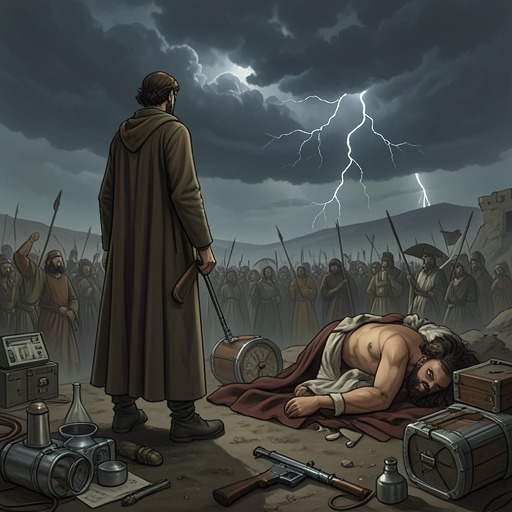
The expression comes after Creon concedes that there is nothing more he can do. The Chorus then tells him that Haemon is mortally wounded; Creon answers, “Yes, we are all wounded to death.” Its placement makes the line a response to Haemon’s condition, but its plural subject carries the injury beyond him.
From Political Duty to Collective Damage
Earlier, Creon had argued that someone must say yes, take the helm, and steer a stricken ship through crime, poverty, and misery. In that account, the ruler’s necessary decisions entail violence: the ship’s crew refuses to work, the officers protect themselves, and the person at the wheel may lose his name in the storm. The later image of universal wounding gives that political metaphor its human consequence. The order Creon tried to preserve has not spared those caught within it, including the ruler himself.
Antigone’s Refusal and the Cost of Choice
Antigone frames the conflict as a division of roles: Creon must put her to death, while she must bury her brother. She insists that she has not said yes and that the choice to refuse remains hers, even as she acknowledges that Creon can have her executed. Her refusal is not a negotiation over the terms of political life; she says she wants everything, whole and complete, or nothing. Against her absolute standard and Creon’s claim that someone must accept responsibility for steering the state, “we are all wounded to death” names the damage left by their irreconcilable choices.
A Tragic Coda
Creon’s line does not undo his earlier insistence on duty or Antigone’s insistence on refusal. Instead, its weary brevity follows the expansive ship-and-storm speech and the Chorus’s immediate report of Haemon’s wound. The shift from one mortally wounded son to “we all” makes the ending communal without making the suffering equal: Haemon’s condition prompts the words, while the plural turns the recognition toward everyone implicated in the catastrophe.