“Without little Antigone, you all would have had such peace”
Antigone“Without little Antigone, you all would have had such peace” is a recurring expression that frames the ending of the play. Spoken first by the Guard while he checks a message, then answered and enlarged by the Chorus, it moves from an intimate, fragmentary farewell to a bleak account of what remains after Antigone’s defiance: Thebes is quiet, but the peace comes only after the deaths are complete.
The Guard’s Recalled Message
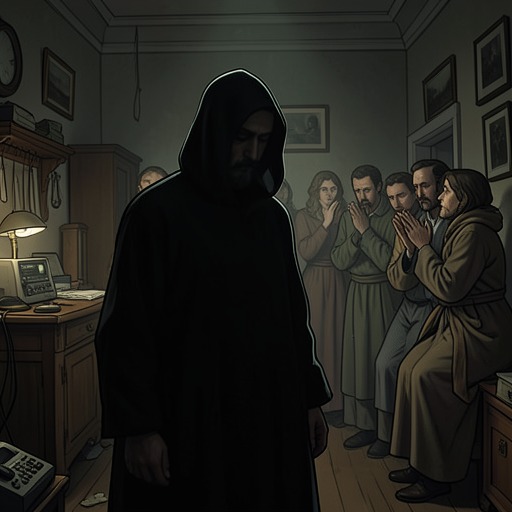
The expression appears first as part of the words the Guard reads aloud: “Without little Antigone, you all would have had such peace. I love you...” He ends by asking, “That’s it?” The small question makes the message sound both painfully incomplete and startlingly plain. The phrase does not explain Antigone’s choices or argue her case; it sets her presence against the peace others might have enjoyed without her.
This scene is framed by the Guard’s concern about the consequences of helping her. He says that if he is searched he will be court-martialed, then looks again at the ring and offers to write in his notebook what Antigone would have wanted to say. The message therefore belongs to a moment of practical risk as well as farewell: the Guard offers to preserve words for someone facing death, and the expression he reads places her absence at the center of the peace she will not live to see.
A Phrase Recast at the Close
The Chorus returns to the thought in the final speech, now speaking beyond the Guard’s immediate exchange: “And so, here we are. Without little Antigone, it’s true, they all would have had such peace.” The qualification “it’s true” gives the line the shape of a concession. The Chorus acknowledges that Antigone’s absence would have spared those around her the disturbance her uncompromising action brought, but the play has already made the price of that disturbance impossible to separate from the lives lost.
The repetition changes the expression’s scale. In the Guard’s hands, it is one piece of a personal message, followed by “I love you...” In the Chorus’s hands, the same idea becomes a verdict on the completed action. Its return binds private tenderness to public aftermath without resolving the tension between them: Antigone is both the source of upheaval and the figure whose disappearance permits the survivors to call themselves peaceful.
Peace After the Deaths
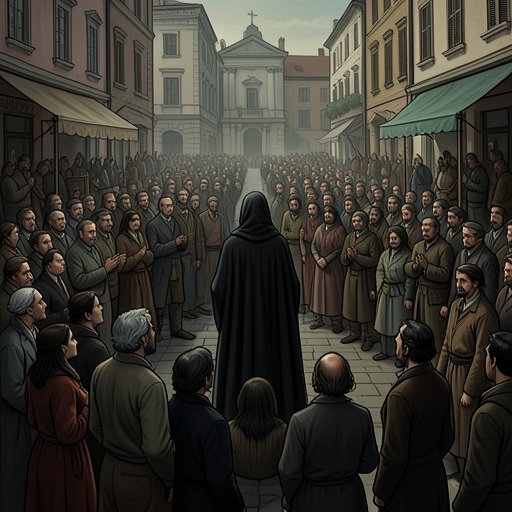
The Chorus immediately turns from the counterfactual to the actual ending: “But now, it’s over. They’re at peace anyway.” The word “anyway” strips the peace of triumph. It is not a settlement reached by understanding or reconciliation; everyone who had to die is dead. The Chorus includes those who believed opposing things, those who believed nothing, and those caught up in the story without understanding it. Their differences persist in the account, but death has made them alike.
The image becomes harsher as the speech describes the dead as stiff, useless, and rotting. The living, meanwhile, will slowly forget them and mix up their names. In this sequence, peace is not a recovered harmony but the stillness left by deaths and the gradual erosion of memory. The expression’s opening promise of peace is therefore answered with a consequence that makes the promise bitter: the conflict ends, but not through a compromise that saves the people drawn into it.
Antigone’s Work and the Empty Palace
The Chorus says that Antigone’s fever has subsided and that its name will never be known; her work is done. The expression’s reference to “little Antigone” sits beside this closing uncertainty. The phrase gives her a tender, familiar scale, while the Chorus presents the force of her action as something that cannot finally be named or explained. The play closes not by supplying a settled account of that force, but by marking its exhaustion.
The final peace settles over Thebes and the empty palace, where Creon will begin to wait for death. This ending completes the expression’s movement from an imagined world in which Antigone’s absence would have spared everyone trouble to a present in which the survivors are at peace only after the losses have occurred. The line thus serves as the play’s last bitter contrast: without Antigone there might have been peace, yet the peace that actually arrives is inseparable from her death, the deaths of the others, and the silence of the palace.