“You all look like cooks”
Antigone“You all look like cooks” is Antigone’s contemptuous image for people who make a workable routine out of the disorder and compromises she refuses to accept. First prompted by Creon’s reference to the kitchen, the phrase becomes a taunt about his political pragmatism and the social world it represents: a world that must keep working, even when its work entails death and resignation.
From political necessity to kitchen
The image takes shape during Creon’s effort to persuade Antigone not to die over Polynices’ burial. He calls the confrontation political, insisting that his task is to keep things clean and orderly even as Polynices’ unburied body rots in the sun under guard. The language of cleanliness sits uneasily beside the decomposing corpse, and the practical work of governing cannot erase what that body makes visible. Creon presents order as a burden he must manage; Antigone hears in that account a defense of the very compromises she rejects. Creon further frames his conduct as the requirement of a job: the choice of whether Antigone should undertake her action may be discussed, but anyone who takes on that job must perform it as he does. The kitchen metaphor answers this conversion of a moral conflict into work. To Antigone, the ruler who speaks in the name of duty and procedure looks less like a tragic authority than a cook occupied with the operations of an ordinary establishment.
A rebuke sharpened by refusal
The insult belongs to a wider clash over whether necessity can justify compromise. Antigone says that everyone has a part to play: Creon must have them put to death, and she and Ismene must bury their brother. She can do little, she acknowledges, but she can do what she can. When Creon tries to save her by distinguishing political obligation from her own fate, she refuses to say yes. His crown, guards, and royal authority may allow him to order her death, she argues, but they cannot make her consent to his politics. That refusal also sets the terms of her demand for happiness. Antigone rejects the modest satisfaction of taking whatever small chance at happiness can be managed, insisting on everything, whole and complete, or nothing. The cook image condenses her judgment of those who accept a lesser portion and then treat the arrangement as life’s proper measure. Her contempt is not simply for domestic labor; it is for a mode of accommodation that makes a compromised existence seem sufficient.
From image to confrontation
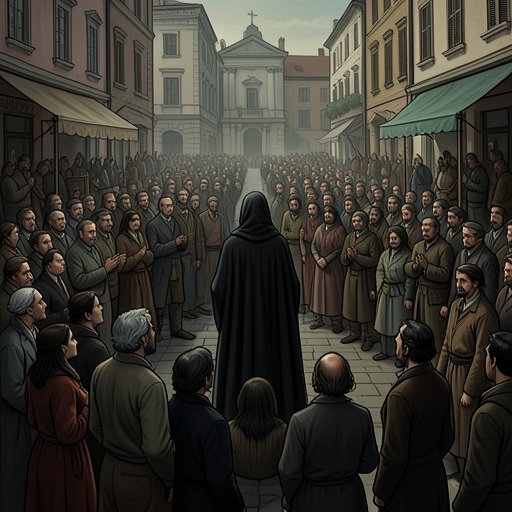
When Antigone turns the kitchen reference back on Creon, she enlarges it into an accusation against the whole group: they have something ugly at the corner of the eye or clinging to the mouth, and they all look like cooks. The phrase moves from a jab at the king to a collective judgment of people who can live within the compromised order. She opposes their pursuit of happiness to her own refusal to settle, making the insult a compact expression of the distance between their standards of what can be accepted. Creon answers not with another defense of his political reasoning but with physical force, grabbing Antigone’s arms and ordering her to be quiet. She responds by calling him a cook and challenging his power to command her. The exchange makes the metaphor an immediate struggle over authority: Creon can seize her and issue orders, but Antigone denies that this gives his commands moral force or wins her agreement.
The phrase’s dramatic force
The phrase’s bite depends on the contrast between the scale of Creon’s responsibilities and the domestic smallness of the image. Creon describes a state in crisis through the language of work, order, and obligation; elsewhere, he compares political rule to steering a sinking ship amid crime, poverty, and misery. Antigone’s cook insult punctures the grandeur of that argument by recasting its speaker as an operator of routine, someone who accepts the job and performs it as required. It does not answer Creon’s claim that someone must say yes and take responsibility. Instead, it rejects the measure by which that necessity is supposed to settle the matter. The line also concentrates the play’s conflict between saying yes and saying no. Creon’s defense rests on the need to act within an imperfect political world; Antigone treats refusal as the last choice that remains hers. Calling the people around her cooks gives that conflict a concrete, repeatable image: they manage what can be managed, while she refuses to call management a sufficient answer. In that sense, the insult is both comic and severe, puncturing royal authority while revealing the irreconcilable standards beneath the argument.