Christmas Eve, near the end of the story’s opening frame
The Christmas Tree in the Snow
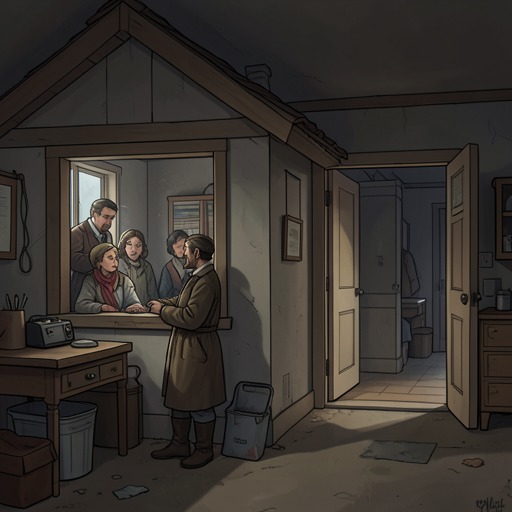
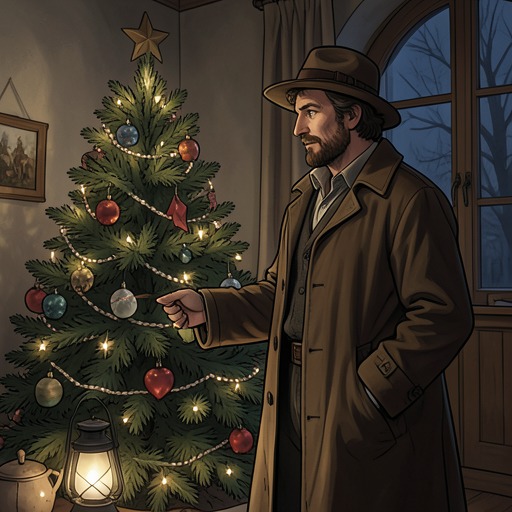
During a village-wide power outage, [Höppner](entity:character-recall-character-h-ppner-cf2ca5dcf857) follows fresh bootprints through the snow to the village square. There he finds the [Christmas](entity:time-recall-time-0cffe7da2c4d) tree felled and its lights cut, while the village sheriff and a municipal worker inspect the scene. The tracks show that Höppner and [Frieder](entity:character-recall-character-frieder-3b2e8c90003f) crossed paths: one set leads in and the other away.
Höppner presents the act as something everyone should know about Frieder, but immediately warns that it is neither the beginning nor the end of their story. The opening image establishes Frieder’s defiant appetite for disruption and frames the novel as a remembrance whose meaning cannot be reduced to its eventual tragedy.
Before Frieder’s suicide attempt
A Friendship Before the Crisis
[Höppner](entity:character-recall-character-h-ppner-cf2ca5dcf857) and [Frieder](entity:character-recall-character-frieder-3b2e8c90003f) have been classmates for years, and their friendship has grown through bike rides, films, and studying together. Höppner, meanwhile, feels trapped at home with his mother’s domineering boyfriend, [F2M2](entity:character-recall-character-f2m2-6c41b60d5c4a), who makes him help renovate the house while belittling him.
Höppner finds refuge in a small television and a part-time job at a chicken farm. His desire to leave for [Berlin](entity:location-recall-location-berlin-54cb4a75d0f6) is mixed with uncertainty about conscription and a future he cannot imagine wanting. The contrast between the life he endures at home and the companionship he finds with Frieder helps explain why the later shared house becomes more than a practical arrangement.
Before Höppner and Vera’s Berlin trip
A Message Beneath the Wallpaper
While helping [F2M2](entity:character-recall-character-f2m2-6c41b60d5c4a) wallpaper the living room, [Höppner](entity:character-recall-character-h-ppner-cf2ca5dcf857) secretly paints an insult on the bare plaster. He covers it with patterned wallpaper before F2M2 returns, and the man even praises the work. When F2M2 announces the next renovation task, Höppner takes the cue to leave.
He meets [Vera](entity:character-recall-character-vera-dfabe34d628c), and they hitchhike to [Berlin](entity:location-recall-location-berlin-54cb4a75d0f6). Their shared escapes from school and home already give their relationship a restless, provisional quality: they are drawn toward another life, though neither yet knows what it will look like.
During an early trip to Berlin
The Unlikely Berlin Bus Ride
In [Berlin](entity:location-recall-location-berlin-54cb4a75d0f6), [Höppner](entity:character-recall-character-h-ppner-cf2ca5dcf857) and [Vera](entity:character-recall-character-vera-dfabe34d628c) experiment with hitchhiking in the city, but nobody stops. A double-decker bus driver lets them board despite their having no money, and they explore the university district and a vast cafeteria.
Vera pulls a room-for-rent notice from a bulletin board and turns their visit into an improvised exercise in apartment hunting. At the viewing, she jokes to the old landlady about studying Marxism-Leninism in Moscow and asks about trains to Warsaw, leaving the woman speechless. The encounter makes Berlin feel both reachable and alien, a possible future filtered through their irreverent humor.
After the early Berlin visit
The Hitchhike Home
The ride back takes longer than expected. At a motorway service area, [Höppner](entity:character-recall-character-h-ppner-cf2ca5dcf857) asks [Vera](entity:character-recall-character-vera-dfabe34d628c) whether she would visit him if he moved to [Berlin](entity:location-recall-location-berlin-54cb4a75d0f6) and whether she wants children; she brushes off the questions, then strokes his cheek as they wake in the sun.
Vera secures a lift from a truck driver by flirting, and the pair arrive back at school just before the day begins. Their intimacy is real but difficult to define: Höppner watches Vera with open longing, while her teasing and independence keep him unsure of what their future together might be.
The morning Höppner returns from his trip
The Class Learns of Frieder’s Attempt
[Höppner](entity:character-recall-character-h-ppner-cf2ca5dcf857) returns to class after being away and notices that [Frieder](entity:character-recall-character-frieder-3b2e8c90003f) is missing. In German class, [Doktor Turnschuh](entity:character-recall-character-doktor-turnschuh-a7909a6fac63) leads a discussion of Goethe’s Werther and whether unhappy love can justify suicide. Höppner argues that the fictional ending may simply be a way to make the story land dramatically.
[Cäcilia](entity:character-recall-character-c-cilia-47200cd1581b) breaks down and blurts out that Frieder has tried to kill himself. The class’s unusual silence and concern reveal that something serious has happened before Höppner has learned the details, abruptly turning a literary debate into a crisis among his friends.
Immediately after the class learns of the attempt
Frieder in the Locked Ward
[Höppner](entity:character-recall-character-h-ppner-cf2ca5dcf857)’s mother tells him that [Frieder](entity:character-recall-character-frieder-3b2e8c90003f) has left the general hospital and is now at [Schwarzes Holz](entity:location-recall-location-schwarzes-holz-94b51728802a), the psychiatric hospital. Höppner visits the locked ward for the first time, uneasy among the patients and the routines of the institution.
Frieder appears stiff and heavily subdued in his pajamas. He explains that he took sleeping pills his mother had been prescribed and washed them down with a large bottle of wine. His father discovered him in the cellar while looking for an axe to chop wood, and Frieder survived after being taken to hospital. The chance interruption by his father saved his life, but Frieder treats the absent axe as a useless object rather than a rescue.
During Frieder’s first weeks in hospital
The Chicken-Farm Night Shift
While [Frieder](entity:character-recall-character-frieder-3b2e8c90003f) remains hospitalized, [Höppner](entity:character-recall-character-h-ppner-cf2ca5dcf857) describes his night work in the chicken farm. He catches and packs the birds for transport, learning how their frantic movement gives way to a muffled, collective noise once they are crammed into crates.
A young shift leader tells him that military service is miserable and recounts the humiliations of conscription examinations. A severed chicken foot lands near Höppner, and the supervisor jokes about a bird’s leg once hopping away in the field. The work’s casual brutality echoes the novel’s recurring tension between ordinary routines and lives being handled as disposable.
The weeks following Frieder’s hospitalization
The Hospital Routine
[Höppner](entity:character-recall-character-h-ppner-cf2ca5dcf857) visits [Frieder](entity:character-recall-character-frieder-3b2e8c90003f) every other day, bringing news from school and helping with homework. Frieder describes a wolf in a wildlife enclosure, an animal whose beaten-down status is interesting only from outside the fence; the image hints at how the institution can make suffering feel both visible and distant.
Frieder’s days are governed by medication, conversations, and occupational therapy. He jokes that a black plastic craftwork has been left too long in the oven so that the ward will not become cheerful. His dry humor survives, but the confined routine threatens to turn him into the passive figure Höppner fears he might become.
Several weeks into Frieder’s hospital stay
Pauline Meets the Bear
[Höppner](entity:character-recall-character-h-ppner-cf2ca5dcf857) finds [Frieder](entity:character-recall-character-frieder-3b2e8c90003f) sitting upright and smiling beside [Pauline](entity:character-recall-character-pauline-17d56a2a28c3), a striking young woman hospitalized after setting a doormat alight at a youth home. Pauline calls Frieder a bear who would rather destroy himself than harm anything else, naming a tenderness that his friends have long recognized but rarely discussed.
Her presence changes the mood around Frieder. He begins to seem animated in a way he had not been since his attempt, and the two form a bond that grows through shared time in the ward. Pauline’s own history of destructive behavior makes her neither a simple cure nor a safe answer, but she becomes an important companion in the fragile world Frieder is rebuilding.
Autumn, after Frieder has spent several weeks in the hospital
Frieder’s First Outing
[Frieder](entity:character-recall-character-frieder-3b2e8c90003f) receives permission to leave the locked ward for a walk in the hospital park, accompanied by [Höppner](entity:character-recall-character-h-ppner-cf2ca5dcf857). Höppner feels responsible for keeping him safe and worries that Frieder might run toward the railway tracks, a danger that has haunted the hospital grounds.
At the park exit, Frieder walks out toward the tracks, frightening Höppner, but stops at the foot of the pedestrian bridge. He says he wants to see something other than patients and depressed people, then admits that crossing into town may be too much. Höppner takes his hand, and they cross together. Frieder laughs for the first time in months before asking to return to the hospital.
After Frieder’s first outing, in autumn
A Home Outside the Hospital
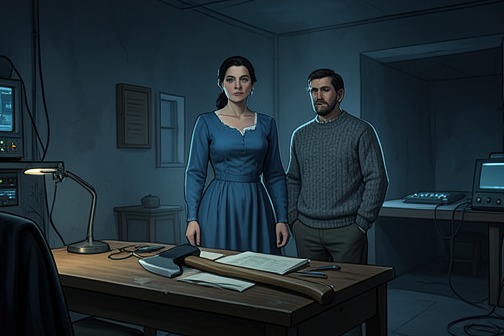
[Frieder](entity:character-recall-character-frieder-3b2e8c90003f) tells [Höppner](entity:character-recall-character-h-ppner-cf2ca5dcf857) that his doctor thinks he should not live with his parents. His grandfather’s empty house could be an alternative, but his parents will not let him live there alone. Höppner sees a chance to escape [F2M2](entity:character-recall-character-f2m2-6c41b60d5c4a)’s household and agrees to move in, though [Vera](entity:character-recall-character-vera-dfabe34d628c) warns him that he could discover Frieder dead one morning and be blamed for not checking sooner.
Höppner weighs the responsibility against the possibility that a regular home and friends might help Frieder more than the hospital’s medication and controlled schedule. He worries that he is choosing his own comfort as much as Frieder’s welfare. When he asks what would happen if they were not alone, Vera agrees to move in too, making the plan a shared act of care rather than a private burden.
During preparations to move into the house
The Empty Grandfather’s House
[Höppner](entity:character-recall-character-h-ppner-cf2ca5dcf857) and [Vera](entity:character-recall-character-vera-dfabe34d628c) inspect the old house left empty after [Frieder](entity:character-recall-character-frieder-3b2e8c90003f)’s grandfather died. It is cold, dim, and marked by its former farm use: an unused kitchen, a disused bathroom, a slaughter kitchen, a small cowshed, and a room with no window.
Vera asks Höppner whether he can bear the possibility that Frieder might kill himself in the room next door. Höppner insists that Frieder will not, though Frieder has made no such promise. The house’s neglected spaces make their planned refuge feel both improvised and exposed to the risks they are trying to manage.
As the school year continues
Four Friends Move In
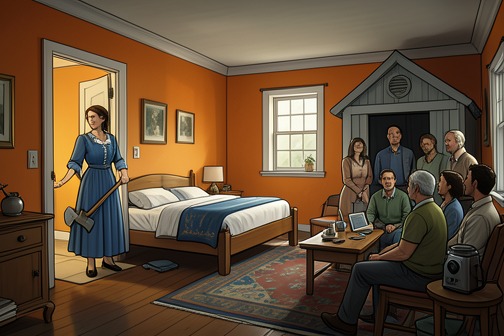
The friends begin making the house livable. [Vera](entity:character-recall-character-vera-dfabe34d628c) paints the small rooms orange, while [Frieder](entity:character-recall-character-frieder-3b2e8c90003f) paints his bedroom white and pale blue and hangs a mock menu offering wine, tzatziki, and coffee for free. [Höppner](entity:character-recall-character-h-ppner-cf2ca5dcf857) moves in with a tractorload of possessions, leaving his television at home for his younger sisters.
[Cäcilia](entity:character-recall-character-c-cilia-47200cd1581b) joins them after persuading her parents that Frieder needs help getting out of the hospital. Her family sends a furniture truck, but she rejects the polished bedroom furniture and comes with the others. That evening they eat together to a loud cassette, and their elderly neighbor [Seidel](entity:character-recall-character-seidel-cd342969425b) returns the axe he had borrowed from Frieder’s grandfather. The group now has a home, a name drawn from a song playing in the house, and a tool whose earlier absence had helped save Frieder’s life.
The first days after moving in
The Household Finds Its Rhythm
The four residents begin living through shared routines: badminton outside, school rides in a rotating bicycle formation, meals, shopping, cooking, and long conversations. [Höppner](entity:character-recall-character-h-ppner-cf2ca5dcf857) notices that he no longer walks hunched over in the house, freed from [F2M2](entity:character-recall-character-f2m2-6c41b60d5c4a)’s constant criticism.
The arrangement is built around watching over [Frieder](entity:character-recall-character-frieder-3b2e8c90003f), even when they pretend it is simply ordinary student life. At meals, Frieder leads their mock prayer, and he turns the English sound of “I am sad” into a joke when he says he is full. The jokes do not erase the danger, but they let the group make a daily life around it.
During the early months at Auerhaus
A Household on Borrowed Food
Money is scarce. [Höppner](entity:character-recall-character-h-ppner-cf2ca5dcf857)’s mother brings discounted food from the supermarket, [Frieder](entity:character-recall-character-frieder-3b2e8c90003f)’s parents pay the baker with grain for bread, and Frieder and [Vera](entity:character-recall-character-vera-dfabe34d628c) begin taking wine and coffee from [Penny](entity:organization-recall-organization-penny-9eed9b2f86c0). The group’s kitchen fund still empties quickly, while [Cäcilia](entity:character-recall-character-c-cilia-47200cd1581b) refuses money from her parents.
Höppner sells his coin collection, keeping only a four-pfennig piece from 1932 minted in [Berlin](entity:location-recall-location-berlin-54cb4a75d0f6) as a talisman. The sacrifice matters because the collection contains much of what he has learned about history and science; letting it go helps sustain the household but leaves him with one small private token of escape and luck.
During the early life at Auerhaus
What Frieder Wanted
[Höppner](entity:character-recall-character-h-ppner-cf2ca5dcf857) continues to wonder why [Frieder](entity:character-recall-character-frieder-3b2e8c90003f) tried to die. Frieder eventually gives him a distinction: he did not want to kill himself, he says; he merely no longer wanted to live. The difference does not provide an explanation, but it changes the question from a single act to a state of being.
The friends also notice that school has changed around them. Teachers give Höppner and Frieder unusual latitude, perhaps out of concern that another harsh encounter might endanger Frieder. In class, Frieder reads about life’s purpose and jokes that it is marriage and children, while he doubts his parents can understand what the world looks like from a different height.
After the household has settled in
Harry’s First Visit
[Harry](entity:character-recall-character-harry-51d33e4b3663), an electrician’s apprentice who has known [Frieder](entity:character-recall-character-frieder-3b2e8c90003f) since kindergarten, turns up in the kitchen in red work clothes and makes himself at home. He boasts that electricians are an elite group because careless work can kill them, then jokes about the apprentices who have been “grilled.”
Harry begins visiting after work, bringing a confident, irreverent presence to the house. His questions about whether Frieder and [Höppner](entity:character-recall-character-h-ppner-cf2ca5dcf857) are gay lead him to admit that he thinks he may be gay, while acknowledging that his father would beat him if he knew. The conversation introduces the danger Harry faces at home and the possibility that [Auerhaus](entity:location-recall-location-auerhaus-8b3598e98c05) could become a refuge for him too.
During a cold, rainy spell
A Missed Morning
One morning [Frieder](entity:character-recall-character-frieder-3b2e8c90003f) insists on cycling to school despite the weather, while the others take the bus. By the third lesson his place is still empty. [Höppner](entity:character-recall-character-h-ppner-cf2ca5dcf857) imagines him hanging himself and cannot focus on anything else.
[Vera](entity:character-recall-character-vera-dfabe34d628c) and [Cäcilia](entity:character-recall-character-c-cilia-47200cd1581b) fear that Frieder may be in danger, and all three hurry home rather than risk meeting a body alone. An ambulance is waiting outside, but Frieder is alive: he has found [Harry](entity:character-recall-character-harry-51d33e4b3663) collapsed on the kitchen floor after a period of studying and has called for medical help. The household’s immediate fear exposes how little they can tell from Frieder’s absences or moods.
The day Harry collapses at Auerhaus
The Stolen Feast
[Frieder](entity:character-recall-character-frieder-3b2e8c90003f) explains that he missed school because he went shopping, after nearly being caught stealing. He put the goods back, returned to town, and bought them properly; among the groceries are ingredients for an elaborate artichoke pizza and an expensive confection from [Kaufhof](entity:organization-recall-organization-kaufhof-d9e75fe559f9).
The group argues over whether [Vera](entity:character-recall-character-vera-dfabe34d628c)’s petty stolen objects count toward the shared household fund. Frieder proposes a rule: stolen goods count for half their store price, allowing each person some private savings while still supporting the collective. The idea turns theft into a playful household economy, but it also blurs the line between survival, thrill, and a growing willingness to take risks.
Soon after the household adopts its theft rule
The Shoplifting Lessons
[Frieder](entity:character-recall-character-frieder-3b2e8c90003f) and [Vera](entity:character-recall-character-vera-dfabe34d628c) set up a mock “training center” in the kitchen and teach [Höppner](entity:character-recall-character-h-ppner-cf2ca5dcf857) how to shoplift. Frieder talks through how to assess mirrors, store detectives, and cashiers, while Vera insists that a thief must act as though buying the item were entirely ordinary.
Höppner succeeds on his first real attempt, slipping a salami into his jacket while smiling at a shop assistant. Outside, he feels that the world has opened up to him, imagining how easily he could take more. When Frieder does not emerge from the shop, Höppner returns toward the store and sees [Bogatzki](entity:character-recall-character-bogatzki-d6dca74e00d7) entering, unsure whether Frieder has been caught.
Winter, after the first shoplifting attempt
A Warning on the Sledding Hill
On a snowy hill, [Höppner](entity:character-recall-character-h-ppner-cf2ca5dcf857) and [Frieder](entity:character-recall-character-frieder-3b2e8c90003f) lie beside one another while a jet passes overhead. Frieder says his parents would throw them out if they learned about the thefts, and Höppner resents how casually he speaks, as though exile would merely return him to the hospital or to death.
Höppner asks whether Frieder would want to be rescued if he were in immediate danger. Frieder says Höppner can save him, but that he wants the choice to remain his. He admits that imagining his own funeral included the satisfaction of seeing other people’s shocked faces. Their exchange makes clear that Frieder’s suicidal thinking coexists with a wish to retain control, not a simple, settled desire for death.
A winter evening before Christmas
A Kitchen of Warmth
The group gathers to make [Christmas](entity:time-recall-time-0cffe7da2c4d) cookies in the warm kitchen. As the others work and talk, [Höppner](entity:character-recall-character-h-ppner-cf2ca5dcf857) closes his eyes and imagines Doris Day entering in a green suit, bringing a full paper bag and singing “Whatever Will Be, Will Be.”
The imagined visitor gives the scene a brief, tender fullness: warmth, voices, and other people keeping watch. The moment suggests how ordinary companionship can become a lifeline without turning into a cure or a promise that the future will be safe.
Later that winter evening
A Confession Over Wine
After the cookies are made, [Höppner](entity:character-recall-character-h-ppner-cf2ca5dcf857) asks [Frieder](entity:character-recall-character-frieder-3b2e8c90003f) what taking the sleeping pills felt like. Frieder says he felt completely present and at peace, as if accepting that his life was over had briefly made everything clear. He also says he had given up the possibility of finishing school, leaving home, or sleeping with a woman.
The conversation turns to sex. Frieder admits that he never slept with [Pauline](entity:character-recall-character-pauline-17d56a2a28c3) because she seemed too perfect, while Höppner reveals that he has never slept with [Vera](entity:character-recall-character-vera-dfabe34d628c) either. They laugh at the idea that Frieder might become a bicycle mechanic, but beneath the joke is a rare image of a future that feels both modest and exactly right.
That night
The Spiral at Night
[Höppner](entity:character-recall-character-h-ppner-cf2ca5dcf857) wakes in the dark and sees [Frieder](entity:character-recall-character-frieder-3b2e8c90003f) sitting alone at the kitchen table in his coat and hat, smoking with a mechanical rhythm. He does not want another serious conversation, but Frieder tells him that if he attempts suicide again, it will not be Höppner’s fault.
The declaration offers reassurance and deepens the unease at once: Frieder is trying to release his friend from responsibility, while reminding him that the possibility remains. Their conversations, which Frieder calls a spiral rather than a circle, have not reached an answer.
Christmas Eve
Christmas at the Family Home
[Höppner](entity:character-recall-character-h-ppner-cf2ca5dcf857) spends [Christmas](entity:time-recall-time-0cffe7da2c4d) Eve with his family, though he considers [Auerhaus](entity:location-recall-location-auerhaus-8b3598e98c05) his real home. He discovers that his sister has taken over his old bedroom and his portable television, an ordinary change that makes the old household feel more alien than ever. He gives his mother a costly leg cream and [F2M2](entity:character-recall-character-f2m2-6c41b60d5c4a) a paint-by-numbers Mona Lisa.
After the gifts, he leaves for a charity meal for elderly people and the homeless, partly to avoid the family tensions. Unable to hitch a ride, he walks through the frozen roadside ditch and imagines a fatal fall, picturing the newspaper story of a young man who froze while trying to help the poor. The fantasy reveals how easily his thoughts turn toward death, even as he continues moving toward other people.
Christmas Eve, at the charity meal
Pauline at the Charity Dinner
At the meal, [Höppner](entity:character-recall-character-h-ppner-cf2ca5dcf857) serves food to people who live on the margins of town. One man tells a disturbing story about an Auschwitz survivor who supposedly bought a local pharmacy with stolen dental gold; Höppner doubts the tale, but it unsettles the festive setting.
He recognizes [Pauline](entity:character-recall-character-pauline-17d56a2a28c3) among the guests. Her hair is gone because she set it alight, and the change makes her seem even more striking to him. She is living in a transitional home after leaving the hospital and cannot return to the youth home now that she is an adult. Their reunion reconnects the hospital’s world to the fragile community forming at [Auerhaus](entity:location-recall-location-auerhaus-8b3598e98c05).
Christmas Eve, later that night
The Power Goes Out
Back at [Auerhaus](entity:location-recall-location-auerhaus-8b3598e98c05), the friends prepare hot water for bathing and sit amid steam, cassette music, and the familiar warmth of the kitchen. [Pauline](entity:character-recall-character-pauline-17d56a2a28c3) says that fire can make things whole by painting over a ruined picture. Then the power fails, and the group sits in darkness, singing “Silent Night” while [Vera](entity:character-recall-character-vera-dfabe34d628c) lights four candles.
A man weeps on the stairs. Vera finds [Frieder](entity:character-recall-character-frieder-3b2e8c90003f) lying there, laughing and repeating, “I did it!” The opening scene’s secret is revealed: Frieder has felled the village [Christmas](entity:time-recall-time-0cffe7da2c4d) tree. His act is not just vandalism but a burst of agency and irreverence, a deed whose meaning the friends will keep arguing over.
Christmas Eve, immediately after the tree is felled
Harry Comes Out
As the household bathes and regathers in the kitchen, [Harry](entity:character-recall-character-harry-51d33e4b3663) arrives bruised, with red and blue marks on his face. He says he has told his father that he is gay, and the bruises make the cost of that disclosure unmistakable.
The friends receive him without sending him away. His arrival turns the improvised household into a refuge for someone escaping violence at home, while [Pauline](entity:character-recall-character-pauline-17d56a2a28c3) also leaves her transitional accommodation and makes a room on the hayloft. With Harry and Pauline joining, the group becomes six, though their available spaces are already nearly exhausted.
The days after Christmas
The Darkroom Dispute
[Pauline](entity:character-recall-character-pauline-17d56a2a28c3) settles on the hayloft, while [Harry](entity:character-recall-character-harry-51d33e4b3663) takes the tiled slaughter kitchen. The only unused room is a windowless space crammed with discarded furniture and household objects. Harry calls it the darkroom, and [Höppner](entity:character-recall-character-h-ppner-cf2ca5dcf857) thinks it might have been a better place for Pauline than the hayloft.
[Frieder](entity:character-recall-character-frieder-3b2e8c90003f) erupts at the suggestion that anyone should live in the darkroom, cellar, or old chicken shed. His vehemence surprises the others, who had not realized how strongly he felt about the spaces in the house. Afterward he sits silent for hours, but eventually cooks dinner and announces a New Year’s party for their new housemates.
New Year’s Eve
The New Year’s Gathering
[Frieder](entity:character-recall-character-frieder-3b2e8c90003f)’s party brings together nearly the whole school’s upper classes, patients from the psychiatric hospital, and gay guests who have traveled from across the region. [Harry](entity:character-recall-character-harry-51d33e4b3663) arrives in a huge Cadillac Eldorado, dressed flamboyantly and pleased with the attention. The house fills with music, smoke, and unlikely conversations.
Frieder moves among the guests, introducing strangers and inventing links between them, saying that he is speeding up diffusion. At midnight, the crowd pours into the street and counts down together. The gathering briefly makes the village’s conventional boundaries porous, while the refrain of “[The Final Countdown](entity:expression-recall-expression-the-final-countdow-62c443e879cc)” gives [Höppner](entity:character-recall-character-h-ppner-cf2ca5dcf857) the fear that this may be the group’s one and only New Year together.
New Year’s Eve, during the party
The Locked Car
Overwhelmed by the crowd and by thoughts of everything that might go wrong, [Höppner](entity:character-recall-character-h-ppner-cf2ca5dcf857) escapes into [Axel](entity:character-recall-character-axel-e9f7c8d6b5e7)’s car. Axel’s central locking traps him inside; panic makes the vehicle feel like a tightening coffin until Axel finally opens the door.
Höppner stumbles out into spilled champagne and tzatziki. He then searches for [Vera](entity:character-recall-character-vera-dfabe34d628c), only to see her emerge from her room with condoms and lock the door behind her. The scene punctures the party’s apparent communal ease: Höppner is jealous and lonely, and Vera’s belief that love is not a cake does little to soften the experience of being shut out.
After midnight on New Year’s Eve
A Kiss on the Hayloft
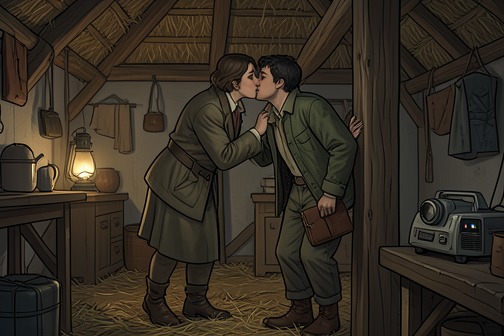
[Höppner](entity:character-recall-character-h-ppner-cf2ca5dcf857) finds [Pauline](entity:character-recall-character-pauline-17d56a2a28c3) on the hayloft, frightened by the crush of partygoers. They talk about [Frieder](entity:character-recall-character-frieder-3b2e8c90003f)’s medication and the way people’s moods depend on chemistry, whether prescribed or produced by the brain. Pauline challenges Höppner’s habit of hedging everything with “quasi,” insisting that he cannot avoid the choice between opposing positions forever.
They kiss, and Höppner slips his hand beneath her sweater before she warns him not to go further. The intimacy is brief and tentative, but it brings him close to someone whose vulnerabilities resemble his own. The next day, he feels alone again as he sees signs of [Vera](entity:character-recall-character-vera-dfabe34d628c) and [Harry](entity:character-recall-character-harry-51d33e4b3663)’s closeness and hears Frieder observe that what seems right in theory may be hard to bear in practice.
Winter, after New Year
The Snowy Hill Above the Alb

[Höppner](entity:character-recall-character-h-ppner-cf2ca5dcf857) walks into the snowy woods with a bottle of vodka, tormented by [Vera](entity:character-recall-character-vera-dfabe34d628c)’s relationship with [Harry](entity:character-recall-character-harry-51d33e4b3663), uncertainty about school, and the prospect of conscription. He imagines the grim choices expected of a conscientious objector and decides that, without lying, he could only admit he would shoot an attacker if ordered to defend someone he loved.
He drinks and grows numb in the cold, believing he is dead and imagining [Frieder](entity:character-recall-character-frieder-3b2e8c90003f) guiding him through a tunnel toward the light. In that imagined afterlife, Frieder asks whether he is there because of [Pauline](entity:character-recall-character-pauline-17d56a2a28c3); Höppner says it is because of everything. The experience becomes a near-fatal crisis, interrupted by the imagined comfort of a friend who is still alive and waiting for him.
After Höppner’s night in the snow
Vera Offers a Walk
[Vera](entity:character-recall-character-vera-dfabe34d628c) lies on [Höppner](entity:character-recall-character-h-ppner-cf2ca5dcf857)’s bed and says she had thought he did not want to sleep with her. He protests that she was the one who had refused, and their exchange exposes how badly their assumptions have drifted apart. She tells him not to be jealous and repeats her theory that love is not diminished by being shared; he rejects it as nonsense.
Vera proposes that they cycle to the [Blautopf](entity:location-recall-location-blautopf-d0b8d5e6d33b) and walk around it when the weather warms. The modest invitation leaves open the possibility that their relationship might continue, but it offers no resolution. [Harry](entity:character-recall-character-harry-51d33e4b3663) arrives in his Cadillac, and Vera goes outside to join him.
Winter, during the house’s firewood work
Pauline Takes the Axe
The house runs short of firewood, and the group brings out the old timber piled beneath a tarp. [Höppner](entity:character-recall-character-h-ppner-cf2ca5dcf857) struggles to split a log because he is afraid of injuring [Harry](entity:character-recall-character-harry-51d33e4b3663), who is holding it. [Pauline](entity:character-recall-character-pauline-17d56a2a28c3) steps forward, swings the axe, and splits the wood cleanly beside [Frieder](entity:character-recall-character-frieder-3b2e8c90003f)’s fingers.
Frieder and Pauline continue working in a steady rhythm, watching one another without looking away. They process more wood than the household can use that winter, and Höppner doubts they will all share another winter. Their work makes the closeness between the two visible without turning it into a declaration.
Shortly after Epiphany
The Second Conscription Notice
The town finally removes the felled [Christmas](entity:time-recall-time-0cffe7da2c4d) tree, explaining that the cleanup had to wait until the municipal work schedule allowed it. [Frieder](entity:character-recall-character-frieder-3b2e8c90003f) says that his father heard [Bogatzki](entity:character-recall-character-bogatzki-d6dca74e00d7) discuss the matter, though his father has not mentioned either the tree or the group’s thefts.
A second conscription notice arrives for [Höppner](entity:character-recall-character-h-ppner-cf2ca5dcf857). He files it in a folder labeled “Bummbumm,” alongside the documents he is beginning to imagine as stages of a life organized around birth, school, military service, work, and death. He assumes there will be a third notice before the authorities act, an error that soon forces the issue.
About fourteen days after the second notice
Bogatzki Arrives at Dawn
[Höppner](entity:character-recall-character-h-ppner-cf2ca5dcf857) wakes early to study for a history exam but is startled by his homemade alarm and [Bogatzki](entity:character-recall-character-bogatzki-d6dca74e00d7), standing in his room in full uniform. The sheriff has come with an official order to take Höppner to the examination office because he ignored two summonses.
Höppner insists on being handcuffed, partly to turn the arrest into a spectacle, and Bogatzki fumbles with the restraints before admitting he cannot find the key. [Vera](entity:character-recall-character-vera-dfabe34d628c) is allowed to accompany them. [Frieder](entity:character-recall-character-frieder-3b2e8c90003f) rides after the police car on his bicycle, and Bogatzki unexpectedly praises Frieder’s unusual intelligence, recalling how he once devised a more efficient route for farm work.
That morning, at the examination office in Stuttgart
The Conscription Examination
At the conscription office, [Höppner](entity:character-recall-character-h-ppner-cf2ca5dcf857) refuses to cooperate with the physical examination, but the doctors classify him as fully fit for service by inspection. Officials suggest elite military assignments and warn that his refusal may be reported. Höppner jokes about the hypothetical naked Russian used in conscientious-objection tests, leaving the panel uncertain whether he is serious.
[Frieder](entity:character-recall-character-frieder-3b2e8c90003f) bursts into the room pretending to search for his bicycle key and invents an urgent story about bringing lunch to his grandfather, a former prisoner in Siberia. The officials crawl around looking for the key, distracted from the papers on the desk. While they search, Frieder takes Höppner’s medical file and escapes, preserving the possibility that the authorities will not be able to process his conscription.
That afternoon, after the examination
The Stolen File
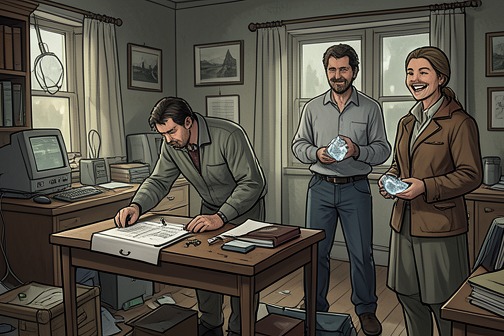
[Höppner](entity:character-recall-character-h-ppner-cf2ca5dcf857) returns to [Auerhaus](entity:location-recall-location-auerhaus-8b3598e98c05) terrified that he will be called up before he can leave for [Berlin](entity:location-recall-location-berlin-54cb4a75d0f6). [Vera](entity:character-recall-character-vera-dfabe34d628c) and [Frieder](entity:character-recall-character-frieder-3b2e8c90003f) reveal the stolen conscription file, which Frieder took while the officials were searching under the table. They explain that the document was lying exposed after the official carrying it crawled away from his chair.
Vera suggests freezing the file as a joke about the [Cold War](entity:time-recall-time-700d9e46b459). Höppner, overwhelmed with relief, says he will live at Auerhaus forever; Frieder corrects him with “we,” while Vera answers “you.” Their exchanges show that the household’s togetherness is real but not identical for each person, and that Höppner’s future remains entangled with the group rather than settled by the stolen papers alone.
Spring, on the morning of Höppner’s German Abitur exam
A Rescue on the Road
Cycling toward his German Abitur, [Höppner](entity:character-recall-character-h-ppner-cf2ca5dcf857) is frightened by fast traffic and falls behind [Frieder](entity:character-recall-character-frieder-3b2e8c90003f) and [Cäcilia](entity:character-recall-character-c-cilia-47200cd1581b). In a roadside ditch, an elderly drunk collapses. A short-haired soldier stops, turns the man into a safer position, and asks Höppner to get help rather than doing nothing.
The soldier, a twelve-year volunteer with a family and an engineering degree, speaks of his military life while they wait for medical assistance. The ambulance does not arrive, and when the man collapses again, the soldier and Höppner carry him to the emergency department. The hospital staff take the man away with deliberate calm, and the soldier drives Höppner back to his bicycle—after the exam has begun.
That morning, two hours after the exam begins
The Improvised Abitur Essay
[Höppner](entity:character-recall-character-h-ppner-cf2ca5dcf857) arrives at the exam late and finds his classmates already writing. The assigned topics include a literary analysis, Goethe, and an essay on a text comparing novels to flight simulators. He cannot make sense of the argument and turns instead to improvisation, weaving together Werther, imagined reality, escapism, and a crude metaphor about airplane waste tanks as flying libraries.
He polishes the language during the final minutes, replacing casual words with academic-sounding ones. Though he believes he has failed, [Doktor Turnschuh](entity:character-recall-character-doktor-turnschuh-a7909a6fac63) later gives the essay the highest possible mark. The unexpected result briefly persuades Höppner that the school system may be fair, even though his success rests on confident improvisation rather than understanding.
After the spring exam, before the final verdicts
The Drug Raid
Police storm [Auerhaus](entity:location-recall-location-auerhaus-8b3598e98c05) in a fast, theatrical raid, demanding that everyone lie down while they search for [Harry](entity:character-recall-character-harry-51d33e4b3663), who is absent. The group’s calm confusion unsettles the officers, and [Pauline](entity:character-recall-character-pauline-17d56a2a28c3) casually opens the refrigerator despite a weapon being pointed toward her.
The search uncovers Harry’s drug stash in the slaughter kitchen and [Höppner](entity:character-recall-character-h-ppner-cf2ca5dcf857)’s conscription file hidden in the freezer. The prosecutor lists possible charges connected to theft, suppressing and damaging documents, state symbols, dead people, and the terrorist poster the friends use as a joke. The raid turns their improvised rebellion into a serious legal threat and exposes how little control they have over the consequences of their games.
Later the day of the raid
Harry’s Secret Business
[Harry](entity:character-recall-character-harry-51d33e4b3663) returns from work after being arrested at the factory gate, then released after police processing. The stash they did not find is hidden in the old chicken shed, behind a fake layer of dried chicken manure. Harry explains that a drug user angry over a dispute probably named him to the police.
The conversation reveals that Harry earns money by selling sex at the train station as well as through his apprenticeship and dealing. [Höppner](entity:character-recall-character-h-ppner-cf2ca5dcf857) is shocked, and the others explain that Harry may be thinking about his future because the work cannot last indefinitely. The revelations deepen the gap between Harry’s breezy bravado and the precarious ways he supports himself.
The night of the raid
The Fake Gun in the Cadillac
The group drives to a documentary about grain and global hunger in [Harry](entity:character-recall-character-harry-51d33e4b3663)’s Cadillac. On the way home, [Frieder](entity:character-recall-character-frieder-3b2e8c90003f) discovers a wooden pistol in the glove compartment and uses the roof-mounted searchlight to pretend to shoot at shadows representing speculators, generals, fear, sadness, and loneliness.
The play gives Frieder and Harry a temporary way to attack the abstractions that trouble them, but the weapon and their bravado bring them close to real danger at a traffic light. The group later agrees not to speak about the near catastrophe. The episode makes the boundary between fantasy and violence dangerously thin.
The night of the raid, at a traffic light in Ensingen
The Traffic-Light Confrontation
At a traffic light, [Frieder](entity:character-recall-character-frieder-3b2e8c90003f) points the wooden pistol and searchlight at a police officer in a patrol car, then pretends to fire. [Harry](entity:character-recall-character-harry-51d33e4b3663) accelerates away, while Frieder continues shouting and aiming through the rear window. The officer responds with real gunfire before the car is stopped at another red light.
The police arrest the five young people in the car, though the weapon is only an imitation. The group escapes physical injury, but the incident marks a new level of recklessness: Frieder had deliberately risked provoking the officer into shooting. The confrontation later appears in a newspaper account, making the private danger public and forcing [Höppner](entity:character-recall-character-h-ppner-cf2ca5dcf857) to face what Frieder’s suicidal impulses can mean for everyone around him.
The morning after the traffic-light confrontation
The Birds and Harry’s Father
The friends sleep together in [Frieder](entity:character-recall-character-frieder-3b2e8c90003f)’s room after the frightening drive. [Harry](entity:character-recall-character-harry-51d33e4b3663) tells them that his father stayed home after a work accident and withdrew from other people, taking up beekeeping only after Harry’s mother insisted he find a hobby. Harry says he does not want to become like his father and feels that his father’s life is so closed off that it hardly matters whether he is alive.
Harry also explains that his own marijuana once tasted of honey and that he hid it in beehives, believing drug dogs feared bees. Frieder rejects the story as nonsense and says everyone has become distant again, as if separated by thick glass. The exchange shows the strain the raid and the near shooting have put on the household’s trust.
The days after the police confrontation
The Household Falls Silent
After the confrontation, [Auerhaus](entity:location-recall-location-auerhaus-8b3598e98c05) grows quiet. [Vera](entity:character-recall-character-vera-dfabe34d628c) studies alone, [Frieder](entity:character-recall-character-frieder-3b2e8c90003f) cooks and insists that everything has turned out fine, while [Höppner](entity:character-recall-character-h-ppner-cf2ca5dcf857) searches for [Harry](entity:character-recall-character-harry-51d33e4b3663) and finds no clear answer about where he is. The easy intimacy of the earlier household gives way to anger and withdrawal.
Höppner visits [Pauline](entity:character-recall-character-pauline-17d56a2a28c3) on the hayloft, where she takes photographs of her black moods and arranges them like a private museum. She spits on a candle to extinguish it when he asks whether one might fall over. The image captures both her dark humor and the uneasy coexistence of care and danger in the house.
After the raid and the traffic-light incident
Cäcilia Leaves Auerhaus
[Cäcilia](entity:character-recall-character-c-cilia-47200cd1581b) returns only to collect her violin. She says her parents have hired a lawyer, but the purpose is to get her out of the case, not to protect the others. Their defense will present her as someone led astray, and she will stay away from [Auerhaus](entity:location-recall-location-auerhaus-8b3598e98c05) to make that argument convincing.
She has a place to study in America and wants an unblemished record. Her apology is qualified by the familiar sentence that she understands if the others cannot understand her. The household’s collective ideal cannot overcome the different risks each person is willing or able to bear.
A few days after the traffic-light incident
The Newspaper Reveals the Pursuit
[Höppner](entity:character-recall-character-h-ppner-cf2ca5dcf857) waits for his mother at the supermarket and tells her the German exam went fairly well. She reads him a local newspaper story describing a car with a weapon aimed at police officers and a roof-mounted searchlight. The details make clear that the article is about the group’s drive in the Cadillac.
Höppner’s mother asks whether they were responsible, but he denies it. She does not press him; instead, she brings him a pallet of yogurt that has just expired, offering food rather than judgment. The gesture echoes her earlier support for the household and shows that she can understand more than Höppner expects, even when he will not confess.
That day, after the newspaper account
Höppner Attacks Frieder
At [Auerhaus](entity:location-recall-location-auerhaus-8b3598e98c05), [Frieder](entity:character-recall-character-frieder-3b2e8c90003f) admits that he had deliberately tried to make the police officer shoot him. [Höppner](entity:character-recall-character-h-ppner-cf2ca5dcf857) strikes him repeatedly and tells him that if he wants to die, he should do it without dragging the others into the danger.
Frieder tries to turn away but does not fight back. The beating is a rupture in their friendship, driven by love, terror, and anger at the way Frieder’s private decision could have become a collective catastrophe. Höppner’s violence cannot resolve the crisis, but it forces the danger into the open.
Near the end of the school year
The German Exam Is Not Enough
[Höppner](entity:character-recall-character-h-ppner-cf2ca5dcf857) learns that [Doktor Turnschuh](entity:character-recall-character-doktor-turnschuh-a7909a6fac63) awarded his German essay fifteen points, so he did not fail the written examination after all. The grade reinforces his uneasy suspicion that success at school can depend on something other than mastery, but he is relieved to believe the system has rewarded him fairly.
The legal proceedings are also moving toward resolution. [Cäcilia](entity:character-recall-character-c-cilia-47200cd1581b)’s lawyer persuades the authorities that the missing conscription file is among the investigation materials, where it may remain. The state’s pursuit of the group begins to loosen, though the consequences of their actions are not yet settled.
At the end of the school year
The Final Oral Examination
[Höppner](entity:character-recall-character-h-ppner-cf2ca5dcf857) faces his oral examination in community studies with [Hoffmann](entity:character-recall-character-hoffmann-f5b0506b297c), the teacher whose cruelty the students have never managed to dislodge. He cannot answer a question about Lombard loans and discounting, and begins improvising wildly about Italian regions, travel, and unrelated facts.
As the examination continues, he stops trying to conceal that he does not know the material. Hoffmann says he would like to award him a point but cannot find a basis for doing so. Höppner receives zero and must repeat the year, losing the Abitur despite having done unexpectedly well on the German essay.
After the final oral examination
The Auerhaus Verdict
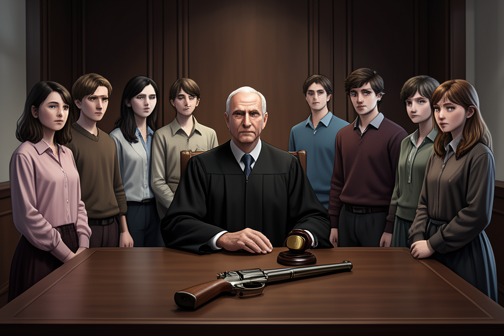
[Cäcilia](entity:character-recall-character-c-cilia-47200cd1581b)’s lawyer persuades the court that she was drawn into the group’s misbehavior by bad influences, and the case against her is dismissed. [Vera](entity:character-recall-character-vera-dfabe34d628c), [Pauline](entity:character-recall-character-pauline-17d56a2a28c3), and [Höppner](entity:character-recall-character-h-ppner-cf2ca5dcf857) receive forty hours of community service for theft and insulting the memory of the dead; [Frieder](entity:character-recall-character-frieder-3b2e8c90003f) receives fifty hours, including the wooden-pistol incident.
[Harry](entity:character-recall-character-harry-51d33e4b3663) receives a suspended sentence for drug dealing and possession, along with a two-year driving ban tied to the police pursuit. The verdict recognizes the group’s actions as offenses while allowing them to avoid prison. Their remaining time at [Auerhaus](entity:location-recall-location-auerhaus-8b3598e98c05) is now visibly limited, and the community begins to prepare for an ending it has long avoided discussing.
The week before the move
Service in the Nursing Home
[Höppner](entity:character-recall-character-h-ppner-cf2ca5dcf857), [Frieder](entity:character-recall-character-frieder-3b2e8c90003f), [Vera](entity:character-recall-character-vera-dfabe34d628c), and [Pauline](entity:character-recall-character-pauline-17d56a2a28c3) complete their court-ordered community service in the kitchen of an old people’s home. They make breakfasts, prepare enormous pots of food, and chop sacks of onions while the kitchen supervisor keeps their offense secret from the other workers.
The work gives them a shared routine just as their own household is about to end. Frieder compares life at [Auerhaus](entity:location-recall-location-auerhaus-8b3598e98c05) to floating on an air mattress in a tropical lagoon: a person can imagine staying there forever, then open his eyes and discover that the afternoon is already over. The group’s jokes continue, but they can no longer make the temporary feel permanent.
The move from the village toward Berlin
The Last Drive from Auerhaus
[Höppner](entity:character-recall-character-h-ppner-cf2ca5dcf857) and [Frieder](entity:character-recall-character-frieder-3b2e8c90003f) load a mattress and boxes into [Harry](entity:character-recall-character-harry-51d33e4b3663)’s Cadillac, which Harry lends because he is barred from driving. Before they leave the town, they visit a bookshop to find a route map. Frieder distracts the customers with a theatrical outburst and secretly takes a road atlas.
Outside, he says he is borrowing it and promises to return it after the trip. Höppner and Frieder look back at the town center, where a fountain now covers the concrete steps that once held their conversations. Höppner drops his latest conscription notice into a mailbox marked “Return to sender,” abandoning the attempt to keep the authorities’ demands neatly filed away.
After Harry completes his apprenticeship
The Household Moves to Cologne
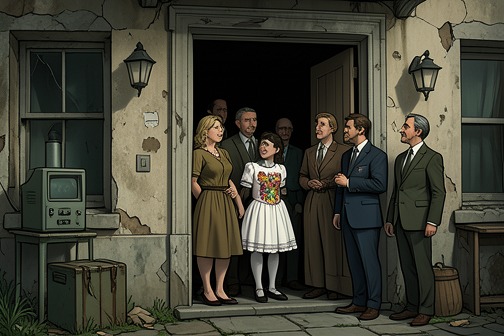
After [Harry](entity:character-recall-character-harry-51d33e4b3663) finishes his apprenticeship, the group leaves the village and moves together into a run-down house in Cologne. For a moment, [Höppner](entity:character-recall-character-h-ppner-cf2ca5dcf857) imagines a hopeful future montage in which Harry designs musical clothing, [Pauline](entity:character-recall-character-pauline-17d56a2a28c3) completes her education, [Frieder](entity:character-recall-character-frieder-3b2e8c90003f) becomes a professor, [Vera](entity:character-recall-character-vera-dfabe34d628c) becomes a school principal, and Höppner becomes a devoted reader and gardener.
He recognizes that this bright future is only a fantasy: his imagined simulator has removed every accident, injury, and death. The novel refuses that easy landing. The move marks the end of [Auerhaus](entity:location-recall-location-auerhaus-8b3598e98c05) as a shared home, but not the end of the relationships or the uncertainty that shaped it.
After the move, before Frieder’s death
The Auerhaus Trial and Separation
The court’s practical outcome sets the group on separate paths: [Cäcilia](entity:character-recall-character-c-cilia-47200cd1581b) is cleared, the others receive community service, and [Harry](entity:character-recall-character-harry-51d33e4b3663) receives a suspended sentence and a driving ban. The friends leave the village with their shared life behind them, but their separation is not yet complete; [Höppner](entity:character-recall-character-h-ppner-cf2ca5dcf857) and [Frieder](entity:character-recall-character-frieder-3b2e8c90003f) continue to meet and talk.
The story’s later recollections complicate the idea that the household simply ended with the move. [Auerhaus](entity:location-recall-location-auerhaus-8b3598e98c05) had given its residents a way to live outside the ordinary sequence of birth, school, work, and death, but it could not protect them indefinitely from the forces that had brought them together.
After Auerhaus, before his death
Frieder’s Life After the House
[Frieder](entity:character-recall-character-frieder-3b2e8c90003f) begins an apprenticeship as a bicycle mechanic in a small Hessian town and lives in a furnished room. [Höppner](entity:character-recall-character-h-ppner-cf2ca5dcf857) visits him there, and more often Frieder comes to [Berlin](entity:location-recall-location-berlin-54cb4a75d0f6) on weekends with his employer’s brother. The two sit in Höppner’s kitchen and talk for long stretches, returning to the same conversations as if they were slowly spiraling toward a center.
Frieder is lonely, afraid to go among people, and convinced that nothing will change. Höppner reminds him that life has been different before, though Frieder has forgotten it. Their friendship continues as an effort to talk him back toward life, but the distance and repetition reveal how precarious that effort has become.
During the period after Auerhaus, before the final move
The Missing Four-Pfennig Talisman
[Höppner](entity:character-recall-character-h-ppner-cf2ca5dcf857) finds a four-pfennig coin in a bag of belongings beneath a road bridge, where someone appears to be living among discarded clothes and bottles. The coin is dated 1932 and was minted in [Berlin](entity:location-recall-location-berlin-54cb4a75d0f6), just like the one he kept as a talisman.
Rather than keep the stranger’s coin, Höppner swaps it for his own. He reasons that the person living under the bridge needs a functioning good-luck charm more than he does. The exchange quietly turns his private superstition into an act of care, transferring the hope he had carried for himself to someone whose life he does not know.
After the period of weekend visits, before Gründonnerstag
Frieder Dies by Suicide
[Frieder](entity:character-recall-character-frieder-3b2e8c90003f) dies alone in his furnished room, where his landlady finds him several days later. His parents describe the death as following a long illness, a phrase that is both true and evasive. The exact date cannot be established.
The people who loved him are left to wonder whether his reasons were the same as those behind his earlier attempt. [Höppner](entity:character-recall-character-h-ppner-cf2ca5dcf857) remembers that Frieder had seemed cheerful when they last spoke, but knows that mood could not reliably reveal what Frieder had decided. The death confirms the limit of the friends’ vigilance without making their years together meaningless.
Gründonnerstag, after Frieder’s death
The Funeral in the Village
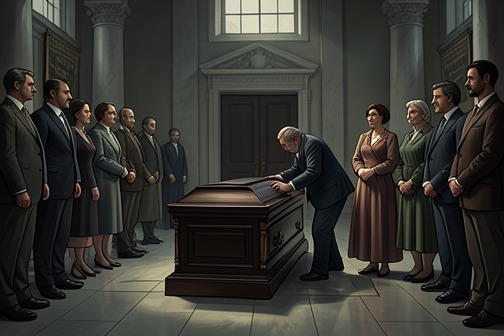
The village gathers at the funeral hall on [Gründonnerstag](entity:time-recall-time-gr-ndonnerstag-784fbd0cbd24). [Höppner](entity:character-recall-character-h-ppner-cf2ca5dcf857) stands with [Vera](entity:character-recall-character-vera-dfabe34d628c) and [Harry](entity:character-recall-character-harry-51d33e4b3663); [Cäcilia](entity:character-recall-character-c-cilia-47200cd1581b) is away in America, and [Pauline](entity:character-recall-character-pauline-17d56a2a28c3) is absent. [Bogatzki](entity:character-recall-character-bogatzki-d6dca74e00d7) asks whether [Frieder](entity:character-recall-character-frieder-3b2e8c90003f) was the one who cut down the [Christmas](entity:time-recall-time-0cffe7da2c4d) tree, and Vera says the act was for Frieder’s parents, not for the village itself.
Frieder’s coffin is a large, dark wooden box. His father helps push it out, and Vera later explains that the pallbearers have not come. Höppner thinks of how he has usually begun telling Frieder’s story with the felled tree, not with the funeral, because beginning at the end would falsely make death the most important thing about him.
After the funeral, on Gründonnerstag
The Missing Axe Search
At the inn, the friends discuss [Frieder](entity:character-recall-character-frieder-3b2e8c90003f)’s death and search their memories for the last days of his life. They disagree about whether the overdose might have been miscalculated and whether a failed attempt would have been dismissed as a plea for rescue. [Höppner](entity:character-recall-character-h-ppner-cf2ca5dcf857) admits that Frieder had sounded cheerful shortly before he died.
[Vera](entity:character-recall-character-vera-dfabe34d628c) suddenly asks where the axe is. She and Höppner search the barn, hayloft, cellar, and upstairs rooms, even trying the darkroom, but the axe is nowhere to be found. They leave without it, unable to decide whether it belongs with Frieder, with the house, or with the story they are still trying to tell.
At the inn, after the search for the axe
The Father’s Last Words
[Frieder](entity:character-recall-character-frieder-3b2e8c90003f)’s father tells the group that he found a diary among Frieder’s belongings. In it, Frieder wrote that his time at [Auerhaus](entity:location-recall-location-auerhaus-8b3598e98c05) had been the happiest of his life. He had also written about cutting down the [Christmas](entity:time-recall-time-0cffe7da2c4d) tree and about feeling completely present, with everything briefly seeming good.
His father is overcome as he speaks, and the room falls quiet. He acknowledges that God may punish Frieder, but insists that this is how things were. The testimony confirms that the household’s brief life mattered to Frieder, even though it could not save him permanently.
Later at the inn, after Frieder’s father speaks
Pauline’s Sentence
[Bogatzki](entity:character-recall-character-bogatzki-d6dca74e00d7) tells the group that [Pauline](entity:character-recall-character-pauline-17d56a2a28c3) has received ten years for arson resulting in death. The news lands like a new version of the old boundary between hospital and prison, a grim echo of the places the young people once imagined as interchangeable.
[Vera](entity:character-recall-character-vera-dfabe34d628c) leaves the inn, followed by [Höppner](entity:character-recall-character-h-ppner-cf2ca5dcf857) and [Harry](entity:character-recall-character-harry-51d33e4b3663). Their attention turns again to the absent axe and the house they are about to leave behind, while Pauline’s fate remains another consequence that their earlier community could not prevent or repair.
After Frieder’s death, during Höppner’s later life in Berlin
The Auerhaus Belongings
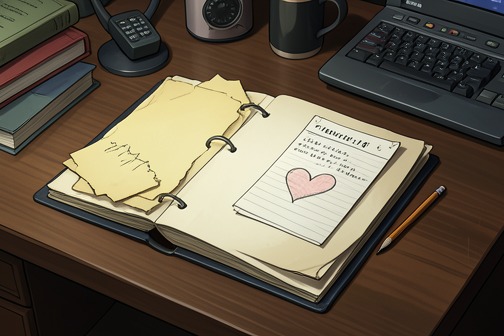
In [Berlin](entity:location-recall-location-berlin-54cb4a75d0f6), [Höppner](entity:character-recall-character-h-ppner-cf2ca5dcf857) finds old scraps of paper from the kitchen of [Auerhaus](entity:location-recall-location-auerhaus-8b3598e98c05), where visitors used to leave messages beside a soft pencil. He has preserved them in a folder titled “The Memory of Humanity,” turning ordinary notes into a private archive of the household.
The notes include repeated pleas from [Axel](entity:character-recall-character-axel-e9f7c8d6b5e7) to [Cäcilia](entity:character-recall-character-c-cilia-47200cd1581b), a recipe from Höppner’s mother, a formal notice from [Bogatzki](entity:character-recall-character-bogatzki-d6dca74e00d7) banning [Frieder](entity:character-recall-character-frieder-3b2e8c90003f) from [Penny](entity:organization-recall-organization-penny-9eed9b2f86c0), and a heart drawn by [Vera](entity:character-recall-character-vera-dfabe34d628c) with no named recipient. Frieder once says Vera could be an asshole, then concedes that Höppner disagrees. The scraps preserve the group’s petty jokes, loyalties, and unresolved affections more vividly than any polished account could.
After the funeral gathering, at the grave
Frieder’s Burial
At the cemetery, [Harry](entity:character-recall-character-harry-51d33e4b3663) takes one handle of the coffin and [Vera](entity:character-recall-character-vera-dfabe34d628c) corrects the group’s attempt to carry it on their shoulders. They arrange themselves according to height, with [Frieder](entity:character-recall-character-frieder-3b2e8c90003f)’s father and Vera among the bearers, then lower the coffin into the grave with ropes.
Vera drops a feather shuttlecock onto the coffin, and someone lays a large joint beside it. [Höppner](entity:character-recall-character-h-ppner-cf2ca5dcf857) does not throw soil; instead, he reaches down and lets his T-shirt fall onto the box. The burial folds the signs of their ordinary life—sport, smoking, and a shared household—into the final farewell.
Years after Frieder’s death
The Final Recording
After returning to his [Berlin](entity:location-recall-location-berlin-54cb4a75d0f6) apartment, [Höppner](entity:character-recall-character-h-ppner-cf2ca5dcf857) receives a small package from abroad containing a cassette. It holds a sad piece of violin music with a poor, echoing recording, and he thinks of [Cäcilia](entity:character-recall-character-c-cilia-47200cd1581b) playing in a bathroom.
For a long time he has continued to speak to [Frieder](entity:character-recall-character-frieder-3b2e8c90003f) in his thoughts, sometimes hearing reassurance and sometimes warning. Eventually he understands that he is speaking only to his own memory of Frieder, so he stops for a few days, then begins again. The novel closes with remembrance as an ongoing, imperfect conversation rather than a finished explanation.