Theresia Höppner
AuerhausTheresia Höppner is the narrator’s mother, introduced in the late scenes through small, unexpectedly attentive gestures rather than a full account of her life. She waits for him after his German Abitur, asks whether he is happy, and later appears in the notes left for the Auerhaus household. Her presence joins everyday maternal care to the novel’s more unsettling questions about survival, violence, and what it means to be well.
Identity and Introduction
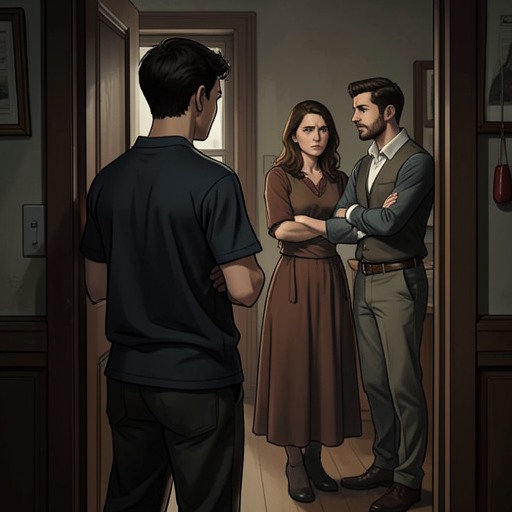
Theresia is identified as the narrator’s mother. In one scene she is taking a lunch break in a parked car, the driver’s seat reclined fully and her jacket pulled over her as a cover. The narrator waits outside because he has promised to tell her how the German Abitur went. The setting is unceremonious: small cars arrive at the supermarket, shoppers give him suspicious looks, and the scene unfolds amid the ordinary routines of a parking lot. This background makes the intimacy of their later exchange feel all the more unforced; she is not summoned for a dramatic confession, but is simply there, sharing a pause in the day.
Asking About Happiness
When they lower the car windows and smoke together, Theresia begins by saying there is something she has wanted to ask him for a long time. The narrator assumes she will ask what he plans to do after the Abitur or whether he and Vera are still together. Instead, she asks whether he is happy. The question catches him off guard: it is the last one he expects from her.
His answer measures happiness against the possibility of suicide. He says that, at least, he does not intend to kill himself in the near future, and asks whether that is happy enough. The exchange does not resolve what happiness means or establish that he is content. Its force lies in the distance between the ordinary questions he anticipates and the serious one his mother actually asks. Theresia opens a space for him to speak about his condition, even though he answers through a stark, guarded qualification rather than an uncomplicated declaration of well-being.
The Newspaper and the Police Confrontation
Theresia takes the newspaper from him and reads its report aloud. The headline announces shots in the night and describes the young men’s prank as nearly ending badly. The article concerns the confrontation involving a patrol car near Ensingen, at the exit toward Gebingen. It reports that the weapon used to threaten the officers was seized and proved to be a convincing replica; proceedings had been opened against the driver and passenger over traffic violations, carrying an imitation weapon, and gross mischief. A photograph shows the bespectacled officer and the traffic lights at the village exit, with a caption crediting the police’s measured conduct for preventing bloodshed.
As she reads, Theresia pauses and looks up, apparently waiting for a response. She then asks whether they were the people involved. The narrator denies it, calling the suggestion nonsense, and she insists on an honest answer. The exchange shows her attending closely to a public account that may touch the young people’s lives, while the narrator attempts to keep the connection concealed. The newspaper becomes more than a report: in her hands, it is a prompt for a direct question he would rather evade.
A Note for Auerhaus
Theresia’s concern also survives in writing. Among the notes associated with Auerhaus is her practical message to the household about aubergines that are still usable despite having browned on the outside. She explains that they can be sliced and fried in oil with salt and garlic, then signs off warmly. The note addresses the shared house rather than a single person, and its advice is specific, economical, and immediately useful.
Placed beside other messages left for the household, her recipe-like instruction makes care tangible without turning it into a speech. She notices food that might otherwise be discarded and gives the residents a way to use it. The gesture recalls her earlier attentiveness to the narrator’s state of mind, but in a quieter register: where the question in the car asks directly about happiness, the note offers help through an everyday detail.
Narrative Role and Significance
Theresia’s scenes are brief, but they create a meaningful contrast between what the narrator expects from a parent and what she actually asks. He prepares for questions about plans and romance; she asks whether he is happy. He tries to answer in terms of not dying by suicide, and her attention does not reduce that answer to a routine report about school or the future. The moment leaves his unease visible rather than neatly resolved.
Her reading of the newspaper extends that attentiveness from his inner condition to the dangers surrounding his circle. She notices the connection suggested by the article, pauses for an answer, and presses him when he denies involvement. The scene holds care and suspicion together: her concern does not make her omniscient, and his denial does not erase the question.
The two surviving forms of her presence—the conversation in the car and the message about aubergines—also broaden the novel’s portrait of care. It can take the form of asking a difficult question, trying to get an honest answer, or leaving practical instructions for a group of young people living together. Theresia is not developed through an extensive independent plot, but these moments make her more than a background parent: she is an observant figure whose concern appears in both crisis and ordinary domestic life.