Article 242 of the Criminal Code: Theft
AuerhausSection 242 of the German Criminal Code, the provision for theft, is the charge that most directly connects the Auerhaus residents’ shoplifting to the state’s case against them. Its path through the novel runs from an investigator’s terse naming of the offense to convictions and community-service sentences, making the law’s formal classification part of the story of how the household is judged.
Naming the Offense
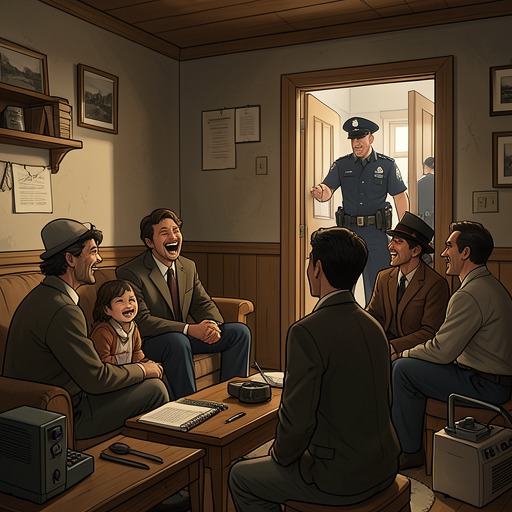
When officials arrive at the house, they keep its residents in the kitchen while the prosecutor presents a stamped document concerning narcotics law. The investigation soon expands beyond drugs: after Frieder retrieves the narrator’s conscription file from the freezer, an official examines it and identifies theft under Section 242 alongside suppression of documents. The prosecutor later repeats the theft charge while listing other alleged offenses, including damage to property and defamation of the memory of the dead.
That repetition places theft among several different kinds of conduct assembled into a single legal inventory. The residents’ household practices and the altered conscription papers are translated into discrete statutory accusations, each named aloud by an authority figure. Section 242 is thus not merely a label for taking goods; it is one element in the official reconstruction of the house as a criminal matter.
Trial and Unequal Outcomes
At trial, Vera, Pauline, and the narrator are convicted of theft and defamation of the memory of the dead. Each receives forty hours of community service. Frieder receives fifty hours, with the additional matter of the wooden pistol contributing to his sentence. The ruling makes the theft charge consequential for several residents, but it does not produce identical penalties: the court’s outcomes distinguish among the members and the conduct attributed to them.
Cäcilia’s case follows a different course. Her parents’ lawyer argues that she was not pictured on the terrorist poster that hung beside the kitchen sink, and the case against her is dismissed on every count. The contrast between her acquittal and the others’ convictions shows how the prosecution’s broad case against the household could be divided person by person, with representation and the particulars of each person’s alleged conduct shaping the result.
Legal Classification and the Household
The trial’s vocabulary sits against the residents’ own improvised domestic world. Their poster, used to mark people who had failed to wash up, is treated in the proceedings as part of a landscape of evidence; an object governed at home by a joke about chores acquires a different significance when examined by the state. The theft count likewise makes a shared household economy legible as an offense, shifting the meaning of taking goods from collective practice to individual criminal liability.
Section 242’s role is therefore both practical and structural: it accounts for the theft convictions, while the sequence from investigation to trial exposes how officials break a communal life into charges and sentences. The forty-hour penalties for Vera, Pauline, and the narrator, set beside Frieder’s fifty hours and Cäcilia’s dismissal, leave the law’s accounting visibly uneven rather than abstract.