Article 90a of the Criminal Code: Defaming the State and Its Symbols
AuerhausSection 90a of the German Criminal Code, concerning disparagement of the state and its symbols, becomes one of the charges considered in the investigation of Auerhaus. Its appearance in the case gives legal weight to Frieder’s drawings on official conscription papers, transforming an act of mockery into evidence examined by a prosecutor.
The papers and the charge
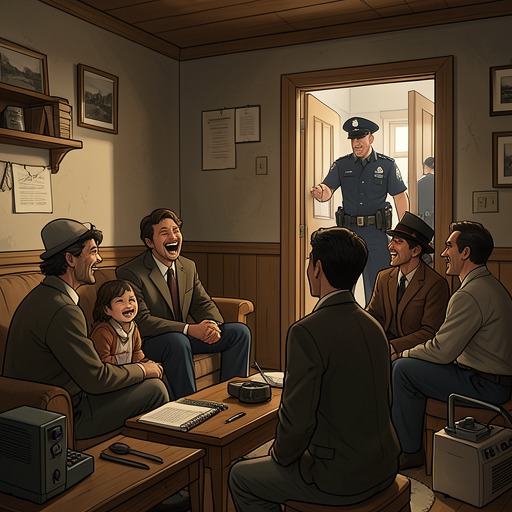
During a search of the house, people in civilian clothes arrive with a prosecutor, who presents a stamped document authorizing the investigation. The officers inspect the conscription file. Frieder has drawn a line through the federal eagles printed across its pages and added small campfires beneath them; the crossed-out emblems look like chickens skewered on spits. When the prosecutor reviews the file, he names several suspected offenses, including Section 90a, describing it as disparagement of the state and its symbols. The same inspection also brings up suspected theft, suppression of documents, forgery, and property damage, so the rule appears within a broader inquiry into what the residents have done to official documents and property.
From household irreverence to state scrutiny
The prosecution’s attention to the eagles makes the altered file more than a private joke: the state’s emblem, repeated in letterheads and stamps, is itself the object the prosecutor identifies under Section 90a. This formal labeling contrasts with the housemates’ everyday irreverence, including their homemade terrorist poster, where portraits of residents who had failed to do the dishes joined images of disliked celebrities crossed out with an X. The poster prompts the prosecutor’s attention, but the evidence does not establish that it constitutes a Section 90a offense.
Trial and the rule’s consequences
The trial proceeds as Cäcilia’s parents’ lawyer had predicted, but the account reports distinct outcomes for the residents rather than a separate punishment under Section 90a. Cäcilia is acquitted on all counts; Vera, Pauline, and the narrator each receive forty hours of community service for theft and disparagement of the memory of the dead. Frieder receives fifty hours, with the wooden pistol also part of his case. Harry receives a suspended one-year prison sentence for drug dealing and possession, as well as a two-year driving ban related to the pursuit. The listed verdicts show that official accusations are divided among the housemates and do not support attributing a specific sentence to Section 90a alone.