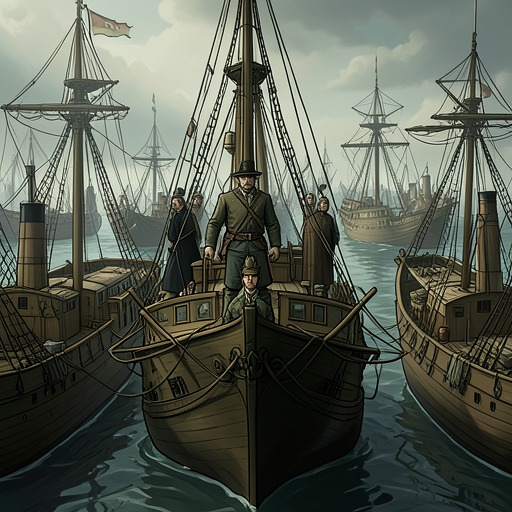
The only fair fight was the one you lost
Blackwater“The only fair fight was the one you lost” is Fleet Admiral Von Braun’s maxim about combat: a fair contest is one in which the odds have not been deliberately stacked in your favor. Marcell remembers the advice while setting a trap for a Union destroyer, and the ensuing attack demonstrates its logic through deception, concealed weapons, and an enemy forced to make the wrong choice.
Origin and Meaning
As a midshipman, Marcell heard Von Braun advise him to do his best to stack the deck and ensure he could win in every scenario. At the time, the principle had seemed like bluster. Recalling it years later, with missiles launching from his ship, Marcell tries to put it into practice. The saying thus shifts from a provocative expression of hard-won experience into a standard for operational planning: victory depends not on accepting a supposedly fair contest, but on influencing its terms before the decisive exchange.
Deception as Preparation
The maxim’s logic appears in the opposing forces’ use of misdirection. A Union task force plans to disguise its ships as a civilian flotilla fleeing the Amazon Sea, then exploit delayed and misleading reports to make the Tharcians believe an attack has begun earlier than it has. Its heavier ships will sit in the radar shadow of lighter vessels, while electronic warfare makes the formation appear to contain many more small ships. Concealment alters not only what an opponent can see, but what it can reasonably infer from the available signals.
Marcell later turns that logic back on the Union. Unable to confirm whether another squadron is present through jamming and interference between shoal zones, he orders an open-channel broadcast claiming that a large task force from the belt is five hours away after refueling at Deimos. The claim is deliberately uncertain; its value lies in making the Union react to a possibility rather than allowing it to dictate the tempo. This is the maxim applied to information and decision-making as much as to weapons.
The Trap in Action
Marcell’s missile attack puts the principle into physical form. His ships’ forward momentum is intended to conceal the launch, while deployable magnetic mines expand the threat. The mines attach to spaceborne vessels, avoid friendly identification signals, and form shaped charges against a hull. Clearing them requires ships to move slowly and use manually directed point defenses, leaving those defenses less able to deal with fast missiles.
Three missiles approach the lead destroyer from widely separated angles. When its point defenses engage the first apparent minelayer, a failsafe releases mines into the destroyer’s path. The Union’s manual defenses respond slowly; then the commander appears to mistake the third missile for another mine-laying weapon and reserves fire for what seems the more immediate danger. That mistaken reading opens the way for the missile’s megathermal warheads. They strike amidships, and the destroyer’s power, ammunition, fuel, and structure become part of the cascading destruction: its drive fails, explosions tear through the vessel, and it splits in two.
Significance
The episode gives the saying its concrete proof. Marcell does not seek a clean contest between evenly matched ships; he combines concealment, a false signal, mines, and a feint to make the Union divide its attention and misjudge the threat. The enemy’s error is not an inexplicable lapse but the consequence of a deliberately constructed choice under pressure. Von Braun’s maxim therefore joins tactical ingenuity to a larger contest over information: the side that shapes the opponent’s picture of the battlefield can shape the opponent’s actions as well.