Detective fiction versus real crime
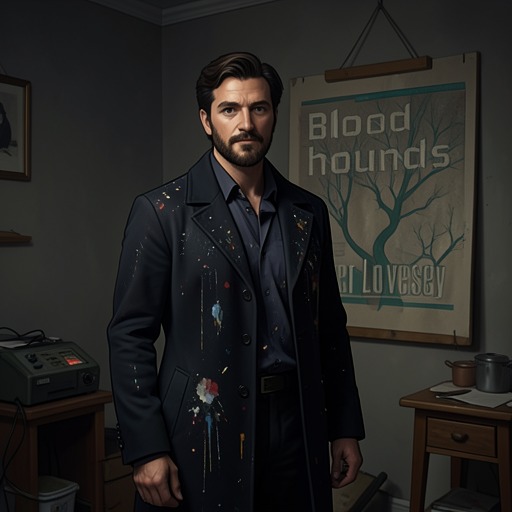
BloodhoundsDetective fiction versus real crime is a recurring argument about whether a real investigation can be understood through the rules and expectations of a whodunit. The novel gives the debate several voices: Milo Motion defends the genre’s reassuring restoration of order, Rupert Darby objects to its distance from suffering, and Peter Diamond resists having his work turned into a literary puzzle. The tension is not merely theoretical. When the police treat the case as a story with a neat solution, their confidence in a familiar pattern helps produce a false accusation.
Fiction, politics, and restored order
Milo’s conversation with Diamond turns from the merits of crime writers to the politics he believes their books embody. He argues that for nearly a century the genre affirmed conservatism and the social order: however vile the crime, readers could expect order to be restored by the ending. His account makes the detective story’s resolution more than a technical matter of identifying a culprit. It is also a promise that disruption can be contained and the existing world made legible again. Milo contrasts that tradition with comparatively recent left-wing crime writers, who, in his view, have found ways to subvert the status quo.
Milo’s literary enthusiasm gives this argument a personal, if somewhat theatrical, setting. He prefers to be thought of as a Sherlockian, admires much of John Dickson Carr’s work, and singles out Carr’s specialization in impossible crimes. He also recalls Carr’s biography of Conan Doyle and his changing relationship with Britain: an Anglophile until the postwar Labour government, he left for the United States because he could not abide socialism and returned after Churchill came back to power. Milo presents politics as inseparable from crime writing; Diamond answers that a policeman is neutral. The exchange leaves a pointed difference between a genre’s ideological history and the practical self-understanding of the detective who must investigate an actual crime.
Diamond resists the whodunit frame
For Diamond, the case’s resemblance to a detective story is a source of professional frustration, not delight. He groups together the riddles, the stolen Penny Black stamp, and the Bloodhounds club, and complains that the whole affair feels like a whodunit rather than the work of a career detective. The apparent locked-room murder intensifies the absurdity: he imagines the next development might as well involve invisible ink. His complaint marks a boundary between a fictional puzzle, constructed to invite solution, and a real case in which the detective cannot assume that each strange detail has been arranged for the reader’s satisfaction.
Julie Hargreaves does not dismiss the mystery; she challenges the way Diamond proposes to approach it. Instead of attacking the locked-room problem head-on and puzzling over it until a solution appears, she suggests beginning with the small group of people who could have stolen the stamp. The shift is methodological as well as thematic. It turns attention from the spectacular question of how a room was locked to the people and evidence associated with the theft. In that move, the novel tests the detective-story instinct to solve the most ingenious puzzle against the more grounded task of establishing who had the opportunity to commit a crime.
Darby’s objection to puzzle stories
Rupert Darby articulates the opposing literary complaint from inside the Bloodhounds. He stays with the club partly because it gets him out of his local for a couple of hours, but says he also has a mission: to persuade its members to read about contemporary crimes and the misery and despair they cause. He accuses them of fixation on old puzzle stories, with maps at the front and snobbish characters marked by xenophobia. His objection is not simply that such books are old-fashioned. Their stylized puzzles and prejudices, as he describes them, divert attention from the human pain of real crime.
Darby reinforces the distinction with a joke about a German suspect and British Summer Time, then says that the club knows nothing about real crime. When Diamond needles him about being qualified to teach the subject, Darby accepts the premise only in a particular sense: he reads books that show crime with blood, pain, and suffering. His position gives the theme a different emphasis from Milo’s. Milo asks what social order the genre restores; Darby asks what realities its conventions exclude. The disagreement makes the club a setting where crime fiction is both a pastime and an argument over what deserves to be read.
The danger of imposing a plot
The case gives the debate practical consequences when the police’s theory about Sid Towers comes under pressure. John Wigfull is told that the padlock had not been changed: it was the same one Milo Motion originally bought, and the key recovered by divers at Avoncliff fitted it. More damaging still, a new riddle indicates that Towers could not have been the criminal mastermind behind the rhymes and the theft. The paper bag with lists of rhyming words, which Diamond had previously produced and which seemed to clinch the case against Towers, no longer settles the matter. The thief remains at large.
This reversal exposes the risk in treating evidence as the pieces of a satisfying fictional solution. The detectives had read the bag and Towers through a coherent theory, but the new information forces them to recognize that they may all have been wrong. The episode does not show that puzzles are useless; the riddles remain part of the case. Instead, it separates the existence of a puzzle from the certainty that the investigators have interpreted it correctly. The novel’s contrast between fiction and real crime therefore turns on the discipline to revise a story when the facts fail to support it. A restored order may be a genre’s promise, but in police work the ending cannot be trusted in advance.